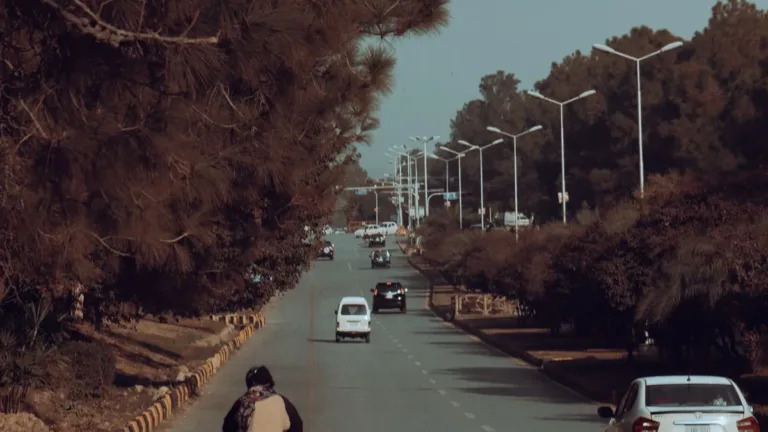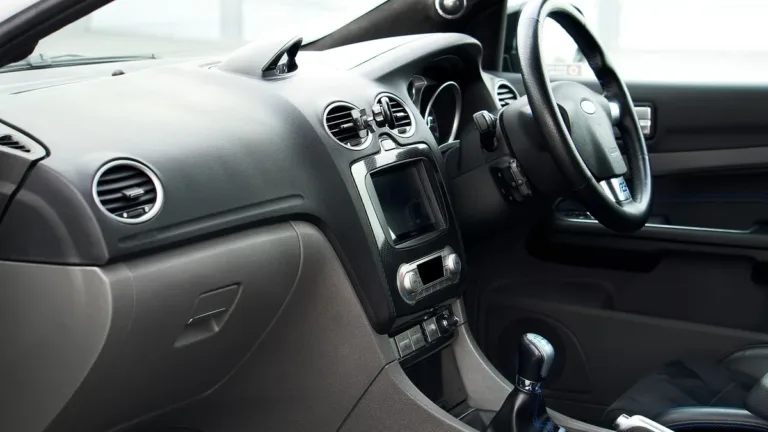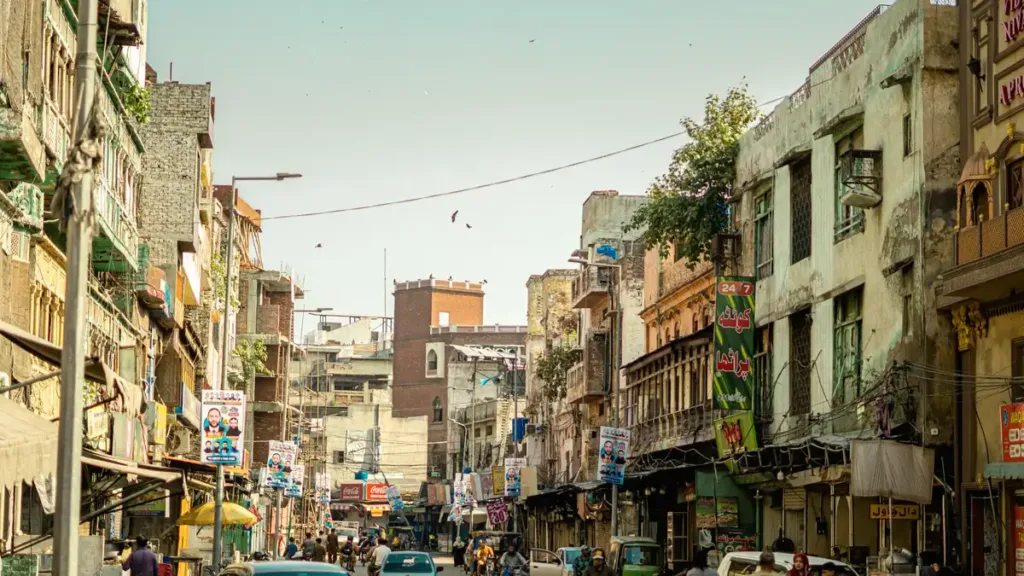
The best car for city driving in Pakistan is usually the smallest automatic that still carries your people and bags: a Suzuki Alto or Cultus with the AGS gearbox, or a Swift CVT, for one or two adults with light luggage; a Honda City or Toyota Corolla-class sedan when you have four adults, business meetings and proper suitcases. A crossover only earns its bulk in the city when you are leaving it, for the hills or a long run up the motorway. That is the short answer. The better answer starts somewhere most people forget to look: where the car will sit when you are not in it.
Seat count tells you whether everyone fits on the drive. It does not tell you whether the car fits into the lane outside your aunt’s house in an old quarter of Lahore, the ramp under a Karachi office tower, or the guarded forecourt of an Islamabad guest house. Pick the class from the parking reality at each end of the day, then check it against the passenger list. This guide walks through that order of thinking, with the published measurements that matter and the points where a hill or motorway trip changes the verdict.
The best car for city driving in Pakistan, by where it parks
Use this as a first cut. The rows describe the situation you will face most often during the hire, not the one day you might visit somewhere difficult.
| Your main parking situation | Class to start from | Why | Watch out for |
|---|---|---|---|
| Old-city lanes, family homes in dense mohallas, bazaar errands | Economy hatch, automatic | Shortest body, easiest to turn and tuck against a wall | Two large cases is the practical limit |
| Hotel or office basements, shopping-mall car parks | Economy hatch or standard sedan | Low roofline clears ramps and height bars; sedan boot keeps bags out of sight | Tight spiral ramps punish long wheelbases |
| Gated sectors and compounds with a guard and a forecourt | Standard or executive sedan | Space is not the problem; comfort and a lockable boot are | Security checks at the gate take time; plan for it |
| City base, but with day trips to Murree, the Margalla foothills or beyond | Comfort crossover | Ground clearance and a stronger engine for gradients | Harder to place in narrow streets and low car parks |
| Mostly motorway, several cities in one trip | Standard or executive sedan, or crossover for five adults | Long-distance comfort, bigger boot, steadier at speed | Pay attention to fuel range and rest stops, not parking |
If your hire has more than one of these rows, pick the class for the row you will live with most nights. A family visiting relatives in a tight neighbourhood for ten days, with one trip up to the hills, is better served by a small automatic for the ten days and a separate arrangement for the hill day than by a big crossover they spend a week trying to park.
Why the parking at the end of the day decides the class
Most car-hire decisions are made on a phone in a departure lounge: how many seats, how many bags, what it costs. The friction in Pakistani cities arrives later, at the destination. Three situations cause nearly all of it.
Narrow streets and old-city access
The historic cores of Pakistan’s big cities were laid out long before the car. Lahore’s Walled City once had 13 gates, and although the Shah Alami area was rebuilt after 1947 with wider streets, much of the inner fabric is still lanes where a car either fits or does not. The Shahi Guzargah conservation project, run by the Punjab government with the Aga Khan Trust for Culture on the royal route between Delhi Gate and the Wazir Khan Mosque, is a clue in itself: these are places designed for people on foot, not for an SUV looking for a kerb.
The same pattern repeats in older neighbourhoods of Rawalpindi, Peshawar, Multan and parts of Karachi. The difficulty is width plus parked motorbikes, handcarts and nowhere to turn at the far end. There the useful measurements are overall length and turning circle, and the smallest hatchbacks win outright.
A practical rule: if the address you will visit most is inside an old quarter, plan to stop at the edge of it. Walk the last few hundred metres, or send someone ahead to find a legal spot. A small car makes the edge parking easier; it does not make driving deep into the lanes wise.
Hotel and office parking for a hired car
Hotel and office parking for a hired car is where the second problem shows up. Many city hotels, office towers and malls park cars in basements reached by ramps, sometimes spiral ones, with a height bar at the top. Posted clearances vary from building to building, so treat every building as its own case rather than assuming last week’s car park tells you anything about this one.
Three checks before you arrive:
- Ask the building for its clearance height and whether the ramp is straight or spiral. Front desks and office receptions can usually tell you, and security at the barrier certainly can.
- Know your vehicle’s height. Honda publishes 1,498 mm for the current City 1.2LS sedan. Toyota Indus publishes 1,835 mm for the Fortuner GR-S in its Fortuner specification sheet. Roof bars, a roof box or a luggage carrier add to either figure.
- Ask whether visitor parking is underground or at street level. Some offices keep the basement for staff and send visitors to a surface lot or a separate parking plaza, which changes how far you walk with bags.
Length matters on ramps too. A long wheelbase needs more room to swing through a tight turn, and a spiral ramp built with small cars in mind can feel very narrow in a large SUV. If most of your days end in a basement, a hatch or a compact sedan removes a daily source of stress.
Gated compounds and guarded forecourts
The third situation is the opposite. Many homes in planned sectors and housing societies, guest houses and business premises have a gate, a guard and a forecourt. Here space is not the constraint. What counts is that the car can be locked, that bags are not on show, and that you allow time at the gate for entry checks, especially at offices, embassies and hotels with vehicle inspection. In this setting a sedan with a proper boot is often the calmest choice, because nothing sits visible behind the rear seats.
Automatic versus manual in stop-go traffic
If you drive an automatic at home, hire an automatic in Pakistan. City traffic in Lahore, Karachi and Rawalpindi is dense, stop-start and unpredictable, with motorbikes, rickshaws and pedestrians filling any gap. Managing a clutch through that for an hour is tiring, and tired drivers make poor decisions about gaps and parking.
The good news is that automatics now exist at the small end of the market. Suzuki Pakistan sells the Alto in a manual VXR and in two AGS versions (VXR-AGS and VXL-AGS). The Cultus comes as manual VXR and VXL, plus a VXL-AGS. The Swift is offered as a manual GL and in GL CVT and GLX CVT form. Moving up a size, Honda lists the City 1.2LS with a CVT.
AGS is an automated manual: a conventional gearbox with the clutch and gear changes done for you. It feels different from a torque-converter automatic or a CVT. There can be a pause as it changes gear, and on a steep ramp it may roll back a little before it bites, so a light touch of the handbrake or brake-hold habits help. It is still far easier than a manual in a traffic queue. If you have never driven one, give yourself ten minutes in a quiet street before the first basement ramp.
That makes the automatic hatchback for city parking the default recommendation for a solo traveller or a couple on a mainly urban trip. Two practical caveats:
- Automatic stock in a given class and city is limited. Ask for it explicitly when you enquire, and treat any class name as the class, not a guaranteed model.
- Check the transmission is written on the confirmation. “Alto or similar” can mean a manual unless the gearbox is specified.
Small hatch, sedan or crossover: the numbers that matter
The three classes that cover most city hires differ in ways you can measure. The figures below come from manufacturers’ Pakistani pages and from iDrive’s own class descriptions; hire vehicles within a class vary by model and year, so read them as typical, not exact.
| Class | Typical models | Published figures | Best at | Weakest at |
|---|---|---|---|---|
| Economy hatch | Suzuki Alto, Cultus, Wagon R, Swift; Daihatsu Mira | Petrol, front-wheel drive, 658 cc to 1,197 cc; iDrive lists up to 5 passengers and 2 large cases | Old-city edges, basements, short errands, fuel cost | Four adults with luggage, motorway comfort, hill gradients |
| Standard sedan | Honda City, Toyota Corolla, Toyota Yaris, Changan Alsvin | Honda City 1.2LS: 4,451 mm long, 1,694 mm wide, 1,498 mm high, 172 mm ground clearance, 5.3 m minimum turning radius, 510-litre boot, CVT | Business days, four adults, hidden luggage, motorway runs | Tight lanes and very tight spiral ramps |
| Comfort crossover / SUV | Kia Sportage, Hyundai Tucson, Haval H6; Toyota Fortuner in the premium 4×4 class | Fortuner GR-S: 4,795 mm long, 1,855 mm wide, 1,835 mm high, 279 mm ground clearance, 716-litre luggage capacity | Hill roads, rough surfaces, five adults with bags | Old-city streets, low car parks, fuel use in traffic |
Look at the sedan and SUV rows side by side. The Fortuner is roughly 34 cm longer, 16 cm wider and 34 cm taller than the City, and it has more than a hundred millimetres of extra ground clearance. Those extra centimetres are what you want on a broken mountain road and exactly what you do not want in a basement built for small cars. You can see the full range, from the economy hatch class up to the larger comfort crossover and SUV class, on iDrive’s vehicle pages, each listing seats, bags and whether self-drive is offered.
When a long-distance or hill trip changes the answer
The city verdict holds as long as the car stays in the city. Two kinds of trip reverse it.
The best car for long distance driving in Pakistan
On a motorway day, parking stops mattering and comfort, stability and luggage space take over. A hatch with four adults and bags will get from Lahore to Islamabad, but the ride will be noisy and cramped and the boot full. For the best car for long distance driving in Pakistan, start at a standard or executive sedan for up to four adults, and a crossover for five with luggage. The UK Foreign, Commonwealth and Development Office’s safety and security advice for Pakistan warns that local driving standards are erratic, especially at night, and advises care on long road journeys and cross-country travel. A larger, more stable car does not change other drivers, but it does give you a more relaxed platform for a long day, and it is worth planning the drive to finish before dark.
The best car for mountain driving in Pakistan
Hill and mountain roads are where ground clearance, engine power and a proper low gear earn their keep. The FCDO notes that remote mountain roads can be of very poor quality with uneven surfaces, that landslides frequently block or destroy roads, and that some routes, including the N15 between Chilas and Babusar in Gilgit-Baltistan, are inaccessible at times of year because of extreme weather. It recommends travelling with experienced local drivers and in clear weather.
So the best car for mountain driving in Pakistan depends on how far you go. For a day up to the Murree hills on good tarmac, a crossover with decent clearance is comfortable and a sedan will usually cope in dry conditions. For the Karakoram Highway, Naran and Kaghan, Skardu or anything with loose surfaces, you are into high-clearance 4×4 territory, and very often a car with a driver who knows the road. iDrive’s guide to the best car for the northern areas covers that decision in detail, route by route.
Splitting the hire
If your trip is mostly city with a single long or hill excursion, consider two arrangements rather than one compromise:
- A small automatic for the city days, sized for the parking you will actually use.
- A separate crossover, 4×4 or car-with-driver for the excursion, booked for those dates only.
Security of overnight parking
The last question before you settle on a class is where the car sleeps. The FCDO’s safety page lists carjacking among the risks travellers should be aware of in Pakistan. That does not mean every street is dangerous. It does mean that overnight parking should be chosen, not accepted by default.
- Prefer guarded or gated parking. A hotel car park with a barrier and a guard, a gated home forecourt or a staffed office lot is better than a kerb outside, however quiet the street looks at 10 pm.
- Leave nothing on view. A sedan boot hides bags; a hatch’s parcel shelf and an SUV’s cargo area are more visible. Take valuables and documents inside.
- Keep the paperwork with you, not in the glovebox. Your licence, International Driving Permit and the hire documents should travel with the driver, because police checks can happen anywhere.
- Save the local helplines. In Islamabad, the capital’s police list 15 for emergencies and 1915 for the traffic helpline. Check the equivalent numbers for any other city before you arrive.
- Agree what happens if the car is damaged or stolen overnight. Ask the supplier about the reporting procedure and your liability before you drive away, not after.
When the parking problem is better solved by a driver
Sometimes the honest conclusion is that no class fixes the parking. If your days are a string of short stops in dense districts, a driver who drops you at the door, circles or waits nearby, and collects you when you call removes the problem entirely. The same applies to weddings and family events, where dozens of cars converge on one lane at once.
The trade-off is familiar: self-drive gives you privacy and flexibility, a driver gives you local road knowledge, no parking hunts and no liability for the car while it waits. For a city-heavy trip with a lot of stopping, the driver often wins; for a trip with long stays at a single address, self-drive can make more sense. If you lean towards self-drive, iDrive’s self-drive car rental in Pakistan page explains collection, delivery and the checks carried out before a vehicle is released. If you lean the other way, our sister service Pakistan Taxi, one of the iDrive brands, sets out what to expect from a car and driver hire for city days.
A checklist before you confirm the class
Run through this with your itinerary open. It takes ten minutes and saves the most common regret, which is a car that is right on the drive and wrong at the door.
- List the three addresses where the car will park most. Home, hotel, office, relatives. Note which are old-city lanes, basements or gated forecourts.
- Ask each building about clearance and visitor parking. Height bar, ramp type, and whether visitors park underground or at street level.
- Count adults and large cases honestly. Two large cases is the practical ceiling for a hatch; a sedan boot or a crossover takes over after that.
- Decide on the gearbox. If you drive an automatic at home, ask for AGS or CVT explicitly and check it is written on the confirmation.
- Mark any motorway or hill days. Consider a separate vehicle or a car with driver for those, rather than upsizing for the whole hire.
- Check overnight parking at each stop. Guarded or gated beats the kerb, and a boot beats an open cargo area.
- Carry your documents. The FCDO advises that visitors driving in Pakistan need both a 1968 International Driving Permit and their UK licence; check your own country’s position if you are not from the UK.
When you are ready, plan your journey on iDrive with the route, dates, passengers and bags. The class you pick is a starting point: availability, the exact model and the price are confirmed in writing before anything is final, and you can ask for an automatic or a different class at that stage.
Questions people ask
What is the best car for city driving in Pakistan for a couple?
An automatic economy hatch, such as a Suzuki Alto AGS, Cultus VXL-AGS or Swift CVT. It is easy to place in narrow streets and small car parks and carries two people with two large cases.
Is a sedan too big for Lahore or Karachi?
Not usually. A Honda City-sized sedan is 1,498 mm tall with a 5.3 m turning radius, which suits most car parks. It struggles only in the tightest old-city lanes and the smallest spiral ramps.
Should I hire an SUV for the city if I am also going to the hills?
Only if the hill trip is long or the city parking is easy. Otherwise hire a small car for the city and a separate crossover, 4×4 or car with driver for the hill days.
Are automatic hire cars available in Pakistan?
Yes. Automatic versions of the Alto, Cultus, Swift and City are all sold in Pakistan. Stock in any one class and city is limited, so request the gearbox explicitly and confirm it in writing.