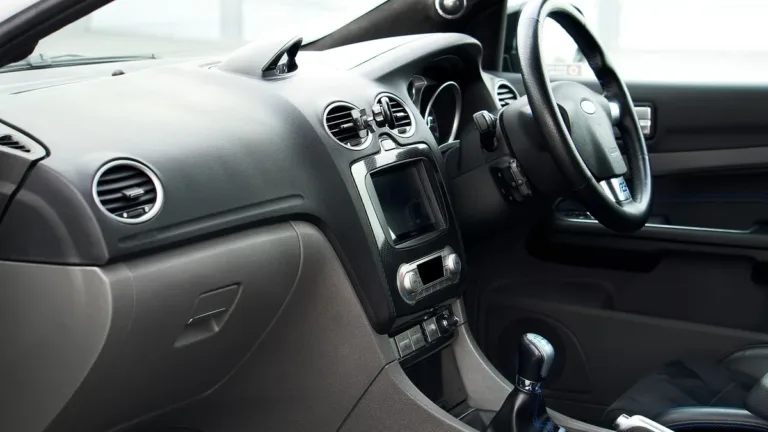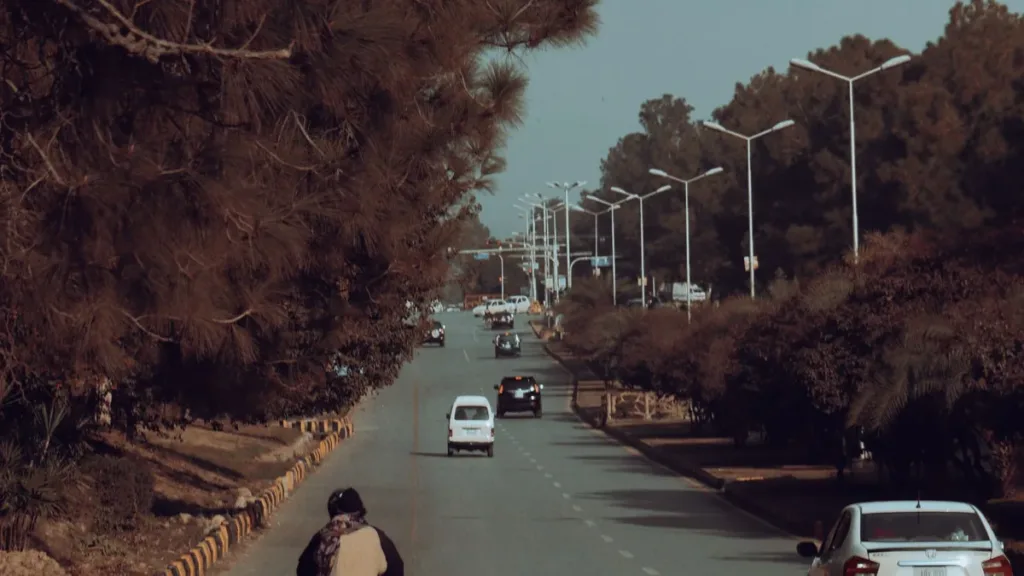
If you are wondering about driving in Pakistan, left or right: traffic keeps to the left, and cars are right-hand drive, with the steering wheel on the right and the gear lever under your left hand. The US State Department puts it in one line: drivers in Pakistan drive on the left-hand side of the road. For a UK driver that sounds like home. For someone from the Gulf, North America or mainland Europe, it is the first of several adjustments.
The side of the road is the easy part, though. What decides whether a visitor should take the wheel is everything around it: lane habits, mixed traffic, night driving, mountain closures, and how much of the trip you can afford to spend concentrating. This guide answers the side-of-the-road question properly, then gives you a short scoring test so you can decide between self-drive and a chauffeur on the facts of your own trip rather than on instinct.
Which side driving in Pakistan: the short technical answer
Pakistan kept the left-hand rule of the road it inherited from British India, the same system still used in India, Bangladesh and the UK. Nothing about it is regional or seasonal: the same rule applies on the M-2, in the old city of Lahore and on the Karakoram Highway.
In practice that means:
- You keep left on single carriageways, and the slow lane on dual carriageways and motorways is the left-hand one.
- Overtaking is done on the right, so the fast lane is on your right.
- The driver sits on the right, closest to the centre line. Your passenger sits on the kerb side.
- Roundabouts run clockwise, as they do in every left-hand-traffic country.
- A “free left” turn is the easy turn; a right turn is the one that crosses oncoming traffic.
Which hand driving in Pakistan: the controls
People who search “which hand” usually mean the gear stick. In a right-hand-drive car you change gear with your left hand. The pedal layout does not change: clutch on the left, brake in the middle, accelerator on the right. Indicator and wiper stalks vary by manufacturer, so a driver who swaps between left- and right-hand-drive cars may flick the wipers when they meant to indicate for the first day or two. Harmless on an empty road, less so at a busy Lahore junction.
If you only drive automatics, ask which gearbox the car you are offered actually has. Changing gear with the “wrong” hand while also reading unfamiliar traffic is a lot to ask of a jet-lagged brain.
Is driving in Pakistan hard? What actually catches visitors out
Official advice from two governments is blunt. The UK Foreign, Commonwealth & Development Office says that outside the major motorways road quality is variable, conditions can be poor and local driving standards are erratic, especially at night. The State Department warns that local drivers may come head-on in your lane if they think it gets them there faster, and lists animals, horse carts, cyclists and pedestrians among the hazards.
Neither of those is a reason to panic. They are a description of a different driving culture, and the skill that matters is reading it. Here is what tends to trip up newcomers.
Informal lanes
Painted lanes in city traffic are more of a suggestion than a rule. A three-lane road often carries four or five lines of vehicles, and gaps close fast. Drivers communicate with the horn far more than in Europe or North America: a short tap usually means “I am here” rather than “you are wrong”. Visitors who treat every horn as aggression tend to brake unexpectedly, which is the one thing the traffic around them does not anticipate.
Roundabouts and U-turns
Clockwise flow is logical once you are in it. The friction comes from habits: vehicles entering without waiting, others taking the outer ring to go all the way round, and motorcycles filtering through every gap. On many urban dual carriageways, turning right is done by driving past the junction to a signed U-turn slot in the central reservation, then coming back. That means you are regularly slowing in the fast lane, with traffic behind you, while looking for a gap in oncoming vehicles. If you are going to practise one thing on a quiet road before the city, make it this.
Motorcycles, rickshaws and animals
Motorcycles are everywhere, often carrying two, three or a whole family, and they pass on both sides. Auto-rickshaws and loaders stop wherever a passenger waves. On rural roads and in the north, expect donkey carts, tractors with trailers and livestock being walked along or across the carriageway. The WHO’s Global Status Report on Road Safety 2023 notes that more than half of road deaths worldwide are pedestrians, cyclists and motorcyclists, concentrated in low- and middle-income countries. When you share a road with that many unprotected users, your mirrors and your patience do most of the work.
Night driving
The State Department cautions that many vehicles lack working headlights or dimmers and many roads are neither lit nor signed. Add unmarked speed breakers, parked trucks without reflectors and pedestrians in dark clothing, and you have the strongest single argument for limiting self-drive to daylight.
Foreigner driving in Pakistan: papers and practical limits
For UK licence holders the FCDO is specific: you need both the 1968 version of the International Driving Permit and your UK driving licence with you in the car. Other nationalities should check their own government’s advice and the rental provider’s terms, because a hire company can set stricter conditions than the law, such as a minimum age, years of licence held, or a security deposit.
Three further points shape what a foreign driver can realistically do:
- Where you are allowed to go. The FCDO's regional risks page advises against all travel to Balochistan, many districts of Khyber Pakhtunkhwa and the N45 between Mardan and Chitral, and against all but essential travel to Azad Jammu and Kashmir, northern Sindh and Dera Ghazi Khan. It also says foreigners need advance permission from local or federal authorities to travel in Khyber Pakhtunkhwa, Balochistan and several districts of Azad Kashmir. Ask your insurer how it treats areas covered by that advice, and read the current map before planning any route by road, because it changes.
- Mountain roads. The FCDO notes that many northern roads, including the N15 between Chilas and Babusar, are inaccessible at some times of year because of extreme weather, that surfaces are often poor and that landslides frequently block or destroy roads. It tells travellers to use experienced local drivers on these routes, and only in clear weather. That is one of the rare cases where official advice points directly at the chauffeur option.
- Who to call. The National Highways & Motorway Police patrol the motorways and national highways. The NHMP website lists current contact details and points motorists to its travel advisory and the FM 95 road information service, both worth checking before a long run. Save the number before you set off rather than hunting for it on the hard shoulder.
If you are still weighing up renting a car yourself, our page on self-drive car rental in Pakistan explains how that service is arranged.
Who adapts well, and who does not
Experience behind the wheel is not the same thing as experience that transfers. The drivers who settle in quickly tend to share a profile; the ones who struggle share another.
Usually adapts within a day or two
- UK, Irish, Indian and other left-hand-traffic drivers, who only need to adjust to traffic density rather than to the side of the road.
- People who have driven in busy South Asian or Middle Eastern cities and are comfortable with close quarters and constant horn use.
- Drivers who have visited the same city many times as a passenger and already know the main roads, junctions and landmarks.
- Anyone whose plan is mostly motorway, in daylight, with no fixed appointments.
Usually finds it harder than expected
- North American and continental European drivers, who are changing sides, gear hand and traffic culture all at once.
- Gulf residents used to wide, well-marked highways and strict lane enforcement, who can find Pakistani city streets surprisingly tight.
- Anyone arriving on an overnight flight and planning to drive straight from the airport.
- Drivers who dislike being hurried, because city traffic rewards assertiveness and punishes hesitation.
None of this is about ability. A careful driver from Toronto may be safer than an overconfident one from Birmingham. The question is how much new information you are processing at the same time, and whether your trip leaves you room for it.
Route and schedule: the factors that change the answer
The same driver can sensibly self-drive one leg and hand over the next. These are the variables that move the decision most.
Motorway versus everything else
The FCDO draws the line itself: road quality is variable outside the major motorways. Controlled access, lane markings and service areas make the M-2 between Islamabad and Lahore a very different experience from a Grand Trunk Road town centre. Our guide to motorway tolls and drive times on the M-1, M-2 and M-4 covers the practical side of those runs. The difficulty is usually at each end: the interchange, the city streets, the hotel you cannot find.
City centres and old quarters
Walled-city Lahore, Rawalpindi’s Saddar or central Karachi at rush hour are hard work for anyone, local drivers included. Parking is scarce and informal. If most of your time is in dense urban areas, the value of self-drive falls sharply, because you spend it hunting for somewhere to leave the car.
Mountains and the north
Roads to Hunza, Skardu and the valleys combine long distances, single-track sections, landslide risk and seasonal closures. Local knowledge of which stretch is open, where fuel is reliable and when to turn back matters more than driving skill. This is where official advice and common sense agree.
Timing and obligations
A trip built around a wedding, a funeral, a business meeting or a flight has fixed points. Each fixed point adds pressure to a self-driver who is also navigating, parking and managing passengers. Loose sightseeing days carry far less of that pressure.
Who is in the car
Driving an elderly parent to a hospital appointment, with children in the back and luggage in the boot, is a different job from driving yourself. The more people depend on the driver, the more attention that seat demands.
A simple self-drive or chauffeur score
Instead of a gut feeling, score your trip. Take each factor below, give it the points that match your situation, and add them up. Score each leg separately if your itinerary mixes motorway runs, city days and mountain travel.
| Factor | 0 points | 1 point | 2 points |
|---|---|---|---|
| Your usual traffic side | Left-hand traffic (UK, Ireland, India) | Right-hand traffic, but you have driven on the left before | Right-hand traffic, never driven on the left |
| Experience of dense mixed traffic | Regularly drive in busy South Asian or similar cities | Some experience abroad | Mostly orderly, lane-disciplined roads |
| Main road type | Motorway most of the way | Mix of motorway and city | Old city centres, rural roads or mountains |
| Time of driving | Daylight only | Some dusk or early-morning legs | Regular night driving |
| Fixed appointments | None, flexible days | One or two fixed times | Wedding, flights, meetings or medical visits |
| Passengers depending on you | Just you | One or two adults | Children, elderly relatives or a group |
| State on arrival | Rested, a day or more after landing | Arriving the same day, daytime flight | Off an overnight flight |
| Local route knowledge | Know the roads well | Know the city as a passenger | First visit |
Reading your score
- 0 to 4: self-drive is a reasonable choice, provided your papers and insurance are in order. Keep night driving to a minimum anyway.
- 5 to 9: a split plan usually works best. Drive yourself on the easy legs, typically a daylight motorway run, and use a driver for arrivals, city days and anything with a fixed time.
- 10 to 16: a chauffeur is the sensible default. You can still ask for a self-drive car later in the trip once you have watched the traffic for a few days.
Two worked examples, both hypothetical. A London-based driver visiting family in Islamabad for ten flexible days, arriving rested, mostly on the M-2: around 2 or 3 points, so self-drive is fine. A family from New Jersey flying overnight into Lahore for a wedding, with grandparents in the car and evening functions across the city: well into double figures, so a driver is the clear call.
Hard stops that override the score
Some conditions should push you to a chauffeur whatever the total says:
- Your route crosses areas where the FCDO or your own government advises against travel or requires permission.
- You do not hold the documents your government and the rental provider require, such as the 1968 IDP for UK licence holders.
- The trip includes northern mountain roads during a season of known closures or landslides.
- You would be driving tired, straight off a long-haul flight.
What a chauffeur changes, and what it does not
A car with driver removes the navigation, parking, local-traffic reading and night-time strain from your day. It does not remove the need to plan: you still decide the itinerary, the pick-up times and the stops. It also changes the cost structure, because you are paying for a person’s time as well as a vehicle, with considerations such as driver meals, overnight stays and waiting time. Our breakdown of what a car with driver includes and what changes the cost goes through those items one by one, and the wider comparison of self-drive versus a car with driver sets the two options side by side on price and flexibility.
The trade-off, put plainly: self-drive buys independence and usually a lower day rate; a chauffeur buys attention, local knowledge and a car that is waiting when you come out of the venue. For many visitors the right answer is not one or the other but a combination scored leg by leg.
If you would rather ask questions about eligibility, deposits and handover before deciding, our sister service Pakistan Taxi, also part of the iDrive network, has a practical guide to self-drive questions for overseas bookers.
Your next step
Once you have your score, send the details of the legs you want covered: dates, pick-up points, passengers, luggage and whether you want self-drive, a driver, or a mix. You can see how our chauffeur service in Pakistan is arranged, or go straight to the iDrive booking page to submit your journey. Availability and pricing depend on dates, vehicle type and route, and are confirmed with you before anything is fixed.
Questions people ask
Does Pakistan drive on the left or the right?
On the left. Cars are right-hand drive, so the driver sits on the right and overtakes on the right.
Can a UK driver use their licence in Pakistan?
The FCDO says UK drivers need both the 1968 International Driving Permit and their UK licence in the car. Rental providers may add their own conditions.
Is it safe to drive at night in Pakistan?
Both the FCDO and the US State Department flag night driving as a particular risk, citing unlit roads and vehicles without working lights. Keep self-drive to daylight where you can.
Do I need a driver for the northern areas?
The FCDO recommends experienced local drivers for remote regions because of seasonal closures, poor surfaces and landslides. For Hunza, Skardu and similar routes, a driver is the practical default.