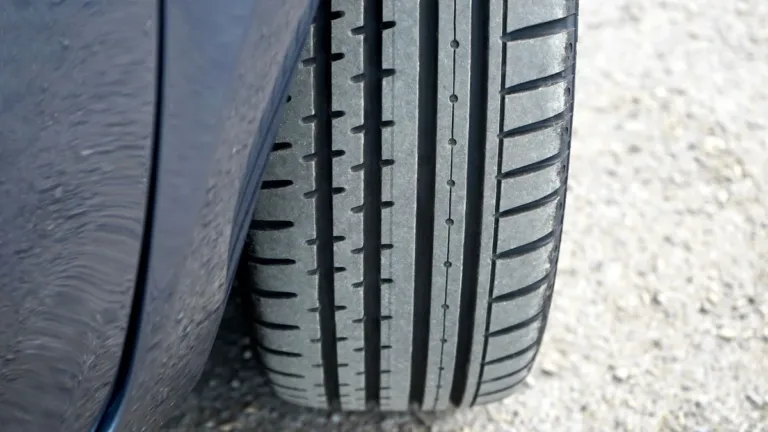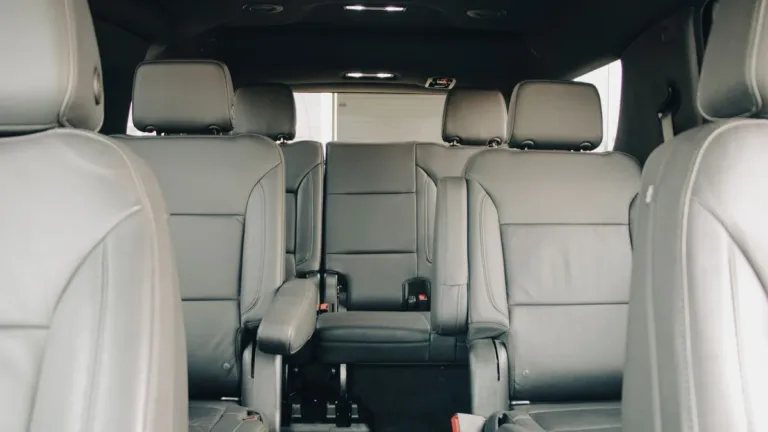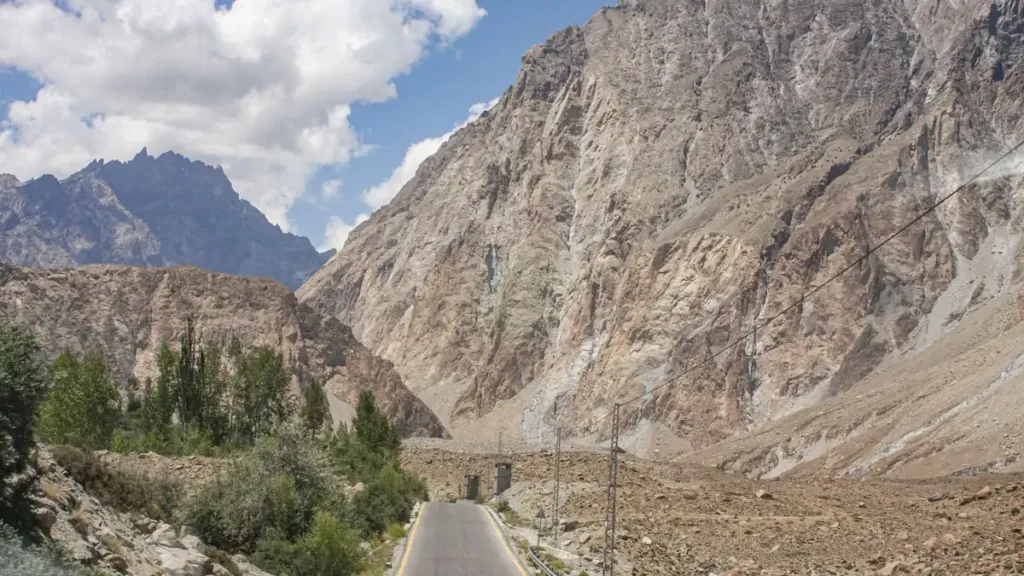
The best car for northern areas in Pakistan depends less on the badge than on the last twenty kilometres of your plan. If your trip stays on the sealed Karakoram Highway and the main valley roads to Gilgit, Hunza or Naran, a well-maintained sedan or crossover with a driver who knows mountain roads will do the job. Ground clearance starts to matter once you add broken tarmac, landslide debris, washed-out culverts and hotel access lanes. A genuine 4×4, or more often a local jeep, is only essential for a short list of places: the Raikot Bridge to Tato track for Fairy Meadows, the Deosai crossing, and the rougher side valleys. Most people who ask for a Land Cruiser for Hunza are really asking for comfort and headroom, not traction.
That distinction matters because the vehicle you choose drives the cost of the whole trip. A big 4×4 costs more per day, burns more fuel and is harder to find at short notice. Pay for it where it earns its keep, and not everywhere else.
The best car for northern areas in Pakistan, route by route
Here is the decision in one place. It assumes a summer or early-autumn trip, a driver at the wheel and normal luggage for two to four people. Winter and monsoon change the picture, and we cover that further down.
| Route or destination | Minimum sensible class | Better choice if budget allows | Why |
|---|---|---|---|
| Islamabad to Naran on the Kaghan road | Sedan | Crossover | Sealed most of the way; spring debris and crowding, not traction, are the issues |
| Naran over Babusar Top to Chilas | Crossover | SUV or 4×4 | High pass, open only in the warm season, with steep grades and glacier-cleared sections |
| Chilas to Gilgit and Hunza on the KKH | Sedan | Crossover or SUV | Sealed highway; clearance helps when slides leave rubble on the carriageway |
| Hunza to Khunjerab on the KKH | Sedan | SUV | Paved to the border; altitude and cold, not surface, are the stress |
| Jaglot to Skardu road | Crossover | SUV | Being widened and improved, but a gorge road where rockfall is a real consideration |
| Skardu to Deosai | 4×4 or local jeep | Local jeep with its own driver | High plateau, summer-only access, rough crossing |
| Raikot Bridge to Tato (Fairy Meadows) | Local jeep only | Local jeep only | Narrow gravel track operated by local operators; your own car stops at the bridge |
Read the table as a floor, not a ceiling. Nobody will stop you taking a Prado to Hunza. The point is that you do not need to.
Where a sedan is genuinely fine
The classic over-specification is a four-wheel-drive request for a trip that never leaves blacktop. So let us be precise about where a saloon car copes.
The Karakoram Highway north of Chilas
From Chilas through Raikot, Jaglot and Gilgit, and on into Hunza and Gojal, the KKH is a sealed, engineered highway. It is steep in places and exposed in others, but a front-wheel-drive car with good tyres and sound brakes will climb it. The same holds for the stretch to the Chinese border: the Khunjerab Pass sits at about 15,500 feet and is described by Dawn as the world’s highest paved international border crossing. Paved is the operative word. What tests a car up there is thin air and cold, which hits engine power, cabin heating and passengers long before it hits traction.
Note the seasonal shift too. Khunjerab traditionally opened only from April to November; Pakistan and China have since agreed to keep the crossing open year-round, marked with an official ceremony in April 2025. That does not mean the upper KKH is pleasant in January. It means the border is not the limiting factor.
Naran and the Kaghan valley floor
The road up the Kaghan valley to Naran is sealed and heavily used in summer. It closes for months each winter under snow and glaciers: in 2026 the district administration and NHA reopened it to Naran on 21 April after a closure dating from November, according to The Express Tribune. Once open, a sedan reaches Naran without drama. The friction in peak weeks is traffic, parking and hotel lanes, not the gradient.
So when is a sedan to Hunza a bad idea?
A sedan to Hunza is a sound choice for a couple with two suitcases. It becomes a poor one when the car is full, when elderly passengers need to sit upright through a full day of mountain driving, or when the itinerary includes side trips off the highway. The limit is usually space and comfort, not the road.
Where ground clearance matters more than 4×4
Between “any car will do” and “only a jeep will do” sits a middle band where the useful attribute is height, not driven wheels. Most of the northern trip lives in this band, and it is where a crossover or a mid-size SUV earns its premium.
Four situations push you into it:
- Slide debris on sealed roads. After rain, stones and mud settle on the carriageway even once the road is declared open. A low sedan can ground on a rubble edge or take a stone to the sump. A few extra centimetres of clearance make that a non-event.
- Glacier-cleared sections on the passes. On the Naran side of Babusar, NHA crews cleared more than 21 glaciers before the 2025 reopening, Dawn reported. Early in the season, meltwater runs across the road and the surface breaks up. Clearance and a firmer suspension help more than a transfer case.
- Hotel and village access lanes. Plenty of guesthouses in Hunza, Nagar and around Skardu sit up short, steep, part-paved lanes. These are the places where a sedan scrapes and a crossover simply drives up.
- The Skardu gorge road. The 167 km Jaglot to Skardu road is being widened by the Frontier Works Organization from about 3.66 metres to 7.3 metres, with sharp curves eased, according to APP. It is a far better road than it was. It is still a gorge road beside the Indus, and a taller vehicle gives the driver better sight lines and more margin over fallen rock.
If you only change one thing in your booking, change this: specify a crossover or SUV for the passes and the Skardu road, and let the rest of the trip ride on whatever that vehicle is.
True 4×4 and jeep-only sections
This is the short list, and it is shorter than most people expect.
Fairy Meadows: your car stops at Raikot Bridge
The official Gilgit-Baltistan tourism department describes the approach plainly. From Raikot Bridge on the KKH, a 15 km “dangerous and narrow gravel mountain road” climbs to Tato village, and it is open only to local tour operators who carry visitors. From Tato it is about 5 km and three to four hours on foot to Fairy Meadows, at roughly 3,300 metres.
The consequence for vehicle choice is simple: nothing you hire in Islamabad will go up that track, whatever its badge. Plan for your car to drop you at Raikot, wait or return, and collect you when you come back down. That makes a sedan or crossover perfectly adequate for a Fairy Meadows trip, because the difficult section is handled by someone else’s jeep.
Deosai
Deosai is a high alpine plain at an average of 4,114 metres, according to the Gilgit-Baltistan tourism department, and it is reachable only in summer. The Skardu side is the short approach; the western side comes up from Astore via Chilim. The road closes under heavy snow for a large part of each year: Dawn noted in 2019 that the Skardu to Deosai road normally stays shut from November to March.
Treat Deosai as a real 4×4 or local-jeep crossing. Conditions vary with the season and the last storm, so ask whoever drives it for you what they ran over the plateau in the past fortnight. Our car with driver in Skardu page explains how a Skardu-based itinerary can be arranged around day trips like this.
Side valleys and unsealed links
Beyond Fairy Meadows and Deosai, the pattern holds: once the road becomes a track cut into a hillside, you want a proper 4×4 with low range, or a local jeep whose driver knows that route well.
If you do need an owner-grade 4×4 for the whole trip, our premium SUV and 4×4 class is where the larger body-on-frame vehicles sit. Request it when the itinerary genuinely calls for it; availability varies by date and season.
Season and landslides change the answer more than the car does
Ask “is 4×4 necessary for Hunza?” in July and in February and you get different answers, but the reason is rarely traction. It is which roads exist at all.
Babusar is a summer road
Babusar Top, at about 13,700 feet, links Naran with Chilas and, when open, cuts the Mansehra to Diamer journey to around seven hours against fourteen via the KKH, per Dawn. It is shut for most of the cold months. In 2026 it reopened on 25 May after a seven-month closure, ProPakistani reported, and it typically closes again around November or December. Our explainer on Babusar Top and the KKH covers the opening pattern in more depth.
Outside that window, no vehicle choice gets you over Babusar. The question becomes which alternative route you can use, and that brings in a constraint some overseas visitors miss.
The FCDO constraint on the lower KKH
The UK Foreign, Commonwealth and Development Office currently advises against all travel on the Karakoram Highway between Mansehra and Chilas via Battagram, Besham City, Dasu and Sazin, up to the junction with the N15. It also warns that travelling against its advice can invalidate travel insurance. For a British traveller, that makes the summer Babusar route the practical road link into Gilgit-Baltistan, and it makes winter road travel via the lower KKH a question for your insurer before it is a question for your driver. Many visitors fly instead. Advice changes, so read the live FCDO page, or your own government’s, before you commit.
Monsoon slides
From late June into August, rain brings landslides and mudflows onto the KKH and the Skardu road. In August 2025 the NDMA warned that the KKH and Hunza Road were impassable after landslides and flooding, that “several areas have no viable detours”, and that travellers should avoid unsafe alternative routes, Business Recorder reported. In June 2026, Dawn described heavy rain temporarily closing sections of the KKH and the Baltistan road, with officials saying blocked stretches are typically cleared within 24 to 48 hours.
A 4×4 does not cross a landslide. What it does is handle the rough, freshly-cleared surface once the road reopens, and ride out the queue with more comfort. The things that actually protect a monsoon trip are these:
- Build in at least one spare day on any itinerary that crosses Diamer or the Skardu road.
- Check PMD, NDMA and Gilgit-Baltistan advisories the night before and the morning of travel; GB’s deputy tourism director told Dawn that checking official advisories is the key step.
- Start early. Early-morning departures help avoid delays, and one traveller quoted by Dawn in June 2026 said leaving early made all the difference.
- Carry water, snacks, warm layers and any medication in the cabin, not the boot, in case of a long hold.
Delays are not always about weather either. In the same Dawn report, one traveller described being stuck for around 38 hours at Chilas because of road blockades. No vehicle fixes that; time in the plan does.
Driver experience beats vehicle choice
If the budget forces a choice between a bigger car and a better driver, take the driver. On these roads, most of the risk sits in judgement: when to stop behind a slide rather than squeeze past, how to meet an oncoming truck on a narrow bend, when to turn back because the weather on a pass is turning, how hard to push a loaded car at altitude.
What a good northern-areas driver brings that no vehicle does:
- Route memory. Knowing which nullahs flood after rain and which hotels have a lane a sedan cannot manage.
- Local contacts. Hearing from other drivers that a stretch is closed long before an official update lands.
- Pace discipline. A steady driver refuses to be rushed by the car behind or by a sunset deadline. Diamer Police set up checkpoints at Babusar in 2025 and officials noted accidents occur on the Babusar to Chilas section every year.
- Handover skill. Arranging the jeep at Raikot or in Skardu and being at the pick-up point when you come back down.
This is also the real case for a car with driver over self-drive for most visitors. It is not that the roads are impassable; it is that the knowledge is local and the margin for error is thin.
Access or status? How to tell which you are paying for
A large share of SUV requests for the north are really about how the trip feels: headroom, a high seating position, a quieter cabin, a bigger boot, the sense of safety that a heavy vehicle gives. Those are legitimate reasons to pay more. They are just not access reasons, and it helps to be honest about which one is driving the budget.
Run your itinerary through three questions:
- Does any leg leave sealed road with your own vehicle? If the only rough section is Raikot to Tato, the answer is no, because a local jeep takes that leg.
- Are you crossing Babusar, driving the Skardu road or staying up steep hotel lanes? If yes, clearance earns its keep; a crossover is the sensible floor.
- How many people and bags, and how long are the days? Five adults with large cases for a week is an SUV or van question even on perfect tarmac.
If you answered no, no and “two people, light”, a sedan is the rational choice and the saving is real. If you answered yes to the second question only, book a crossover. Only a yes to the first question makes a full 4×4 an access requirement rather than a comfort upgrade.
What about off-roading for its own sake?
People searching for the best car for off roading in Pakistan are often asking a different question: they want to drive tracks, not just reach a hotel. That is a specialist trip needing a body-on-frame 4×4 with low range, all-terrain tyres, recovery gear and ideally a second vehicle. For most visitors the smarter pattern is a comfortable car on the highway plus a local jeep for the specific track.
A worked example of choosing a class
The following is an illustrative example, not a quote or an availability promise.
A family of four from Manchester plans ten days in July: Islamabad to Naran, over Babusar to Chilas, a Fairy Meadows overnight, then Hunza and back by the same summer route. Their instinct is a Land Cruiser for the whole trip.
- Naran: sealed road, sedan-capable.
- Babusar and the Chilas descent: glacier-cleared pass, crossover is the sensible floor.
- Raikot to Tato: local jeep only, whatever they hire.
- Chilas to Hunza on the KKH: sealed, sedan-capable, with monsoon debris a real possibility.
The access requirement across the whole trip is a crossover. What pushes them up to an SUV is four adults’ luggage and July heat on long days, which is a comfort call, and a reasonable one. Nothing on this route requires a full-size 4×4. If they add Skardu and Deosai, the Deosai day becomes a local jeep day and the base car can stay the same. The time they build in for slides and blockades will matter more to how the trip goes than the badge on the grille.
The same thinking applies well beyond Pakistan. Our sister company Saudi Cab Co has a guide to choosing an SUV for desert and mountain routes in Saudi Arabia, useful if your year includes Umrah as well as a trip north.
Booking the right class without overpaying
When you send an enquiry, give the route as a list of legs rather than “northern areas”. Include the month, the number of passengers and bags, whether anyone needs an easy step-in height, and which nights you plan off the main highway. That lets the class be matched to the roughest leg you will actually drive, rather than to the most dramatic photo you have seen.
For a classic Hunza itinerary, start with our Islamabad to Hunza car with driver page. If you are travelling as a family and prefer a calmer, planning-first approach, our sister service Pakistan Taxi, also run on the iDrive network, has a page on premium SUV journeys. When the legs are settled, send the details through iDrive booking; quotes depend on season, dates and vehicle availability, and are confirmed only once a suitable car and driver are assigned.
Questions people ask
Is 4×4 necessary for Hunza?
No, not for the KKH itself. The highway through Gilgit and Hunza is sealed to the Khunjerab border. A crossover helps with slide debris and steep hotel lanes; a 4×4 is only needed for rough side trips off the highway.
Can a sedan manage the Karakoram Highway?
Yes, a sound sedan with good tyres and an experienced driver copes with the sealed KKH north of Chilas. It struggles with space for larger groups and with fresh landslide rubble, which is where clearance matters.
Do I need a jeep for Fairy Meadows?
Yes, but not one you bring. The Raikot Bridge to Tato track is operated by local jeep operators, according to the Gilgit-Baltistan tourism department. Your own car waits at Raikot, then you walk the last stretch from Tato.
What is the best time to drive to the north by road?
Summer, when Babusar is open; in 2026 it reopened on 25 May, and it usually shuts again by November or December. Allow spare days in the July and August monsoon, and check NDMA and Gilgit-Baltistan advisories before each long leg.