If your factory visit is at Sundar Industrial Estate Lahore, book the car to wait. The estate sits on Sundar-Raiwind Road, roughly 40 km from Lahore city centre and 54 km from Allama Iqbal International Airport, according to the Punjab Industrial Estates Development & Management Company (PIEDMC). A vehicle released at the gate has to come back from wherever its next job took it, and on the southern edge of the city that is rarely close. For Quaid-e-Azam Industrial Estate in Kot Lakhpat, which is inside the city’s Township area, a call-back is a reasonable gamble for a single meeting, and a poor one for a day of several factories.
That is the short rule. The rest of this page is the reasoning behind it, so a buyer, auditor or visiting engineer can apply it to their own day: how far each estate really is from where you will sleep, what happens at the gate, why recall is slow, how to compare the cost of waiting against two separate trips, and how the same logic works for a Faisalabad industrial estate visit or a Sialkot supplier round.
The decision in one table
Four things decide whether the car stays: distance back to the city, how long you will be inside, how many sites you are seeing, and whether you are a foreign national whose visit the host has registered in advance. Put your day against this table before you book.
| Your visit | Default choice | Why |
|---|---|---|
| One meeting at Sundar Industrial Estate, any length | Car waits | About 40 km from the centre; a car sent back to the city is a long way off when you need it |
| Two or more factories at Sundar in one day | Car waits, booked by the hour or for the day | Moves between plots inside a 1,763-acre estate are short but frequent |
| One short meeting at Quaid-e-Azam Industrial Estate | Call-back is workable | The estate is inside Lahore; a return trip is short outside the rush hours |
| Quaid-e-Azam estate plus a second site elsewhere in Lahore | Car waits | Re-booking between sites costs more time than it saves |
| Faisalabad or Sialkot factory day from Lahore | Car with driver for the whole day | Intercity distance makes a call-back impractical |
| Foreign national, visit arranged by the host | Car waits | The host’s gate arrangements usually name a vehicle and driver in advance |
Where Sundar Industrial Estate Lahore sits against your hotel
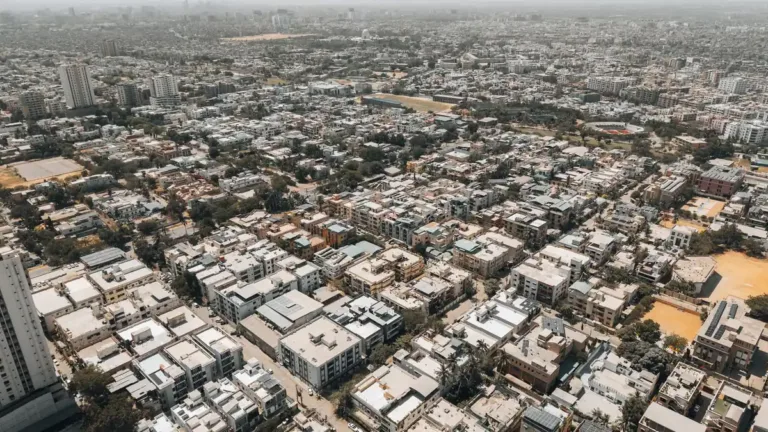
Most business visitors stay in Gulberg, around the Mall, in Defence or near the airport. All of those are well to the north-east of Sundar. The estate is out beyond the southern suburbs, on the road towards Raiwind, and PIEDMC puts it 7.5 km from the N-5 National Highway. In practice your morning drive is a crossing of Lahore’s southern half and then a run out along Sundar-Raiwind Road, not a quick hop.
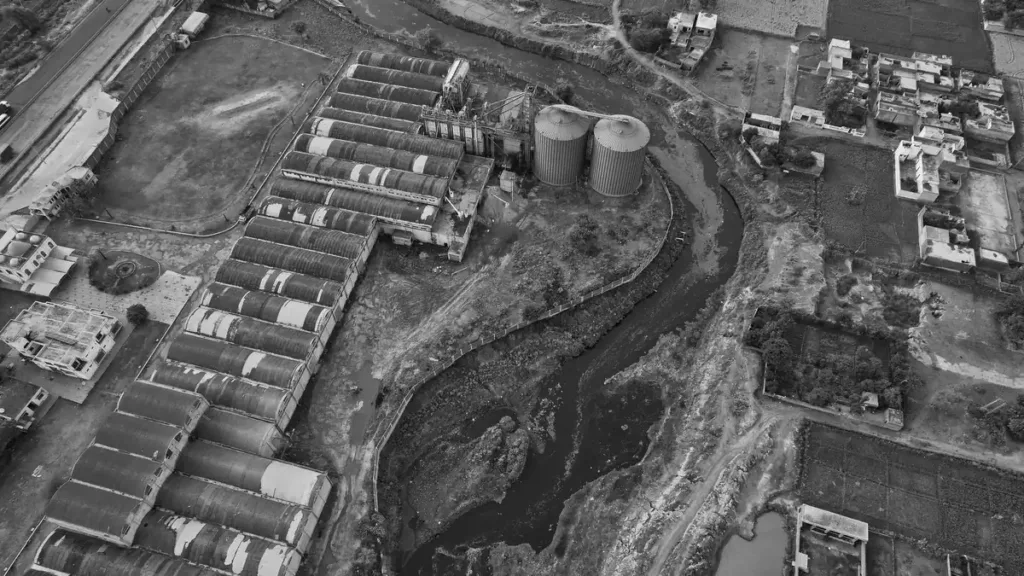
The estate itself is large. PIEDMC lists 1,763 acres in total, about 1,262 of them industrial plots, divided into 726 plots of between half an acre and six acres. It reports more than 560 factories in production and around 80,000 jobs. Sectors range from auto parts, pharmaceuticals and chemicals to textiles, garments, steel fabrication, food processing and cold storage. The estate’s own board of management quotes 566 factories in production, with more than 22 close to starting. Either way, you are not visiting a single building. You are entering a small industrial town with its own roads, gates and security system.
Quaid-e-Azam Industrial Estate: the in-town option
Quaid-e-Azam Industrial Estate is a different proposition. PIEDMC places it in Kot Lakhpat, in the township area at the centre of Lahore; the neighbourhood has Defence to the east and Township to the west. It is older, developed in the 1960s and 1970s, and smaller at 565 acres, with 517 functioning industrial units and around 50,000 workers, according to PIEDMC’s estate page. Its industries overlap with Sundar’s: textiles, dyeing and printing, auto parts, pharmaceuticals, food, plastics and chemicals, with dedicated zones for garments, packaging and wood products.
Because it is in town, the Quaid-e-Azam estate behaves much like any other Lahore business address for transport. The risk there is not distance but traffic at the wrong hour, especially around shift changes when tens of thousands of workers arrive and leave the same few gates.
A note on names
Plenty of Lahore addresses carry the Quaid-e-Azam name, so an email that just says “Quaid-e-Azam” is not an address. Ask for a map pin and the factory’s plot number before the day. A driver who knows Lahore well can still lose a good part of the morning circling an estate for the right plot.
Gate entry and visitor registration
Industrial estates in Punjab are not open business parks where you walk into reception. Both PIEDMC estates describe boundary walls with controlled access, and Sundar publishes its own security procedures. Its board lists an Integrated Security System, a general Security SOP and a separate SOP for foreign nationals. The administrative office is at Gate 2 on Sundar-Raiwind Road, and the estate runs a one-window desk for its resident industries.
The foreign-nationals SOP is published as a downloadable document, and procedures change, so read the current version rather than a summary. What matters for transport planning is simpler: the gate needs to know who is coming, and the factory is the party that tells it. That has three consequences for your car.
- The host usually registers the visit, not you. Ask your contact at the factory to confirm, in writing, what the gate needs from you: passport or CNIC, the names of everyone in the car, and whether the vehicle and driver must be named too.
- A different car at the gate can mean a delay. If the host has passed on one vehicle registration and a different car turns up for your return, the gate may hold it while it checks with the factory. A waiting car avoids that problem entirely.
- Foreign nationals should expect more checks, not fewer. The existence of a dedicated SOP tells you the estate treats foreign visitors as a separate category. Leave slack in the schedule and let the host deal with the paperwork before the day.
Carry the documents you would carry anywhere in Pakistan: original passport with visa, or CNIC or NICOP for Pakistani nationals, plus the host’s name, phone number and plot number written down, not just saved in a chat thread. A gate guard will want a name he can ring.
Why recall is slow from industrial zones
The appeal of a call-back is obvious. Drop the visitor, release the car, and pay nothing while the meeting runs. The trouble is that the car you released does not sit round the corner. It goes to its next job, and on the edge of Lahore the next job is almost always back towards the city.
Four things stack up against a quick return from Sundar:
- Distance. A vehicle that has gone back into central Lahore has to cover much of that 40 km again before it reaches the gate. That is the same journey you just made, in reverse, and then again.
- Thin local supply. Estates are full of vehicles, but most are staff buses, delivery trucks and company cars. On-demand ride supply follows passengers, and passengers live in the city. Apps that work well in Gulberg can show long waits, or nothing, on the Raiwind side.
- Shift traffic. Tens of thousands of workers move in and out at shift changes. If your meeting ends at the same time as a shift, your returning car meets the outbound tide at the gate.
- Finding you. A new driver needs the plot number, the right gate and permission to enter. Each of those is a phone call, and each call happens while you stand outside the factory.
None of this means a call-back never works. It means the uncertainty sits with you, the visitor, at the end of a long day, often with samples, a laptop and a flight to catch. That is the wrong place for it.
The exception: short, in-town meetings
At Quaid-e-Azam Industrial Estate the arithmetic changes. The return trip is short, the city’s supply of cars is close, and a one-hour meeting does not justify an hour of paid waiting if your schedule is loose. Book the return for a fixed time rather than “when we finish”, and give yourself a margin if you have anything time-critical afterwards.
Keep the car waiting or call back: the cost comparison
The question buyers ask is whether waiting time costs more than a second trip. It usually does not, once you count what a second trip actually involves. We will not quote rupee figures here, because rates change and depend on the vehicle, the day and the operator. Instead, compare the shape of the two options.
| Cost element | Car waits on site | Release and call back |
|---|---|---|
| Outbound journey | Paid once | Paid once |
| Return journey | Paid once | Paid once, as a separate booking |
| Time on site | Paid as waiting or hourly time | Not paid |
| Empty running to reach you | None | Often priced in, openly or not, when the pickup is far from the city |
| Risk of a late or missing car | Low: the driver is already at the gate | Sits with you |
| Gate re-registration | None | Possible if the vehicle changes |
| Luggage and samples | Stay locked in the car | Travel with you or go back with the first car |
The line people forget is empty running. A driver asked to collect you from the far side of the city, with no fare to take back out there, is doing two journeys for one payment. Operators handle that differently, but it rarely disappears. When you set it against the waiting charge for a two- or three-hour visit, the difference narrows sharply, and the waiting car wins on certainty.
A worked example, with made-up numbers
Example only, not a quote. Suppose a visitor leaves a Gulberg hotel at 8.30, has a 10.00 meeting at Sundar that runs to 12.30, and needs to be back for a 15.00 call. With a waiting car, the day is one booking: out, three hours on site, back. With a call-back, the visitor books a second car at around 12.00, then waits to hear whether anyone accepts a pickup so far out. If the first answer is a long wait, the 15.00 call is at risk, and the “saving” has cost the afternoon. The exact numbers will differ. The structure of the risk will not.
For what is normally inside a day or hourly booking, and what changes the price, our note on what a car with driver includes sets out the usual items: driver time, fuel, tolls, parking and overtime.
Multi-factory days and the lunch break
Sourcing trips rarely stop at one supplier. A garment buyer might see a stitching unit, a textile mill and a trims supplier in one day, and several of those may share an estate. A factory visit car with driver earns its money on days like this.
- Cluster by estate, not by supplier. Put every Sundar visit on the same day and every Kot Lakhpat visit on another. Crossing between the two estates twice in a day burns time for nothing.
- Get plot numbers for every stop in advance. Ask each host for its plot number and nearest gate, and send the list to the driver the evening before.
- Plan lunch on purpose. Hosts often offer lunch at the factory. If they do not, there is no reason to drive back into the city for it. Ask the first host what is nearby, and tell the driver so he can plan his own break.
- Let the driver eat too. A driver on a long day needs a proper meal and prayer time, particularly for the midday prayers. Agree a window at the start, rather than discovering at 13.30 that he needs a break you had not planned for.
- Build in a buffer before the airport. Sundar is 54 km from Lahore airport by PIEDMC’s figure. If you are flying out the same evening, the last factory should be the one nearest the route back, and the meeting should end with a real margin, not a hopeful one.
Groups add a twist. A delegation of six in two cars needs both drivers to know the full list of stops, and one person should hold the master schedule. If the group is larger than two cars, a van or minibus is often simpler than a convoy.
Faisalabad industrial estate visit and Sialkot: the same rule, further out
Many Lahore sourcing trips continue to Faisalabad or Sialkot. The logic above applies with more force, because the distances are intercity rather than cross-town.
Faisalabad
The name most buyers see on an itinerary is M-3 Industrial City, run by the Faisalabad Industrial Estate Development and Management Company (FIEDMC). FIEDMC describes it as sitting at the Sahianwala Interchange on the M-4 Motorway, south of Faisalabad, covering about 4,485 acres, adjacent to Allama Iqbal Industrial City and close to Faisalabad International Airport. The naming trips people up: despite the “M-3” in its title, the estate is on the M-4. The present M-3 motorway runs from Lahore south to Abdul Hakeem, and the old Pindi Bhattian to Faisalabad section became part of the M-4.
For a day trip from Lahore, book one car for the whole day. There is no sensible call-back between cities, and a driver who has done the run knows where to refuel and where the interchanges are. If you are staying in Faisalabad, our Faisalabad taxi and car hire page covers local and intercity bookings. For a family-friendly take on the same drive, our sister service Pakistan Taxi has a practical guide to organising a day of visits between Lahore and Faisalabad.
Sialkot
Sialkot’s exporters built their own airport. Sialkot International Airport was inaugurated in November 2007 as Pakistan’s first privately owned airport, built by the city’s business community, and it sits at Sambrial, about 14 km west of the city. If your suppliers are in Sialkot, flying straight in can mean you never need the drive from Lahore at all.
If your Sialkot suppliers are at separate addresses rather than inside one estate, a waiting car is even more useful, because every visit is its own pickup. Treat it as a driver day, with all addresses sent the night before.
Safety and official advice
At the time of writing, the UK FCDO travel advice for Pakistan does not place Lahore, Faisalabad or Sialkot in its areas where it advises against all or all but essential travel. Within Punjab, it advises against all but essential travel to Dera Ghazi Khan, and against all but essential travel within 5 miles of the India border, with exceptions for the Grand Trunk highway via the Wagah border and the Kartarpur Corridor. It also warns of an ongoing risk of terrorism and of planned protests and marches in several cities. Sialkot is close to the border, so check where each supplier actually is before you commit to the visit.
The advice is updated often, including for planned protests that can disrupt roads. Check it the day before, and ask your host whether anything is expected around the estate. A waiting car is also the simplest contingency if a protest or road closure changes your plans mid-afternoon: you have a vehicle and a driver who knows the alternatives.
Checklist before you confirm the booking
- Estate name, plot number, nearest gate and a map pin for every factory
- Host contact name and number, written down
- What the gate needs: passport or CNIC, passenger names, vehicle registration, driver details
- Start time, expected finish, and any hard deadline afterwards, such as a flight
- Waiting on site or a fixed call-back time, decided in advance
- Number of passengers and the amount of luggage or samples
- Lunch and prayer windows for you and the driver
- A check of the FCDO page the day before
With that list, the booking itself is quick. See our business travel car service for how corporate days are arranged, or the Lahore taxi and car hire page for single journeys around the city. When you are ready, send the details through the iDrive booking request form; we will come back with availability and a price for the day you have described, and nothing is fixed until you have confirmed it.
If your team runs similar site visits in the Gulf, our sister company Saudi Cab Co has a guide to site-visit transport for engineering and construction teams in Saudi Arabia.
Questions people ask
How far is Sundar Industrial Estate from Lahore airport?
PIEDMC gives the distance as 54 km from Lahore airport and about 40 km from the city centre. Journey time depends heavily on the hour and the route.
Can I get an app ride back from Sundar Industrial Estate?
Sometimes, but do not rely on it. Supply is thin on the edge of the city, and a new vehicle may need to be cleared at the gate. A waiting car or a pre-booked return is safer.
Where is Quaid-e-Azam Industrial Estate?
In Kot Lakhpat, in Lahore’s township area, between Defence and Township. It is the older, smaller estate, developed in the 1960s and 1970s, and much closer to central hotels than Sundar.
Do foreign visitors need anything extra to enter?
Sundar publishes a separate SOP for foreign nationals. Ask your host to register the visit and confirm in writing what the gate needs from you and your driver.