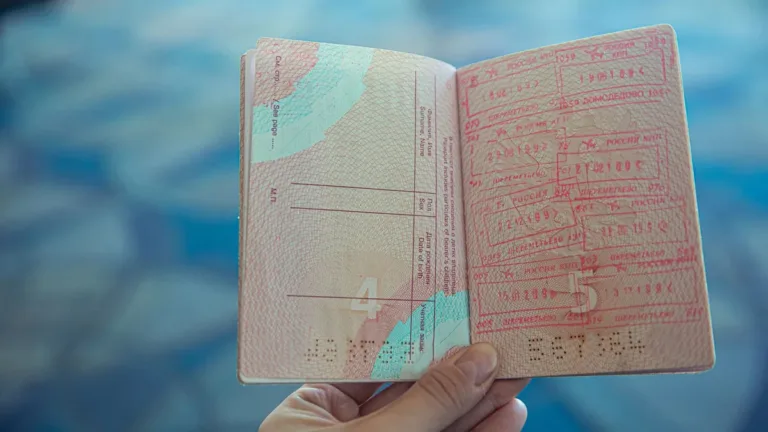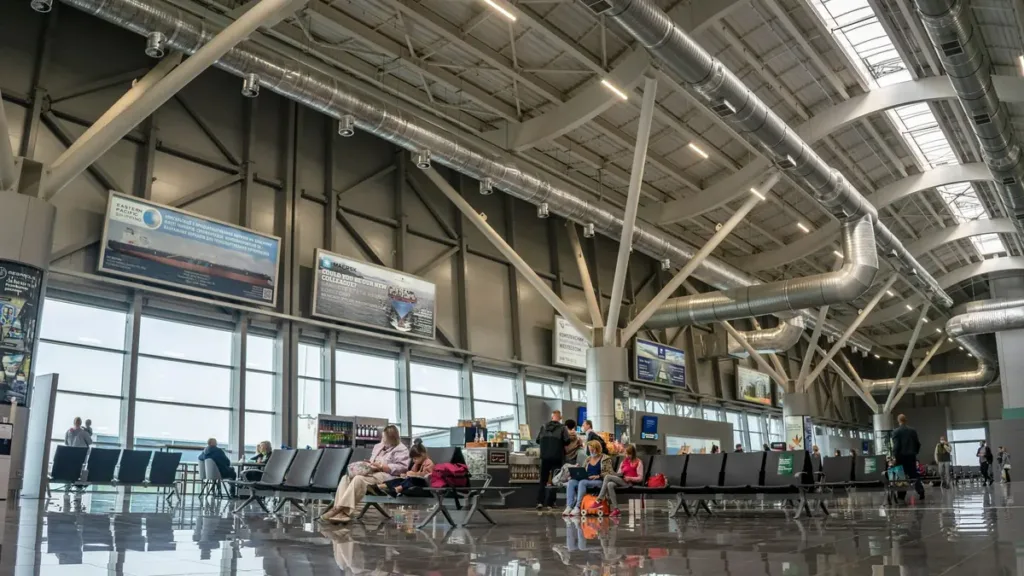
The Lahore airport waiting area for anyone collecting a passenger is not inside the terminal. Greeters and drivers wait on the landside: in the Arrival Concourse Hall that passengers walk into after customs, and in the car park beyond it, where meeter and greeter cars are allowed to park on a timed tariff. That physical fact should drive the waiting clause in any airport quote. A driver who is “waiting” at Allama Iqbal International Airport (LHE) is either standing at the concourse with a name board or sitting in a paid car park, and both cost time and money. So a quote that simply says “free waiting included” tells a buyer almost nothing. What matters is when the free period starts, how long it runs, what happens to parking fees, and at what point the driver is allowed to leave.
Decision summary for buyers
- Ask when the clock starts. “From scheduled arrival”, “from actual landing” and “from the passenger’s call” are three very different promises on a delayed international flight.
- Ask who pays for parking. The airport charges cars by time. A quote should say whether car park fees are included, passed through at cost, or excluded.
- Ask for the charging unit. Waiting beyond the free period is normally billed in blocks. You want the block size and the rate written down, not described as “reasonable”.
- Ask for the release rule. A good clause states how long the driver holds before contacting the booker, and what happens if nobody answers.
- Keep the driver’s contact route and the passenger’s contact route separate. Two numbers that reach the right people at the right hour will rescue more pickups than an extra fifteen free minutes.
Where greeters and drivers wait at Lahore arrivals
The Pakistan Airports Authority portal for Lahore sets out the passenger’s route in plain steps. International arrivals enter the International Arrival Lounge by boarding bridge or bus, clear immigration, collect bags from the assigned belt, go through customs, and then, in the portal’s words, “may proceed to the Car Park Area upon Exit or avail the cab / taxi services” or walk to the Pedestrian Exit Gate. Domestic passengers follow a shorter version and “Exit to the Arrival Concourse Hall”. You can read the full sequence on the airport’s arrival process flow page.
For a pickup, that gives you three realistic meeting points:
- The Arrival Concourse Hall. This is where a named greeting normally happens. The airport says cab reservation counters operate round the clock in the International Arrivals, Domestic Arrivals (Level-I) and the Concourse Hall, which tells you the hall is a working, staffed public space rather than a quiet corner.
- The car park. The airport’s car parking page states that the car park is available “for the meters / greeters vehicles (Cars)” as well as for passengers and staff, and that a drop lane is also available. The drop lane is for dropping off, not for a driver to idle while a flight is delayed.
- The Pedestrian Exit Gate. Useful when a driver cannot bring the car close, but it is a longer walk with luggage and needs a precise description in the booking notes.
Security checks on the way in
Drivers do not simply roll up to the doors. The airport’s entrance security page says the Airports Security Force carries out under-vehicle searches at vehicle check points and body searches for pedestrians, and that people entering may be asked to show a CNIC, airline ticket, passport or airport entry pass. The Airports Security Force is the body mandated to secure Pakistan’s civil airports. For quote wording this matters in one way: the time a driver spends queuing at a check point is time the operator has already spent before your passenger lands. Sensible operators build that into when they set off, not into your bill.
Describe the meeting point on the day, not from memory
Terminals change. Kerbs get coned off, signage moves and a pillar that made a good landmark last year may be behind hoarding this year. If your passenger has not flown into Lahore recently, the booking should carry a meeting point the driver confirms on the day of arrival, ideally with a photo sent by message once the driver is in position. That costs nothing and removes the most common cause of “waiting” that is really two people standing fifty metres apart.
Parking time and fees while the driver waits
Lahore charges car parking by time, and the published structure rewards short stays. When we checked the airport’s parking page in September 2026, the tariff read as follows (the page’s own column headings are “For Every Three Hours” and “For Every Hour Exceeding 1st Three Hour”). The page carries no effective date, so treat these as indicative and confirm at the barrier on the day.
| Vehicle | Opening three-hour block | Each hour after the first three |
|---|---|---|
| Car | Rs. 100 | Rs. 30 |
| Motorcycle | Rs. 15 | Rs. 5 |
Two practical points follow. First, parking at LHE is cheap relative to the cost of a driver’s time, so a quote that excludes parking is not hiding much money. It is hiding a principle, though, and a corporate account needs principles written down. Second, the three-hour first block means most pickups, even with a moderate delay, sit inside one parking charge.
Example, for illustration only: a driver parks an hour before the scheduled landing, the flight lands three hours late, and the passenger reaches the hall an hour after touchdown. That is five hours in the car park: on the published car tariff, Rs. 100 for the opening three hours plus two further hours at Rs. 30, or Rs. 160 in all. A small sum. The larger question is the driver’s five hours, which is where waiting charges, not parking, decide the bill.
A clean quote handles parking in one of three ways, and should say which:
- Included: parking is absorbed in the fare up to the free waiting limit. Simple for the buyer.
- Passed through at cost: the actual car park charge is added, ideally with the ticket or a photo of it as evidence.
- Excluded: the passenger pays at the barrier. Workable for private travellers, awkward for corporate guests who should not be asked for cash at the exit.
Lahore airport arrivals waiting time: touchdown to kerb
The waiting clause should reflect the fact that “landed” and “ready to be met” are separated by a sequence the driver cannot speed up. On an international arrival at Lahore, the airport lists these stages:
- Disembarkation by boarding bridge or bus.
- Immigration, where desks are split into categories, including a lane for overseas Pakistanis and card holders, one for foreigners, one for senior citizens and special persons, and one for women travelling alone or with children. The airport also notes a special desk for overseas Pakistani passengers available 24×7.
- Baggage claim, with free trolleys and an optional paid porter service. The airport’s passenger facilitation page lists porter charges of Rs. 400 for international and Rs. 200 for domestic passengers, booked through the Passenger Facilitation Services counters near the baggage area in the arrival lounges.
- Customs, through the red channel for anyone with goods to declare or the green channel for those without, with spot checks and X-ray scanning.
- Exit into the concourse hall or out towards the car park.
The airport does not publish typical clearance times, and nobody honest can give you a fixed figure. A family returning from the Gulf with several checked bags, a first-time foreign visitor answering immigration questions, and a domestic passenger with hand luggage only will each take very different lengths of time to reach the hall. That variability is the whole reason the clock-start definition in your quote matters more than the headline number of free minutes.
Domestic versus international
Domestic arrivals skip immigration and customs, so the gap between landing and meeting is usually shorter. A corporate waiting policy can reasonably treat the two differently, and many buyers will prefer a quote that states separate free periods for each rather than one blended figure.
Free waiting time on an airport pickup: what the number should mean
There is no regulated standard for free waiting on private airport transfers in Pakistan. Each operator sets its own. That means the figure on a quote is only comparable once you know the rule behind it. The table below sets out the three common ways the free period is anchored and what each one does to a delayed flight.
| Clock starts at | What it protects | Where it fails | Best suited to |
|---|---|---|---|
| Scheduled arrival time | The operator’s planning. Simple to administer. | A flight that lands late eats the free period before the passenger is even off the aircraft. | Short domestic hops with reliable timings. |
| Actual landing time (flight tracked) | The passenger. Delays do not use up the allowance. | Relies on the operator checking live flight status and adjusting the driver’s timing. | International arrivals and most corporate bookings. |
| Passenger’s call or message after collecting bags | Both sides, when it works. The driver moves only when the guest is ready. | A guest with no local SIM or no data cannot make the call. | Experienced travellers with a working phone plan. |
For international arrivals at LHE, a clock anchored to actual landing is the fairest default, because the immigration, baggage and customs stages all happen after touchdown. Live flight status for Lahore is published on the airport’s own flight schedule page, so there is no technical excuse for an operator not to track it.
Example, for illustration only: suppose two quotes both promise “60 minutes free”. Quote A counts from scheduled arrival; Quote B counts from actual landing. The flight lands 50 minutes late. Under Quote A, the passenger has about ten free minutes left to clear immigration and collect bags. Under Quote B, the full hour is still available. Same headline, very different product.
What free waiting does not cover
Free waiting is time, not service. It does not by itself include a name board, porter help, a driver who comes inside the concourse, or parking. If those matter to your guest, the booking should list them. Our guide to what a car with driver includes and what changes the cost sets out which extras usually move the price.
How driver waiting charges in Pakistan are billed
Once the free period ends, waiting becomes chargeable. The mechanics vary by operator, so the quote should spell out four things rather than leave them to the invoice:
- The billing block. Quotes that charge waiting in fixed increments rather than by the minute need the increment stated. A block that is long relative to the likely overrun can make a short delay expensive. Ask for the block length in writing.
- The rate per block and the currency. For overseas bookers paying in pounds, dirhams or dollars, confirm whether the waiting rate is fixed in that currency or converted from rupees at invoicing.
- Whether a cap applies. A cap limits exposure on a badly delayed flight. Without one, the only limit is the release rule.
- How it is evidenced. Driver arrival time, passenger meeting time and any parking ticket should be recorded, so a waiting charge can be checked against the flight’s actual landing time.
Two further items belong in the same paragraph of the quote. Tolls and parking should be listed as included or extra, so they are not confused with waiting. And any tax on the service should appear as its own line, so the buyer can see whether the quoted figure is gross or net and the waiting charge can be checked on the same basis.
Writing a corporate quote waiting policy for Lahore
A corporate quote waiting policy has to survive two tests: the finance team must be able to check an invoice against it, and the driver must be able to act on it at eleven at night without phoning three people. Vague adjectives fail both tests. Numbers, triggers and named contacts pass them.
The wording below is an example structure, not iDrive’s standard terms. The bracketed values are placeholders for you and the operator to agree.
Waiting. For international arrivals at Allama Iqbal International Airport, free waiting of [X] minutes applies from the flight’s actual landing time as shown on the airport’s published flight status. For domestic arrivals, free waiting of [Y] minutes applies from actual landing. Waiting beyond the free period is charged at [rate] per [block] minutes, capped at [amount] per booking unless the booker approves further waiting.
Parking. Car park charges at LHE are [included up to the end of free waiting / passed through at cost with the ticket / excluded].
Contact and release. If the passenger has not been met [Z] minutes after the end of free waiting, the driver contacts the passenger, then the booker’s named contact. If neither responds within [W] minutes, the operator may release the vehicle, and the booking is treated as [no-show / chargeable waiting only].
Flight changes. A new flight number or date notified by the booker before [cut-off] is treated as an amendment, not a cancellation.
Three details make that clause work in practice:
- Name the booker’s contact. A travel desk number that goes to voicemail at night is not a contact. Give the operator a person or an on-call line.
- Record the passenger’s reachable number. Foreign visitors and many overseas Pakistanis arrive without a working local SIM. A WhatsApp number that works on Wi-Fi or a roaming data plan is often the only reliable route in the first half hour, so ask the guest which it will be before they fly rather than assuming connectivity out in the car park.
- Keep amendments separate from cancellations. The general cancellation and no-show terms that apply to iDrive bookings are set out in our terms of hire; the waiting clause should sit alongside them without contradicting them.
Long delays: hold, release or rebook
When a flight into Lahore slips by hours rather than minutes, the question stops being about free waiting and becomes a small operational decision. The right answer depends on how late, how certain the new time is, and what the guest needs on arrival.
| Situation | Usually sensible | What to confirm with the operator |
|---|---|---|
| Delay under the free period, landing time firm | Hold. The driver adjusts arrival to the new time. | That the clock is anchored to actual landing. |
| Delay of a few hours, new time published | Release and return. The driver leaves the car park and comes back for the revised time. | Whether a return counts as the same booking or a new one. |
| Delay with no reliable new time | Pause the booking and reconfirm once the airline publishes a time. | Who watches the flight and who calls whom. |
| Diversion or overnight cancellation | Rebook for the new day or the new airport. | How the original booking is treated under the cancellation terms. |
| VIP or security-sensitive guest | Hold continuously and accept the waiting cost. | The cap, and who can approve waiting beyond it. |
For senior guests, the cost of an empty kerb is almost always higher than a few extra blocks of waiting. For a solo traveller on a flexible budget, release-and-return is often the better trade. The point is to decide in advance, in writing, so the driver is not improvising at the barrier.
Briefing the passenger, not just the driver
A waiting clause protects the booker. A good briefing protects the guest. Before travel, send the passenger four lines: the driver’s name and number, the agreed meeting point (concourse hall or a named spot at the car park), what to do if nobody is visible after exiting customs, and a reminder that porters should only be taken from the official PFS counters, as the airport advises, with the printed slip kept by the passenger.
Families and first-time visitors who want a friendlier walk-through of the arrivals hall, luggage and meeting points may find the Lahore airport journey guide from our sister service Pakistan Taxi useful to forward alongside the booking. Travellers flying on to the Hajj or Umrah can compare how pickup waiting works on the other side in the guide from our sister company Hajj Umrah Taxi, comparing pickup wait times at Madinah and Jeddah airports.
Next step
If you are pricing a Lahore arrival, put the flight number, the passenger’s reachable number and your preferred waiting and parking rules into the request, and ask for them to be reflected in the quote. You can start on our Lahore airport taxi and transfers page, or use the booking page to send the journey details. Onward travel and day hire inside the city are covered on our taxi and car hire in Lahore page. Quotes are subject to confirmation of vehicle and driver availability, and the waiting terms that apply are the ones written on the quote you accept.
Questions people ask
Can a driver wait inside the terminal at Lahore airport?
The airport’s published arrival flow has passengers exit to the Arrival Concourse Hall and then to the car park, cab services or the Pedestrian Exit Gate. Meeting normally happens in the concourse hall or at the car park, not in the baggage hall.
How much does it cost to park while waiting at Lahore airport?
The airport’s parking page listed Rs. 100 for a car’s first three hours and Rs. 30 for each hour after that when we checked in September 2026. Tariffs change, so confirm at the barrier or on the airport’s page.
Is there a standard free waiting time for airport pickups in Pakistan?
No. Operators set their own. Compare quotes on when the free period starts, whether it differs for domestic and international flights, and what happens after it ends.
What should happen if my flight is several hours late?
Your quote should say whether the driver holds, leaves and returns, or pauses the booking until a new time is confirmed, and who must approve extra waiting. Agree it before travel rather than at the car park barrier.