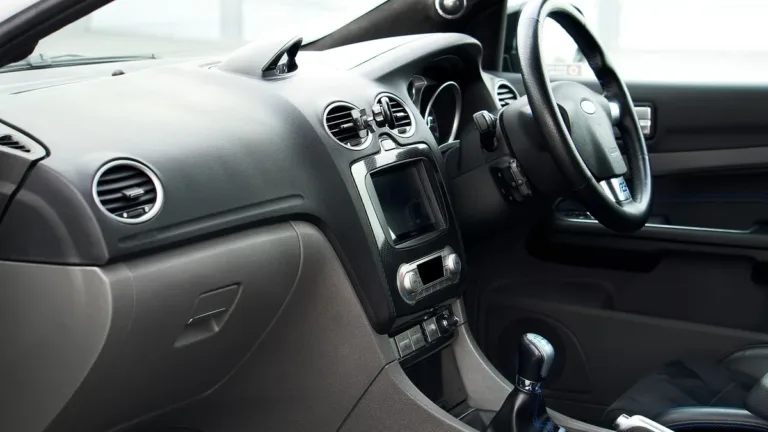
Car rental insurance in Pakistan is three separate questions dressed up as one: what cover the law makes the vehicle carry, what extra cover the rental supplier has bought on top, and what your company’s own policies and the traveller’s travel insurance will or will not pay. For a company-funded self-drive hire, the person approving the spend should assume nothing overlaps until a document proves it. Ask the supplier for the vehicle’s insurance certificate and policy schedule, confirm the named or permitted drivers, get the excess (deductible) in writing, and check whether the planned route sits inside the policy’s territory. Then compare that against your employer liability, fleet or travel policy wordings. Where the gaps cannot be closed before departure, a car with a driver usually costs less in management time than the risk you would otherwise carry.
What follows is written for the finance lead, travel manager or line manager who signs off the hire, not for the driver. It sets out where each layer of cover starts and stops, and the paperwork that turns assumptions into facts.
Car rental insurance Pakistan checklist: the budget holder’s decision
- Approve when you hold the insurance certificate, the policy schedule with the excess stated, confirmation that your traveller is a permitted driver, and a route that sits inside both the policy territory and your own travel-risk policy.
- Approve with conditions when the excess is high but your corporate policy or a separate excess product covers it, and you have that in writing from your broker, not from a sales page.
- Switch to a car with driver when the traveller holds only a foreign licence without the right permit, when the route runs into areas where the UK government advises against travel, or when nobody can tell you who pays for damage to the hired vehicle.
If you are still deciding between the two models, our breakdown of self-drive versus a car with driver in Pakistan covers the operational trade-offs; this guide stays on the insurance side.
The legal minimum: third party insurance for a Pakistan car
Two bodies of law matter to a hirer. Provincial motor vehicles legislation, built on the Motor Vehicles Ordinance 1965, governs cars on ordinary roads; ask your broker to confirm what it requires for the province you are driving in. On national highways and motorways, the National Highways Safety Ordinance 2000 sets a clear rule of its own.
Section 41 of the National Highways Safety Ordinance 2000 says no owner may use, or permit to be used, a road vehicle on a national highway unless it is covered by “No Fault Accident Compensation” insurance from a registered insurance company. The same section explains why it is called no-fault: a claimant does not have to prove the death or permanent disablement resulted from the driver’s fault. Section 58 requires the driver to produce the driving licence, certificate of insurance and registration certificate when a police officer asks for them.
Two practical conclusions follow for a corporate hire:
- Legal minimum cover protects other people, not your hired car. Third-party and no-fault compensation cover exist so that injured people have a route to payment. They are not designed to repair the vehicle your employee was driving.
- The certificate has to travel with the car. If the vehicle is stopped on the M-2 or the N-5 and the paperwork is missing, the delay falls on your traveller’s schedule. Ask the supplier to confirm the certificate is in the glovebox, and keep a photo of it on file.
A company should not treat “the car is legally insured” as an answer to anything except the first, narrowest question. It says nothing about who pays when your employee reverses into a gate pillar in Gulberg.
Comprehensive insurance on a rent a car: the excess is the real number
When a supplier says a vehicle carries comprehensive insurance, it normally means the policy also responds to damage to, or theft of, the insured vehicle itself, not only to third parties. That is the layer your company actually cares about. It is also where most of the ambiguity lives, because “comprehensive” is a sales word until you see the schedule.
Three figures decide your exposure:
- The excess or deductible. The amount the policyholder pays before the insurer pays anything. On a rental, the supplier is the policyholder, so the question becomes: how much of that excess does the rental agreement pass on to the hirer?
- The security deposit. Often set with the excess in mind. A deposit is not a cap on liability unless the agreement says it is.
- Loss-of-use and administration charges. Some agreements charge for the days a damaged car is off the road, whether or not the insurer pays for the repair. These sit outside the insurance entirely.
Ask for all three in writing before the booking is confirmed. A useful test: if the car were written off on day two, what is the largest single invoice your company could receive? If the supplier cannot give a figure, you have not yet bought insurance in any meaningful sense; you have bought a hope.
Who is the policyholder, and why it matters
In almost every rental, the insured party is the vehicle owner, meaning the rental company or the individual owner behind a marketplace listing. Your employee is at best a permitted driver. That affects claims: the insurer’s contract is with the supplier, so any surveyor visit, repair authorisation or settlement runs through them. Your company’s leverage comes from the rental agreement, not the insurance policy. Read those two documents side by side.
What rental car insurance in Pakistan policies can exclude
Motor policy wordings vary between insurers, and there is no single standard schedule you can assume. Rather than trust a summary, have someone read the exclusions clause of the actual policy for the car being hired. These are the headings that matter most for a business traveller.
Unlisted or unlicensed drivers
If the policy or the rental agreement names permitted drivers, anyone else at the wheel may void the damage cover for that trip. Colleagues swapping driving duties on a long run from Islamabad to Lahore is exactly the scenario that catches companies out. Name every person who might drive, and get each name accepted in writing.
Licence validity sits in the same bucket. A UK visitor needs both a UK licence and the 1968 international driving permit, according to the UK government’s Pakistan travel advice. A driver who does not hold what the law requires is a claims problem waiting to happen. Our guide on driving in Pakistan with a UK licence sets out the licence side in more detail.
Territory: northern areas and mountain roads
Some suppliers restrict where a self-drive car may be taken, and some policies define a geographic limit. If the trip goes anywhere near Gilgit-Baltistan, the Karakoram Highway or the upper Kaghan and Neelum valleys, raise it by name, because that is where road conditions and recovery distances make an underwriter or a supplier most likely to say no. Note too that the FCDO currently advises against all travel on the Karakoram Highway between Mansehra and Chilas, which feeds straight into the travel insurance problem covered below. It also notes that outside the main motorways road quality varies and conditions can be poor, that many mountain routes in the north are seasonally inaccessible, and it recommends experienced local drivers for remote areas.
Put the full itinerary in the booking request, including any day trips, and ask the supplier to confirm in writing that every leg is inside the permitted area.
Off-road use, commercial use and conduct
- Unmade tracks and river crossings. A jeep track to a site visit may count as off-road even if locals drive it daily.
- Carrying goods or fare-paying passengers. Moving stock samples or equipment may fall outside a private-use policy.
- Driving under the influence, racing or dangerous driving. Standard grounds for refusal nearly everywhere.
- Keys left in the car or an unlocked vehicle. Often a condition of theft cover.
- Tyres, glass and underbody. Sometimes excluded or subject to their own excess, which matters on broken rural surfaces.
Mapping the three layers: supplier, employer and travel cover
The reason company-funded hires go wrong is not usually a lack of insurance. It is that three policies each assume one of the others is doing the work. Lay them out next to each other before the trip and the gaps become obvious.
| Risk | Supplier’s motor policy | Employer’s own policies | Traveller’s travel insurance |
|---|---|---|---|
| Injury or damage to third parties | The legal-minimum layer; confirm it is in force | Possibly, under a liability or fleet wording that extends to hired vehicles abroad; ask your broker | Often limited or excluded for motor use; read the personal liability section |
| Damage to the hired car | Only if the car carries own-damage (comprehensive) cover; hirer may owe the excess | Only if a hired-in vehicle extension exists and covers Pakistan | Some policies offer rental excess cover as an add-on; many do not include it by default |
| Theft of the hired car | Usually within comprehensive cover, subject to key and parking conditions | Rarely, unless specifically extended | Rarely |
| Employee’s own injuries and medical costs | Not the purpose of a motor policy | Depends on your employer’s liability, business travel or personal accident cover | Core medical cover, subject to its terms |
| Travel to areas under government advice against travel | Governed by the policy territory | Many corporate travel policies follow government advice; check yours | The FCDO warns cover could be invalidated |
Treat every cell as a question, not an answer: your actual wordings may be broader or narrower, and only the documents settle it.
Does travel insurance cover a rental car?
Sometimes, partly, and rarely in the way a finance team hopes. Travel policies are built around medical emergencies, cancellation and belongings. Cover for damage to a hired car, if it exists, tends to be an optional extension with its own limit, and cover for injuring someone else while driving is often carved out of the personal liability section altogether. Ask the insurer a direct question in writing: “Does this policy pay the rental excess for a self-drive car hired in Pakistan, and up to what amount?”
There is a second, bigger issue. The FCDO’s warnings and insurance page for Pakistan states that travel insurance could be invalidated if you travel against its advice. At the time of writing, the FCDO advises against all travel to the whole of Balochistan and to a list of Khyber Pakhtunkhwa districts, including Peshawar and Swat, and against all but essential travel to other areas including Azad Jammu and Kashmir and parts of Sindh. These lists change, so check the live page on the day you approve the trip, and again the day before departure.
Where the employer’s cover fits
If your company already runs a UK or Gulf fleet, its motor policy may include a hired-in vehicle clause. Those clauses are usually written with the home country in mind. The two questions to put to your broker are whether the extension applies to vehicles hired in Pakistan, and whether it pays out when a local policy already exists or only above it. Get the answer on letterhead or by email from the broker, and file it with the booking.
Business travel policies differ again. Many are strong on medical evacuation and security assistance and weak on motor liability.
The claims process: police report, surveyor and the first 24 hours
A claim is won or lost in the hour after the bump, which is precisely when your traveller is least likely to be reading a policy. Give them a one-page card before departure. The legal duties on national highways are specific: under sections 59 and 61 of the National Highways Safety Ordinance, a driver involved in an accident must stop, give their name and address and the owner’s address to anyone affected, take reasonable steps to get medical help for anyone injured, and, if no uniformed officer is present, report the occurrence at the nearest patrol post as soon as possible and in any case within 24 hours. The motorway police (NHMP) run those patrol posts.
Off the national highways, report to the local police station. Either way, the sequence for your traveller looks like this:
- Make the scene safe and deal with injuries first. The ordinance requires the driver to park so the vehicle is not a hazard and to put out warning signs.
- Photograph everything. Vehicles, number plates, road markings, damage close up and from a distance, and the other driver’s licence and insurance certificate if offered.
- Call the supplier before agreeing to anything. If the other party proposes a cash settlement at the roadside, your employee should not pay or sign on the company’s behalf without the supplier’s instruction.
- Get the report reference. Insurers generally want evidence that the incident was reported to the police. Ask the supplier which document their insurer needs, whether a patrol post entry or a formal police report, and make sure your traveller leaves with a reference number.
- Keep the car where the supplier says. Many insurers send a surveyor to inspect before repair. Moving or repairing the car without permission can compromise the claim.
- Notify your own broker the same day. Most policies carry a notification condition, and missing it hands the insurer an argument you did not need to give them.
If the insurer refuses or stalls
Because the supplier holds the policy, a dispute over the car’s own damage is usually theirs to pursue, while your company’s exposure is set by the rental agreement. For a claim you or your employee have directly against a Pakistani insurer, the Federal Insurance Ombudsman handles grievances against insurance companies, including non-payment of claims, and has opened regional offices including Multan and Peshawar. Insurers themselves are licensed by the Securities and Exchange Commission of Pakistan, which also licenses insurance surveyors. Checking that the named insurer on the certificate appears in SECP’s licensing records is a quick diligence step worth doing before you sign.
Documents to request from the supplier before you sign off
Paste this list into the procurement email. A professional supplier should send it without fuss.
- Insurance certificate for the specific vehicle, showing the insurer, policy number, vehicle registration and validity dates covering the whole hire.
- Policy schedule stating the type of cover (third party only, or comprehensive), the excess or deductible, and any separate excesses for glass, tyres or theft.
- Exclusions clause from the policy wording, not a summary.
- Permitted drivers confirmation, naming each employee who may drive and the licence each must hold.
- Territory confirmation covering every leg of the itinerary, including day trips.
- Registration certificate copy, and confirmation that the original is in the vehicle.
- Rental agreement with the deposit, the hirer’s maximum liability for damage, loss-of-use charges and the accident procedure written out.
- Breakdown and recovery arrangements, with a number that answers outside office hours.
- Handover condition report with photographs, to be signed at collection and at return.
Our terms of hire set out how responsibilities are allocated when a hire is arranged through iDrive, and the self-drive car rental page explains what to include in a request so the supplier can answer these points before a quote is accepted. Availability and terms depend on the supplier and vehicle, so treat every quote as provisional until those documents arrive.
When a car with driver takes the insurance question off your desk
For a lot of corporate trips, the cleanest insurance decision is not to self-drive at all. With a chauffeured vehicle, the operator is responsible for the car and the driver, and your employee is a passenger. The questions do not disappear, but they get shorter: is the operator’s vehicle insured for commercial carriage of passengers, and does your travel or personal accident cover protect the employee as a passenger?
That model tends to win on cost of risk when:
- the traveller is on a short visit and does not hold the permit the FCDO says UK licence holders need;
- the itinerary includes motorway runs plus city meetings, where parking and night driving add exposure without adding value;
- the route heads north, where the FCDO itself recommends experienced local drivers for remote areas;
- several colleagues would otherwise share the wheel, multiplying the named-driver problem.
Our business travel car service is built around those trips, with a driver, a meeting-by-meeting plan and a single point of contact. If the traveller is visiting family rather than clients, our sister service Pakistan Taxi, which runs on the same iDrive network, offers car and driver hire for family and private trips. Either way, you can send the journey details for a quote; confirmation depends on the operator and vehicle available for your dates.
Questions people ask
Is third-party insurance compulsory for cars in Pakistan?
On national highways, the National Highways Safety Ordinance 2000 requires “No Fault Accident Compensation” insurance from a registered insurer, and provincial motor vehicles law governs cover on other roads. Legal-minimum cover protects other people; it does not pay for damage to the hired car itself.
Who pays the excess if a rental car is damaged?
Whoever the rental agreement says. The supplier is normally the policyholder, but the agreement often passes some or all of the excess to the hirer. Get the maximum figure in writing before approving the hire.
Does travel insurance cover a rental car in Pakistan?
Not by default. Rental excess cover, where offered, is often an add-on with its own limit, and cover can be invalidated if the traveller goes against FCDO advice. Ask the insurer in writing.
Do we need a police report to claim?
On national highways the driver must report an accident at the nearest patrol post within 24 hours if no officer is present. Ask the supplier which report their insurer requires, and make sure your traveller keeps the reference.