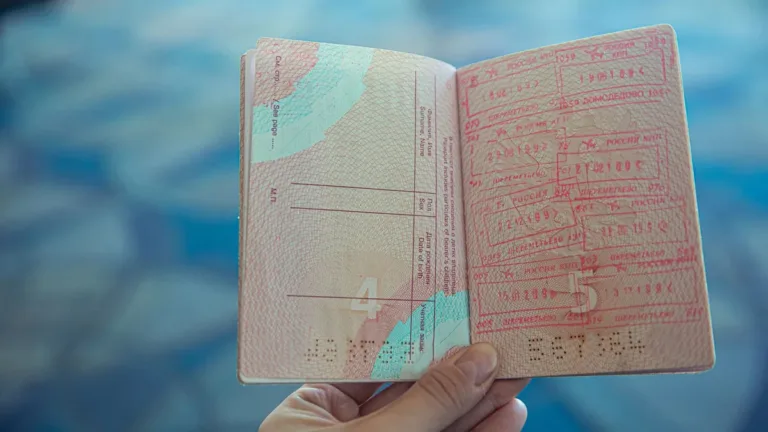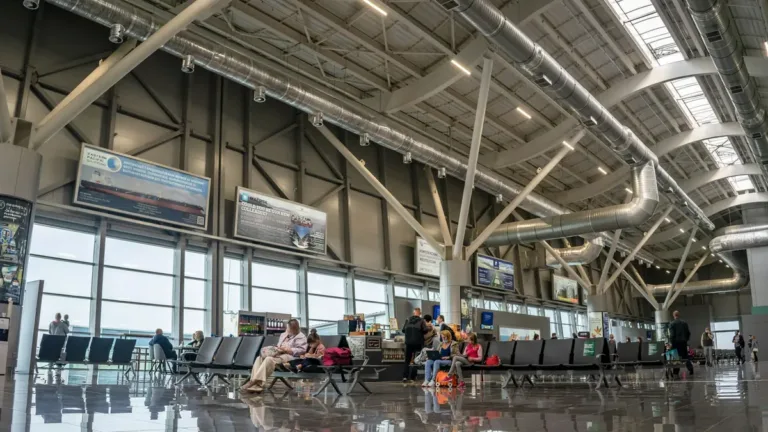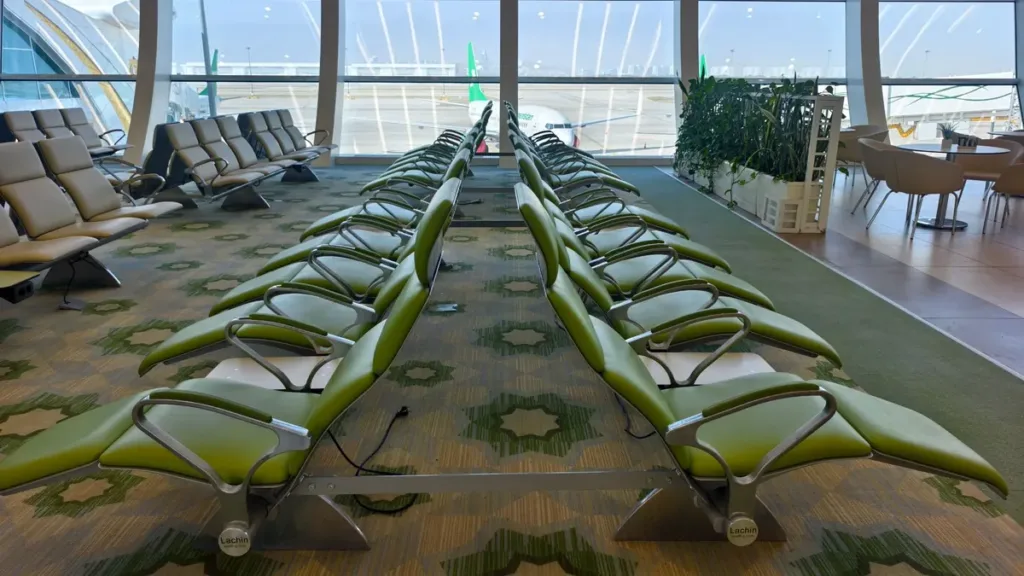
What suppliers sell as VIP protocol Islamabad airport service covers half the job. The arrival comes in two parts, and most delegations only buy one. The first is the airside part: someone meets the principal close to the aircraft or the immigration hall, speeds them through formalities and walks them out. The second is the landside part: the cars at the kerb, who sits in which one, and who takes the delegation from the protocol officer at the terminal door. Protocol agencies sell the first. The second is where arrivals go wrong, because nobody is named to receive the group when the airside escort’s job ends at the glass. This brief covers how to commission both halves so they meet at a single, named handover point, with a seat plan, a convoy order and a timeline that everyone on both sides of the door has read.
The short version: confirm who is actually allowed airside (fewer people than you think), fix one handover point at the arrivals kerb, give every passenger a vehicle and seat before the flight lands, and put one person in charge of the whole movement from on-blocks until the last car pulls away.
Decision summary: what VIP protocol Islamabad airport arrivals actually need
Before calling anyone, decide which of these the visit requires. The answer drives cost, lead time and the number of people who need clearance.
| Element | Who delivers it | When it is needed | What to confirm in writing |
|---|---|---|---|
| Government or state protocol | The host ministry or the sponsoring government department | Official visits by ministers, state guests and senior officials | Which officer meets the principal, and where their responsibility ends |
| Commercial airside assistance (meet at gate, fast-track) | A licensed ground-handling or assistance provider working with the airline and airport | Senior business visitors, elderly principals, large baggage loads | Name of the agent, pass held, exit door they will use |
| Landside ground transport | The transport provider, for example iDrive | Every delegation | Vehicle list, drivers, seat plan, kerb position, lead contact |
| Security escort | Police (where arranged by authorities) or a licensed security company engaged by the client | High-profile principals, or when a security adviser recommends it | Escort vehicle position in the convoy, phone or radio contact, route |
| Lounge access | Airport or airline lounge | Mainly on departure | Eligibility by ticket class, walk-in fee, location |
Most commercial delegations need rows two and three. Row four is a judgement call covered later. Row one is not something a private company can buy; it is extended by the host government to its own guests, and the host decides where it ends.
Airside versus landside: where VIP service at Islamabad airport starts and stops
Islamabad International Airport sits in Fateh Jang, Attock District, roughly 25 km south-west of the capital, and took over from the old Benazir Bhutto airport in May 2018. It is managed by the Pakistan Airports Authority, while security inside the airport boundary belongs to the Airport Security Force (ASF). That split matters for anyone buying VIP service at Islamabad airport, because it decides who can stand where.
Airside: controlled by pass, not by budget
Everything beyond the security line is a restricted area. ASF’s access-control guidance says an Airport Entry Pass (AEP) is issued to people who need authorised access to the security restricted area, that it is non-transferable, and that it is valid only for the specified area while on duty. Getting one is slow by design: the application needs a covering letter signed by the head of the employing department, a security clearance and attested copies of the applicant’s NIC and departmental ID card. In practice your delegation manager, your driver and your local fixer will not be walking up to the aircraft door. Whoever meets the principal airside must already hold a pass for that zone through their employer.
ASF is equally clear about visitors: they are generally kept out of restricted areas, with narrow exceptions such as seeing off or receiving passengers on wheelchairs or stretchers, or an unaccompanied child. Passengers reach the departure briefing area on a valid ticket plus CNIC or passport.
The VIP lane is not for sale
Buyers sometimes ask for “the VIP lane”. The ASF FAQ states that VIP lanes exist to secure high dignitaries of the Government of Pakistan and that only officers of BPS-20 and approved dignitaries may use them. A commercial fast-track product is a different thing, however it is marketed. If a supplier implies they can put a private business delegation through the state lane, that is your cue to ask harder questions, not to sign.
Landside: where your plan has to be tight
The arrivals kerb, the car park and the approach roads are public, but they are policed. ASF’s security instructions ask meeters and greeters to keep numbers to a minimum, carry photo ID and observe drop-lane discipline: no parking in the drop lane, and vehicles in no-parking areas are removed at once. The FAQ adds that with a private vehicle only three people, including the driver, are allowed with one passenger. The airport’s own parking page lists a Rs. 1,000 fine for vehicles lifted from no-parking areas. A four-car convoy idling at the kerb for forty minutes is precisely what those rules exist to stop.
Who does what: roles to name before anyone books a car
Airport protocol services in Pakistan fail most often at the seams between organisations, not inside any one of them. Name a person, not a company, for each role below, and put their mobile numbers on one sheet.
- Movement lead. One person, usually on the client side, who owns the whole arrival and can say yes or no on the day. Everyone else reports to them.
- Airside contact. The protocol officer or assistance agent who meets the principal. They need the flight, passenger names as they appear on passports, and the exit door where they will hand over.
- Landside lead. The transport provider’s supervisor at the kerb. On an iDrive job this is the person who holds the vehicle list and calls cars forward from the car park.
- Baggage lead. Someone who stays with the checked bags through reclaim and customs. Islamabad airport’s passenger guidelines tell travellers to collect baggage after screening by Customs, ANF and ASF, so the bags can come out well after the principal.
- Security lead, if any. The adviser or escort commander who decides route, convoy spacing and whether the principal waits indoors or goes straight to the car.
Above two vehicles, keep the movement lead and landside lead separate: the landside lead should be watching the kerb, not taking calls from head office.
The named handover point at the arrivals kerb
A delegation airport pickup lives or dies on one sentence in the brief: “The airside contact hands the principal to the landside lead at [exact place], and from that moment the landside lead is responsible.” Everything else supports that sentence.
Choosing the point
- Pick a spot both sides can find without a phone call: a numbered exit door, a pillar, a named counter. “Outside arrivals” is not a point.
- Confirm the door the airside contact actually uses. Assistance agents and protocol officers do not always come out through the main passenger flow.
- Agree a fallback point in case the first one is closed, crowded or cordoned for another movement.
What the handover sounds like
Keep it to three facts, spoken aloud: the principal’s name, the head count coming out behind them, and the status of the baggage (“all bags with us”, or “two bags still in reclaim with the baggage lead”). The landside lead repeats the head count back. If the numbers do not match, nobody moves until they do.
Convoy order: lead car, principal car and baggage vehicle
A delegation of more than four or five people with luggage almost always needs more than one vehicle, and the order of those vehicles is a decision, not an accident of who arrived at the kerb first.
| Position | Typical vehicle | Who rides | Why it sits there |
|---|---|---|---|
| 1. Lead car | Saloon or SUV | Landside lead or an advance staff member; security escort if one is used | Sets the pace, knows the route, calls the hotel or venue five minutes out |
| 2. Principal car | Full-size SUV such as a Land Cruiser | Principal, one aide or interpreter; driver only in front unless security says otherwise | Protected in the middle; never the first car away from the kerb in a hurry |
| 3. Staff car or van | SUV, MPV or Hiace-type van | Rest of the delegation | Keeps the group together behind the principal |
| 4. Baggage vehicle | Van or pickup with cover | Baggage lead, checked bags and equipment | Can leave later if reclaim runs long; does not hold up the principal |
Two rules keep this simple. First, the principal’s car must be able to leave without waiting for bags; hand luggage and anything the principal needs that evening goes in the principal car. Second, the baggage vehicle has its own departure trigger, usually “all bags counted and customs cleared”, rather than following the convoy blind. Bags arriving twenty minutes after the principal go unnoticed; a principal waiting in a car park for a suitcase does not.
For the principal car, iDrive lists its VIP SUV class, including the Land Cruiser 300 and 200, as options you can request. Specific models depend on availability at the time of booking, and we confirm the exact vehicle in writing rather than promising it upfront.
Passenger manifest and seat plan by vehicle
The manifest is the single document that turns a group of travellers into a movement. Send it to every lead at least a day before the flight, and resend it when anything changes.
What goes on the manifest
- Flight number, scheduled arrival time and terminal.
- Every passenger’s name as on their passport, role, and a mobile number that will work in Pakistan on arrival.
- Which passengers are receiving airside assistance and which are coming through the normal passenger flow.
- Vehicle number (Car 1, Car 2 and so on), driver’s name and driver’s mobile.
- Seat position in each vehicle, with the principal’s seat fixed.
- Bag count per passenger, and any oversized items such as display stands, camera cases or gifts.
- First destination for each vehicle, which may differ: the principal to a meeting, staff to the hotel.
Seat plan logic
Seat the principal where security or etiquette requires, then work outward: aide or interpreter next, then people who need to brief the principal on the drive in, then everyone else. Nobody who is needed at the first meeting should be in the baggage vehicle. Note guests who prefer not to share a vehicle; adding a car the day before is easy, at the kerb it is not.
A worked example, for illustration only: a six-person trade delegation with twelve checked bags might run as Car 1 (lead saloon, local host), Car 2 (SUV, principal plus interpreter), Car 3 (MPV, four staff with hand luggage) and a van for the twelve bags with the baggage lead. The manifest would show each of those seats by name.
When a security escort is warranted
This is a decision for the delegation’s security adviser, not for a transport company, and it should be made with current official advice open on the screen.
The UK FCDO’s Pakistan safety and security advice describes a high threat of terrorism throughout Pakistan, lists attacks in Islamabad itself, and notes that transport hubs, including airports, are at risk. It also says local authorities sometimes arrange police escorts in higher-risk areas, and that travel to Khyber Pakhtunkhwa, Balochistan and several districts of Azad Kashmir needs advance permission from authorities. The US State Department advisory sits at Level 3, Reconsider Travel, and says US government personnel must use armed escorts and armoured vehicles in certain parts of the country. Both pages change; check them the week of travel, not the month before.
Practical triggers that usually push a delegation towards an escort:
- A principal with a public profile, a political role or a contested business interest in Pakistan.
- Onward travel outside Islamabad and Rawalpindi on the same day, especially towards areas where the advice above requires permission.
- An employer duty-of-care policy or insurer that requires it.
- A published itinerary: once a visit is announced, the arrival time is effectively public.
What iDrive does in that case is plan around the escort: we fix the escort vehicle’s slot in the convoy, share driver details with the security lead, and brief our drivers on spacing and the agreed route. We do not provide armed personnel. If your organisation is arranging an escort through authorities or a licensed security firm, bring that lead into the planning call early.
Timeline from on-blocks to departure from the kerb
Every arrival is different, so treat the timings below as a planning example rather than a promise. What matters is that each step has an owner and a trigger, so nobody is guessing.
| Step | Trigger | Owner | Action |
|---|---|---|---|
| T-24h | Manifest locked | Movement lead | Final manifest and seat plan to all leads; handover point confirmed |
| T-3h | Flight departs origin | Landside lead | Confirm vehicles and drivers; check the airport’s live arrivals board |
| T-60 to T-45 min | Estimated arrival holds | Landside lead | Vehicles enter the general car park, not the kerb |
| On-blocks | Aircraft on stand | Airside contact | Meets principal; texts “on blocks, meeting now” to landside lead |
| Through immigration | Principal clears passport control | Airside contact | Texts “through immigration, X minutes to door” |
| Call forward | That text arrives | Landside lead | Calls lead car and principal car from car park to the handover point |
| Handover | Principal at agreed door | Airside contact to landside lead | Three-fact handover; head count repeated |
| Wheels rolling | Principal seated | Landside lead | Convoy departs; baggage vehicle waits for its own trigger |
The call-forward is the step most delegations skip. Parking at the kerb “to be ready” is how cars get moved on and how the principal ends up standing on the pavement while a driver circles back from the car park. Islamabad’s airport runs a large general car park, listed at 2,200 vehicles, and the official parking page sets out the current charges, which were revised from July 2026. Use it as the holding area and budget for the time.
Route out
The airport is served by the Srinagar Highway towards Islamabad, the GT Road (N-5) towards Rawalpindi, and the M-1 and M-2 motorways for Peshawar and Lahore. Agree the route with the security lead if there is one, and have a second route ready. If the first stop is outside the twin cities, the brief should say whether the convoy stops on the way and where.
Departure day: the reverse movement and the Islamabad airport VIP lounge
Departures are simpler but have their own trap: the principal can enter the terminal, most of the people seeing them off cannot. ASF limits entry to the departure areas to ticketed passengers, so goodbyes happen at the kerb and the protocol contact, if any, takes over at the door.
On the Islamabad airport VIP lounge question, the airport’s CIP/airline lounge page says the lounge is inside the international departure lounge area, is complimentary for international First and Business Class passengers, and offers paid walk-in access to others at published domestic and international rates. Those rates change, so check the page before promising a guest access. It is a departure facility; it does nothing for an arrival.
For departure, reverse the manifest: bags leave first in the baggage vehicle, the principal leaves last, and the landside lead confirms every passenger has entered the terminal before releasing the drivers.
What to put in the brief you send iDrive
When you request a quote for a delegation, the more of this list you send, the more precisely we can plan and the fewer questions come back:
- Flight numbers, dates and times for arrival and departure.
- Head count, principal’s seating requirement and the draft manifest.
- Bag count and any oversized equipment.
- Whether airside assistance or government protocol is arranged, and the contact for it.
- Vehicle classes wanted, with any preferences such as a full-size SUV for the principal.
- First destinations and the rest of the programme, if the cars stay with the delegation.
- Whether a security escort will join, and who leads it.
Start with our Islamabad airport transfer page for single-car arrivals, or the business travel car service if the vehicles stay with the group for the visit. For multi-airport programmes, the Pakistan airport transfers overview shows which airports we cover. Send the brief through the iDrive booking form; our team reviews it, checks vehicle availability and replies with a quote. Nothing is confirmed until you receive written confirmation with vehicle and driver details.
If the delegation is attending a conference with dozens of delegates on different flights, our sister service Pakistan Taxi has a planning guide on transport for conference delegates from arrival to departure. And if the same principal moves on to Jeddah or Riyadh, our sister company saudicabco.com sets out fleet options for airport VIP and diplomatic transfers in Saudi Arabia.
Questions people ask
Can our driver meet the principal inside the terminal?
Not airside. ASF restricts security areas to holders of an Airport Entry Pass for that zone, and visitors are generally excluded. Your driver meets the group at the agreed landside handover point.
Can a private delegation use the VIP lane at Islamabad airport?
ASF says VIP lanes are for high government dignitaries, with only BPS-20 officers and approved dignitaries allowed. A commercial meet-and-assist service is a separate product; ask the provider which pass its staff hold.
Where should the cars wait?
In the general car park until the airside contact reports the principal is through immigration. ASF instructions forbid parking in the drop lane, and vehicles in no-parking areas are removed.