Vehicle verification online in Pakistan works through the provincial Excise and Taxation departments, and the portal you use depends on where the car is registered, not where you are travelling. A Karachi plate goes through Excise Sindh, a Lahore or Rawalpindi plate through Punjab’s MTMIS service, a Peshawar plate through KP Excise, and an Islamabad plate through the Islamabad Excise and Taxation Department. Put the registration number in exactly as it appears on the plate, read what the official record returns, and compare it against what the hire supplier told you. If the make, model, year or registration category disagrees with the booking, stop and ask before the car is sent.
That is the short answer. The longer one matters more for anyone arranging a car from abroad: a registration record tells you a vehicle exists on the government system under that number. It does not tell you whether the tyres are safe, whether the AC works in June, or whether the car at the kerb is the car on the record. This guide separates the two jobs, the registry check and the condition check, and gives you a working checklist for both.
Vehicle verification online Pakistan: which portal for Punjab, Sindh, KP and Islamabad plates
Every province runs its own motor vehicle registry, and each has its own online front door. The table below lists the official entry points as they appeared when this guide was researched. Government portals move, go down for maintenance and change their layout, so if a link fails, start from the department’s home page rather than a search result.
| Plate registered in | Department | Official online route | What you enter |
|---|---|---|---|
| Sindh (Karachi, Hyderabad, Sukkur, Larkana, Mirpurkhas) | Excise, Taxation & Narcotics Control Department, Government of Sindh | Online Vehicle Verification on excise.gos.pk | Vehicle category (four or two wheels), registration number exactly as on the plate, then a security check |
| Punjab (Lahore, Rawalpindi, Faisalabad, Multan and the rest of the province) | Excise, Taxation & Narcotics Control Department, Punjab | “Online Verification of Registered Vehicles”, which links to the MTMIS service | Registration number (MTMIS may be slow or unreachable from some networks) |
| Khyber Pakhtunkhwa (Peshawar, Mardan, Swat, Abbottabad) | Excise, Taxation & Narcotics Control Department, KP | Vehicle Verification under e-Services on kpexcise.gov.pk | Registration details as prompted |
| Islamabad Capital Territory | Excise & Taxation Department, Islamabad | “Check Vehicle Detail” under Vehicle Registration on islamabadexcise.gov.pk (the department names its CITY ISLAMABAD app as its only other official source) | Registration details as prompted |
Two practical points. First, the Sindh page states plainly that you should use “the registration number exactly as shown on the number plate”, so copy it from a photo of the plate rather than from a hurried WhatsApp message. Second, Islamabad’s department publishes a notice on its home page that only its website and the CITY ISLAMABAD app are official sources of its information, and that other sources are considered unauthorised. That is sensible advice for every province: use the department’s own link, not a third-party “checker” that may cache stale data or harvest what you type.
The direct starting points are the Excise Sindh online vehicle verification page, the Punjab Excise motor vehicle registration section, which links out to MTMIS, the KP Excise e-Services pages and the Islamabad Excise and Taxation home page.
Sindh excise vehicle search in practice
The Sindh excise vehicle search is the tidiest of the four. You choose “Four Wheelers” or “Two Wheelers”, type the number, clear a security check and view the official motor vehicle record. The same department also lists “Vehicle Verification by CNIC” and “Check Your Number Plate” on its online services page. As a hirer, stick to the registration-number search; there is no reason to ask a driver for an identity card number. Sindh’s registry links Karachi with the regional directorates in Hyderabad, Sukkur, Larkana and Mirpurkhas in one computerised system, so a Hyderabad-registered van sent for a Karachi pickup should still be findable.
MTMIS vehicle verification for Punjab plates
Punjab’s department site lists “Online Verification of Registered Vehicles” among its services, and that link goes to the MTMIS system. MTMIS vehicle verification covers any Punjab plate, whether the car is based in Lahore, Rawalpindi or Multan. During research for this guide the MTMIS address did not respond from every network tried. If it times out, try later, try on mobile data, or ask the supplier to send a screenshot of the record and then confirm it yourself when the portal is back.
Excise vehicle verification in Islamabad
For excise vehicle verification in Islamabad, the department’s home page carries a “Check Vehicle Detail” link under its Vehicle Registration menu. The notice panel above it tells owners to pay token tax through the PAK APP and to install an M-TAG, warning of strict action against vehicles without one. The vehicle check will not confirm an M-TAG, so for a car that will run on Islamabad roads, ask the supplier directly.
Fields that matter: model, year, tax and owner
What each portal returns varies by province and changes as the systems are upgraded, so treat the list below as what to compare if the record shows it, not a promise of what you will see. The principle is simple: every field on the official record is a claim the supplier has already made, directly or by implication, and you are checking the two agree.
- Make and model. Say the quote said Toyota Corolla and the record says Suzuki Cultus. That is a different car, a different boot and a different ride on a four-hour motorway run. Model is the single most useful comparison.
- Model year or year of registration. Suppliers sometimes quote a class (“late-model sedan”) rather than a specific car. If the record shows a registration year a decade old, the “late-model” description needs explaining.
- Colour and engine capacity. Useful as a physical cross-check at pickup, and engine capacity also drives which tax and fee bands apply.
- Tax status. Where the portal shows whether token tax is paid, an unpaid or long-expired status is a flag. It does not make the car unsafe, but it suggests paperwork is not being kept up, and paperwork is what you rely on if something goes wrong.
- Owner type. Some records show whether the vehicle is held by an individual or an organisation. A hire company’s fleet car registered to a private person is not automatically wrong (some operators work with owner-drivers), but it should match what you were told.
- Registration category. Private or commercial. That deserves its own section.
Screenshot the result with the date visible. If the car later turns out to be different, the screenshot is your evidence that the mismatch was the supplier’s, not a misunderstanding.
Commercial vs private registration: why the category matters
Pakistan’s registries treat private cars and commercial or public service vehicles differently, and the difference shows up in tax schedules as much as in the rules. Punjab’s motor vehicle tax page, for example, sets new-registration rates for “Tractors, Trucks, Buses, Rickshaws and Taxies” separately from private cars, and publishes a separate schedule of motor tax on commercial vehicles. Sindh’s page groups vehicles into cars and jeeps, commercial vehicles, and public transport, and notes that registration and tax requirements vary with “intended use”.
For a buyer, the category answers one question: is this vehicle set up, on paper, to carry paying passengers? Here is how that plays out across the usual hire types.
| What you are hiring | Registration you would expect to see | Extra paperwork worth asking about |
|---|---|---|
| Hiace, Coaster or coach for a wedding or group tour | Commercial / public service | Current fitness certificate; route permit where the journey requires one |
| Sedan or SUV with driver from an operator’s fleet | Varies by operator and province; ask | How the operator covers passenger carriage, and who the vehicle is registered to |
| Self-drive rental | Commonly private, registered to the rental business or an owner | Registration book copy, authority for you to drive it, any cover the contract describes |
| Owner-driver on a monthly arrangement | Usually private, in the driver’s own name | Record in the driver’s name matching the person who turns up |
None of this is a legal ruling on what a given journey requires. Rules differ by province and by type of service, and they change. The point is narrower: if, to take an example, a supplier is sending a Toyota Coaster to move wedding guests between Lahore and Sialkot and the record shows no sign of commercial registration, you want that conversation before the day, not at the roadside with forty guests waiting.
Fitness certificates for commercial vehicles
The registration record is the ownership side. The fitness certificate is the roadworthiness side, and for commercial vehicles it is the closest thing Pakistan has to a periodic safety inspection.
Punjab’s Transport Department sets it out clearly. Under the Punjab Motor Vehicle Ordinance, 1965 and the Motor Vehicles Rules, 1969, transport vehicles, meaning public service vehicles and goods transport, registered and operating in Punjab must obtain a vehicle fitness certificate, and the department states that all commercial vehicles must be tested every six months. Testing runs through the Vehicle Inspection and Certification System (VICS), with appointments by phone or through the VICS website. The department’s checklist for the test includes the original registration book, the driver’s CNIC and licence, and a vehicle free of fluid leaks and loose or hanging parts or wires.
What that means for your checklist:
- For any van, minibus or coach, ask for a photo of the current fitness certificate. Look at the date. A six-monthly test in Punjab means a certificate from more than six months ago should prompt a question.
- Match the registration number on the certificate to the plate and the portal record. Three documents, one number.
- Do not expect a fitness certificate for a private car. The requirement Punjab describes is for transport vehicles. For a private sedan or SUV, condition evidence has to come from photos and the supplier’s own maintenance practice.
Punjab’s process is the one set out here because it is published in detail. If the vehicle is registered in another province or in Islamabad, ask the supplier which authority certified it, when, and for how long the certificate runs, and check the document rather than the answer.
Photo evidence to request: tyres, AC, interior and the plate
This is where most of the real risk sits. A registry check catches the wrong car; photos catch the tired one. Ask for images taken within a few days of travel, in daylight, and ask for them as a set rather than one flattering three-quarter shot from a showroom listing.
The photo set worth asking for
- Front and rear, with the number plate readable. This ties every other photo to the registration you checked.
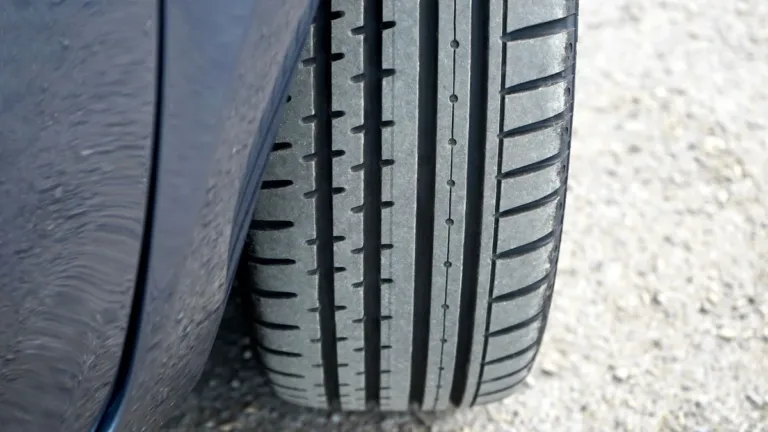
- Each tyre, close enough to see the tread. Bald front tyres on a Prado heading up the Karakoram Highway are a different proposition from worn rears on a city hatchback. Ask about the spare too, and whether a jack is on board.
- The dashboard with the engine running. Warning lights show up on a running dashboard; they are invisible in a photo of a parked car. The odometer reading is useful context as well.
- AC vents and controls, ideally a short video. Between May and September across the Punjab and Sindh plains, a weak AC is not a comfort issue, it is the difference between a manageable journey and an unbearable one, especially with elderly passengers or children.
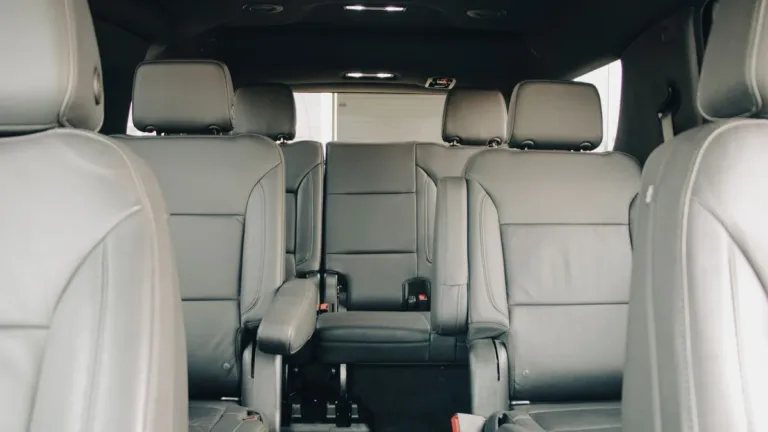
- Seats and seat belts, front and rear. Rear belts that are tucked away, cut or missing buckles matter if you are travelling with children or fitting a child seat.
- The boot, empty. Compare it with your luggage. CNG cylinders fitted in the boot of some sedans take a large share of the space, which is the sort of thing that turns a two-suitcase car into a one-suitcase car.
- Any existing body damage. For self-drive especially, this protects you at return.
If you are booking a specific class rather than a named car, the iDrive vehicle classes page sets out what each class typically covers, from economy hatch to Coaster, so you can judge whether the car in the photos belongs in the class you asked for. For families working out seats against suitcases, the guide on how many people and suitcases actually fit in Pakistani fleet vehicles is the companion to the boot photo.
The colour and trim should agree across every photo and with the portal record. A supplier who will not photograph the tyres of a car they are about to send you has made the decision easy.
What online verification cannot tell you
A clean registry result is necessary, not sufficient. Be clear about the gaps so you do not read more into the record than it holds.
- Mechanical condition. Brakes, suspension, steering and tyres are not on any registration record.
- That this is the car that arrives. The check proves a number belongs to a certain vehicle. At pickup you still need to confirm the plate, colour and model in front of you match.
- The driver. Registration says nothing about who is behind the wheel, their licence or their experience on the route. Ask for the driver’s name and the vehicle number in advance, and check both at the kerb.
- Insurance and liability. Whether and how passengers are covered depends on the operator’s arrangements and the contract, not the registry.
- Accident or repair history. The portals are tax and ownership systems, not vehicle history reports.
- Current status. Records can lag behind transfers and payments. A mismatch is a reason to ask, not proof of wrongdoing.
For how responsibilities are split between customer, operator and platform on an iDrive booking, the iDrive terms of hire are the governing document, and worth reading before you rely on any assumption about who covers what.
A working sequence for booking from abroad
Most people reading this are arranging a car for a date some weeks away, often from the UK or the Gulf, for parents, a wedding party or a work trip. The checks fit into the booking rhythm like this.
- At enquiry: describe the journey, passengers and luggage, and ask what vehicle class the supplier proposes. You are not checking anything yet; you are setting the standard.
- Once a vehicle is proposed: ask for the make, model, approximate year and, if the specific car is known, the registration number. Many operators allocate the exact car closer to the date, which is normal. Ask when the number will be shared.
- When you have the number: run it through the right provincial portal. Screenshot the result. Compare model, year and category with what was proposed.
- For vans, minibuses and coaches: ask for the fitness certificate photo and check the date and number.
- Three to five days before travel: ask for the photo set. Look at tyres, AC and the boot first.
- The day before: confirm the driver’s name, the phone number they will be on, the plate and the meeting point. Send these to whoever is being collected, particularly elderly relatives arriving alone.
- At pickup: the person being collected checks the plate against the message before loading bags. Thirty seconds, and it closes the most basic gap of all.
If a check fails at any step, the useful response is specific: “The record shows a 2012 Cultus, we agreed a Corolla; please confirm the replacement vehicle and its number.” Vague complaints get vague answers.
The same discipline applies well beyond Pakistan. Families who combine a Pakistan trip with Umrah will find that our sister company Saudi Cab Co has written up the equivalent checks for Saudi Arabia in its guide to vehicle safety checks before booking a Saudi transfer.
How this works on iDrive
iDrive is a managed-mobility platform whose journeys are carried out by partner operators and drivers, which is why these checks are worth knowing. A request through the iDrive booking page asks for a vehicle class for a journey; what is confirmed, and when, depends on availability and the operator, and a request is not a guarantee of a particular car. The vehicle details you receive are the ones to check against the registry and the photos.
If you prefer a calmer, family-oriented planning route for airport runs and intercity journeys, iDrive’s passenger brand, our sister service Pakistan Taxi, describes its vehicle options for journeys across Pakistan in the same class terms.
And if you are on the other side of the transaction, an operator or owner with cars to offer, the same evidence standard applies to you: registration details that match, current fitness paperwork for commercial vehicles, and honest photos. The route in is becoming an iDrive car-hire supplier.
Questions people ask
Can I check car registration in Pakistan from outside the country?
Yes. The provincial Excise portals are public web pages, so you can check car registration in Pakistan from the UK, the Gulf or anywhere else with the registration number. Some provincial systems can be slow or unreachable from certain networks; if one times out, try again later or on a different connection.
Which portal do I use if the car is from Rawalpindi but the trip starts in Islamabad?
Use the portal for the province that registered the car, which for a Rawalpindi plate is Punjab’s MTMIS service. Where the journey starts is irrelevant to the registry.
Does a matching record prove the car is safe?
No. It proves the registration number belongs to a vehicle with those details. Condition comes from recent photos, the supplier’s maintenance practice and, for commercial vehicles, a current fitness certificate.
What if the portal shows something different from the quote?
Screenshot it and ask the supplier, specifically, to explain or replace the vehicle before the travel date. Records can lag, so a mismatch is a question first; an unexplained one is a reason not to proceed.