The short answer on Carnival vs Staria for a business party: the Hyundai Staria is the stronger luggage vehicle once the rearmost seats are in use, because it is a taller, longer box; the Kia Carnival is the better-riding, car-like cabin for four to six senior people with modest bags. Neither is the right call for nine adults each carrying a full-size checked case. At that point two vans, or one van plus a sedan, beats squeezing everything into one vehicle. The figures below come from the manufacturers’ own published specifications, and one caution runs through all of them: seat counts and boot space vary by market and by trim, so the only number that matters is the one for the specific vehicle you are allocated.
This guide is written for travel managers, executive assistants and people organising a delegation into Islamabad, Lahore or Karachi who need to decide how many vehicles to request, not just which badge to ask for.
Carnival vs Staria decision summary: which vehicle for which party
If you only read one section, read this one. It assumes long-haul arrivals with one checked case per person plus a cabin bag, which is the normal profile for a UK or North American business trip.
- 1-3 passengers: an executive sedan. An MPV is more vehicle than you need and a harder one to park at a hotel porch.
- 4-5 passengers, light bags: the Carnival, with seats behind the second row folded or left empty for luggage.
- 4-6 passengers, one checked case each: the Staria in a bench-seat layout, or a Carnival with the rearmost seats folded. Confirm the layout before the day.
- 7-9 passengers with checked luggage: not one vehicle. Split the party, or send a separate luggage vehicle.
- A principal plus staff: a sedan for the principal and an MPV for everyone else. It is often more practical than it sounds, and far more flexible.
Seat layouts: why “7, 9 or 11 seats” tells you less than you think
Both vehicles are sold worldwide in several seating configurations, and the version on a Pakistani road is not necessarily the version in a British or American review.
Kia Carnival in Pakistan
Kia Lucky Motors, the local assembler and distributor, lists the current Carnival in Pakistan in an 11-seat configuration with the 3.5-litre V6 petrol engine (3,470 cc, 272 PS) and an eight-speed automatic. Its specification page also lists 11 seat belts, a walk-in device for access to the rear seats and a 60:40 split third row. Wikipedia’s Carnival model history notes that the Pakistani Carnival has been offered only as an 11-seater, a choice it attributes to the local commercial-vehicle tax category, with a facelift arriving in December 2024.
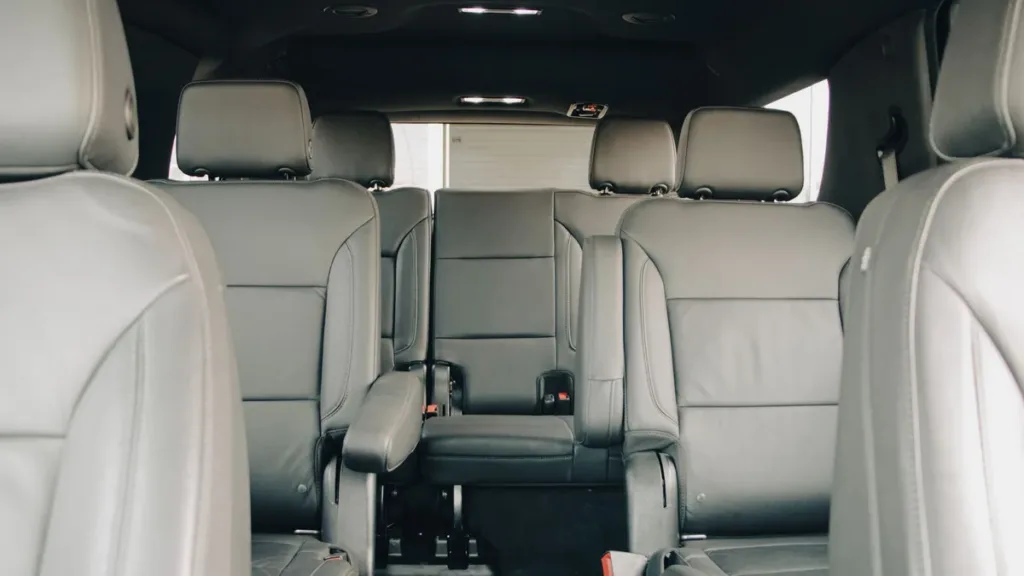
That matters for luggage. Eleven belts in a vehicle 5,155 mm long means the floor behind the last occupied row is the first thing to disappear. Older imported Carnivals and grey-market units can have different layouts, so the operator should tell you which one you are getting.
Hyundai Staria
Hyundai sells the Staria in everything from a three-seat panel van to 7, 8, 9, 10 and 11-seat passenger versions, depending on the market, according to Wikipedia’s Staria model history. The version that matters for executives is the split between two families:
- Bench-seat Staria (8 or 9 seats in most markets): the practical people-mover, with a large usable load area behind the third row.
- Staria Lounge (7 seats): individual reclining chairs in the second row that slide a long way back. Comfortable, but those chairs eat the boot.
The cargo and door figures used below come from Hyundai Australia’s published specification, because it splits the standard and Lounge models cleanly. A Staria on a Pakistani road may be trimmed differently, so ask the operator, in writing, how many seats the allocated Staria has and whether the second row is a bench or captain’s chairs.
Boot space with the third row up: the number that decides the booking
Brochures love maximum cargo figures, measured with every rear seat folded or removed. That is irrelevant to a group of seven. What you need is the space left behind the last row of seats that people are actually sitting in.
What the manufacturers publish
Hyundai Australia’s specification sheet for the current Staria gives a minimum cargo space (VDA) of 831 litres for the standard bench-seat model, rising to 1,303 litres. For the Staria Lounge, the same sheet gives just 117 litres minimum and 431 litres maximum, because the lounge chairs are designed to slide back into what would otherwise be boot. That single contrast is the most useful fact in this whole comparison: the same body shape can be a luggage champion or a four-cabin-bag vehicle depending on the seats inside it.
Kia’s US media specifications for the 2025 Carnival give a minimum of 40.2 cubic feet (SAE) behind the third row and a maximum of 145.1 cubic feet with the rear rows out of the way. Two warnings apply. First, those are US figures measured on a different standard from VDA, so you cannot subtract one number from the other and call it a verdict. Second, the US car is a seven or eight-seater; the Pakistani 11-seat layout adds seating that reduces the load floor when used. Treat the Carnival as the smaller boot of the two whenever its rearmost seats are occupied.
Translating litres into suitcases
Litres are an abstraction. Airline limits are not. British Airways caps a checked bag at 90 x 75 x 43 cm and 23 kg in standard economy, and a main cabin bag at 56 x 45 x 25 cm. Emirates, on weight-concept routes, caps the combined length, width and height of each checked bag at 203 cm, with no single piece over 32 kg. A delegation flying in on different airlines can easily arrive with cases of quite different shapes.
A rough, practical rule, not a manufacturer figure: large hard-shell cases stand upright or lie flat, and they rarely tessellate the way a VDA test block does. So a published litre figure overstates what real luggage will use. Plan on the conservative side and ask the operator to confirm the loading for your specific bag count.
| Party and bags (example scenario) | Carnival, rear seats in use | Staria bench-seat | Staria Lounge |
|---|---|---|---|
| 4 people, 4 cabin bags | Comfortable | Comfortable | Comfortable |
| 4 people, 4 checked cases + cabin bags | Works with rearmost seats folded | Comfortable | Tight: check first |
| 6 people, 6 checked cases | Tight: fold what you can | Workable: confirm | Not realistic |
| 7-9 people, one case each | Not realistic | Only with soft bags | Not realistic |
The table is a planning guide, not a guarantee. It is built from the published cargo figures and airline size limits above, and the real answer depends on bag shape, how the seats are set and whether anyone brings a garment carrier or sample case.
Sliding doors and entry: the executive test
Both vehicles use sliding rear doors, which is the single biggest reason businesses choose an MPV over a large SUV. A sliding door opens without swinging into a kerb or a neighbouring car in a hotel drop-off lane, and a passenger in a suit can step in upright rather than folding into a low seat.
- Carnival: Kia Lucky Motors lists a “Smart Power Sliding Door” and a smart automatic tailgate on the Pakistani car, plus Safe Exit Assist, which warns occupants about approaching traffic before they open a door.
- Staria: in Hyundai Australia’s specification, dual power sliding doors belong to the Lounge; the standard bench-seat model has dual manual sliding doors. Locally supplied or imported units may differ, so confirm which you are getting if a power door matters to your principal.
Step height differs too. The Staria is roughly 25 cm taller than the Carnival (1,990 mm against 1,740 mm, from the Hyundai Australia sheet and Kia Lucky’s figures). That gives the Staria more standing-room feel and headroom, and a slightly higher first step. The Carnival feels closer to getting into a large saloon. For an older principal or anyone with a knee problem, that is worth a thought.
Ride and noise on the motorway: Kia Carnival vs Hyundai Staria
For most delegations the long leg is the M-2 between Islamabad and Lahore, or an airport run followed by a day of meetings across one city. Our motorway tolls and drive times guide covers the timings and toll points. What changes between the two vehicles is how the hours feel.
Why the shapes ride differently
The Carnival is 1,740 mm tall with 172 mm of ground clearance, per Kia Lucky Motors. It sits low for a people-carrier and behaves more like a large estate car: less body roll through interchanges, less side-wind sensitivity on open stretches of motorway. Kia also lists a range of driver-assistance features on the Pakistani car, including lane keeping and lane following assist, blind-spot collision-avoidance assist and forward collision-avoidance assist.
The Staria is about 100 mm longer (5,253 mm against 5,155 mm) and much taller, on a 3,273 mm wheelbase. A long wheelbase generally helps rear-seat ride comfort over expansion joints, while height brings more exposure to crosswinds and more cabin volume for sound to move around in. None of the manufacturer specifications cited here publish cabin noise measurements, so any claim that one is “quieter” is opinion. What we can say from the design is that the Carnival is the more car-like vehicle and the Staria the more van-like one, in the good and the bad senses of both.
What actually drives comfort on the day
On Pakistani roads, three things usually matter more than the badge:
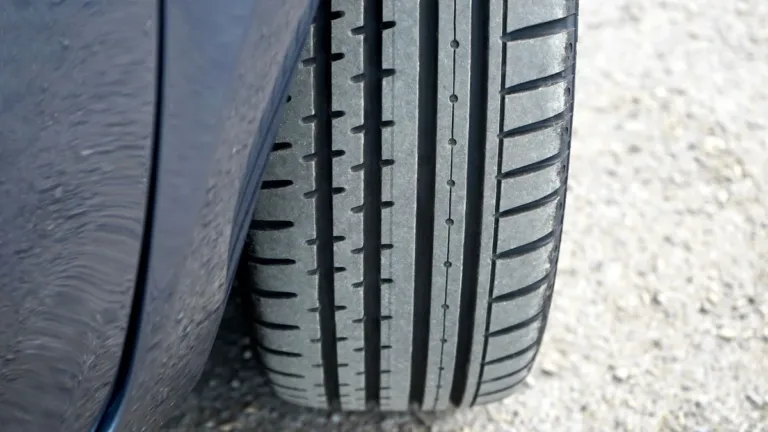
- Tyre condition and pressure. Worn or over-inflated tyres make any MPV feel harsh and noisy.
- Load. A fully loaded van with people in every row rides differently from one carrying four passengers.
- The driver. A calm driver who holds a steady lane speed will make a long motorway leg feel shorter in either vehicle.
If comfort for the rear-seat occupant is the priority, ask which seat they will use and whether it reclines. In the Carnival, Kia Lucky lists heated, ventilated, power-adjustable second-row seats on the current Pakistani trim. In the Staria Lounge, the captain’s chairs are the whole point of the vehicle, at the cost of the boot.
Two sedans vs one MPV: the comparison buyers skip
The instinct with five or six people is to book one people carrier for business. It is often right. Sometimes it is not, and the reasons are practical rather than cost-driven.
| Factor | One MPV (Carnival or Staria) | Two executive sedans |
|---|---|---|
| Luggage | Shared load space; tight with every seat used | Two separate boots, easier to split heavy cases |
| Schedule flexibility | One itinerary for everyone | Two routes; people can peel off to separate meetings |
| Arrival timing | Waits for the last passenger through arrivals | First car can leave when its passengers clear |
| Hotel porch and parking | Larger footprint; some older buildings have low car-park ceilings | Fits anywhere a car fits |
| Contingency | One breakdown stops the whole group | One car can carry the key passenger if the other has a problem |
| Conversation | Whole team together: useful for pre-meeting briefings | Split team; private calls easier |
Two sedans also answer the seniority question cleanly. A chairman who wants privacy for calls does not have to share with junior staff and their cases. You can see the executive sedan options, such as the executive sedan fleet page, alongside the vans before you decide.
Where the MPV clearly wins is a tight schedule with one agenda: a factory visit, a site tour, a single conference venue. Everyone leaves together, arrives together and talks on the way.
Recommendation by party size for executive MPV hire
Here is how we would think through executive MPV hire for the party sizes that come up most often. Each is an example scenario, not a quote.
Three to four executives, one checked case each
The Carnival is the natural fit. With its rear seats folded there is room for cases, the ride is closer to a large saloon, and the power sliding door makes hotel and office drop-offs tidy. See the Kia Carnival (KA4) vehicle page for how it sits in the fleet. If one of the four is clearly the principal, a sedan for them and a second sedan for the others is a genuine alternative.
Five or six people arriving from a long-haul flight
This is where the Staria earns its place, provided it is a bench-seat version. Six people with six large cases is the configuration most likely to overflow a Carnival with its rear rows occupied. The Hyundai Staria vehicle page shows the option. Tell the operator the exact bag count, including golf bags, sample cases and garment carriers, and ask whether the vehicle has a bench or captain’s chairs.
Seven to nine people
Do not trust a single MPV with seven to nine adults and full international luggage. Either split into two vehicles or send a separate luggage vehicle ahead to the hotel. Our guide to how many people and suitcases fit in Pakistani fleet vehicles works through larger vans and multi-vehicle splits for exactly this case.
A senior visitor with staff and a security or protocol requirement
Treat the principal’s vehicle and the team’s vehicle as separate decisions. Lead with a sedan or a Lounge-seat Staria for the principal, and put staff and luggage in a bench-seat MPV. Our business travel car service in Pakistan page explains how multi-vehicle corporate movements are set up.
What to confirm before you request a Staria vs Carnival allocation
Any Staria vs Carnival comparison is only as good as the information you give the operator. Put these in the booking notes:
- Passengers and seating: the exact headcount and whether anyone needs a front seat or a particular row.
- Bags by type: checked cases, cabin bags, laptop bags, and anything unusual such as display stands or medical equipment.
- Flight details: flight numbers for everyone, so the operator can see who lands when. Different airlines mean different bag sizes.
- Seat layout request: bench or captain’s chairs, and a request that rear rows not needed are folded before arrival.
- Stops: hotel, office and any meeting venues with porch or car-park restrictions.
- Fallback: what happens if the specific model is unavailable on the day. A like-for-like substitute should be agreed in principle, not improvised in the car park.
Model names are a request, not a promise. Availability of a given vehicle depends on the operator’s fleet on the day, and the final quote and allocation are confirmed by the booking team.
Where the same question comes up abroad
Many Pakistani businesses and families also travel through Saudi Arabia, where the same luggage-versus-seats trade-off applies to Umrah groups and corporate visits. Our sister company Saudi Cab Co runs a Hyundai Staria VIP van service in Saudi Arabia, which is useful context if your team moves between both countries.
For families and private travellers in Pakistan, our sister service Pakistan Taxi, an iDrive brand, explains its group van journeys in plainer, passenger-first terms.
Next step
When you have the headcount, bag count and flight details, send them through the iDrive booking request. The team will come back with the vehicle options that fit, a quote to review and any questions about layout, before anything is confirmed.
Questions people ask
Is the Kia Carnival or the Hyundai Staria bigger?
The Staria. Hyundai lists it at 5,253 mm long and 1,990 mm tall; Kia Lucky Motors lists the Pakistani Carnival at 5,155 mm long and 1,740 mm tall. Both are just under 2 metres wide.
How many seats does the Carnival have in Pakistan?
Kia Lucky Motors lists the current Pakistani Carnival with 11 seat belts. Imported units may differ, so confirm with the operator.
Which is better for luggage with every seat used?
A bench-seat Staria. Hyundai’s published minimum cargo figure for the standard Staria is 831 litres (VDA); the Lounge version is just 117 litres.
Can I guarantee a specific model?
You can request one. Allocation depends on availability on the day and is confirmed by the booking team, so agree an acceptable alternative in advance.