A rental car inspection checklist earns its keep only if it produces a record that both sides accept. In Pakistan that means five things, captured at collection and captured again, in the same order, at return: the bodywork and glass photographed panel by panel after the dust has been wiped off; all four tyres plus the spare, jack and wheel spanner physically seen; the fuel level and odometer photographed with the ignition on; the registration document checked against the number plate; and the cabin tested, air conditioning first. Each of those goes on a sheet that the supplier’s representative signs, and you keep a copy of it.
The method below suits self-drive hire in any Pakistani city, for residents and for overseas Pakistanis who last drove here years ago. The aim is not suspicion: if a question about a scratch or a missing jack comes up on the last day, the answer is already in your phone with a time on it.
The decision summary: what the record has to prove
Hire-car arguments are usually about small things nobody wrote down: a scuffed bumper, a cracked fog-lamp lens, a spare that was flat before you opened the boot. The checklist answers four questions without anyone relying on memory.
- What condition was the car in when you took it? Photos and video, timed, with the plate visible in the first frame.
- What was supplied with it? Spare, jack, spanner, documents, keys, any child seat or phone mount.
- What were the readings? Fuel and odometer at both ends, written as numbers.
- Who agreed? A signature or a written acknowledgement from the supplier at collection and at return.
Before you reach the car
A decent inspection takes fifteen to twenty minutes. The handover itself often happens somewhere badly lit: a basement car park under a Blue Area office block, a hotel forecourt in Clifton after dark, a side street off Main Boulevard in Gulberg. Plan the handover to suit the inspection, not the other way round.
- Ask for a daylight slot. Scratches, paint mismatches and small dents disappear under sodium lights and car-park tubes. If a night collection is unavoidable, say in advance that you will want a proper look at the car and bring a torch.
- Get the paperwork before the keys. Ask the supplier to send the rental agreement, the fuel policy, any mileage allowance and the deposit terms in writing before the day. Reading a contract on a car bonnet while someone waits is how clauses get missed.
- Carry a microfibre cloth. It sounds fussy until you meet a car parked through a Karachi dust spell. A thin layer of dust hides fine scratches completely; a wipe reveals them.
- Know which documents you will be asked for. Suppliers typically want to see your licence and identity documents before releasing the car. If you hold a foreign licence, read our guide on driving in Pakistan on a UK licence and the permit that goes with it before you travel.
The rental car inspection checklist, in walk-around order
Order matters because it makes the return inspection comparable. If you start at the front-left corner at collection and walk clockwise, do exactly the same at return, and your two sets of photos line up frame for frame.
1. Start recording before you touch anything
Begin a continuous video with the number plate and the handover location in shot. Say the date, time and the supplier’s name out loud. Then walk the car slowly at waist height, followed by a second pass crouched low along the sills. One unbroken clip is harder to argue with than a string of edited ones.
2. Bodywork, panel by panel
Work around the car in a fixed sequence: front bumper, bonnet, front-left wing, front-left door, rear-left door, rear-left quarter, boot lid, rear bumper, then the right side back to the front. Look at each panel from an angle rather than straight on; low, raking light shows dents that a head-on view hides.
- Wipe the dust off each panel before you judge it. Pay attention to the lower third of the doors and the bumper corners, where kerbs, parking pillars and motorcycle handlebars leave their marks in city traffic.
- Check the roof if the car is tall enough to hide it. On an SUV or a Hiace-type van, stand on the door sill or hold the phone up.
- Look for paint that does not match between panels. It usually means earlier repair work, which is worth recording so it is not blamed on your hire.
- Photograph every mark with something for scale, such as a key or a coin, and a wider shot showing where on the car it sits.
3. Glass, mirrors and lights
Run a finger along the windscreen edge and look through it from the driver’s seat for stone chips; small chips in the wiper sweep tend to spread into cracks with heat and motorway vibration. Check both door mirrors for cracked glass and loose housings. Switch on side lights, headlights (dipped and main beam), indicators, hazards, reverse lights and brake lights. For the last two, ask the supplier’s representative to stand behind the car.
4. Wheels and tyres
Tyres deserve more time than most people give them, because they are where Pakistani road conditions show up first. The UK government’s travel advice for Pakistan describes road quality outside the major motorways as variable, and the US State Department’s country page says roads outside major cities are poorly maintained and warns of potholes, sharp drop-offs and barriers that are not signposted. A tyre that is already tired will not enjoy either.
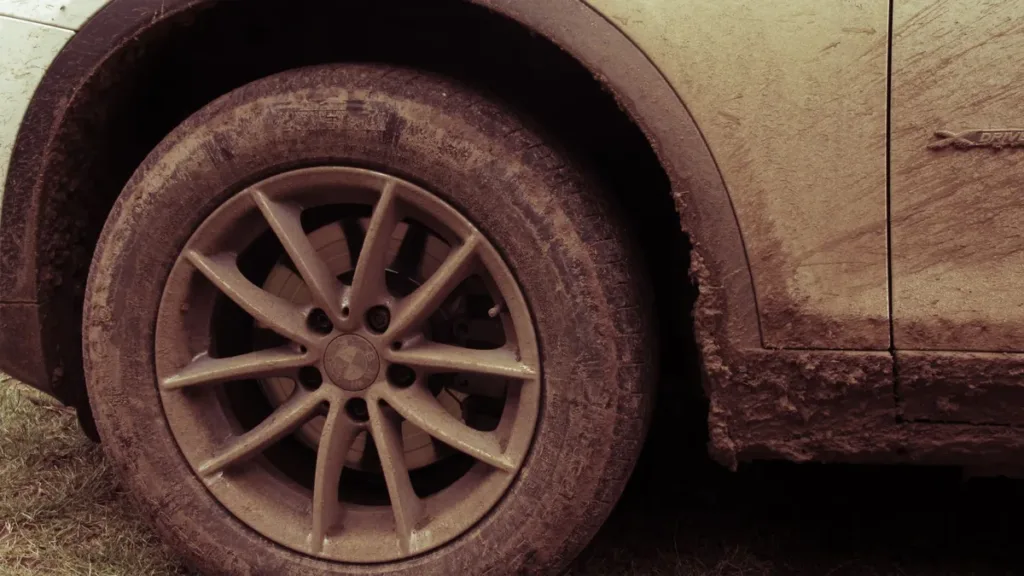
- Tread. Look for the raised treadwear indicators in the grooves. According to the US National Highway Traffic Safety Administration’s tyre guidance, a tyre worn level with those indicators is due for replacement.
- Age. Find the tyre identification number on the sidewall. NHTSA explains that its last four digits give the week and year of manufacture, so “0321” would mean the third week of 2021. Photograph it on each tyre.
- Sidewalls. Bulges, cuts and exposed cords are reasons to ask for a different car, not just items for the list.
- Rims. Kerb scrapes on alloy wheels are easy to pick up and hard to disprove without a photo. Photograph each wheel face on.
- Pressure. You cannot measure it by eye, but you can note any tyre that looks visibly lower than the others and ask for it to be checked before you leave.
5. Spare wheel, jack and toolkit
Open the boot, lift the floor panel and look. Do not accept “it’s there” as an answer. You are checking four things: that the spare exists, that it holds air, that the jack and wheel spanner are present and fit the car, and whether the wheels use locking nuts, in which case the locking key needs to be with the toolkit. NHTSA points out that spares are prone to ageing because they are seldom replaced, so check the spare’s date code too. A flat spare discovered on the M-2 between Lahore and Islamabad is a problem you could have solved in the car park.
Documents that should travel with the car
This is the part of the checklist most specific to Pakistan, and the part a renter used to hiring in the UK or the Gulf may never have thought about. If a traffic officer stops the car, you are the one answering, so know what is in the glovebox before you leave.
Registration document
Depending on the province and the age of the registration, you may be handed a traditional registration book or a newer card. The Punjab Excise, Taxation and Narcotics Control Department has introduced an e-registration card alongside the older registration certificate, so either format can turn up on a Punjab-registered car. Whatever the format, check three things:
- the registration number matches the number plates, front and rear;
- the make, model and colour on the document match the car in front of you;
- the document is the original or a copy the supplier confirms in writing that you may carry, and you have photographed it.
Token tax
Token tax is the recurring motor vehicle tax paid to the provincial excise department. On its vehicle registration page, Punjab Excise refers to the “original registration certificate containing update payment of token tax”, which tells you the payment status is tied to the registration record rather than to anything you can confirm by looking at the windscreen. Ask the supplier directly whether token tax is paid up to date and note their answer on the sheet.
Check the record yourself
Both of the largest provinces offer online lookups. Punjab Excise lists online verification of registered vehicles among its services, and the Excise Sindh vehicle verification service lets you choose four-wheeler or two-wheeler, enter the registration number exactly as it appears on the plate and view the official record. Compare what comes back with the car and its document, and raise any mismatch before you drive.
The rest of the glovebox
- Your copy of the rental agreement, with the supplier’s name and a phone number that is answered out of office hours.
- Whatever insurance or cover document the supplier provides, and a clear note of the excess you would pay if something happens.
- If the car has a tracker fitted, ask who monitors it and whether there are rules about where the car may be driven. A supplier may restrict hill or out-of-province trips; find out now.
Inside the cabin: air conditioning, electrics and comfort
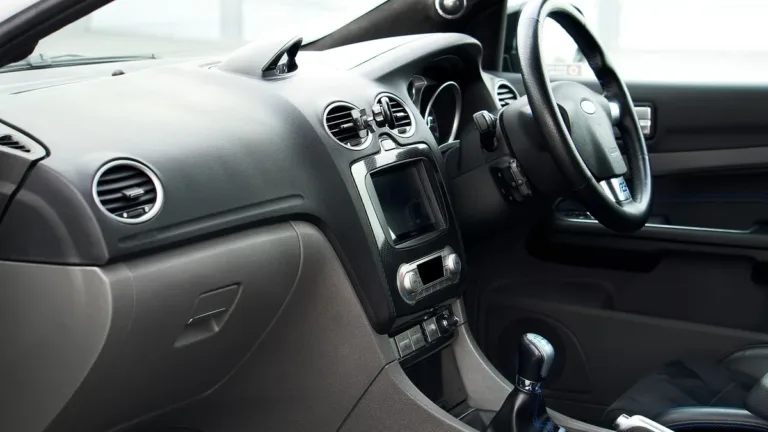
In a Pakistani June, a weak air conditioner is not a minor fault. Test it properly: engine running, fan on full, coldest setting, for at least three or four minutes. The air from the centre vents should turn clearly cold. Listen for the compressor clicking in and watch the temperature gauge while you do it.
Then work through the rest of the interior in one pass:
- Dashboard warning lights. Turn the ignition on without starting and watch the lights come on; start the engine and check they all go out. Photograph anything that stays lit, especially engine, oil, brake or airbag warnings.
- Windows and locks. Every electric window up and down, central locking from the key and from inside, the child locks on the rear doors if you are travelling with children.
- Horn, wipers and washer fluid. The horn is a working instrument on Pakistani roads. Wipers matter in monsoon season and on the dusty stretches of the GT Road.
- Seats and seat belts. Each belt should pull out, lock on a sharp tug and retract. Note tears, burns or stains in the upholstery with a photo.
- Keys. Count them. If you have been given a spare key, list it. Replacing a modern remote key is rarely cheap, and the sheet is your proof of how many you were given.
Fuel level and odometer: write numbers, not impressions
With the ignition on, take one clear photo of the instrument cluster showing the fuel gauge and the odometer together. Then write both on the sheet: “fuel 3/4, odometer 48,213 km” is a record; “nearly full” is an opinion.
Three points to settle before you drive off:
- Fuel policy. Is the car to be returned at the same level, or full? Get the answer in writing. If “same level” is the rule and you collected at a quarter tank, a quarter tank is what you return.
- Fuel type. Confirm whether the car takes petrol or diesel, and whether it runs on any particular grade. Some older cars in Pakistan have CNG kits fitted; if yours does, ask how the supplier wants it used.
- Mileage allowance. If the hire includes a daily or total kilometre limit, the odometer photo at collection is the baseline for any excess charge. Work out roughly what your itinerary will add. A single run from Islamabad to Lahore and back on the M-2 uses a meaningful slice of many allowances.
Collection and return side by side
The table below is the whole method on one screen. Print it, or keep it open on your phone at the handover.
| Item | At collection | At return | Why it matters |
|---|---|---|---|
| Video walk-around | One continuous clip, plate first, same direction of travel | Repeat in the same order and direction | Makes before and after directly comparable |
| Bodywork and glass | Wipe, photograph each panel, mark existing damage on the sheet | Same panels, same angles; supplier walks with you | Small cosmetic marks are the usual argument |
| Tyres and rims | Tread, date code, sidewalls, rim faces | Rim faces and any visible tyre damage | Rim scrapes are easy to acquire and hard to disprove |
| Spare, jack, spanner | Seen and listed, spare inflated | Seen and ticked back in | Missing items can be charged to you |
| Documents | Registration matches plates; record checked online | Returned to the glovebox and noted | Protects you at checkpoints; proves return |
| Cabin and AC | AC cold, warning lights clear, keys counted | Same checks; remove your belongings | Separates existing faults from new ones |
| Fuel and odometer | Photo with ignition on, numbers written | Photo with ignition on, numbers written | Basis for fuel and mileage charges |
| Signatures | Supplier signs the condition sheet | Supplier signs the return sheet | Turns your photos into an agreed record |
The rental car return inspection: closing the record
The return is where the collection work pays off, and also where people rush for a flight from Allama Iqbal International or a train. Build in thirty minutes.
- Return in daylight if you can. With a night key drop, the inspection happens without you and your photos become your only record.
- Refuel and tidy first. Fill to the agreed level near the return point and keep the receipt. Remove sand, food wrappers and your belongings. A cleaning charge is an avoidable one.
- Repeat the walk-around with the supplier present. Same video, same order, same angles. Stop at each mark that was on the collection sheet and confirm it is the same mark.
- Photograph the cluster again. Fuel and odometer, ignition on.
- Hand back and list what you return. Keys, documents, spare-wheel kit, child seat, anything else that came with the car.
- Sign the return sheet only when it is accurate. If the representative writes “no new damage”, check the wording before signing. If they note new damage, ask them to describe it precisely and photograph it together.
- Keep a copy. A photo of the signed sheet on your phone is enough. Ask for a written note, by message or email, of when the deposit will be released and how.
If the supplier will not inspect the car with you, send your return photos and video to them straight away by email or message, with the date, time and location. That gives you a received timestamp.
Rental car damage photos that hold up later
Photos only settle a dispute if they are clear about three things: where, when and which car.
- Frame the car first. Your first photo of each session should show the number plate and the surroundings. Every later photo then belongs to that car.
- Wide, then close. For every mark, take one shot showing the whole panel and one close-up with a key or coin for scale.
- Do not edit or filter. Leave the originals untouched so their embedded time and location data survive. Crop copies if you need to share a detail, but keep the originals.
- Send them promptly. Sharing the collection set before you leave the car park means the supplier has seen the same images, at the time you took them.
If you pick up a new mark during the hire, photograph it where it happened and tell the supplier the same day.
Arranging a self-drive hire through iDrive
An inspection proves condition; it does not rewrite the contract, and a car with worn tyres or a warning light that will not clear should be swapped, not merely documented. iDrive arranges self-drive hire through independent suppliers in its network, and eligibility, deposit, mileage allowance and insurance excess are set by the supplier: get them in writing before you commit. Availability depends on city, dates and vehicle class, and nothing is committed until the supplier confirms it. See our self-drive car rental page for Pakistan, the wider car rental options across Pakistan, and, if your route includes the Karakoram Highway or winter hill roads, our note on whether self-drive or a car with driver suits the trip.
If you are booking for relatives or planning from abroad, our sister service Pakistan Taxi, which also runs on the iDrive network, has a practical note on self-drive questions for overseas bookers, including deposit and handover. When you know your dates, you can start a journey request on iDrive and ask about self-drive terms for your city.
Questions people ask
What to check when renting a car in Pakistan that people usually miss?
The spare wheel and jack, the tyre date codes, the registration document against the plates, and a proper air-conditioning test. Dust-covered bodywork is the other trap: wipe before you judge.
Should I inspect the rental car before driving if the supplier says it has been checked?
Yes. The supplier’s check is their record. Your own photos and a signed condition sheet are yours, and you need both if a question comes up at return.
What if the car is returned out of hours with no inspection?
Photograph and video the car where you leave it, including fuel and odometer, and send the set to the supplier straight away. Ask in writing for the return inspection result and the deposit timeline.