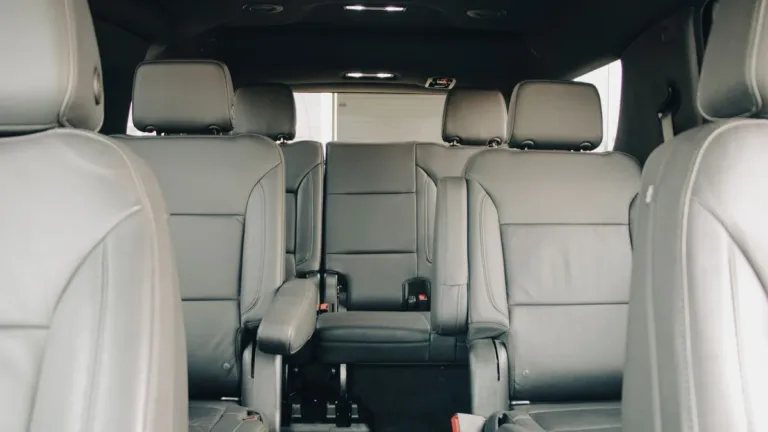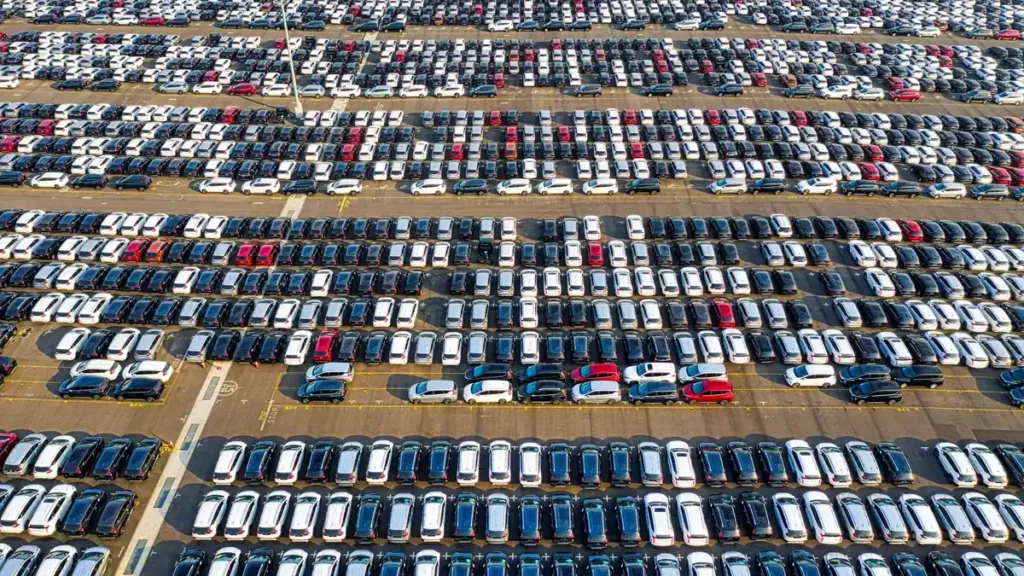
Rental car classes explained in one line: when you book a car in Pakistan you are reserving a class (a band of vehicles that share seats, body type, transmission and air conditioning), not a named model with a specific registration. A request for “standard sedan” can be met by a Honda City, a Toyota Yaris sedan or a Changan Alsvin; an “executive sedan” request might be a Civic, an Elantra or a Corolla Altis. That is not evasiveness. It is how every fleet that serves more than one customer at a time has to work, from Heathrow to Lahore’s Allama Iqbal International.
The useful question is therefore not “will I get a Civic?” but “what does this class actually commit to, and what must I say out loud if something matters to me?” This guide answers that for the Pakistani fleet specifically, because the international vocabulary (economy, compact, intermediate, full-size) maps awkwardly onto the cars that really run on the M-2 and the Karachi Northern Bypass.
Decision summary: what car class should I book?
- One or two people, city errands, light bags: economy hatch. Cheapest to run, easiest to park in Saddar or Anarkali, weakest on the motorway and on boot space.
- Airport run with two large cases, or a couple on an intercity day: standard sedan. This is the default class for most visitors and the one with the widest model pool.
- Business meetings, wedding guests you want to look after, long motorway days: executive sedan. More cabin, better seats, and usually an automatic; Honda Atlas lists the current Civic Standard with a CVT gearbox.
- Five adults, or four adults with full-size luggage: skip sedans entirely and look at a family MPV or a van. A sedan class promises five seatbelts, not five comfortable adults plus their suitcases.
- Northern roads, protocol movements, or the look matters: premium SUV/4×4 or VIP SUV, where the model pool is smaller and the class names carry more meaning.
If you are still unsure, the whole ladder with the models currently listed in each band is on our vehicle classes page.
Why class booking exists: fleets, assignment and the “or similar” line
A fleet is a moving target. On any given morning some cars are out on multi-day hires, some are at the workshop for a service, one has a cracked windscreen from a gravel lorry on the GT Road. Whoever dispatches has to match the day’s bookings to the cars and drivers physically available at that city base. If every booking were tied to one model, one late return would cascade into a string of broken promises.
Grouping cars into classes solves that. The operator commits to a set of characteristics and keeps the freedom to choose which car inside the set does the job. The international car-hire industry formalised this through ACRISS, the Association of Car Rental Industry Systems Standards, whose four-letter codes you will have seen on booking confirmations abroad. ACRISS states plainly that its codes describe groupings of vehicles rather than specific models: a code such as CCMR means compact, two/four-door, manual, unspecified fuel with air conditioning, and any car with those traits qualifies.
The phrase “or similar” on a confirmation is the plain-English version of the same idea. It is a promise about the class, and the model named beside it is an illustration.
How the ACRISS code is built
Each letter carries one attribute, which is why the code is a surprisingly good checklist even when your Pakistani operator does not use it:
- Category (size, cost, power, luxury): the ACRISS ladder runs Mini, Economy, Compact, Intermediate, Standard, Fullsize, Premium and Luxury, each with an “Elite” step, plus Oversize and Special.
- Type (body): 2-3 door, 4-5 door, wagon, passenger van, SUV and so on.
- Transmission and drive: manual or automatic, and whether it is 4WD or AWD.
- Fuel and air conditioning: petrol, diesel, hybrid or electric, with or without AC.
The full letter list is in the ACRISS expanded matrix. Notice what the code never contains: colour, model year, trim level or engine size. That gap is exactly where most disappointment comes from.
Car rental categories in Pakistan: the class-to-model map
Pakistan’s road fleet is dominated by locally assembled Suzuki, Toyota and Honda models, with Kia, Hyundai, Changan and Haval now filling the crossover and MPV bands. The international labels do not line up neatly. A Suzuki Alto is smaller than most European “economy” cars, and a Honda City, which sits in our standard class, would be sold as compact or intermediate in a Manchester rental office. So treat the ACRISS column below as an approximate translation for visitors used to foreign confirmations, not an official coding.
| iDrive class | Models currently listed in the class | Roughly equivalent to (ACRISS family) | Where it earns its keep |
|---|---|---|---|
| Economy hatch | Suzuki Alto, Suzuki Wagon R, Suzuki Cultus, Suzuki Swift, Daihatsu Mira | Mini to Economy | City hops, one or two passengers, carry-on bags |
| Standard sedan | Honda City, Toyota Yaris sedan, Toyota Corolla GLi/XLi, Changan Alsvin | Compact to Intermediate | Airport transfers, couples, most intercity days |
| Executive sedan | Honda Civic (FC and FE generations), Hyundai Elantra, Toyota Corolla Altis/Grande | Standard to Fullsize | Business travel, senior guests, long motorway runs |
| Luxury sedan | Small, availability-led pool | Premium to Luxury | Protocol and occasions where the car is part of the message |
| Comfort crossover / SUV | Kia Sportage, Hyundai Tucson, Haval H6, Changan Oshan X7 | Intermediate to Standard SUV | Higher seating, rougher city roads, family of four |
| Family MPV | Honda BR-V, Suzuki APV, Suzuki Every, Changan Karvaan | Passenger van (smaller) | Five to seven people on shorter journeys |
| Premium SUV / 4×4 | Toyota Fortuner, Land Cruiser Prado 150 and 250 | Fullsize to Premium SUV, 4WD | Northern areas, unmetalled tracks, bigger luggage loads |
| VIP SUV | Toyota Land Cruiser 200 and 300 | Luxury SUV, 4WD | Security protocols, dignitaries, wedding lead cars |
| Group van and minibus | Toyota Hiace variants, Hyundai Staria and Grand Starex, Kia Carnival, Toyota Coaster, 45-seat coach | Passenger van / Oversize | Wedding parties, tours, airport groups |
The model lists come from our own class pages and change as the fleet changes; each class page, such as economy hatch cars and what they suit, shows the current pool. Two practical observations about the map:
- Some listed models are no longer on sale new. Pak Suzuki’s own site currently lists the Alto, Every, Cultus, Swift and Fronx as its car line-up, with no Wagon R on the current range. Hire fleets keep running older models for years, which is one reason model year is never part of a class promise.
- The class boundaries are about use, not badges. A top-trim Corolla and a base Civic are close in size; they sit in different classes because the Civic reliably delivers the cabin and ride an executive booking implies, while the Corolla pool spans everything from basic GLi to Altis Grande.
Economy vs standard vs executive car: what really changes
These three sedan-and-hatch bands carry most bookings, so it is worth being precise about the differences rather than relying on the names.
Economy hatch
The appeal is cost and manoeuvrability. The trade-off is space and, on some models, gearbox choice. Pak Suzuki sells the Alto in a VXR with a five-speed manual and VXR-AGS and VXL-AGS versions with its automated gear shift, and the current listing shows air conditioning across the Alto range. The Cultus is likewise offered as manual VXR and VXL or as the VXL-AGS. In practice that means an economy booking can arrive with either gearbox unless you specify one, and AGS behaves differently from a conventional automatic: it is a manual gearbox with the clutch and shifts handled for you, so it pauses between gears.
For a self-drive visitor who has only driven automatics in the UK or the Gulf, that single detail matters more than the badge on the bonnet.
Standard sedan
This is where the boot finally becomes useful. Honda Atlas quotes the City 1.2LS at five seats, a 1,199 cc engine, a CVT and a 510-litre luggage space. That is enough for two large checked cases and cabin bags, which is why a standard sedan is the sensible floor for a family airport pick-up with serious luggage. Our standard sedan class page lists the rest of the pool.
Executive sedan
Here you are paying for rear-seat room, ride quality and presentation. Honda Atlas lists the current Civic Standard with a CVT and dual automatic climate control, with the turbocharged engine reserved for the RS. For a director flying into Islamabad for two days of meetings, or elderly parents being driven from Lahore to Sialkot for a wedding, the executive sedan class is often the right answer even when a standard sedan would technically fit everyone.
What a class booking covers, and what it cannot promise
Most complaints about hire cars are not about the car being bad. They are about the car being different from a picture someone had in their head. Separating the two lists below removes most of that friction before it starts.
The attributes a class is built around
- Body type and size band. A sedan class means a four-door saloon with a separate boot, not a hatchback with the seats folded.
- Seating. The number of seatbelted places the class is built around. It is a maximum, not a comfort rating.
- Luggage expectation. Roughly how many standard checked cases fit with all seats occupied. Our guide to how many people and suitcases actually fit works through this model by model.
- Air conditioning. Treat it as a baseline expectation in every car class, and confirm it in writing; if you are travelling in June through Sindh or south Punjab it is the one feature that is not negotiable.
- Transmission, when requested. Manual versus automatic is a class-level attribute in the ACRISS scheme. In Pakistan, where the economy band mixes manual and AGS versions, state it rather than assume it.
What sits outside the class
- Colour. Nobody can guarantee a black car for photographs unless the booking is for that specific vehicle.
- Model year and generation. A Civic request may be met by an FC or the newer FE; a Corolla by several facelifts.
- Exact trim. Leather, sunroof, a particular infotainment screen, alloy wheels: all variable within a class.
- Fuel type. Petrol or hybrid may both appear unless you ask, and an older car may carry a gas conversion whose cylinder takes up part of the boot. If luggage space is critical, say so.
- A named model. The model shown on a class page is representative. If a specific model is truly required, say so, and accept that the answer might be “that exact car is not available on that date”.
Honest operators do not promise items from the second list. If someone guarantees a white 2024 Land Cruiser 300 for a date three months away without checking a specific vehicle, the promise is marketing, not dispatch.
How to write a class request that gets you the right car
A good request is short, specific and ranks what matters. The aim is to turn “a nice car” into constraints a dispatcher can actually check against the vehicles in front of them.
- Name the class, not the model. “Executive sedan” gives the operator room to meet the request; “Civic only” narrows the pool and raises the chance of a refusal.
- State the headcount and the luggage in numbers. “Three adults, one child aged four, two 30 kg checked cases and three cabin bags” is far more useful than “a family”.
- List hard requirements separately from preferences. Hard: automatic, child seat, room for a folded wheelchair. Preferences: dark colour, newer model year.
- Explain the use. Islamabad Airport to Murree in January is a different ask from a day of meetings on Lahore’s Main Boulevard. Context lets a dispatcher pick within the class sensibly.
- Say whether a driver is included. With a driver, gearbox and navigation are the driver’s problem. For self-drive, transmission, fuel type and documents matter much more.
- Ask for the vehicle details before the day. Model, colour and registration are normally confirmed once a specific car is assigned, closer to the journey.
An example request (illustrative)
Executive sedan, Allama Iqbal International to DHA Lahore and back five days later. Two adults, two large checked cases, two cabin bags. Must have: automatic, working rear AC, boot that takes both cases. Preferred: dark colour, newer generation. Driver needed; flight lands 03:40.
Nothing in that request forces a named model, yet everything a traveller actually cares about is on the record. You can send exactly this kind of request through iDrive’s journey booking page; availability and the price are confirmed against the fleet, not assumed.
Upgrades and downgrades on the class ladder
Because classes are ranked, the question of what happens when the booked class is short on a given day has a logical answer: move along the ladder, and be clear about who pays for the move.
Upgrades
If no standard sedan is free, the usual fix is an executive sedan or a comfort crossover in its place. A no-charge upgrade is a goodwill decision by the operator, not an entitlement, and it is worth checking two things before you accept one: that the larger vehicle still suits the trip (a Prado in the lanes of old Rawalpindi is not a treat), and that any fuel or toll arrangement is not recalculated against the bigger car without you being told.
A paid upgrade you request yourself is different. It makes sense when the plan changes: an extra relative joins the airport pick-up, or the “few bags” turn into four large cases after a wedding shopping trip in Liberty Market.
Downgrades
A move down the ladder should never happen silently. If a smaller class is offered, you should be told before the journey, the price should reflect the lower class, and you should be free to decline. For bookings where the class is load-bearing, such as a seven-seat MPV for a family of seven, a downgrade is not a substitute at all; the realistic alternatives are a second vehicle or a change of time.
Sideways moves within a class
The most common “change” is not a change of class at all. You booked a sedan class car hire expecting a City and a Yaris arrives. Same class, same seats, similar boot, same promise kept. If a sideways swap breaks one of your stated hard requirements, that is a legitimate issue to raise. If it only breaks an unstated preference, the fix for next time is the request template above.
Chauffeur hire versus self-drive: why class matters differently
With a car and driver, class is mostly about space and comfort; the driver knows the car, the route and the fuel stops. With self-drive, class also decides what you have to handle yourself: an AGS gearbox you have never used, a manual in Karachi traffic, or a large SUV on hill roads. Our comparison of self-drive or a car with a driver sets out the wider trade-off, and anyone planning to drive should check the licence and permit rules for their own nationality before they travel.
If you are booking for relatives rather than a business itinerary, our sister service Pakistan Taxi, which runs on the iDrive network, groups the same fleet into simpler passenger-friendly bands on its guide to vehicles for journeys across Pakistan. Families who also travel for Umrah will find the same class-not-model logic applied to sedans, SUVs and vans in our sister company Saudi Cab Co’s guide to choosing a vehicle for a Saudi Arabia trip.
Questions people ask
What does “or similar” mean on a Pakistani car booking?
It means the named car is an example of the class you booked. Any vehicle in that class, with the same body type, seating, air conditioning and any transmission you specified, meets the booking.
Can I guarantee a specific model such as a Civic or Land Cruiser?
You can request one, and for VIP or protocol work a specific vehicle is sometimes assigned in advance. Until a particular car is confirmed to you by model and registration, treat any named model as a preference.
Is an economy hatch big enough for an airport pick-up?
For one or two passengers with cabin bags, often yes. With two large checked cases, a standard sedan such as the City, which Honda Atlas lists with a 510-litre boot, is the safer minimum.
Are cars in Pakistan automatic?
Many are, but not all. Economy models such as the Alto and Cultus are sold new in both manual and AGS versions, so state “automatic” as a hard requirement if you need it.