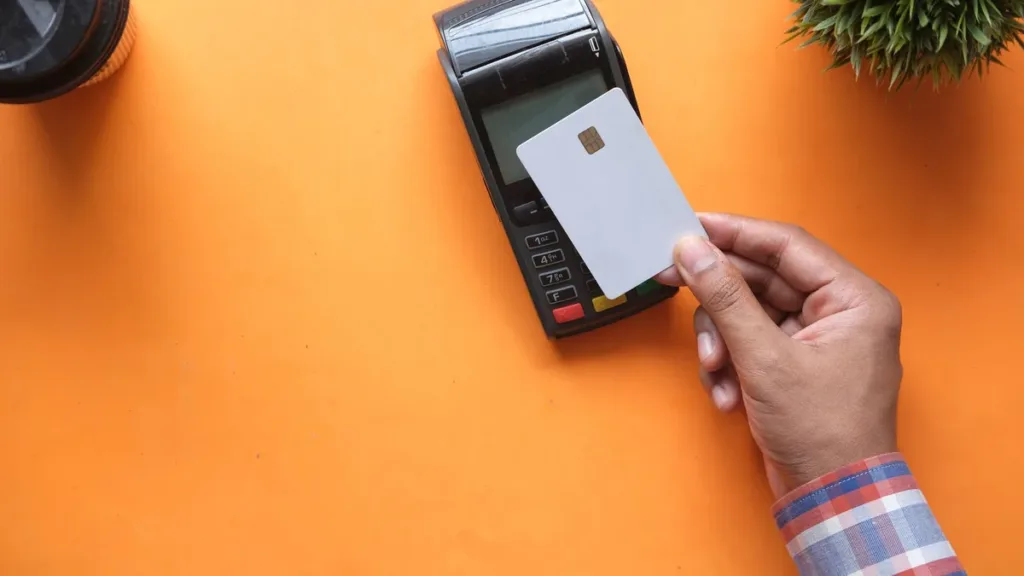
Should I pay in local currency or pounds? For a card issued in the UK and used on a Pakistan purchase, the default answer is to pay in the local currency, Pakistani rupees, and let your own card network and bank do the conversion. When a terminal, ATM or checkout offers to charge you in pounds instead, somebody other than your bank is choosing the exchange rate. That service is called dynamic currency conversion, and the rate it applies usually carries a mark-up that is larger than what your card issuer would add. There is one real exception: when a business quotes you a fixed amount in pounds, tells you the rate and margin up front, and your card treats the payment as a sterling transaction with no foreign fee. Then paying in pounds can be the cleaner option, and the only honest test is arithmetic, not habit.
This guide applies that test to a Pakistan transport booking, where three different figures tend to get blurred together: the rupee price of the journey, the currency the website displays it in, and the rate your card actually applies when the money leaves your account.
Should I pay in local currency or pounds? The short decision
Most of the confusion goes away if you ask one question at the moment of paying: who is converting, and can I see their rate? The table below covers the situations overseas Pakistanis and visitors meet most often.
| Situation | Usual better choice | Why |
|---|---|---|
| Card terminal in a Pakistani hotel, restaurant or shop asks “PKR or GBP?” | PKR | Choosing GBP hands the conversion to the merchant’s provider, whose rate you cannot compare on the spot. |
| ATM in Pakistan offers to “guarantee” the amount in pounds | Decline the conversion, take the rupee amount | Same mechanism as a terminal; your card network’s rate no longer applies if you accept. |
| Online checkout priced in rupees, with an optional currency switch | Compare both figures before paying | The converted figure may be fixed and disclosed; your card’s rupee conversion may still be cheaper, or may add a foreign fee. |
| Your card charges no non-sterling fee and uses the network rate | PKR, almost always | You get close to the card network’s rate with nothing added by your bank. |
| Your card charges a percentage fee on every foreign-currency transaction | Do the sum | A disclosed, modest margin in pounds can beat a rupee charge plus your bank’s fee. |
| You hold a UAE, Saudi or other Gulf card | Same logic: local currency unless the sum says otherwise | Nothing about DCC is specific to sterling; AED or SAR offers work the same way. |
What dynamic currency conversion is, and who sets the rate
Dynamic currency conversion, usually shortened to DCC, converts a card payment into the cardholder’s home currency at the point of sale, at an ATM or online, rather than leaving the conversion to the card issuer afterwards. According to the Wikipedia overview of dynamic currency conversion, the service is run by third-party DCC operators working with merchants, not by your bank. The terminal recognises a foreign card from its number and offers the home-currency option.
The rate is set by that operator, typically from a wholesale rate plus a mark-up. Mastercard spells out the consequence plainly on its currency converter page: if a transaction is converted by the merchant or ATM operator, Mastercard’s conversion rates do not apply, and this usually happens when you select your card’s currency rather than the merchant’s. In other words, pressing “GBP” on a terminal in Lahore does not get you “the pound rate”. It gets you somebody else’s pound rate.
Visa and Mastercard require that the customer is offered a genuine choice, that the rate is disclosed, and that home-currency conversion is not pre-selected. Those rules help after the event; they do not make an expensive rate cheaper at the till.
Where the network rate comes in
If you decline DCC and pay in rupees, the transaction is converted by your card network and billed by your issuer. Mastercard notes that its rates are specific to the date and time your bank authorises the transaction, which is generally the moment you pay, and falls back to the processing date if the rate cannot be applied at authorisation. Mastercard also warns that your bank may or may not use the network rate and may add its own foreign-transaction fees. So “pay in local currency” is the better default, but its real cost still depends on your card’s fee schedule.
Three figures in one Pakistan booking: price, display and charge
“Pay in PKR or GBP” is really three separate questions. Take an airport pickup at Islamabad booked from Birmingham: the journey has a price, the website displays it in some currency, and your card is charged in some currency, not necessarily the same one.
1. The underlying price is in rupees
On idrive.pk the fare is set in Pakistani rupees. The iDrive Terms of Hire state in clause 4.2 that prices are set and shown in PKR, the operating currency, and may vary by route, vehicle class, duration, service type and demand. Fuel, tolls and drivers are all paid in rupees, so the rupee figure is the real price of the journey. Everything else is a translation.
2. A display currency is only a translation
iDrive, like other sites aimed at overseas buyers, can show a pound estimate beside the rupee figure so that a visitor in Manchester or Glasgow can judge the order of magnitude. That estimate is a reading aid, not what you will be charged. When comparing quotes, compare the rupee figures.
3. The charge currency decides who converts
The charge currency is what the payment processor actually presents to your card. Stripe, which processes card payments for many international merchants, describes this in its documentation on presentment and settlement currencies: if the charge currency differs from your card’s currency, your bank or card issuer might charge you a foreign exchange fee, and a bank might also charge a fee when the card and the business are in different countries, regardless of the currency used. So paying in pounds does not automatically make a payment “domestic” in your bank’s eyes.
Of the three figures, you only pay the charged amount. The only one that stays still is the rupee price.
When paying in pounds costs more
Paying in pounds costs more whenever the conversion used to produce the pound figure is worse than the conversion your card would have applied to the rupee figure, after your bank’s own fees. That sounds circular, so here are the two common cases.
Case 1: a terminal or ATM offering DCC
This is the classic bad deal. You cannot see the network rate at the till, and the operator’s mark-up is folded into the rate rather than shown as a line. Even if your card charges a foreign fee, the rupee option is usually cheaper, because DCC mark-ups tend to exceed it.
Case 2: an online checkout that converts for you and says so
Some businesses price in rupees but let you pay in another currency, with the rate and margin disclosed and fixed at the moment of payment. That is still a conversion with a margin, but you can see the number before committing and compare it. If your card adds a percentage fee on any non-sterling payment, a disclosed modest margin can come out level or cheaper.
A worked example, with made-up numbers
The figures below are hypothetical and chosen to make the arithmetic easy. They are not current rates, fares or fees.
- Journey price: Rs 30,000.
- Suppose the card network rate on the day is Rs 375 to the pound. Rs 30,000 divided by 375 is £80.00.
- Card A charges no foreign fee. Paying in rupees costs about £80.00.
- Card B adds a 3% non-sterling fee. Paying in rupees costs about £82.40.
- A terminal offering DCC at an effective rate of Rs 345 to the pound would ask for about £86.96.
- A checkout that converts with a disclosed 2% margin on the same reference rate would ask for about £81.60.
With Card A, rupees win clearly. With Card B, the disclosed checkout conversion is marginally cheaper than rupees, and the DCC offer is the worst of the lot in both cases. Swap in your own card’s fee and the real figures on the day, and the answer may change. That is the point: the choice is a calculation, not a rule of thumb.
Checking the rupee rate yourself
For a rough sense of where the rupee sits, the State Bank of Pakistan publishes a daily interbank reference rate against the US dollar, the M2M revaluation rate, alongside weighted average bid and offer rates. It is a wholesale benchmark, not a rate any card or exchange counter will give you, but it tells you whether a quote is in a sensible range. The Visa and Mastercard consumer calculators show an indicative network rate for your card currency.
Card asks pay in pounds or rupees? Spotting the choice
The offer is not always worded as a question about currency. Knowing the common phrasings is half the defence.
On a card terminal
- The screen shows two amounts, one in PKR and one in GBP, and asks you to pick. Choose PKR.
- The cashier asks “Pounds or rupees?” before handing you the machine. Say rupees, then check the screen before entering your PIN.
- The receipt shows an exchange rate, a “reference rate” and a mark-up percentage. That is a DCC receipt. If you did not choose it, raise it with the merchant straight away and keep the slip.
At an ATM
- Wording such as “Accept conversion”, “Guaranteed rate” or “Continue with conversion” usually means DCC. The option to decline may be phrased as “Continue without conversion” or “Decline”.
- Visa has required ATM operators to state clearly that conversion is optional, but the layout still nudges you toward accepting. Read both buttons.
On an online checkout
- A currency selector near the total, or chips labelled PKR, GBP, USD and so on.
- A line saying the amount is “converted at today’s reference rate” or similar. A good checkout also shows the rupee figure it started from.
- A final payment page in a different currency from the one you were browsing in. Always read the currency code on the last screen, not the estimate you saw earlier.
For a Gulf-based traveller the same checks apply with AED, SAR or QAR in place of GBP. If your trip also passes through the Kingdom, our sister company Saudi Cab Co has a practical guide to currency, card payments and tipping in Saudi Arabia that covers the other end of the journey.
How the currency choice works on an iDrive booking
Clause 4.2 of the Terms of Hire says that if you prefer to pay in another currency, a range of major currencies, including pounds sterling, US dollars and euros, is offered at checkout. The amount in your chosen currency is calculated from the PKR price using a reference exchange rate checked against two independent sources and refreshed periodically, plus a currency-conversion margin to cover exchange-rate risk and processing costs. The terms say the rate and margin are shown to you and fixed at the moment you pay.
Clause 4.6 adds the part that matters for your comparison: that conversion is done by iDrive itself before the payment is taken, and any further fees or spreads applied by your own card issuer or bank are outside iDrive’s control.
In practice that gives you two routes on the iDrive secure checkout:
- Pay in PKR. You are charged the rupee amount, and your card network and bank convert it into your account currency at their rate, plus any fee your bank applies to foreign-currency payments.
- Pay in your own currency. You are charged a converted amount that already includes iDrive’s margin. Your bank may still apply its own charges, depending on how it classifies the payment.
Neither route is always cheaper. If your card has no foreign-transaction fee, paying in rupees will usually cost slightly less, because you avoid a margin. If your card adds a percentage to every non-sterling payment, paying in pounds may come out close or lower. Look at both figures on the checkout and at your card’s fee schedule, then choose.
If you are still working out what to arrange before travelling, the guide to booking Pakistan transport before you fly covers timing, pickup details and what to have ready. Travellers paying on behalf of parents or relatives who will actually take the ride may find our sister service Pakistan Taxi’s note on booking and paying for someone else’s airport ride useful, since the payer and passenger details are handled separately.
Reading the final charge on your statement
The number on your banking app a few minutes after paying is not always the number that settles. Here is how to read what you see.
- Pending amount. Your bank may show an authorised amount first. For a rupee payment, the pound figure at this stage reflects the rate at authorisation, which Mastercard says is the rate it generally applies.
- Posted amount. When the transaction settles, the figure can shift slightly if the network could not apply its rate at authorisation and used the processing-date rate instead.
- Separate fee line. Some banks show the non-sterling or foreign-transaction fee as its own line; others roll it into the converted amount. Your statement or the transaction detail screen usually says which.
- Currency code. If you chose rupees and the transaction detail shows an original amount in PKR, your bank did the conversion. If it shows only GBP, the conversion happened before the card was charged.
If you paid on a terminal in Pakistan and the statement shows GBP with no rupee original, but you remember choosing rupees, the terminal may have applied DCC anyway. Keep the receipt and contact your card issuer; that is exactly the situation the card schemes’ DCC dispute rules are meant for.
Refunds when the currency moved
Cancellations are where the currency choice you made weeks earlier comes back into play. As a rule, a card refund reverses the charge in the currency it was made in, and if that is not your account currency, your bank converts it at the rate it applies when the refund is processed, not the rate on the day you paid.
That produces two different outcomes:
- If you paid in pounds via a merchant’s own conversion, a full refund returns the same pound amount you were charged. The rupee has moved since, but that movement is no longer your problem.
- If you paid in rupees, a full refund returns the same rupee amount, which your bank converts at the rate on the refund date. If the rupee has weakened against the pound in the meantime, you get back slightly fewer pounds than you paid; if it has strengthened, slightly more. Check with your bank whether the foreign-transaction fee on the original payment is returned with a refund; card issuers set their own rules on that.
For iDrive bookings, the iDrive refund policy is currently published as a draft for legal review and is marked on the page as not in force, so check its status before relying on it. The draft proposes that refunds go back through the payment processor to the original card, in the currency you were charged, for the amount charged, and notes that your own bank’s exchange rate or foreign-transaction charge on the way back is outside iDrive’s control.
A practical consequence: if you expect plans to change, for example a wedding date that is not yet final, paying in your own currency removes the exchange-rate risk from any refund. Paying in rupees keeps the conversion in your bank’s hands in both directions. Neither is wrong; they are different risks.
A checklist before you press pay
- Find your card’s fee schedule for non-sterling (or non-home-currency) transactions. Note the percentage and any fixed charge.
- Note the rupee price of the booking, not the display estimate.
- If the checkout offers your own currency, note that figure and the rate or margin shown.
- Estimate the rupee option in pounds using the Visa or Mastercard calculator, then add your bank’s fee.
- Compare the two totals. If they are within a few pence, choose the one whose refund behaviour suits your plans.
- On any terminal or ATM in Pakistan, choose rupees unless you have done the same sum and the pound offer genuinely wins.
When you are ready to price a journey, start on the iDrive booking page, where the rupee figure comes first and the currency choice sits at checkout. Availability and the final booking confirmation depend on a partner being assigned.
Questions people ask
Should I pay in local currency or pounds in Pakistan?
On card terminals and ATMs, pay in rupees. Choosing pounds hands the conversion to the merchant’s DCC provider, and Mastercard confirms its own rates then no longer apply. Online, compare the rupee charge plus your bank’s fee with any disclosed pound figure.
What is the GBP to PKR card rate I will actually get?
If you pay in rupees, it is your card network’s rate at the moment your bank authorises the payment, possibly with your bank’s fee on top. The Visa and Mastercard calculators give an indication; the State Bank of Pakistan’s daily reference rate is a wholesale benchmark against the dollar, not a card rate.
Does paying in pounds protect me if I cancel?
It removes exchange-rate movement from the refund, because a refund reverses the charge in the currency charged. If you paid in rupees, your bank converts the rupee refund at the rate on the day it arrives.