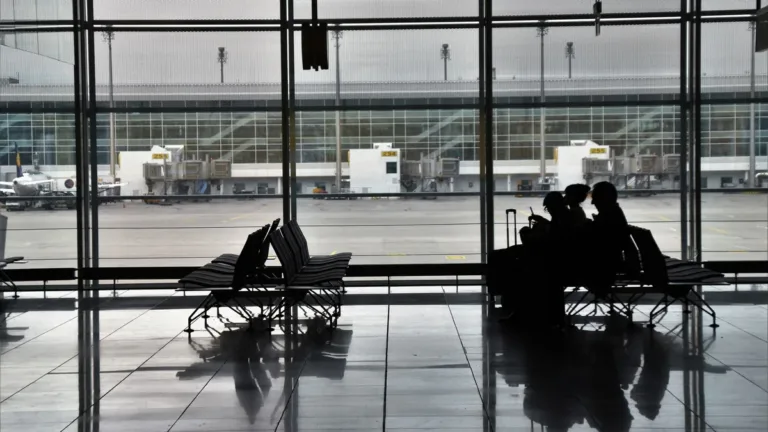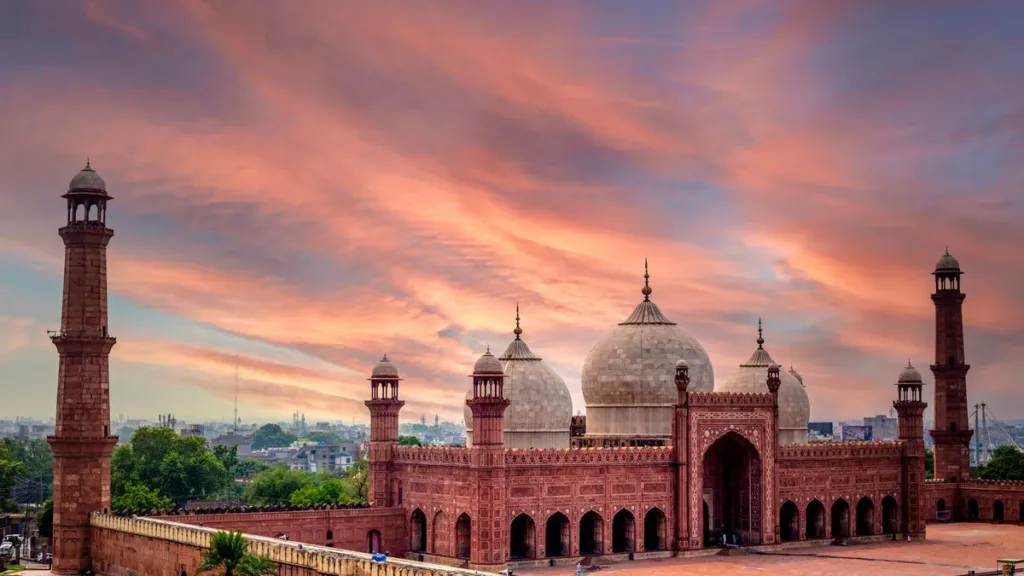
The short answer on the Wagah border crossing for foreigners, as of September 2026: you cannot currently cross. The UK Foreign, Commonwealth & Development Office (FCDO) says in its Pakistan advice, updated on 22 September 2026, that the crossing point on the Grand Trunk highway “is currently closed”, although visitors can still reach Wagah and attend the daily border ceremony from the Pakistani side. The FCDO’s India advice goes further: it says the Wagah-Attari crossing is closed and advises against all travel within 10km of the India-Pakistan border. So if your plan was to walk from Amritsar into Lahore, you need a different plan, and for now that plan involves an aircraft.
What follows is for people who still have to make the journey work: overseas Pakistanis with family in India or Punjab, foreign travellers doing a two-country trip, and anyone buying transport for a group. It covers the current status and how it came about, who was allowed to cross when the post was open, the documents each side asks for, the ceremony and its timings, the Lahore-to-Wagah road, and the structural reason any cross-border itinerary here is really two trips with a line drawn between them.
Decision summary
- Crossing India to Pakistan by land: not possible while the crossing stays closed. Route by air instead and confirm routings with the airline.
- Watching the flag ceremony from Lahore: the FCDO says visitors can still attend on the Pakistani side, and the Grand Trunk road to Wagah sits inside the exception to its border-area warning.
- Watching from the Indian side: Attari falls within the 10km zone where the FCDO advises against all travel. Check your insurer before going.
- Future reopening: treat any reopening as news to verify on official pages on the day, not something to build a non-refundable itinerary around.
Current status of the Wagah border crossing for foreigners
The closure is a consequence of the April 2025 crisis between India and Pakistan. After the attack at Pahalgam on 22 April 2025, India announced a package of measures that included closing the main border crossing between the two countries, ending travel for Pakistani nationals under the SAARC Visa Exemption Scheme and cancelling visas already issued to Pakistanis. By 24 April, Pakistan had suspended visas issued to Indian nationals and closed its airspace to Indian aircraft. India launched military strikes on 7 May 2025, and a ceasefire was announced on 10 May after three days of hostilities. The sequence of diplomatic measures is documented with dates.
The ceasefire did not reopen the gate. More than a year later, both of the UK government’s country pages still describe the crossing as closed. The Kartarpur Corridor, the other route Sikh pilgrims used to reach Gurdwara Darbar Sahib, has also been shut from the Indian side since 7 May 2025, and the FCDO lists it alongside Wagah as closed for crossings.
What “closed” does and does not mean
Closed here means the immigration post is not processing travellers. It does not mean Wagah is off limits from Lahore. The FCDO’s Pakistan warnings page advises against all but essential travel within 5 miles of the international border with India, then carves out two exceptions: the Grand Trunk highway via the Wagah border, and the Kartarpur Corridor. It adds, in brackets, that the crossing point is closed but that visitors can still attend the ceremony. The India warnings page carries no equivalent exception for Attari.
That asymmetry matters for insurance. Both pages repeat the standard FCDO line that travel insurance can be invalidated if you travel against its advice. A trip to the ceremony from Lahore on the Grand Trunk road is inside the stated exception. A trip to the ceremony from Amritsar is not.
How to check the status yourself
- Read the current FCDO pages for both Pakistan and India, and note the “updated” date at the top of each.
- Read the US State Department’s Pakistan advisory, which tells travellers to confirm the status of the crossing before setting out.
- Look for an announcement from either government, reported by a national newspaper such as Dawn or The Express Tribune. A single social media post from a traveller is not a reopening.
- If your trip is more than a few weeks out, check again the week before you go.
Who may cross at Attari-Wagah, and who may not
Even in normal times the Attari Wagah border crossing was not an open door. The US State Department’s Pakistan travel advisory, reissued at Level 3 (“Reconsider travel”) in June 2026, states that the only official Pakistan-India border crossing point for people who are not citizens of Pakistan or India is in Punjab, between Wagah and Atari. For a third-country passport holder, that meant one gate, on one road, with no alternative if it shut.
The rules split into three groups, and it is worth being clear which one you are in before reading anything else.
| Traveller | Position when the post was open | Position now |
|---|---|---|
| Foreign national (e.g. British, American, EU passport) | Could use Wagah-Attari as the single designated crossing, with visas for both countries arranged in advance | Cannot cross; the post is closed |
| Pakistani national going to India | Needed an Indian visa under the bilateral arrangements then in force | India cancelled existing visas for Pakistani nationals and ended SAARC visa-exemption travel in April 2025 |
| Indian national going to Pakistan | Needed a Pakistani visa under the bilateral arrangements then in force | Pakistan suspended visas issued to Indian nationals in April 2025 |
Dual nationals and British Pakistanis should read this carefully. Your eligibility at a land border depends on which passport you present and what that country allows, not on where you live. If you hold both a British and a Pakistani passport, the position for Pakistani nationals may still bite on the Indian side. Take that question to the relevant high commission before you commit money to anything.
Documents both sides ask for
None of this lets you cross today. It is the checklist to keep for when a reopening is confirmed, and most of it applies to flying into Pakistan anyway.
Pakistan side
- Visa in advance. The FCDO’s Pakistan entry requirements state plainly: “You need a visa to visit Pakistan and you must apply in advance.” The same page notes that the Wagah crossing is the only official land crossing between the two countries and that it is currently closed.
- The official portal. Applications go through the Government of Pakistan’s online visa system, which says it is open to citizens of 175 countries and lists a visa-on-arrival route in the tourist category for citizens of 50 of them. The portal also says issuance is the government’s prerogative and that you should plan travel only once you hold a valid visa. Treat that as instruction, not boilerplate.
- Passport validity. The FCDO says your passport must expire at least six months after the date of your visa application.
- Entry stamp. The FCDO warns that leaving Pakistan will be difficult without an entry stamp. At a land border, check the stamp before you walk away from the counter.
India side
- Indian visa before you arrive. The State Department notes that an Indian visa is required to enter India and that no visa services are available at the border. The same applies in reverse: do not expect to sort out a Pakistani visa at Wagah.
- Your own government’s advice. The India-side 10km warning means your insurer may treat a trip to Attari differently from a trip to Amritsar city. Ask in writing.
Wagah border timings and the flag ceremony
The ceremony is the part of Wagah that has survived the closure, and for most visitors from Lahore it is the whole point of the trip. The flag-lowering has taken place every evening since 1959. The choreographed marching that goes with it, high kicks, stamping and glaring across the gate, is sometimes called the “silly walk” ceremony and dates from 1986, according to the Wikipedia entry on Wagah. On the Pakistani side it is performed by the Pakistan Rangers.
When it starts
There is no single clock time that holds all year. The ceremony is tied to sunset rather than to a fixed hour (the Wikipedia entry describes it as taking place two hours before sunset), so the start moves earlier through the winter months and later through the summer. That is the main reason online lists of Wagah border timings disagree with each other: many were written in one season and never updated.
A sensible planning approach:
- Look up the sunset time in Lahore for your date.
- Work backwards to arrive well before the ceremony begins. Crowds build before the start, and you should expect security checks on the way in.
- Ask your hotel or host in Lahore to confirm the start time the day before. Local knowledge beats any published table.
- Allow for the ceremony to be altered or scaled back at short notice, particularly during periods of tension between the two countries.
What to take, and what to leave
- Your original passport or national ID card, in case you are asked for identification on the approach.
- Minimal bags. A small bag moves through screening faster than a rucksack.
- Water and a layer. Winter evenings in Lahore turn cold quickly once the sun drops.
- Patience at the exit. Everyone leaves at the same moment, and the car park empties slowly.
Behave as you would at any military post: follow instructions, ask before photographing personnel, and do not wander toward the gate outside the spectator areas.
Lahore to Wagah border distance and the road there
Wagah sits about 24km from Lahore; Amritsar is about 32km away on the Indian side. The road is the historic Grand Trunk Road, which in Pakistan carries the N-5 national highway designation and runs west from Lahore through Gujranwala, Jhelum and Rawalpindi toward Peshawar. The short Lahore-to-Wagah stretch is the eastern tail of that route and the one the FCDO names in its exception.
The distance is short. The time is not always. Journey times from central Lahore depend heavily on where you start, the day of the week and whether you hit the evening rush as everyone else heads for the ceremony. Treat any figure you are quoted as an estimate and leave a margin.
Example planning timeline
This is an illustration, not a schedule. Adjust it to your date and starting point.
- Sunset minus roughly four hours: collected from a hotel in Gulberg or the Mall Road area.
- Sunset minus roughly three hours: arrive at Wagah, park, clear screening, find seats before the ceremony begins.
- Ceremony: watch from the Pakistani stands.
- After the ceremony: wait for the crowd to thin, then return to Lahore for dinner or straight to the airport for a late flight.
If you are going straight to Allama Iqbal International Airport afterwards, do not cut it fine. A delayed exit from the car park is normal, not exceptional.
Why a cross-border itinerary needs two separate suppliers
This is the part most guides skip, and it is the part that matters most to anyone buying transport. When Wagah reopens, and whenever you plan any trip that touches two countries by land, the transport does not cross with you. You finish one journey at one side’s checkpoint, clear two sets of formalities, and start a second journey on the other side. Two countries, two sets of licensing and insurance, two suppliers who each answer only for their own leg.
Treating it as one booking is where plans break. A driver in Lahore has no way to know whether you cleared Indian exit formalities on time. A driver in Amritsar has no reason to wait if the Pakistani side is slow. Nobody owns the gap unless you design it.
| Leg | Who arranges it | What to confirm | Typical failure |
|---|---|---|---|
| Hotel to Attari (India) | An Indian operator | Drop-off point, time, what happens if the post is shut on arrival | Arriving to find the crossing closed with no return arranged |
| Formalities at both posts | You | Visas, passport validity, entry stamp | Delay that pushes you past your pickup window |
| Wagah to Lahore or the airport (Pakistan) | A Pakistani operator | Meeting point, waiting-time terms, a phone number that works on both networks | Driver leaves after a fixed wait; no local SIM to call |
How to write the handover
- Name a meeting point on the Pakistani side that a driver can reach without entering restricted areas, and agree it in writing.
- Agree waiting time, not a pickup minute. A window with a clear rule for what happens after it closes is worth more than a precise time neither of you can control.
- Swap contact details in advance, including a WhatsApp number, and a fallback person at your hotel or family home in Lahore.
- Keep the two legs commercially separate. If the first leg collapses, you want to be able to cancel or move the second without disputing the whole package.
The same logic applies to today’s workaround. If you are coming from India by air via a third country, the connection point replaces the gate as the place where your plans can come apart. Arrange the Lahore leg around the arrival you actually land on, not the one on the original ticket.
The Lahore legs: city and airport
Whether you are heading to Wagah for the ceremony or arriving from abroad because the land route is shut, Lahore is the hinge. Allama Iqbal International Airport (LHE) is about 15km from the city centre.
Three arrangements come up again and again:
- Airport arrival to a Lahore address. Straightforward if the address is precise. Give the driver a pinned location as well as the written address, because a district name alone is rarely enough. iDrive’s Lahore airport transfers page sets out what to send with a request.
- A half-day within Lahore that includes Wagah. The ceremony fits naturally at the end of a day of city visits. Our Lahore car and driver service handles requests for a driver across the afternoon and evening.
- Onward to another city. If Lahore is only a stopover, a road leg to Islamabad, Sialkot or Faisalabad is often simpler than a second flight. See city-to-city transport in Pakistan for how those journeys are quoted.
Families collecting relatives, rather than buying for themselves, may prefer our sister service Pakistan Taxi, whose Lahore airport journey guide walks through arrivals from the family side of the barrier.
Crossing from India to Pakistan on foot: the realistic alternatives
The walk across the line at Wagah was, for many travellers, the romantic way to arrive in Pakistan. It is not available, and there is no other land crossing open to foreigners to substitute for it. Your realistic options are these:
- Fly via a third country. Pakistan closed its airspace to Indian aircraft in April 2025, so a routing through a hub outside both countries is the usual workaround. Airspace rules can change; check current routings and notices directly with the airline before you buy.
- Split the trip into two holidays. For many people, the honest answer is to see India on one trip and Pakistan on another, flying home in between. It costs more in flights and less in stress.
- Wait for a confirmed reopening. If the land route is essential, for example for a family member who cannot fly, watch the official pages and do not pay deposits until the post is actually processing travellers.
What you should not do is travel to the Indian side on the strength of a rumour. The FCDO advises against all travel within 10km of the border in India, and arriving at a closed post leaves you in a restricted zone with nowhere to go but back.
A checklist for anyone buying this trip
If you are a travel manager, a family organiser or an overseas Pakistani arranging things for relatives, run through this before money changes hands.
- Have you read both FCDO pages, Pakistan and India, and noted the date each was updated?
- Does your travel insurance explicitly cover the places on the itinerary, including Wagah?
- Does every traveller hold a valid Pakistani visa from the official portal, with at least six months left on the passport?
- Is the Lahore leg booked around the arrival time you will actually land, with a waiting-time rule agreed?
- If the ceremony is on the plan, is there a buffer of several hours before any flight?
- Does someone in Lahore, a hotel desk or a relative, have the driver’s number and yours?
- Are the legs cancellable independently of each other?
When those answers are in place, send the details through the iDrive journey request form. A request is not a booking: it is reviewed against the vehicle and timings you describe, and availability and price are only settled if a quote is issued and you accept it. If you are organising from the UK or the Gulf, the notes on arranging Pakistan transport before you fly cover the extra details worth sending.
Questions people ask
Is the Wagah border open for foreigners right now?
No. As of September 2026 the UK government’s advice for both Pakistan and India describes the Wagah-Attari crossing as closed. Check the current FCDO and US State Department pages before planning.
Can I still watch the Wagah border ceremony?
From the Pakistani side, yes: the FCDO says visitors can still attend the daily ceremony, and the Grand Trunk road to Wagah is an exception to its border-area warning. From the Indian side, Attari lies within the 10km zone where the FCDO advises against all travel.
How far is Wagah from Lahore?
About 24km, along the Grand Trunk Road (N-5). Journey time depends on your start point and the evening traffic heading to the ceremony, so leave a margin.
Can I get a Pakistan visa at the border?
Plan on no. The FCDO says you must apply for a Pakistan visa in advance, and the official portal advises planning travel only once a valid visa has been issued.