Short answer: at Allama Iqbal International Airport your driver will not be waiting in the baggage hall, at the belt or at the aircraft door. Airport Security Force rules keep visitors out of the restricted side of the terminal, so the first place a pre-booked driver can stand is the public area beyond the arrivals exit, among the other people meeting passengers. Good Lahore airport arrivals directions therefore come down to three things: know the order of the controls inside, know that the meeting happens only after you walk out, and have your driver’s name, phone number and number plate on your phone before the aircraft lands. With iDrive, those details come by email once a driver is assigned to your booking, before you travel, not as a surprise at the kerb.
That is the whole plan in one paragraph. The rest of this guide takes the walk in order, explains where drivers are actually permitted to wait, and then deals with the part most arrival guides skip: when the driver is assigned, how to confirm you have the right car, and what to do if nobody is holding your name.
Decision summary for a Lahore arrival
- Where you meet: outside the arrivals exit, on the public (landside) side. Nobody without a ticket or an airport pass gets into the restricted area to collect you.
- What you hold before landing: driver name, phone or WhatsApp number, vehicle model, colour and registration, plus your booking reference.
- How you confirm identity: three checks, in order: the board, a detail only the real driver knows, and the plate against your email.
- What you never do: leave with someone who approaches you first, or hand over bags before the plate check.
- What to allow for: construction and traffic changes around the terminal while the expansion programme runs.
Lahore airport international arrivals: the walk from aircraft to exit
Inside the terminal the sequence is fixed. What varies is how long each stage takes, which depends mostly on how many flights land around yours. Plan for the order below and you will not be surprised by anything except the queue length.
- Aircraft to terminal. The Allama Iqbal Terminal uses both air bridges and remote parking stands, so you may walk straight in or ride a bus from a remote stand. A bus adds a few minutes and puts you in the building with a whole planeload at once.
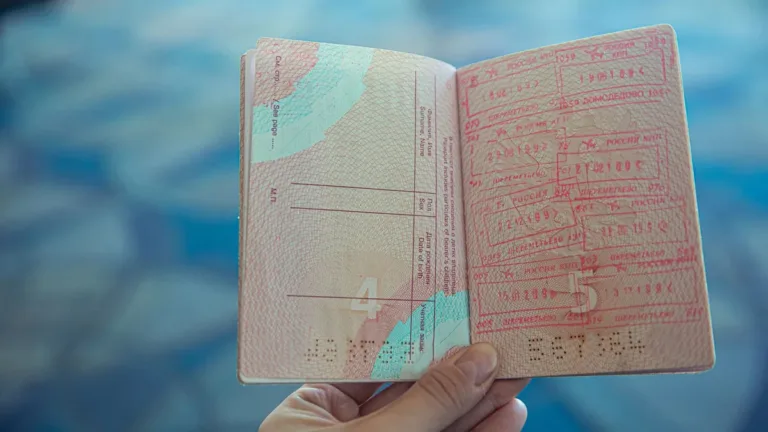
- Immigration. Have your passport and visa paperwork in hand, not in the bottom of a rucksack. Join the queue that matches your passport. This is usually the stage that decides whether you walk out early or late.
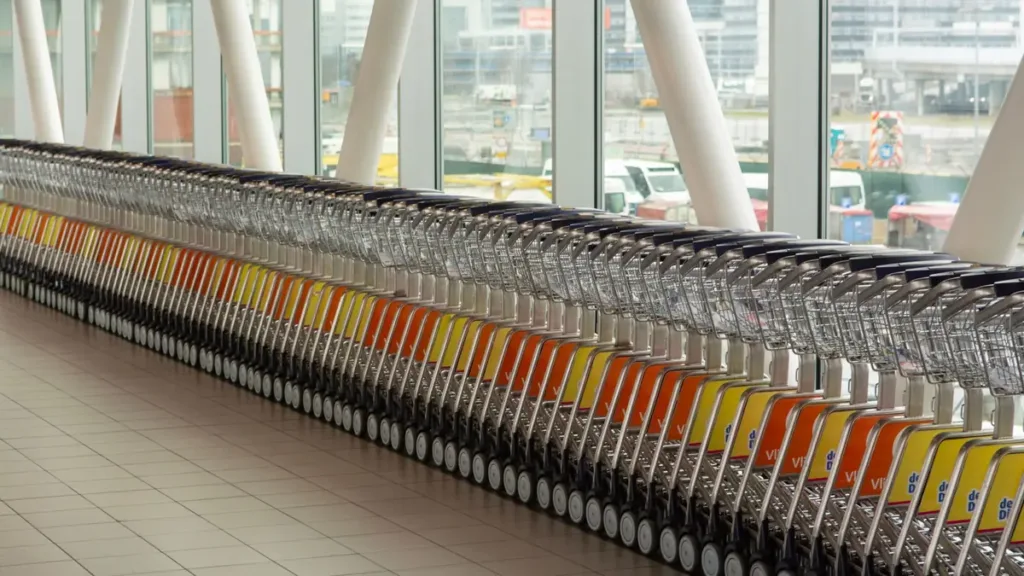
- Baggage reclaim. Check the screens for your belt number and take a trolley if you have more than a cabin bag. Keep every bag within reach: the ASF is blunt that unattended baggage is removed and destroyed.
- Customs. If you are carrying goods that need declaring, this is where it happens. Check your allowances before you fly rather than at the desk.
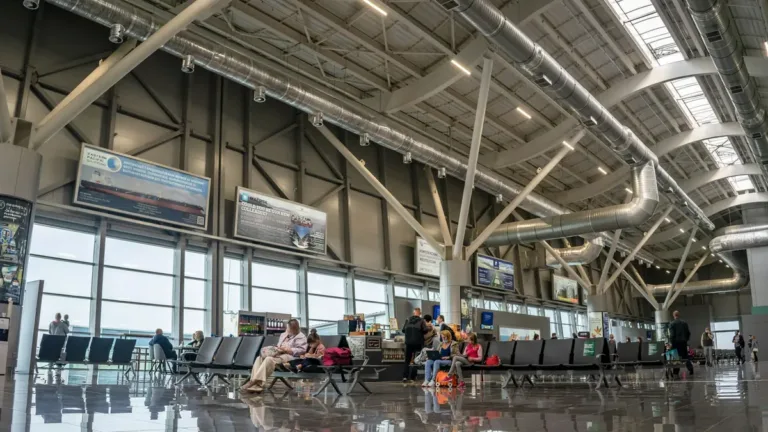
- The exit. You now pass into the public arrivals area. This is the first point at which anyone outside the airport system can reach you, including your driver.
Why the driver cannot come inside
This is not a courtesy rule. The Airport Security Force’s access-control policy states that no visitor is allowed into the restricted area except in exceptional cases, such as receiving a passenger on a wheelchair or stretcher or an unaccompanied child. Airport staff themselves enter on passes issued on a need-to-enter basis. A driver who says he will “come to the belt” is either mistaken or not who he says he is.
Even those exceptions are not a walk-in right. The ASF says permission has to be obtained from its Chief Security Officer or Officer Commanding, during business hours and before the flight arrives. In practice, if you are travelling with a wheelchair user or a child flying alone, book assistance with the airline before departure as well, so someone is already responsible for bringing the passenger out to the waiting family or driver.
Where drivers are allowed to wait at the Lahore airport exit
Once you are through the doors, there are really only two places your driver can be: standing in the public area with a board, or with the car in the car park, waiting for your call. The kerb in front of the terminal is not a third option in the way many visitors imagine.
The public arrivals area
This is where meeters and greeters gather, and where a driver on a meet-and-greet booking should be standing when you walk out. The ASF’s security instructions ask that only the minimum number of people come to receive a passenger, and its FAQ sets a hard ceiling: with a private vehicle, only three persons including the driver are allowed per passenger, to keep the concourse and car park from clogging. Visitors are also told to carry a CNIC or other photo identity. For a family arrival this matters: if five cousins plan to come to the airport as well as your booked driver, some of them will be turned away or will slow everyone down.
The drop lane is not a waiting area
The ASF instructions say plainly not to park in the drop lane, and that vehicles left in no-parking areas are removed by forklift. So a professional driver will not sit at the kerb for forty minutes while you queue at immigration. He parks, walks to the exit to meet you, and then walks you back to the car, or brings the car round once you are together with your bags.
The car park
Expect a short trolley walk between the exit and the car. That walk is where the identity checks below should already be done, not something you sort out at the boot.
| Meeting method | How it works | Good for | Watch out for |
|---|---|---|---|
| Name board at the exit | Driver waits in the public area with a board, then walks you to the car | First-time visitors, families, anyone with heavy luggage | Crowding at peak times; board wording (see below) |
| Call on exit | Driver waits in the car park; you phone or WhatsApp when you are through customs | Regular travellers with a working phone and light bags | No signal or no data in the first minutes; you wait while he walks over |
| Kerb pickup after a call | You wait at the exit; driver brings the car to the pick-up point once you confirm | Passengers with reduced mobility who should not walk far | Short windows at the kerb; stay reachable by phone |
If you are unsure which method suits your trip, say so when you book an iDrive Lahore airport transfer and note it in the booking. The driver can only follow the plan he was given.
When the driver is assigned, and what the message contains
Two different moments get confused here. Booking is when the journey is recorded. Assignment is when a named driver and a specific vehicle are allocated to it. With iDrive, your booking email tells you that driver details will follow by email before travel, and the assignment email is the one you actually need on landing day. It carries the driver’s name, a phone or WhatsApp number and the vehicle: model, colour and registration.
A booking made three weeks ahead is a booking for a journey, not a promise about which person will turn up. Drivers are allocated nearer the time, once flight details and the day’s work are clearer. That is normal, and it is why the flight number in your booking matters more than the landing time you typed. A flight number can be checked against the schedule; a time cannot.
What to do on your side before you fly
- Give the flight number and date of arrival in Pakistan, not the date you leave home. Overnight flights from the UK and North America often land the next calendar day.
- Tell the desk if your flight changes. A rebooked connection in the Gulf can move your arrival by hours.
- Save the driver’s number in your phone and open a WhatsApp chat with it before departure, so the chat is already there when you land.
- Screenshot the assignment email. Roaming data may not connect the moment you switch your phone on in the hall.
- If the driver details have not arrived by the day before you travel, contact iDrive rather than waiting to find out at the exit.
Name board pickup at Lahore airport: the three-point check
A name board is a convenience, not proof. Anyone can write a name on a sheet of card, and the arrivals area is exactly where people who want to pick up passengers for their own purposes will stand. The UK Foreign Office’s safety and security advice for Pakistan is worth reading on this: it tells travellers to avoid street taxis and to use reputable, licensed companies where you call and the operator contacts a driver, and it notes that British nationals of Pakistani origin have been targeted by criminals, including kidnappers, because they are often perceived as wealthier than locals. None of that is a reason to be anxious. It is a reason to run three quick checks every time.
1. The board
Decide in advance what the board should say. A full name with a family surname, held up in a crowded hall, tells everyone standing nearby who you are. A first name with the booking reference, or a short agreed word, is enough for you to spot and useless to anyone else. Put your preference in the booking notes.
2. A detail only the real driver knows
Let the driver speak first. Ask him to tell you the booking reference, your destination area or the code word you agreed. Do not volunteer it yourself by asking “Are you here for booking such-and-such?”, because the answer to that question is always yes.
3. The plate
Before any bag goes in the boot, compare the registration on the car with the one in your assignment email. Then check the model and colour. If the car is different, stop and call the number in the email, not a number the driver gives you on the spot. Vehicle swaps do happen for ordinary reasons, but a legitimate change will be confirmed by the desk.
Example: you land at night, walk out and see a board reading “SARA / 4417”. You ask, “Which booking is this?” The driver says “Four four one seven, going to DHA Phase 6.” You walk to the car park and the plate matches the email. Three checks, under a minute.
While you wait, the ASF’s own advice applies: do not accept food or drinks from strangers, and keep your bags with you rather than letting a helpful passer-by take the trolley.
What to do if no one is there
Most “no-show” moments at an airport are timing problems, not missing drivers. You came out faster than expected, the driver is walking over from the car park, or he is standing on the other side of a pillar with thirty other boards. Work through it in order.
- Stay in the public area near the exit. It is staffed, lit and watched. Do not wander out to the road or into the car park on your own to look for him.
- Call or WhatsApp the driver on the number in the assignment email. Tell him exactly where you are standing and what you are wearing.
- Check your email and messages. A delay notice or a changed vehicle may already be waiting.
- Contact the iDrive desk if the driver does not answer. The desk has the booking and can reach the driver or the fleet partner through its own channels.
- Refuse unsolicited offers. Someone who says “your driver sent me” but cannot pass the checks above is not your driver.
| Situation | First move | If that fails |
|---|---|---|
| Driver not visible, phone answers | Agree a precise meeting spot at the exit | Stay put and let him come to you |
| Driver’s phone off or no answer | Message on WhatsApp, then try again after a few minutes | Contact the desk with your booking reference |
| Your phone has no signal | Use the screenshot of the email to show staff or your family the details | Ask a family member at home to contact the desk for you |
| Flight landed very early | Tell the driver your actual exit time | Wait inside the public area rather than at the kerb |
| Someone unknown offers a lift | Decline politely | Report persistent approaches to airport security staff |
Terminal changes during the expansion works
Lahore’s airport is being expanded while it stays open, and that affects both the walk out and the drive away. Phasing and completion dates shift, so treat any timeline you read online, including in older news reports, as provisional.
What has been reported so far:
- Roads and parking. In June 2024, after an inspection by the aviation secretary, The News reported that roads connected to the airport car park were being widened, that the entrances and exits of the passenger car park were to be doubled once the roads were done, and that a traffic study was counting vehicles at the airport’s entry and exit points. Changed access roads mean your driver’s route in and out may not match what he used a year ago.
- The terminal itself. The same report covered expansion of the terminal building and its related facilities. Work of that kind brings temporary walkways, relocated doors and changed signage, sometimes for months at a time.
What that means for you
Follow the signs you see on the day, not the directions a relative remembers from their last trip. Ask your driver, when he confirms, where exactly he will be standing, because a meeting point described as “the usual place” may have moved. And check arrival times on the official Allama Iqbal International Airport website or with your airline rather than relying on an old screenshot.
Lahore also has a separate Hajj terminal for pilgrim flights. If you are flying in on a Hajj or Umrah charter, confirm with your group organiser which terminal your flight uses and pass that to the driver. For the Saudi end of the same journey, our sister company Hajj Umrah Taxi has a practical guide on where to meet your driver at Jeddah airport.
From the kerb into Lahore
The airport sits about 15 kilometres from the city centre, and the time that distance takes depends almost entirely on the hour and the traffic around the airport works. A late-night arrival usually moves freely; an evening rush can be slow. Your driver will know the current state of the roads better than any map you checked at home.
A few habits save the most trouble on the first drive:
- Give a precise address. In the larger housing societies a block letter or street number can repeat from one phase to the next, so give the phase, block and house number together.
- Know the gate. Some gated societies have more than one entrance, and the one your hosts use by day may not be the one that is staffed after midnight. If your hosts know which gate to use, pass it on.
- Plan the rest of the stay separately. If you need a car for family visits or business meetings after the airport run, look at taxi and car hire in Lahore rather than stretching an airport booking to cover the day.
If you are heading to a relative’s home and want a family-focused checklist for the address itself, our sister service Pakistan Taxi, also run by iDrive, explains how to get the address right from Lahore Airport to a family home.
Flying into more than one city on the same trip? Our overview of airport transfers across Pakistan covers the other airports iDrive serves, and the same meeting logic holds at each of them. When your flight details are settled, you can request your Lahore airport journey through iDrive and add your board wording and meeting preference in the notes.
Questions people ask
Can my driver meet me at the baggage belt in Lahore?
No. ASF access control keeps visitors out of the restricted area except in exceptional cases such as wheelchair or stretcher passengers and unaccompanied children, and even then only with prior ASF permission. Your driver meets you after you exit into the public area.
When will I get my driver’s details?
With iDrive, driver details follow by email once a driver is assigned, before you travel. The email includes the driver’s name, a phone or WhatsApp number and the vehicle’s model, colour and registration. If nothing has arrived by the day before you fly, contact the desk.
How many people can come to the airport to receive me?
The ASF allows only three persons, including the driver, per passenger when a private vehicle is used, and asks that the minimum number of people come to receive a passenger. Plan the welcome party accordingly.
What should the name board say?
Something you recognise and a stranger cannot use: a first name with your booking reference, or an agreed short word. Avoid a full name and family surname on display in a crowded hall, and always check the plate before loading bags.