The Khush Aamdeed service at Islamabad airport is a paid, per-person meet-and-assist product: a host meets the passenger from the aircraft door, moves them and their bags through the terminal using dedicated facilitation lanes and a buggy, and stays with them until they leave the building. It is licensed by the Pakistan Airports Authority and, at the time of writing, covers international flights at Islamabad International Airport only. What it does not do by default is put your visitor in a car. On the two lower tiers, the service ends at the terminal exit, which means the driver meeting still has to be planned by whoever is hosting the trip. Only the top tier lists a “chauffeur handover”.
So the useful question for a host is not “should we book the Khush Amdeed service Islamabad airport now offers?” but “which meeting arrangement does this particular visitor need, and where exactly does responsibility pass from the airport host to our driver?” This guide answers both, with the official charges source, a decision table and a handover checklist you can send to the driver and the traveller.
What the Khush Aamdeed service at Islamabad airport actually covers
The operator’s own description is short and specific. According to the official Khush Aamdeed service page, the arrival service runs “from when the aircraft doors open till you leave the airport”, and the departure service runs “from the moment you reach the airport till your flight departs.” The same page cites a PAA licence reference (SOP-001-ISCM-1.0) and states that only international services are available, with domestic flights marked as coming soon. The booking portal describes it as a meet-and-assist concierge service at Islamabad International Airport; no other airport is listed there.
Every tier, according to that page, includes the same core:
- a service ambassador (the host who meets the passenger);
- baggage concierge;
- golf cart or buggy transfer inside the terminal;
- dedicated facilitation lanes;
- a digital identity badge (the page mentions a UPID and Face-ID);
- coordination with the airline and ground handling agent;
- multilingual support;
- wheelchair and medical coordination.
The tiers then add layers. Gold adds lounge access. Platinum adds lounge access, a welcome kit, hotel or tourism liaison and, crucially for anyone arranging onward transport, a chauffeur handover.
Where it starts and where it stops
Two boundaries matter. At the start, the host is at the aircraft door, which is airside, beyond the point any relative or driver can reach. At the end, the arrival service stops when the passenger leaves the airport. Nothing on the official page says the host walks the passenger to a car park, to a family waiting outside, or to a named driver, except where Platinum’s chauffeur handover is included. Treat that as the working assumption until the operator confirms otherwise in writing for your booking.
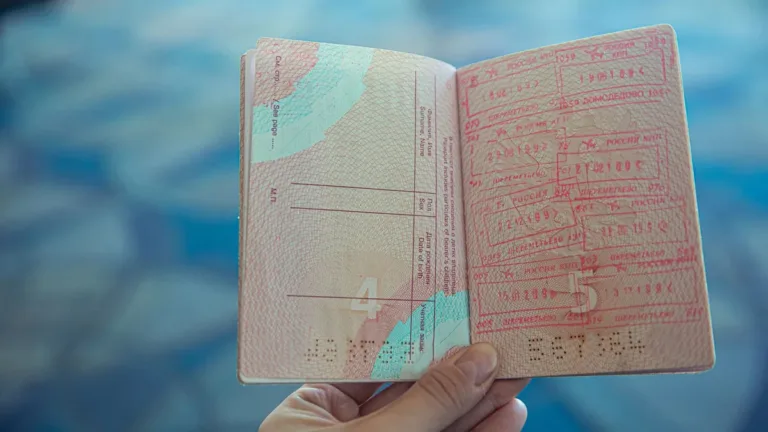
One more boundary is easy to miss: facilitation is not exemption. A host can shorten queues and keep a nervous traveller company, but immigration, customs and security screening still happen. The UK Foreign Office reminds visitors in its Pakistan entry requirements to make sure their passport is stamped on entry, because leaving without an entry stamp becomes difficult. A faster lane is no reason to skip checking that stamp before walking on.
Checking Islamabad airport meet and greet service charges
At the time of writing (September 2026), the official page listed international pricing per person as follows. These figures are the operator’s, they are quoted in US dollars with a rupee approximation, and they can change without notice, so check the live page or the booking portal before you commit.
| Tier | Listed price (per person) | Listed service window | Adds to the core |
|---|---|---|---|
| Silver | $50 (about PKR 13,900) | About 30 minutes | Core service only |
| Gold | $75 (about PKR 20,850) | About 45 minutes | Lounge access, standard bottled water |
| Platinum | $100 (about PKR 27,800) | About 60 minutes | Lounge access, premium water, welcome kit, chauffeur handover, hotel or tourism liaison |
Three things to read carefully in that table.
- It is per person. A couple travelling with two teenage children counts as four passengers. The official page does not publish separate infant or child pricing, so ask before assuming a discount.
- The service window is a published figure, not a promise about your flight. Ask what happens if bags are slow or the aircraft parks at a remote stand and the window runs out. Get the answer in writing.
- The dollar price is the anchor. The rupee figures are approximations shown by the operator. If you pay in sterling, riyals or dirhams, your card issuer’s rate applies on the day.
Booking runs through the operator’s Khush Aamdeed booking portal, which describes a five-step flow and states that you are not charged until you confirm. The portal did not publish a minimum lead time or cancellation terms when we checked, so treat both as questions to settle before paying, particularly if the traveller’s flight is on a route prone to schedule changes.
What the charge buys, in plain cost terms
For a family of four on Silver, the listed arithmetic is four times $50. That sum buys time and company inside the terminal. It does not buy the ride home, the wait outside, or a driver’s patience if the flight lands two hours late. Budget the airport assistance and the onward vehicle as two separate lines, because they are two separate suppliers with two separate sets of terms.
Three meeting arrangements, and who each one suits
Hosts in Pakistan generally choose between three levels of arrival support. They are not rungs on a luxury ladder; each solves a different problem.
1. Kerbside pickup
The passenger clears the terminal on their own, walks out, phones or messages the driver, and the car comes to them. This is the cheapest and fastest option when it works, and it works well for confident travellers with a local SIM or roaming, light luggage and a clear idea of what the vehicle looks like. It fails when the phone is dead, when the passenger does not know the pickup zone, or when the driver cannot wait at the kerb and is circling.
2. Name board meeting
The driver waits where the airport directs meeters and greeters, holding a board with the passenger’s name. The passenger still handles the airside part alone: immigration, baggage belt, customs. The value is at the exit, where the passenger sees a name instead of hunting for a car. This suits first-time visitors who are fine with queues but not with a crowded arrivals area, and older relatives who dislike using a phone in a hurry.
3. Airside meet-and-assist
This is where Khush Aamdeed sits. Someone meets the passenger at the aircraft door, before any queue, and stays with them through the formalities. It suits travellers for whom the airside part is the real problem: an elderly parent flying alone, a passenger needing wheelchair coordination, a first-time foreign visitor who speaks neither Urdu nor English with confidence, or a senior guest whose host wants the arrival to feel looked after.
Decision table: which arrangement a first-time visitor needs
Use the traveller’s weakest point, not their seniority, to decide. A company director who flies every month may need nothing; a retired aunt on her first long-haul trip may need the full service.
| Visitor profile | Main risk on arrival | Sensible arrangement | What to add |
|---|---|---|---|
| Frequent traveller, local SIM, carry-on only | Finding the car | Kerbside pickup | Vehicle registration and colour sent before landing |
| First-time visitor, confident, working phone | Crowded exit, unfamiliar layout | Name board | Driver’s name, a photo of the board, an agreed fallback spot |
| Elderly or unwell passenger travelling alone | Walking distance, queues, bags | Meet-and-assist, plus a named driver meeting | Wheelchair coordination requested at booking; the family’s number given to the host |
| Foreign guest with limited Urdu or English | Questions at immigration and customs | Meet-and-assist | Hotel or host address printed in English and Urdu |
| Family group with children and heavy luggage | Bags, trolleys, keeping everyone together | Name board, sometimes meet-and-assist | Vehicle sized for the real luggage count, not the headcount |
| VIP or business guest with a tight schedule | Delay and first impression | Meet-and-assist, top tier if a formal handover is wanted | Chauffeur handover confirmed in writing, with the driver’s details |
Two arrangements often combine. Meet-and-assist covers the airside half; a name board or a confirmed driver covers the landside half. That combination makes most sense for elderly travellers and important guests, because neither piece alone gets the traveller from the aircraft to the car.
The meet and assist to driver handover
Every airport arrival that goes wrong goes wrong at a seam. With meet-and-assist, the seam is the terminal exit, where the airport host’s job ends and the driver’s begins. Plan that seam deliberately.
Who holds the passenger at each stage
- Aircraft door to baggage belt: the Khush Aamdeed host, according to the operator’s description of the arrival service.
- Baggage belt to exit: the host, with baggage concierge included in every tier.
- Exit to vehicle: on Platinum, the listed chauffeur handover; on Silver and Gold, nobody by default. This is the gap to close.
- Vehicle to destination: the driver and the transport provider.
How to close the gap on Silver or Gold
- Give the host the driver’s name and mobile number at booking, and ask whether the host can phone the driver as the passenger reaches the exit. The page lists no formal handover on these tiers, so this is a request, not an entitlement.
- Send the driver the passenger’s full name as it appears on the passport, the flight number and a recent photo if the family is comfortable sharing one.
- Agree one fallback meeting point that both sides can find without a phone signal, and write it down.
- Tell the passenger, in advance, that the host will leave at the exit. A traveller who expects to be escorted to the car and suddenly finds themselves alone is a predictable source of panic calls.
How to make a Platinum chauffeur handover work
The operator lists “chauffeur handover” as a Platinum feature but does not define the steps on its page. Ask three questions when booking: where the handover physically takes place, what the host needs from you about the driver, and whether the host will wait if the driver is delayed. If your driver is from a separate company, confirm that the host will hand over to an outside chauffeur rather than only to a partner.
The same seam exists wherever airport assistance and ground transport are bought separately. Our sister company Saudi Cab Co has written a detailed guide on where airport assistance ends and the driver begins in Saudi Arabia, which is worth reading if the same family also travels for Umrah.
What the visitor needs before boarding
Most arrival problems are created at the departure airport, days earlier. Send the traveller a single message containing everything below, and ask them to keep it offline on the phone and on paper.
Documents
- Passport, visa or identity card. UK visitors need a visa arranged before travel, according to the FCDO, and the portal lists visa-on-arrival eligibility only for certain nationalities; the government’s Pakistan Online Visa System is the official application route and states that travellers should plan only once a valid visa is issued. The FCDO notes that holders of a valid NICOP or Smart NICOP are recognised as Pakistani citizens and can enter without a visa.
- Passport validity. The FCDO says the passport must have an expiry date at least six months after the date of the visa application.
- Health documents where relevant. The FCDO entry page covers vaccination requirements, including yellow fever and polio, depending on where the traveller has been.
- The Khush Aamdeed booking confirmation, if booked, with the tier clearly shown.
Contacts and meeting details
- The host’s contact route from the booking, and the driver’s name, mobile and vehicle details.
- The fallback meeting point, in words, not just a pin.
- The destination address in English and Urdu, plus a family member’s number who will answer at any hour.
- A note of whether the passenger needs a wheelchair, and confirmation that this was requested at booking, not left for the day.
Timing information
- The flight number, not just the airline, so the driver can track the actual landing time.
- The expected number of checked bags, which decides the vehicle size.
- Any onward journey after arrival, such as a drive to Abbottabad, Mirpur or Lahore, so the host and driver know the passenger will be tired and the car needs to be ready rather than parked far away.
The FCDO’s safety and security advice for Pakistan recommends using taxis only from reputable, licensed companies where you call for a car and the operator contacts the driver, and advises against hailing street taxis. Arranging the car through an operator before the flight is the simplest way to follow that.
When meet-and-assist is unnecessary
Paying for an airside host is easy to justify for the wrong reasons. It is usually unnecessary in these situations:
- The traveller has done this arrival before and found it manageable. Familiarity is worth more than a buggy.
- The flight is domestic. The operator lists international services only at present, so the question does not arise until that changes.
- The real worry is the exit, not the queue. If the visitor copes with immigration but dreads finding the car, a name board meeting fixes the actual problem for far less.
- The group is large and mobile. Because the listed charge is per person, a group of healthy adults travelling together pays a lot for help they share out among themselves anyway.
- A relative is already arranging wheelchair assistance through the airline. In that case, check what the airline provides before paying twice for overlapping help; Khush Aamdeed lists wheelchair and medical coordination, which is coordination rather than a replacement for the airline’s arrangements.
The honest test is this: write down what would go wrong if the visitor landed alone. If the answer is “they would find the exit crowded”, book a driver with a name board. If the answer is “they might not get through the airport at all”, book the host as well.
Arranging the car that meets the host
Whichever tier you choose, the ground transport is a separate booking with its own confirmation. Send iDrive the flight number, passenger names, bag count and destination through the Islamabad airport taxi and transfer page, and say clearly that Khush Aamdeed assistance is booked, and on which tier. A request is not a confirmed booking: availability and the quoted fare depend on the date, the vehicle and the journey, and we confirm what we can arrange before you rely on it.
If the visitor lands elsewhere or plans a multi-city trip, the Pakistan airport transfers overview covers the other major airports. Hosts organising everything from the UK or the Gulf should read booking Pakistan transport before you fly, which walks through the information we ask for when the person paying is not the person travelling. For the family side of the arrival, when the relatives themselves come to the airport, our guide to meeting family at Islamabad or Sialkot airport covers the landside logistics in detail.
Families who want a gentler, step-by-step walkthrough of the Islamabad arrival can also use the Islamabad airport journey guide from Pakistan Taxi, our sister service within the iDrive network. When the plan is settled, send the full details through the iDrive journey request form.
Questions people ask
Is Khush Aamdeed run by Islamabad airport itself?
The official Khush Aamdeed page describes the service as licensed by the Pakistan Airports Authority and cites a PAA licence reference. Bookings are made through the operator’s own portal rather than the airport website.
How much is the khushamdeed Islamabad airport service?
At the time of writing, the official page listed $50, $75 and $100 per person for the Silver, Gold and Platinum tiers on international flights. Prices can change, so check the official page or portal before booking.
Does the host take the passenger to the car?
The arrival service is described as running until the passenger leaves the airport. A chauffeur handover is listed only on the Platinum tier, so on Silver and Gold you should plan the driver meeting yourself.
Does meet-and-assist mean the visitor skips immigration?
No. The service lists dedicated facilitation lanes, but immigration, customs and security checks still apply. The traveller should check their passport has been stamped on entry.
Can I book it for domestic flights?
Not at present. The operator lists international services only and marks domestic services as coming soon.