If you land at Islamabad on an international flight and have an Islamabad airport domestic departure later the same day, you almost certainly do not need a car to get between the two. Islamabad International Airport runs from one terminal building, so the change is a walk, not a drive. What decides your day is the ticket, not the vehicle. On one booking with bags checked through, the airline owns the connection. On separate tickets you become an arriving passenger: immigration, baggage claim, customs, out into the public hall, then back in through departures security and check-in as if you had just come from home. A car only enters the picture when the gap is long enough to leave the airport, when you are overnighting, or when the domestic flight is cancelled and you need to get to a hotel or change plan.
The rest of this guide sets out how to tell which situation you are in, how much time each one realistically consumes, and how to brief a transfer company properly if the gap does turn into a night in Islamabad or Rawalpindi.
Decision summary: do you need a vehicle between flights?
Start with two facts from your booking confirmation: are both flights on the same reference (PNR), and does your baggage tag show the final domestic airport code or ISB? Everything else follows.
| Your situation | What happens at Islamabad | Vehicle needed? |
|---|---|---|
| One booking, bags tagged to the final domestic airport | You still clear immigration at your point of entry into Pakistan, then follow the airline’s instructions for the domestic leg | No. Walk within the terminal |
| One booking, bags tagged only to Islamabad | Collect bags, clear customs, re-check them for the domestic flight | No, unless the gap is long enough to leave |
| Separate tickets, same day, gap of a few hours | Full arrival, then a fresh departure: security, check-in, boarding pass | No. Walk from arrivals to departures |
| Separate tickets, gap of most of a day | As above, but you have time to go into the city | Optional: a round trip to a hotel or family, if the maths works |
| Overnight gap, or next-morning domestic flight | You leave the airport and return the next day | Yes: an arrival transfer tonight and a departure transfer tomorrow |
| Domestic flight cancelled after you land | Rebook, wait, or switch to road | Possibly, and possibly a long one |
The table is deliberately blunt because the commonest mistake runs the other way: people book an airport-to-airport “transfer” at a single-terminal airport, then find the driver waiting outside arrivals for a passenger who never needed to leave.
How many terminals in Islamabad airport, and where the domestic side sits
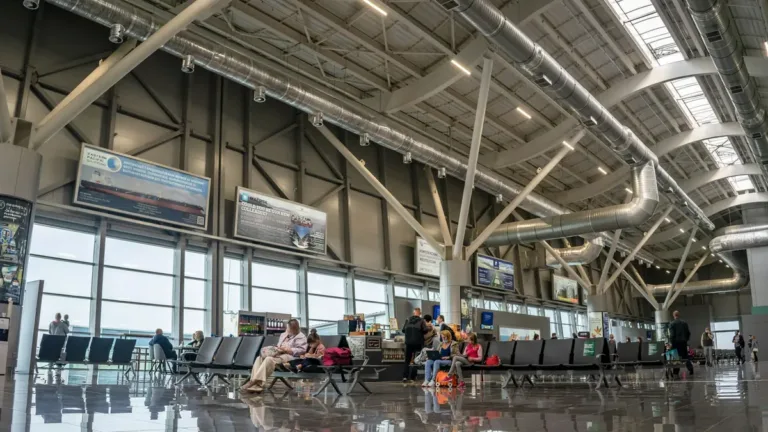
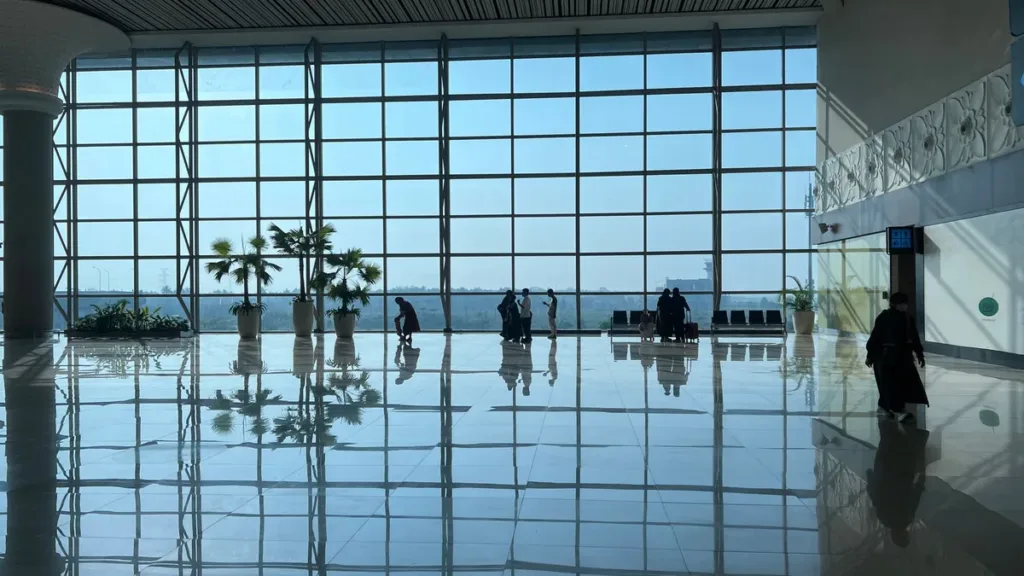
One. The airport that opened at Fateh Jang in 2018 is built around a single modular terminal building of roughly 180,000 square metres with 15 gates and ten remote stands, according to its Wikipedia entry, which records a formal inauguration on 1 May 2018 and full operations from 6 May 2018.
Inside that one building, international and domestic flows are kept apart. The Pakistan Airports Authority’s own arrivals procedure page describes domestic passengers entering a domestic arrival lounge, collecting bags from their belt and walking out to the concourse hall, while international passengers go through immigration, baggage claim and a customs channel. On the way out, the departures procedure page takes international passengers through immigration into an international departure lounge. Domestic passengers skip immigration at both ends.
So when people search for Islamabad airport domestic arrivals or Islamabad airport international arrivals, they are describing two halls of the same building. Getting from the public arrivals area back to the departures entrance is a matter of walking, with a trolley, not a shuttle ride.
Where the car question does apply
The airport sits about 25 km south-west of Islamabad, roughly equidistant from Zero Point and Rawalpindi’s Saddar, and connects to the city by the Srinagar Highway and directly to the Lahore and Peshawar motorways. That distance is why a mid-connection trip into town is not a casual decision. You are committing to two road legs, two lots of traffic and a full departure procedure on your return. The same Wikipedia entry notes a metrobus service to Islamabad and Rawalpindi since April 2022, which suits light travellers but is a poor fit for anyone pushing a trolley of Gulf shopping.
Through ticket or separate tickets: the question that decides everything
An international-to-domestic connection at Islamabad falls into one of two families, and they behave very differently when something goes wrong.
One booking (a through ticket)
Both flights sit on the same reservation, sold together, usually by the international carrier or a partner. The airline built the connection, so if the first flight runs late, re-accommodating you on a later domestic flight is normally its problem under its conditions of carriage, not yours. The UK Civil Aviation Authority’s guidance on delays explains that on a single connecting booking, your right to care and compensation is based on the distance between the first and last airport in that booking, while on a self-transfer of separate bookings you have no statutory right to care, compensation or onward transport if a delay makes you miss the next flight. That guidance applies to flights covered by UK rules, so treat it as the clearest statement of the principle rather than a promise about every carrier flying into Pakistan.
Even on a through ticket, Islamabad is your point of entry, so you meet Pakistani immigration and customs here, not at Skardu or Karachi. Whether your bags are tagged through or must be collected and re-checked is set by the airlines’ interline arrangements, not by the airport. Read the tag at your origin check-in desk and ask the agent directly. If it shows ISB, you are collecting.
Separate tickets (a self-transfer)
You bought the international flight and the domestic flight separately, perhaps because a Gulf carrier’s fare into Islamabad plus a local domestic fare came out cheaper than any through routing. It is a legitimate way to save money and entirely workable, but you carry all of the risk. The domestic airline has no idea your inbound flight exists. If it lands late and you miss check-in, you are a no-show on their system, and whatever the fare rules say about no-shows is what applies.
Baggage allowances also stop being continuous. Qatar Airways’ baggage allowance page explains that on code-share and interline itineraries the allowance is set by IATA’s Most Significant Carrier rule. On separate tickets there is no single itinerary, so the domestic carrier’s allowance governs the second leg on its own terms. A generous international allowance (say, as an example, 30 kg or 40 kg) does not carry over to a domestic ticket with a smaller one.
What the airport actually makes you do between flights
Here is the sequence for a separate-ticket connection, stitched together from the PAA arrivals and departures procedures. A through-ticket passenger whose bags must be re-checked follows much the same path.
- Immigration. Choose the lane for your category. The PAA page lists lanes for overseas Pakistanis, foreigners, taxpayers and special persons, and asks passengers to remove hats and sunglasses and stay off their phones at the desk.
- Baggage claim. Find your flight on the screens, then your belt. Report missing bags to your airline before leaving the hall; PAA notes damage claims must be filed within seven days.
- Customs. Green channel if you have nothing taxable, red channel for taxable or restricted goods. Declaring is your job; the UK FCDO’s entry requirements page for Pakistan is explicit that you must declare anything that may be prohibited or subject to duty, and that importing alcohol or pork products is illegal.
- Out to the public hall. You are now landside, among the people meeting passengers.
- Back into departures. Screening by the Airports Security Force at the entrance, with bags through the scanners.
- Domestic check-in. PAA advises arriving 1.5 to 2 hours before a domestic departure. Drop bags, collect a boarding pass.
- Domestic gate. No immigration on the domestic side.
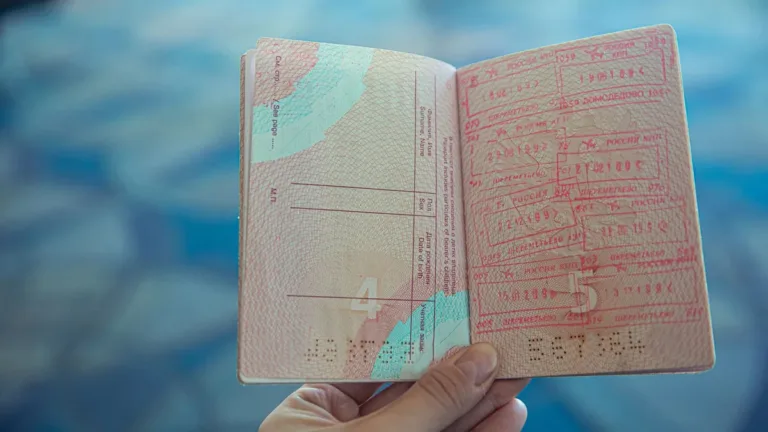
Two details catch people. First, the FCDO warns that leaving Pakistan is difficult without an entry stamp, so check your passport before walking away from the immigration desk, even though your next flight is domestic. Second, the PAA departures page lists currency limits for baggage and a health desk for polio certificate clearance. Those apply to international departures, but they are a reminder that Airports Security Force staff will scan everything again at the departures entrance, so anything bought duty-free on the inbound flight goes through the machines a second time.
Minimum realistic connection times at Islamabad
We could not find a minimum connection time for this change published anywhere passengers can check it, and anyone quoting one to the minute is guessing. What you can do is build the gap from the parts you know.
- The fixed part: PAA’s advice to be at domestic check-in 1.5 to 2 hours before departure. Treat the domestic airline’s own check-in closing time as the hard stop; it is printed on the ticket or the carrier’s site.
- The variable part: the time from wheels-down to walking out of customs. It depends on whether you parked at a gate or a remote stand, how many wide-bodies from the Gulf landed in the same half hour, the immigration queue for your lane and how long the belt takes.
- The buffer: the international flight’s own punctuality. Long-haul arrivals do run late, and a separate-ticket passenger absorbs every minute of it.
As a planning example only, not a rule: an international arrival at 03:30 against a domestic departure at 09:00 leaves five and a half hours. Take off two hours for the domestic check-in window and you have three and a half hours to land, clear immigration, reclaim bags and exit customs, with room for a delay. Compress that same example so the domestic flight leaves at 06:30 and the margin becomes a single hour for the entire arrival process, which is a gamble on separate tickets.
Our own planning view for separate tickets: if your domestic leg is the only flight of the day on that route, or feeds a trip you cannot move, build in more slack than feels necessary. If a later flight exists and your fare allows changes, you can afford to run tighter.
Mountain sectors deserve extra thought
Northern sectors such as Skardu and Gilgit are a common onward leg from Islamabad, and they are the legs where a missed connection or cancellation leaves you with the longest road alternative. Our guide on flying or driving from Islamabad to Skardu sets out what the road alternative involves, which matters if the flight does not go. If it does, a pre-arranged Skardu airport transfer saves you negotiating at the kerb at the far end.
When a ground car or hotel run is actually needed
There are four honest reasons to book a vehicle for an international to domestic connection at Islamabad. Everything else is a walk.
1. The gap is overnight
A late-evening international arrival against an early-morning domestic departure is the classic case. Sleeping on a bench is possible; arriving at a mountain airport after a night in the terminal is not a great start to a trip. The cleaner answer is two separate journeys: airport to hotel tonight, hotel to airport tomorrow. Our Islamabad airport taxi and transfers page covers both directions.
2. Family want to see you in between
A connection through Islamabad is often the only chance for relatives in Rawalpindi or the city to see a traveller heading north. If the gap is long, a round trip is reasonable. Price it as two legs and a waiting window, not a single drop, and leave the return leg generous. The airport is roughly 25 km out, and getting back to departures on a weekday afternoon is not the same drive as the empty road at dawn.
3. The domestic flight is cancelled
If the second flight does not operate, you face three choices: wait for the next one, stay the night, or switch to road. On a through ticket the airline should rebook you; on separate tickets you negotiate with the domestic carrier alone. A car becomes relevant for a hotel run, or for a long-distance drive if you decide not to wait. Our airport transfers across Pakistan page lists the airports and routes we cover.
4. You were never actually connecting
Some itineraries only look like connections. If you are staying in Islamabad for three days before a domestic flight, that is an arrival and a later departure, and you want an ordinary arrival pickup plus a separate departure booking. Our note on how the arrivals pickup at Islamabad or Sialkot works covers the meeting side.
Specifying the booking if the gap is overnight
A vague request produces a vague quote. If you are asking for a transfer around an overnight connection, give the operator enough to plan both legs without back-and-forth.
- Inbound flight number and scheduled arrival time, not your departure time from Dubai or Manchester. The pickup is planned around the landing, and the flight number lets the operator check for delays.
- Your hotel or family address, with a map pin if possible. “Near the Blue Area” or “off GT Road” leaves the operator guessing about the second leg.
- The domestic flight number and departure time for the return run, so the pickup can be timed to PAA’s 1.5-to-2-hour domestic check-in advice plus the drive.
- Passenger and bag count, including prams, wheelchairs and anything oversized. An international allowance of two large cases each plus hand luggage fills a saloon boot fast.
- Whether anyone will travel with you on the second leg, such as relatives riding back to the airport to see you off.
- A contact number that works on arrival, whether a Pakistani SIM, WhatsApp on airport Wi-Fi, or a relative’s phone.
You can send all of this through the iDrive booking request form. Treat what comes back as a quote to confirm, not an automatic booking: availability and price depend on the time, the vehicle and the address, and you should wait for confirmation before relying on it.
If Islamabad is one stop in a longer itinerary
Some overseas travellers combine a trip home through Islamabad with Umrah on the same journey. If your trip includes a connection in Saudi Arabia, the same “which arrival do I give the driver” logic applies there; our sister company Pilgrim Taxi has a guide on which arrival time to give for a connecting Umrah itinerary.
A quick pre-flight checklist for this connection
- Confirm whether both flights share one booking reference.
- Ask at origin check-in where your bags are tagged to, and keep the tag stub.
- Note the domestic airline’s check-in closing time, not just the departure time.
- Check the domestic baggage allowance on its own terms if the tickets are separate.
- Keep anything you need for an unplanned night in your cabin bag.
- Look at the domestic carrier’s later flights on the same route in case you need a fallback.
- If a vehicle is needed, book the arrival leg and the departure leg as two named journeys.
If you would rather have a gentler, family-oriented walk through the terminal itself, our sister service Pakistan Taxi keeps an Islamabad airport journey guide aimed at first-time arrivals and relatives doing the meeting.
Questions people ask
Is there a separate domestic terminal at Islamabad airport?
No. There is one terminal building with separate domestic and international arrival and departure areas. You walk between them.
Do I clear customs in Islamabad if my final flight is domestic?
Yes. Islamabad is your point of entry into Pakistan, so immigration happens there. If your bags come off at Islamabad you take them through customs before re-checking them.
How early should I be at check-in for the domestic flight?
The Pakistan Airports Authority advises 1.5 to 2 hours before a domestic departure. The airline’s own check-in closing time is the deadline that counts.
Do I need a taxi between international arrivals and domestic departures?
Not for a same-day change. You only need a vehicle if you leave the airport, for example to a hotel on an overnight gap or to visit family.