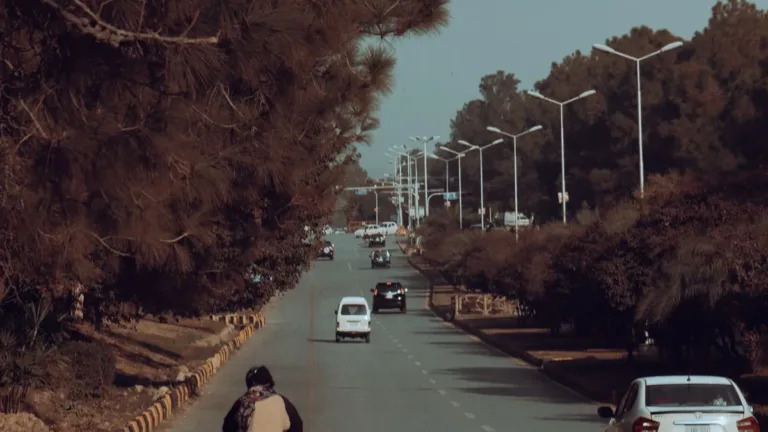
Is driving in Pakistan safe? For a visiting employee on a short project trip, the honest answer is that it is legal and possible, but it is rarely the lowest-risk option, and the official evidence points the same way. The World Health Organization’s latest estimate puts Pakistan’s road death rate at 11.9 per 100,000 people for 2021, against 2.4 for the United Kingdom. The UK Foreign, Commonwealth & Development Office describes local driving standards as erratic, especially at night, and the US State Department’s advice for Pakistan says to drive with experienced local drivers or guides. None of that means a competent driver cannot handle a motorway run in daylight. It does mean an employer who hands a visitor a set of keys and a Karachi address has accepted a risk that most travel policies would struggle to justify.
This guide looks at the question the way a risk register would: what the official sources say, where the exposure actually sits (city streets, motorways, night, rural roads), what the employer owes the traveller, and a short rule set for deciding between self-drive and a car with a driver.
The short verdict for travel managers
If you need a one-paragraph position for a travel policy, this is a defensible one:
- Default for visiting staff: a car with a professional local driver, booked in advance, for airport arrivals, city movements and any journey that could run past dusk.
- Self-drive by exception: acceptable for an experienced driver with the correct documents, on daylight motorway legs between major cities, in a well-maintained vehicle, with a check-in plan.
- Not self-drive: first-day arrivals after a long-haul flight, night journeys, mountain roads in the north, and anything touching areas where the FCDO advises against travel.
The rest of this article explains why each line sits where it does, so the policy can be defended when someone asks “why can’t I just rent a car?”
What official travel advice says about the roads
Three official sources are worth reading in full before any trip is approved. They are short, they are updated, and they are what an insurer or an incident review will point to.
UK FCDO
The FCDO’s safety and security page for Pakistan is blunt on roads. Outside the major motorways, road quality is variable. Local driving standards are erratic, particularly after dark, and driving can be unpredictable at dusk as people rush home. For the mountainous north it notes that landslides frequently block or destroy roads, that some routes such as the N15 between Chilas and Babusar are inaccessible at certain times of year, and it recommends using experienced local drivers on those routes and only in clear weather.
It also flags carjacking as a risk, says major road networks in and around cities may be shut or blocked during protests, and tells travellers to always carry photo ID because they may be detained until they can show it.
US State Department
The State Department’s country information page currently carries a Level 3 “Reconsider travel” advisory, issued in June 2026. Its road section warns that roads outside major cities depend on the weather and are poorly maintained, lists potholes, drop-offs and unmarked barriers, and notes that many vehicles lack working headlights or dimmers and many roads are neither lit nor signed. It also describes local drivers who may come head-on in your lane if they think it saves time. Its recommendation matches the FCDO’s: drive with experienced local drivers or guides.
The WHO numbers, in context
The WHO figure is a modelled estimate rather than a tally of police-recorded deaths, which is what makes it useful for comparing one country with another. Roughly five times the UK’s rate does not mean every journey is five times as dangerous; the risk concentrates on particular roads, times and vehicle types. It does tell a risk assessor that the baseline is materially different from home, and that controls which feel optional in Surrey or Ontario are worth paying for here. The indicator is published on the WHO Global Health Observatory.
Is driving in Pakistan easy? City streets versus motorways
People who ask whether driving in Pakistan is easy usually mean one of two very different environments. Treating them as one is the most common mistake in trip approvals.
The motorway network
The motorways, such as the M-2 between Lahore and Islamabad, are access-controlled, tolled and patrolled by the National Highways & Motorway Police. Lane discipline is better than on ordinary roads, service areas are spaced along the route, and speed limits are enforced. The car limit on motorways was cut temporarily earlier in 2026 and, as Dawn reported, restored to 120 km/h for cars and light vehicles on 22 June 2026. Limits have changed at short notice before, so a driver should check the current figure rather than rely on a briefing note written months ago.
For a driver who is comfortable on UK motorways and on the left-hand side of the road, a daylight motorway leg is the most manageable driving in the country. The difficulties are fatigue, slow heavy vehicles, the occasional pedestrian or animal where they should not be, and weather. Our note on motorway speed limits and realistic drive times covers the timing side.
Driving in Karachi, Lahore and Rawalpindi
City driving is where visitors are most exposed and least prepared. Driving in Karachi, Pakistan’s largest city, means mixed traffic in which motorcycles, rickshaws, buses, delivery vans, donkey carts and pedestrians share the same space with few formal rules applied consistently. Lane markings are treated as suggestions. Right of way is negotiated, often by horn, rather than assigned. A visitor spends so much concentration on the traffic that navigation, parking and security awareness all suffer.
That last point matters for a duty-of-care assessment. A self-driving visitor in a city is a lone person in a stationary car at junctions, in car parks and outside hotels, which is exactly the exposure the FCDO’s carjacking and street-crime warnings describe. A driver who knows the city removes most of that: the passenger is dropped at the door and collected at the door, and the visitor is not the one guarding a parked car on a busy street.
A quick comparison
| Environment | Main hazards | Visitor self-drive? | Suggested control |
|---|---|---|---|
| Motorway, daylight | Fatigue, slow heavy vehicles, weather, closures | Reasonable for experienced drivers | Rest stops, fixed arrival window, check-in call |
| Motorway, night or fog season | Low visibility, unlit vehicles, sudden closures | Avoid | Re-time to daylight or use a professional driver |
| City centre (Karachi, Lahore, Rawalpindi) | Dense mixed traffic, navigation load, street crime, parking exposure | Not recommended | Car with driver, door-to-door |
| National highways and rural roads | Variable surface, head-on overtaking, livestock, poor lighting | Not recommended | Local driver who knows the route |
| Northern mountain roads | Landslides, seasonal closures, altitude, long single-lane stretches | No | Experienced mountain driver, clear-weather window only |
Night driving, fog and rural roads
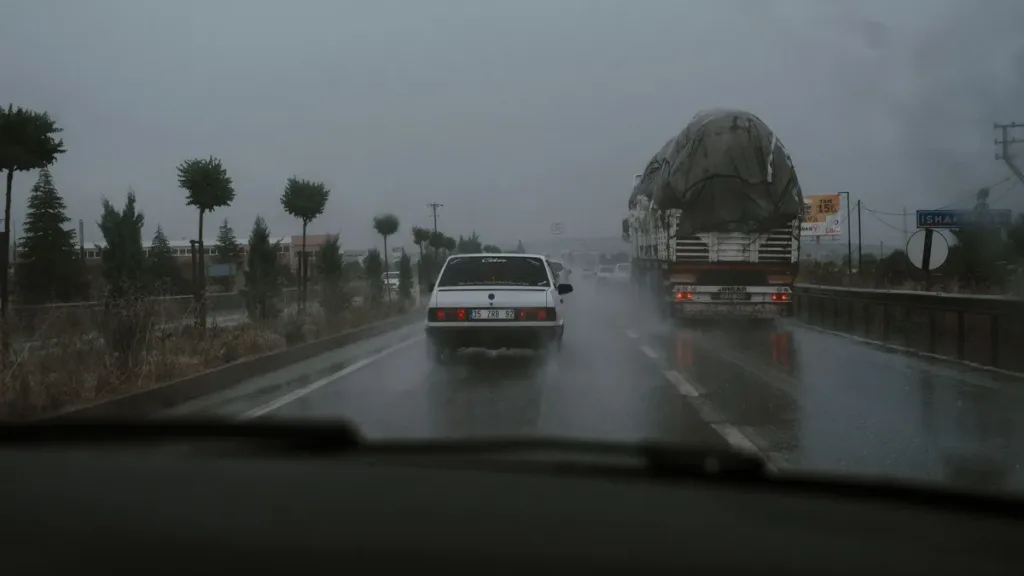
If a policy only has room for one rule, it should be this: visiting staff do not self-drive after dark. Both government sources single out night driving: many vehicles lack working lights, many roads are unlit and unsigned, and dusk brings a rush of traffic.
Winter fog on the plains
From roughly December to January, dense fog settles over the Punjab plains and upper Sindh. The motorway police close motorway sections temporarily when visibility collapses; in January 2025 Dawn reported closures with visibility down to around 50 to 60 metres. In December 2025, an NHMP advisory reported by Business Recorder asked motorists to plan journeys between 10am and 8pm, avoid unnecessary night travel, use fog lights rather than high beam and keep extra distance, and gave the helpline 130 and FM 95 for updates.
So an itinerary that works in October may not work in December, and a closed motorway pushes drivers onto ordinary national highways in the same poor visibility.
Rural roads and national highways
Away from the motorways, conditions change from one district to the next. Single-carriageway highways carry overloaded lorries, buses overtaking into oncoming traffic, tractors, livestock and people walking on the verge. Surfaces can change without warning, and a pothole that a local driver knows about is a burst tyre for someone who does not. It is a different skill set from the one a UK or North American licence tests, and unreasonable to expect a visitor to acquire on a project trip.
Employer duty of care and insurance
For UK-based organisations, the starting point is not travel law but ordinary health and safety law. The Health and Safety Executive’s guidance on driving for work states that health and safety law applies to work activities on the road in the same way as on a fixed site, that employers must carry out a risk assessment, and that it should look at three things: the journey, the driver and the vehicle. The page does not deal specifically with overseas trips, so take advice on how it applies abroad; the three-part framework is still a sensible structure.
Applying the journey, driver, vehicle test to Pakistan
- Journey: which roads, at what time, in which season, and whether any part of the route touches an area covered by an FCDO warning. Record the planned departure and latest safe arrival time.
- Driver: experience on the left, experience in dense mixed traffic, the correct licence documents, fatigue after the flight, and whether the person can communicate with police at a checkpoint.
- Vehicle: age and condition, working lights and seatbelts in every seat, tyres suited to the route, a spare, and who the traveller calls if it breaks down.
Run a city or night self-drive request through those headings honestly and it usually fails on two of them.
Insurance: the question most policies miss
The FCDO is explicit that travel insurance could be invalidated if you travel against its advice. Its main Pakistan page lists areas where it advises against all travel, including Balochistan, named districts of Khyber Pakhtunkhwa and the strips within 10 miles of the Afghan border and the Line of Control, and further areas where it advises against all but essential travel, such as Sindh north of and including Nawabshah, and Azad Jammu and Kashmir. Those lists change; check the live map for the exact districts before approving any road itinerary.
Even outside those areas, ask three things before a visitor self-drives:
- Does the corporate travel policy cover the traveller while driving abroad, or only as a passenger?
- What does the rental agreement’s cover include, what is the excess, and what happens if the car is damaged or stolen?
- Who is liable for a third party injured in a collision, and how would the traveller handle a police report in a language they may not read?
If nobody can answer those confidently, that is a finding in itself. With a car and driver, the traveller’s role shrinks to being a passenger who wears a seatbelt.
Documents a visitor needs before driving
For UK licence holders the FCDO position is specific: carry both the 1968 international driving permit and your UK licence. The IDP cannot be bought outside the UK, and driving without the correct documents could lead to detention. Our guide to driving in Pakistan on a UK licence covers the licence question in more detail. Travellers from other countries should check their own government’s advice and the rental company’s requirements.
Alongside the licence, carry photo ID at all times, the rental agreement and a printed contact sheet.
Defensive driving in Pakistan: what it means in practice
If self-drive is approved, the traveller should be briefed on defensive driving in Pakistan specifically, not on a generic course. The habits that matter most are local:
- Assume the lane is not yours. Oncoming overtakers on single carriageways are a known hazard. Keep speed down on two-lane roads and leave room on the left to escape.
- Read the horn as information. A horn usually means “I am here and I am passing”, not aggression. Hold your line and let the vehicle through.
- Watch the verges. Pedestrians, animals and stationary vehicles without lights appear with little warning, particularly near villages and after dark.
- Keep doors locked and windows up in cities, and keep bags and phones out of sight at junctions.
- Do not argue at the roadside. After a minor collision in a crowded place, note details and call the rental company or host rather than debate liability in the street.
Most of these are about reading other people, not handling the car. That local knowledge is exactly what a professional driver brings, and it does not transfer through a briefing.
Self drive or chauffeur for business travellers: a rule set
The question of self drive or chauffeur for business travellers is easier to settle with rules than with case-by-case debate. The version below is written to be pasted into a travel policy and adjusted.
Self-drive is reasonable when all of these are true
- The traveller has held a full licence for several years, has driven on the left before, and holds the documents their government’s advice requires.
- The journey is mainly on motorways, between major cities, and planned to finish well before dusk.
- The trip is not in the winter fog window for the Punjab plains, or the itinerary has a fallback day if the motorway closes.
- No part of the route passes through an area where the FCDO advises against all travel or all but essential travel.
- The vehicle comes from an established rental provider, and insurance cover for self-drive has been confirmed in writing.
- The traveller has a check-in schedule and a named local contact.
A realistic example: an engineer who lived in Lahore for years, now visiting from Birmingham, driving a daylight M-2 leg to Islamabad in April with a hotel booked at each end. That is a defensible self-drive. If you do approve it, our self-drive car rental options set out what a self-drive request involves.
Switch to a car with driver when any of these apply
- It is the traveller’s first visit, or the first day after a long-haul flight.
- Most of the movement is inside a city, especially Karachi, Lahore or Rawalpindi.
- Any leg is likely to run into dusk or darkness.
- The route uses national highways, rural roads or northern mountain roads.
- The traveller will be carrying equipment, samples or cash-equivalent items that make an unattended car a target.
- The day involves several meetings, or the traveller is senior or travelling with family.
For contrast, a hypothetical consultant flying into Karachi for three days of meetings across Clifton and an industrial estate fails on city exposure, parking and late finishes; a car with driver for the whole stay is the obvious control.
Setting up a car with driver properly
Choosing a driver is itself a control, so treat it as one. A chauffeur service in Pakistan should let you specify the following at the booking stage, and you should be able to see what has been confirmed before the traveller lands:
- The vehicle class, with working seatbelts for every passenger and room for the luggage.
- The pickup point, including the terminal and meeting arrangements at the airport.
- A day plan with approximate timings, so late changes are visible to whoever monitors the trip.
- A clear rule that the route avoids areas covered by FCDO warnings and pauses if closures or protests are reported.
For organisations with repeat traffic, the business travel car service page is the place to start a conversation about regular arrivals and day hires; putting repeat trips through one channel also makes it easier to keep records for the risk file. Quotes and availability depend on the date, the vehicle and the route, so request them early and wait for confirmation before the traveller relies on a booking.
Staff arriving in Karachi on a personal or family basis, rather than for the business, may find the practical, passenger-focused advice from our sister service Pakistan Taxi useful, including its guide to a Karachi hotel arrival for business visitors.
A pre-trip checklist for the risk file
Whatever the decision, keep a short written record that shows the risk was considered:
- FCDO (and, for US staff, State Department) advice checked on the day of approval, with the date noted.
- Each leg marked motorway, national highway, city or mountain road, with a latest safe arrival time before dusk.
- Season noted: winter fog on the plains, monsoon disruption, or snow closures in the north.
- Decision and reason recorded; documents and insurance position confirmed in writing.
- Emergency contacts listed, including the NHMP helpline 130, and a check-in schedule agreed.
When the decision is a car with driver, the next step is simple: send the journey details through iDrive’s booking page with dates, pickup points and passenger numbers, and hold the traveller’s plans until the vehicle is confirmed.
Questions people ask
Is driving in Pakistan safe for a foreign visitor?
It is legal with the right documents, and daylight motorway driving is manageable for an experienced driver. City, night and rural driving carry much higher risk, and both the FCDO and the US State Department advise using experienced local drivers.
Can I drive in Pakistan with a UK licence?
The FCDO says UK drivers need both the 1968 international driving permit and their UK licence, and that the IDP must be obtained in the UK before travel.
Is it safe to drive at night in Pakistan?
Night driving is the scenario official advice warns about most: unlit roads, vehicles without working lights and unpredictable traffic at dusk. For visiting staff, the sensible rule is no self-drive after dark.
Should an employer let staff self-drive in Karachi?
In most cases no. Dense mixed traffic, navigation load, parking and the FCDO’s street-crime and carjacking warnings make a car with a local driver the lower-risk option for city movements.