Most corporate tour packages Pakistan companies are offered are priced around one vehicle: a van, a driver, a hotel, a set of dates. That works for a small team. The moment the headcount, the luggage or the gear spills into a second vehicle, the trip stops being a tour and becomes a small road operation. Two vehicles on the Murree hills or the Kaghan road do not simply travel together because they share an itinerary. They drift apart at the first fuel stop, lose signal on the same bend, and arrive twenty minutes apart at a hotel that only has one person holding the booking reference.
The short answer: once your team needs more than one vehicle, you need a convoy plan. That means a named lead vehicle and a sweep vehicle, agreed regroup points before each stretch with weak mobile coverage, a spacing rule for mountain roads, a luggage split that does not strand anyone’s bag in the wrong van, and a same-morning weather and road check. This guide sets out each of those, with the trade-offs a finance or HR lead should understand before signing off an offsite. It also covers one hard constraint up front: the UK government currently advises against all travel to Swat, so it is not a destination this guide will help you plan leisure trips to.
When corporate tour packages in Pakistan need a second vehicle
There is no universal passenger number at which a trip “becomes” multi-vehicle. The trigger is usually one of four things, and it is often not headcount.
| Trigger | What it looks like | Why it forces a second vehicle |
|---|---|---|
| Seats | More people than the van’s listed seats, counting the front bench honestly | Overloading is unsafe and uncomfortable on long climbs |
| Luggage | Every seat is full and there are still suitcases, laptop bags, a banner stand and a box of branded jackets | A full van rarely has room for full luggage; bags end up on laps or on the roof |
| Timing | Part of the group flies in late, or senior staff need to leave on day two | Different departure times mean different vehicles, whatever the headcount |
| Resilience | The trip goes somewhere a breakdown would strand everyone for hours | Two vehicles mean one can carry people onward while the other waits |
A useful rule for team trip transport: plan seats for people and space for bags separately, then take the larger of the two answers. If you are comparing vans, look at the listed seat count on a specific model, such as the Toyota Hiace Grand Cabin, and then ask what luggage space is left with every seat occupied. Those are two different numbers, and brochure copy tends to quote only the first.
The resilience trigger is the one people skip. On a motorway, a single van with a fault is an inconvenience. On a hill road with a limited signal and few repair shops, it can mean a group standing on a verge in falling temperatures. A second vehicle, even a smaller car, is sometimes the cheapest insurance on the whole trip.
Company offsite locations in Pakistan and what the road does to your plan
The destinations that turn up on most offsite shortlists are hill stations and valleys north of Islamabad. They differ a lot in how much operational planning they need, and one of them currently sits under a UK government travel warning.
Nathia Gali and the Galyat
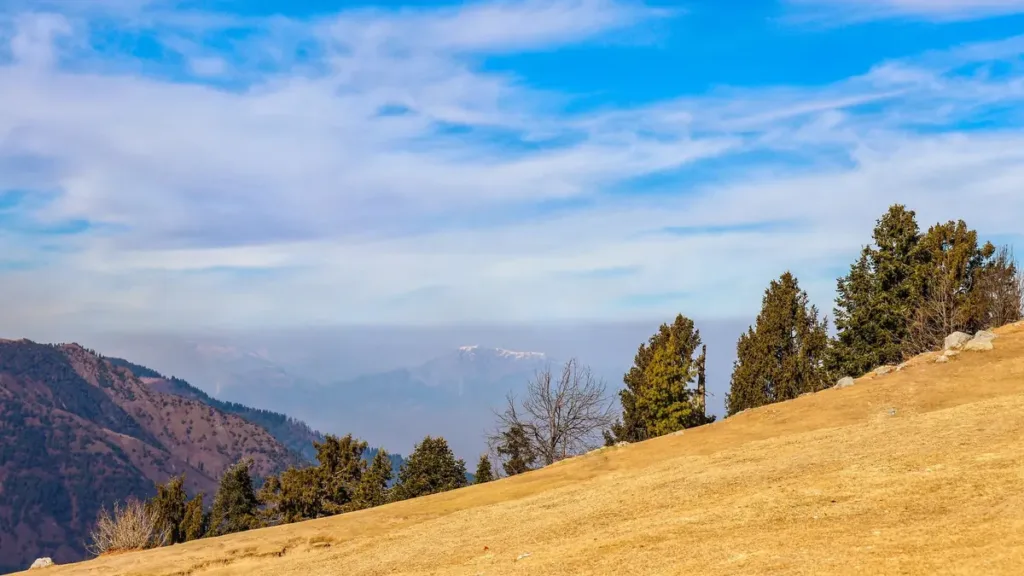
An office trip to Nathia Gali is the most manageable of the classic options. Nathia Gali sits in Abbottabad District at about 2,410 metres, roughly 32 km from both Murree and Abbottabad, according to the Wikipedia entry for Nathia Gali. The same source notes that heavy snowfall is possible between December and January and that the road can occasionally be blocked by it. The drive is short enough to do in a day, which means your main risks are traffic around Murree, parking at small hotels, and winter conditions rather than distance. For the approach through Murree, our guide to the Islamabad to Murree road and driving it in snow season covers the first half of the journey.
Naran and the Kaghan Valley
Naran is a different proposition. It sits in Mansehra District at about 2,409 metres, around 119 km from Mansehra city, with Babusar Top roughly 65 km further on (source: Wikipedia, Naran, Kaghan Valley). The valley is reached via Balakot, and the roads and Babusar Pass usually stay open from May to the end of September, with glaciers blocking roads in winter. Treat it as a full travel day each way, with long mountain stretches where vehicles can easily lose sight and signal of one another. Our Islamabad to Naran and Kaghan road guide covers the route, drive time and season in detail.
If anyone suggests extending the trip over Babusar Pass, treat that as a separate decision. The pass reaches about 4,173 metres on the N-15, and the Babusar Pass article notes that accidents are reported on it every year. Also note that the obvious alternative, the Karakoram Highway between Mansehra and Chilas, is a section the UK Foreign, Commonwealth & Development Office (FCDO) advises against all travel to.
Swat: currently against FCDO advice
Swat regularly appears on corporate tour itineraries, and it is a real destination with a real domestic tourism trade. For planning purposes, though, the position is plain: the FCDO travel advice for Pakistan (checked 25 September 2026) lists Swat among the Khyber Pakhtunkhwa districts it advises against all travel to, along with Upper and Lower Dir, Buner and Peshawar. It advises against all but essential travel to Malakand, Mardan, Nowshera, Shangla and Swabi. The same page warns that travel insurance could be invalidated if you travel against its advice.
If your company has UK-based staff, overseas guests, or a duty-of-care policy that references government advice, Swat is not a leisure offsite option while that advice stands. Domestic teams make their own call, but a responsible organiser should put the FCDO position in front of the decision-maker in writing, check what the company’s insurer says, and look again at Nathia Gali or Naran. Advice changes, so re-check the page before you book anything, not just when the idea first comes up.
Lead and sweep: the two roles that hold a convoy together
Every multi-vehicle trip needs two named roles. Without them, each driver makes their own decisions about speed, stops and routes, and the group stops being a group within an hour.
The lead vehicle
- Sets the pace for the slowest vehicle in the group, not the fastest.
- Calls the stops. Fuel, prayer, tea and toilet breaks happen when the lead says, at places everyone has been told about.
- Carries the trip lead from your company: the person with the hotel confirmations, the passenger list and the authority to change the plan.
The sweep vehicle
- Never overtakes the lead. The sweep is last by definition. If it is not last, nobody knows who is.
- Stops for anyone who stops. A vehicle with a puncture or a car-sick passenger is never left alone.
- Carries the spare capacity: the empty seats, the first-aid kit, the extra water. If a vehicle fails, its passengers move to the sweep.
- Reports the tail. At each regroup point the sweep confirms “all vehicles through” to the lead.
With three or more vehicles, number them in running order and keep that order for the day. Each driver watches the vehicle directly ahead and the one directly behind, nothing more.
Put a named contact in every vehicle, not only in the lead. That person holds a printed list of who is in their vehicle, the lead’s number and the sweep’s number. When a phone dies or a signal drops, the printed list is what still works.
Regroup points and mobile dead zones
A convoy plan built on “we’ll stay in touch on WhatsApp” fails at exactly the moment it is needed. Mountain roads can have long stretches where mobile data is weak or absent, and coverage varies by network, so one person’s full bars mean little for the van behind. The fix is to assume the signal will go and plan meeting places that do not depend on it.
How to set regroup points
- Pick them before the day, on the map, with the drivers. A regroup point is a named, physical place: a specific fuel station, a hotel car park, a town’s main bazaar junction.
- Place one before each known weak-signal stretch. Everyone arrives, the sweep confirms, then the group moves into the stretch together.
- Place one immediately after it. The first vehicle out waits there until the sweep arrives. No waiting at the roadside on a bend.
- Agree a waiting limit. For example (an example, not a rule), if the sweep has not arrived 20 minutes after the lead, the lead sends one vehicle back, and only one.
- Share the list on paper. Every vehicle gets the same printed sheet of regroup points in order.
Hill-road spacing and convoy speed
The instinct in a convoy is to stay close so nobody gets lost. On hill roads that is the wrong instinct. Tight spacing on steep, winding roads means the vehicle behind cannot see the road ahead, has no room to stop if the lead brakes on a bend, and blocks other traffic from overtaking safely.
Spacing principles
- Space by sight, not by distance. Each driver keeps the vehicle ahead in view on straights and accepts losing it briefly on bends. That is what regroup points are for.
- Leave room for others. Local traffic, loaded trucks and other tourists share the road. A gap large enough for a car to slot in lets faster traffic pass without dangerous overtakes.
- Open the gap on descents. Heavy vans need longer to stop going downhill. Drivers should use lower gears rather than riding the brakes, and more gap is always better.
Speed is set by the slowest vehicle
If one vehicle is a heavily loaded van and another is a light saloon, the convoy moves at the van’s pace. Drivers of lighter vehicles will be tempted to push ahead and wait later. Tell them before departure that this is not how the trip works. A convoy that stretches across ten kilometres has lost the ability to help itself.
Build the itinerary around that pace. A drive that one car can do in a set time will take a convoy longer: every stop multiplies by the number of vehicles, every toilet break involves more people, and every regroup costs minutes. Plan a buffer of time into each day and do not schedule the team dinner or the first workshop for the minute you expect to arrive.
Avoid driving mountain roads after dark where you can. Visibility drops, oncoming headlights on bends are dazzling, and regrouping in the dark is harder in every way. For a long travel day such as Islamabad to Naran, that usually means an early start rather than a late one.
Splitting luggage and people
How you divide a group across vehicles matters more than most organisers expect. Get it wrong and you end up with the CEO’s suitcase in one van and the CEO in the other, or the only person who speaks to the hotel sitting in a car that is running an hour behind.
Splitting people
- Keep teams or travel pairs together where you can, but split key roles. The trip lead, the person holding the finance card and whoever handles first aid should not all sit in the same vehicle.
- Fix the seating plan and publish it. Changing vehicles at every stop is how a headcount goes wrong.
Splitting luggage
- Bags travel with their owners. This is the single rule that prevents most arrival-day problems.
- Put shared kit in the sweep. Projectors, banners, gift boxes and catering supplies can travel in the vehicle with spare room, which is usually the sweep.
- Keep a day bag in reach. Warm layers, medication, snacks and chargers belong in the cabin, not under a pile of suitcases.
Weather and road-closure checks
The Murree snowstorm of January 2022 is the case study every organiser in northern Pakistan should know. According to the Wikipedia summary of the 2022 Murree snowstorm, which draws on Dawn, The Express Tribune and AP reporting, 23 people died of hypothermia and carbon monoxide inhalation after vehicles were stranded, some with exhaust pipes blocked by snow. Traffic had poured into the town in numbers far beyond what its roads could handle. The lesson for a team trip is not “never go in winter.” It is: check before you leave, and turn back early rather than late.
What to check and when
- A week out: check the Pakistan Meteorological Department for forecasts, weather alerts and warnings, and the National Disaster Management Authority for active weather advisories and flash-flood warnings.
- Two days out: recheck both and ask your drivers what they are hearing from the route.
- Departure morning: check again, and check the National Highways & Motorway Police travel advisory for the national highway sections you will use.
- At each regroup point: the lead asks whether conditions are still acceptable. Deciding to stop is cheap at a regroup point and expensive on a blocked road.
Keep the NDMA emergency helpline, listed on its site as 051-111-157-157, in every vehicle’s printed sheet. Set a “no-go” rule in advance: if a named agency issues an advisory for your route, or the drivers agree the road is unsafe, the trip changes, without a debate at the roadside.
Multi vehicle tour planning: the order of work
Most offsite planning starts with the hotel and treats transport as a line item. For a convoy, the order should be closer to this:
- Confirm the destination against current advice. Check the FCDO page and any company travel policy before anyone falls in love with a venue.
- Count people and bags separately. Get a firm list, including partners and children, and ask everyone how many bags they will bring.
- Choose vehicles to fit both counts, with at least some spare seats in the sweep.
- Name the roles: trip lead, lead driver, sweep driver, and a contact person for each vehicle.
- Agree the route and regroup points with the drivers, in writing, with a waiting limit.
- Publish the seating and luggage plan to the whole group before departure day.
- Set the weather checks and the no-go rule, and tell the group that plans may change for safety.
- Build time buffers into the itinerary around convoy pace, not single-car drive times.
What to ask a transport provider before you commit
A package that says “transport included” tells you very little. Before you accept a multi-vehicle quote, get clear answers to these:
| Question | Why it matters |
|---|---|
| Which specific vehicle models, and how many seats in each? | “Van” covers everything from a compact people carrier to a large high-roof model |
| Have the drivers driven this route, in this season? | Mountain experience is not interchangeable with city experience |
| What happens if a vehicle breaks down? | You want a named fallback, not “we’ll sort it out” |
| What is the cancellation or change position if the weather closes the route? | Weather changes plans often in the north; agree terms before, not after |
If you want to compare options, the iDrive group van range lists the models we work with, so you can match vehicle type to headcount before you ask for a quote. For team trips that combine travel with a company dinner or an awards night, our events car and driver booking page covers the event side. When you are ready, send the route, dates, headcount and luggage count through the iDrive booking request. We will come back with the vehicle options available for your dates; a quote is confirmed only once vehicles and drivers are assigned.
If your group is more a family gathering than a corporate one, our sister service Pakistan Taxi’s group travel planning is built around families and friends travelling together. And if your company also runs trips for staff heading to Umrah, our sister company Saudi Cab Co publishes a guide to group and van transport for tour operators in Saudi Arabia, where the same convoy logic applies between Jeddah, Makkah and Madinah.
Questions people ask
Is Nathia Gali a sensible offsite choice?
It is one of the more manageable hill destinations near Islamabad: about 32 km from both Murree and Abbottabad. Heavy snow can occasionally block the road, especially in December and January, so check PMD and NDMA before any winter trip.
Can we plan a company trip to Swat?
The UK FCDO currently advises against all travel to Swat. If your staff, guests or insurer follow that advice, it is not a suitable leisure destination while the advice stands. Check the current FCDO page before planning.
When is the Kaghan Valley open for a team trip?
Roads into the valley and over Babusar Pass usually stay open from May to the end of September, with winter snow and glaciers closing sections. Opening dates vary year to year, so check before you book.