Your Pakistan. Your Journey.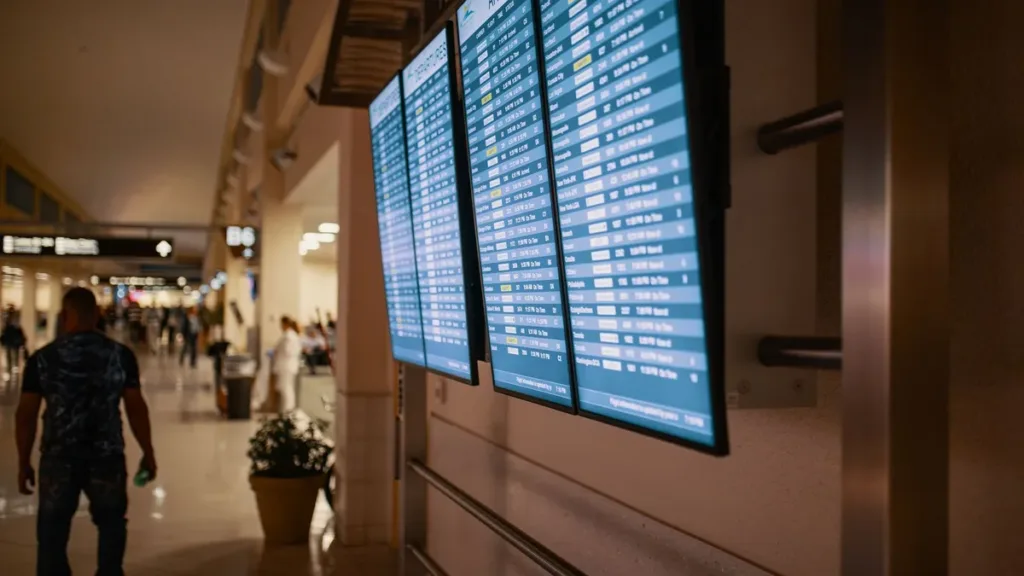
Search “flight tracker Islamabad airport” and you get a moving map of aircraft heading for ISB. For pickups, that map tells a driver one thing well: where the aircraft is and roughly when its wheels will touch the runway. It does not tell anyone when the passenger will be standing outside arrivals. Between touchdown and the kerb sit taxiing, disembarkation, passport control, the baggage belt and customs, and none of those stages broadcasts a signal. So when an operator says “we monitor your flight”, read it as “we will not send the car at the scheduled time if the plane is visibly late or early”. That is useful. It is not a promise that the car will be waiting at the moment you walk out, and it is no substitute for a working way to reach you after landing.
Below: what the data behind a tracker contains, its blind spots for an Islamabad arrival, how a dispatcher should use it, and the short contact plan that covers the gaps.
Decision summary: what flight monitoring for airport transfers really covers
Monitoring is a timing tool for the operator, not a guarantee for the passenger.
| Question | Can a tracker answer it? | What actually answers it |
|---|---|---|
| Has the flight departed and is it airborne? | Yes, usually well | Aircraft position data plus the airline’s own status page |
| Roughly when will it land at Islamabad? | Yes, as an estimate that tightens on approach | Live position, then the airport arrivals board once on the ground |
| Has it landed and reached the gate? | Landing, generally yes; gate arrival, less reliably | Airport arrivals status, airline notification |
| Is the passenger through immigration? | No | A message from the passenger |
| Have the bags arrived on the belt? | No | A message from the passenger |
| Was the passenger rebooked onto a different flight? | No | The passenger, the booker or the airline |
| Has the flight diverted to another airport? | It shows the aircraft going elsewhere, but not what happens next | Airline instructions to passengers, then a revised pickup plan |
The pattern is plain. Everything about the aircraft is visible. Everything about the person is not. A good pickup plan uses the first to schedule the car and a named contact method to handle the second.
What a flight tracker for Islamabad airport actually sees
Consumer flight trackers are built mostly on ADS-B, short for Automatic Dependent Surveillance-Broadcast. The US Federal Aviation Administration describes it as a system that broadcasts an aircraft’s GPS location, altitude, ground speed and other data to ground stations and other aircraft once per second, according to the FAA’s ADS-B overview. Receivers on the ground pick those broadcasts up, and tracking services stitch them into the moving dots you see on a map.
Flightradar24, one of the larger services, explains on its how-it-works page that it relies mainly on ADS-B, uses a calculation method called multilateration (MLAT) for aircraft that send less data, and supplements terrestrial receivers with satellite ADS-B. It also says it combines the raw signals with commercial flight plan and schedule data and its aircraft database. That last point matters more than it sounds: the flight number, the scheduled time and the airport pairing on a tracker are layered on from schedule data, while the position is what the aircraft itself transmits.
Three kinds of time you will see
- Scheduled – the published timetable time. It does not move when the flight runs late.
- Estimated – a projection, usually recalculated from the aircraft’s live position and speed. Early in a long flight it can drift; in the last hour it tends to settle.
- Actual – recorded once the event (departure, landing) has happened.
A dispatcher planning a car for a Gulf or UK arrival cares about the estimated landing time, then the actual one. The passenger’s exit time is a separate number that no tracker computes.
Airport codes are not decoration
Islamabad International Airport appears as ISB (the IATA code used on tickets) and OPIS (the ICAO code used in aviation systems), as shown on its Flightradar24 airport page. If you search a tracker by city name alone you may get unrelated results; searching by flight number and date is far more reliable.
Islamabad airport flight status: which source to trust, and when
There are three places to check an arriving flight, and they answer slightly different questions.
- The airline’s own status page or app. This is the source of record for the flight as a commercial product: delays, cancellations, schedule changes and, crucially, what the airline is telling passengers to do. Emirates, for example, lets you check any of its flights by route or by flight number on its flight status page and sign up for alerts. Check the equivalent page of whichever carrier operates your final leg.
- The airport’s arrivals board. The official Islamabad International Airport website carries current arrivals and departures listings showing airline, flight number, origin or destination, time and status, along with a published help-desk phone number and email for enquiries. This is the best view of what is happening at ISB itself once the flight is close.
- A flight radar service. A flight radar Islamabad airport view is the fastest way to see where the aircraft physically is: still on the ground in Doha, over the Arabian Sea, or holding. It is excellent for “is it moving?” and less authoritative for “what has the airline decided?”
When the three disagree, the practical rule is simple. Trust the tracker for the aircraft’s position, the airline for anything about schedules and passengers, and the airport board for the on-the-ground status at Islamabad. Some sites also publish a live flight schedule Islamabad airport page that is really just the timetable; check whether you are looking at scheduled times or live estimates before sending anyone to the terminal.
The gaps: immigration, baggage and customs
This is where most pickup friction comes from, and it is the part no monitoring software sees.
Disembarkation and the walk
Touchdown is not arrival at the gate. The aircraft taxis, parks, and passengers leave by jet bridge or bus. Trackers often show the landing clearly and the parking position less clearly. Treat “landed” as the start of a sequence, not the end.
Passport control
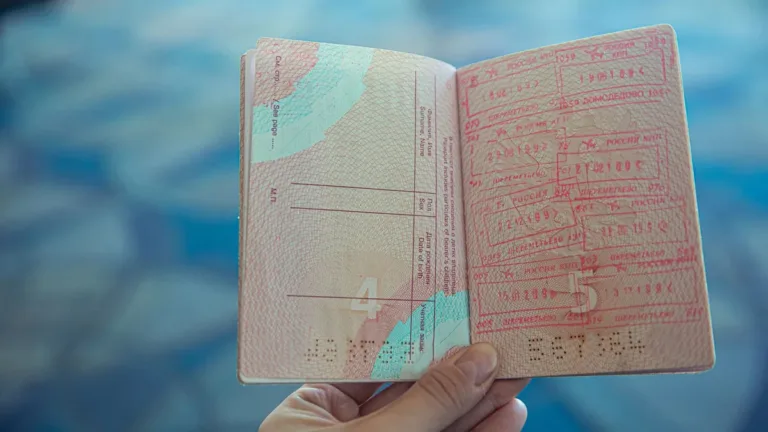
Immigration is the least predictable stage. Foreign nationals need to have obtained a visa before travel; the UK Foreign, Commonwealth and Development Office states in its Pakistan entry requirements that visitors must apply in advance through the online system, that passports need at least six months’ validity from the date of the visa application, and that travellers should make sure their passport is stamped on entry. The same page notes that Pakistani citizens holding a valid NICOP or SNICOP can enter without a visa. Queue length depends on how many wide-body flights land together, staffing on the day and the mix of passports on board. No tracker has any of that information.
The baggage belt
Bags can take longer than the passport queue, particularly on busy evenings or when a flight carries a lot of hold luggage, as family trips from the Gulf and the UK often do. Oversized items, prams and wheelchairs may come out separately. A missing bag means a report at the airline’s baggage desk before the passenger can leave, and that can add a long, open-ended wait.
Customs
Passengers carrying goods that need declaring will spend more time in the customs area. Rules on allowances and duties are set by Pakistan’s customs authorities and change; check the current position with the Federal Board of Revenue before travel rather than relying on what a relative remembers from a previous trip.
The honest summary: landing time is knowable to within minutes; the time a passenger walks out of arrivals is not, and the spread can be wide.
How an operator adjusts dispatch from tracking
Used properly, flight data shifts the car’s timing, not the passenger’s expectations. A sensible dispatch sequence for an Islamabad arrival looks something like this.
- Before departure from the origin airport. The dispatcher confirms the flight exists on the stated date with the stated number, and that the scheduled arrival matches what the customer gave. Mismatches get queried now, not at 2am.
- Once airborne. The departure time is checked. A flight that left late from Dubai or Manchester will almost always land late, and the driver’s start time moves with it.
- In the final hour or so. The estimate stabilises. This is when the driver’s departure for the airport is fixed, allowing for the drive from wherever the car is based in Islamabad or Rawalpindi.
- On landing. The driver should already be close to the airport or in the parking area, not still on the road. The countdown now shifts from the aircraft to the passenger.
- After landing. The operator waits for a message from the passenger – “through passport control”, “waiting for bags”, “coming out now” – before moving the driver to the meeting point.
Notice what monitoring does in that sequence. It prevents the two expensive failures: a driver who waits three hours for a flight that left late, and a driver who arrives after an early landing to find nobody at the meeting point. It does not remove the waiting that happens inside the terminal.
Waiting time is a commercial question, not a technical one
Every operator has to decide how long a driver can wait after landing before charges apply or the job is reassessed. That is a matter for the booking terms, not the tracker. On iDrive, the relevant rules sit in the iDrive terms of hire, and anything specific to your journey is set out when your request is reviewed and confirmed. Read those terms before assuming a car will wait indefinitely because “they are tracking the flight”.
Diversions and rebookings trackers miss
The single biggest weakness of flight monitoring is that it follows an aircraft, and passengers do not always stay with the aircraft they were booked on.
Rebookings
If a passenger misses a connection in Doha, Dubai, Istanbul or Jeddah and the airline moves them to a later flight, the original flight will still land on time, and the tracker will cheerfully show it arriving. The driver goes to the airport for a passenger who is not on board. Only the passenger, the person who booked the car, or the airline’s notification to the passenger can reveal this. It is the most common reason a “monitored” pickup still goes wrong.
Diversions
If an aircraft diverts – to Lahore, Peshawar or elsewhere, perhaps because of weather or an operational issue – a tracker will show it heading to another airport. What it cannot show is what happens next: whether passengers stay on board and continue to Islamabad later, are put on a road transfer, or are rebooked. Those decisions are the airline’s. A driver should not set off for another city on the strength of a map dot; the plan should change only once the passenger or the airline confirms where they will actually exit.
Cancellations and swaps
An aircraft swap or a cancellation-and-reroute can leave a tracker showing a flight number with no live aircraft, or with an aircraft that has nothing to do with your passenger. Again, the airline’s status page is the reference, and the passenger’s message is the confirmation.
Why the flight number must be exact
Monitoring is only as good as the identifier it is fed. A wrong digit sends the operator to watch the wrong aircraft, and everything downstream is confidently wrong.
- Use the operating flight number for the final leg into Islamabad. On a connecting itinerary, the flight that matters is the one landing at ISB, not the first leg out of London, Toronto or Riyadh.
- Watch for codeshares. A ticket may show one airline’s code while another airline operates the aircraft. Give the number printed on the boarding pass for the last leg, and mention the operating carrier if it differs.
- Give the arrival date in Pakistan time. Overnight flights from the UK and North America commonly depart on one calendar day and land on the next. A booking made for the departure date is a classic way to end up with a car a day early or a day late.
- Include the origin airport. Two different services can share similar numbers on different days or routes; the origin removes ambiguity.
- Update it when it changes. If the airline rebooks you, the old number is now worse than useless.
A practical check for bookers: before sending the details, look the flight up yourself on the airline’s status page using exactly what you are about to submit. If you cannot find it, the operator will not either.
A contact plan alongside monitoring
Monitoring covers the aircraft. A contact plan covers the person. You need both, and the contact plan should be settled before the passenger leaves home.
The minimum plan
| Item | Why it matters | Who sorts it |
|---|---|---|
| One primary contact channel (for example a WhatsApp number or the booking app) | Avoids messages scattered across three apps and two phones | Passenger and operator, agreed in advance |
| A way to get online on landing | A UK or Gulf SIM may not roam, or roaming may be expensive; airport Wi-Fi can be patchy | Passenger, before travel |
| A backup contact on the ground | If the passenger’s phone dies, a relative or colleague can relay messages | Booker |
| A named meeting point | “Outside arrivals” is not a place; a pillar, gate or car park row is | Operator, confirmed to the passenger |
| A fallback instruction | What the passenger does if nobody is there after a set interval, and whom they call | Operator and passenger |
Three messages that make the pickup work
- “Landed” – sent as soon as phones are allowed on. Confirms the passenger was actually on the flight, which closes the rebooking gap.
- “Waiting for bags” – tells the driver immigration is done and to get into position.
- “Coming out” – with a description of what the passenger is wearing or pushing, if the driver has not met them before.
Our sister service Pakistan Taxi has written a fuller, family-focused version of this in its guide to building a contact plan for a late-night arrival in Pakistan, which is worth sending to relatives who are coordinating from abroad. For the arrivals hall itself – who waits where, and how the handover works – our guide to meeting family at Islamabad or Sialkot airport goes into the practical detail.
Putting it into practice for an Islamabad arrival
Here is a hypothetical example to show how the pieces fit together. It is illustrative, not a timing promise.
Example: A passenger is flying from Manchester to Islamabad with a connection in the Gulf. The booker submits the final-leg flight number, the arrival date in Pakistan time and a WhatsApp number that will work on landing. The operator checks the flight exists, then watches the connection. The first leg runs late; the passenger misses the connection and is rebooked onto a later flight. The tracker still shows the original flight landing on time – but because the passenger messages the new flight number from the transit airport, the pickup is moved rather than wasted. On landing, the three messages (“landed”, “waiting for bags”, “coming out”) bring the driver to the agreed meeting point.
Take the passenger’s message out of that example and the driver stands at ISB for a flight the passenger is not on. That is the whole argument in one scene.
A short pre-flight checklist
- Final-leg flight number, operating carrier and origin airport confirmed
- Arrival date and time in Pakistan local time
- Primary contact channel agreed and tested
- Roaming, local SIM or eSIM arranged for landing
- Backup contact named
- Meeting point and fallback instruction confirmed in writing
- Waiting-time and cancellation terms read
Planning your Islamabad pickup with iDrive
If you want a car waiting for an arrival at ISB, start with the Islamabad airport taxi and transfer page, or see the wider airport transfers across Pakistan if you are landing in Lahore, Karachi, Sialkot or elsewhere. You can send your flight details and journey through the iDrive booking request form; requests are reviewed and confirmed, including the vehicle and price, before anything is final. If you prefer to keep messages and updates in one place on your phone, the iDrive app is the tidier option.
Whichever way you book, give an exact flight number, keep your phone reachable on landing and send those three messages. Monitoring handles the aircraft. The messages handle you.
Questions people ask
Does a flight tracker show when I will leave the airport?
No. It shows the aircraft’s position and estimated or actual landing time. Immigration, baggage and customs happen inside the terminal and are not tracked.
Which is more reliable for Islamabad airport flight status: the airline or a tracker?
For schedule changes, cancellations and rebookings, the airline. For the aircraft’s live position, a tracker. For on-the-ground status at ISB, the official airport arrivals board.
If the operator monitors my flight, do I still need to message them?
Yes. A message confirms you were actually on the flight and tells the driver when you are through passport control, which no monitoring can do.
What flight number should I give for a connecting journey?
The number of the final flight landing at Islamabad, as printed on that leg’s boarding pass, with the arrival date in Pakistan time.