Your Pakistan. Your Journey.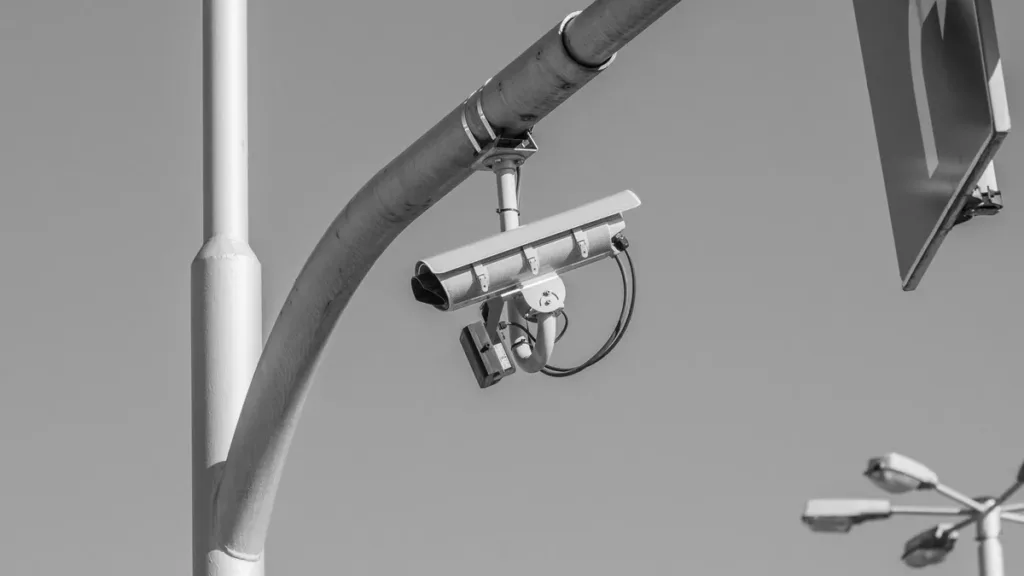
An e-challan on rental car hire in Pakistan is addressed to the vehicle, not to the person who was driving it. Safe City cameras read the number plate, the system looks up the registration record held by the provincial Excise department, and the notice goes to the registered owner. On a hire car that owner is the rental supplier or a fleet partner, so the supplier receives the fine first and then recovers it from whoever had the car at the time stamped on the evidence photo. That usually means you, the renter, pay in the end, from your deposit or by a later charge. Handling fees, how long the supplier can keep chasing you, and what happens if the notice turns up after you have flown back to Manchester or Dubai all depend on the hire agreement, not the traffic police. Settle those points in writing before the keys change hands, and check for outstanding challans at handover and at return.
Decision summary: who ends up paying
- The traffic authority deals only with the registered owner. It does not know or care that the car was on hire.
- The rental supplier receives the notice, matches the violation time to its hire records and passes the cost to the renter under the contract.
- The renter pays if the violation falls inside the hire period and the agreement allows recovery. A clear agreement also lets the renter see the evidence and challenge a wrong notice.
- An employer that booked the car pays the supplier first under a corporate account, then decides internally whether to recharge the employee.
If none of that is written down, expect an argument, and the traveller who has already left the country is in the weakest position.
How Safe City cameras produce an e-challan
Each of the three big systems works on the same principle, even though the agencies and the paperwork differ.
Punjab: PSCA
The Punjab Safe Cities Authority was set up in 2015, started in Lahore and expanded to Rawalpindi, Faisalabad, Multan, Gujranwala, Bahawalpur and Sargodha, according to its published profile. PSCA’s own site now claims a far larger footprint, listing 41 cities and more than 19,000 cameras, and describes AI-assisted detection of traffic violations with an online e-challan verification service. The mechanics have not changed since launch: number plate recognition cameras identify the vehicle, and the challan goes to the address registered against it, with a photograph of the violation.
Unpaid fines do not simply fade away. The Express Tribune reported in 2021 that Punjab’s Excise department and PSCA agreed to block vehicle transfers until e-challan dues are paid, and that blacklisted vehicles spotted by cameras had been stopped and impounded, one over 79 unpaid challans and another over 105.
Islamabad: ICT Police and Islamabad Safe City
The capital’s cameras feed the Islamabad Traffic Police. The Islamabad Capital Territory Police site links to an e-challan verification service where fines can be checked and paid online, lists the traffic helpline as 1915, and puts Safe City coverage of the capital at 75 percent. That leaves gaps, but a renter has no way of knowing where they are, so drive Srinagar Highway and Kashmir Highway as if every gantry is live.
Karachi: TRACS
Karachi moved to camera enforcement in late October 2025. As The Express Tribune reported in November 2025, the TRACS control centre reads the plate, matches it to Excise registration data and generates a challan that Pakistan Post delivers to the registered address. The same report set out the deadlines: a 50 percent discount for payment within 14 days, a doubled fine after 21 days, a blocked driving licence after three months and a suspended CNIC after six. Appeals go through facilitation centres listed on the back of the challan. Those are reported figures from one point in time, so read the terms printed on the challan itself before acting on them.
Why the fine lands on the registered owner
A camera can read a plate. It cannot reliably identify a driver through a windscreen at speed, and it certainly cannot read a rental agreement. So every system anchors the penalty to the registration record, which is the one fact it can verify.
For a hire car this creates three quiet problems.
- The owner may not be the company you dealt with. A rental desk can operate cars registered to an individual or a partner fleet rather than to itself. The notice then goes to that owner’s address, and it may sit there for weeks before anyone connects it to your hire.
- The record may be out of date. If a car changed hands without the transfer being completed at Excise, camera fines go to a previous owner who has no idea who is driving it. Punjab’s rule that a transfer cannot go through until e-challan dues are cleared exists partly to close that gap.
- Nobody checks until something forces it. A car can collect camera fines for months without anyone looking, which is how the Lahore cases above reached 79 and 105 unpaid challans before the vehicles were stopped. A rental car with that kind of history is a problem you do not want to inherit.
How rental suppliers pass camera fines to renters
There is no single industry procedure. In practice suppliers use one of four approaches, and the right questions depend on which one you are dealing with.
| Supplier approach | How it works | What to ask before you sign |
|---|---|---|
| Deduct from deposit | Security deposit held for a set period after return; any challan found in that window is paid from it | How many days the deposit is held, and whether you get the challan copy and photo |
| Charge the card later | Card details kept on file; fines charged when the notice arrives | The cut-off date after which no further charge can be made, and any admin fee |
| Invoice the renter | Supplier sends you the challan and a bill; you pay directly or reimburse | Where invoices go if you have left Pakistan, and the payment deadline |
| Pay and absorb | Supplier treats small fines as a cost of business | Whether that is written down, or just a verbal courtesy that can change |
The deposit method is the one most likely to go wrong for overseas visitors. A deposit held for, say, seven days (a hypothetical figure) will not catch a Karachi challan that Pakistan Post delivers three weeks later to an investor’s house in Gulshan-e-Iqbal. The supplier then has a choice between absorbing it, chasing you by WhatsApp, or charging a card it may or may not still be authorised to use.
An admin or handling fee on top of the fine is not unusual. It is not wrong in itself, since someone has to match the notice to the booking and pay it, but it should be a stated amount in the agreement rather than a surprise. If you are comparing self-drive car rental options in Pakistan, put the fines clause alongside the deposit and fuel policy when you compare quotes, not after.
When the notice arrives after you have flown home
A hypothetical but familiar example: a British Pakistani family hires a car in Lahore for a fortnight around a wedding, returns it at Allama Iqbal International, flies back, and a month later gets a message from the rental desk asking for money for a signal violation on Canal Road.
Three things decide how that plays out.
1. Whether the time on the evidence falls inside your hire
Every genuine e-challan carries a date, a time and a location, usually with a plate photograph. Ask for it. Compare it with the handover and return times on your agreement. If the car was back with the supplier, or with a delivery driver moving it between branches, the fine is not yours. A signed return slip with a clock time is worth more than a friendly wave at the counter.
2. What the agreement says about post-return charges
A well-drafted agreement names a window after return during which traffic fines can still be recovered, the method of recovery and the evidence the supplier will provide. Without that, you are negotiating from memory against a supplier who holds your deposit or your card number.
3. Whether you can check the challan yourself
Punjab and Islamabad both run online e-challan verification, so the notice can be confirmed as real, with its amount, before any money moves. If the portal asks for details you do not hold, such as the owner’s CNIC, ask the supplier to run the check and send you a screenshot. Do this before paying, wherever you are.
One more point for visitors who drive on a foreign licence: the UK government’s FCDO travel advice for Pakistan says drivers must carry the 1968 International Driving Permit together with their UK licence, and that the IDP has to be obtained in the UK before travel. A camera fine is a nuisance. A roadside stop without the right documents is a much bigger one. Our guide on driving in Pakistan on a UK licence covers that in detail.
PSCA e-challan check and other ways to look up fines by registration
Checking takes minutes, and it is worth doing at two points in every hire: when you collect the car and when you return it.
- Note the registration exactly as printed, including the city or province code and year letters. Punjab plates, Islamabad plates and Sindh plates follow different patterns, and a single wrong character returns nothing.
- Identify which system applies. The fine is issued by the authority where the violation happened, not where the car is registered. A Lahore-registered car driven through Islamabad can collect an ICT challan.
- Punjab (PSCA): use the “Verify your e-challan” service linked from the PSCA home page. The portal has historically asked for the registration number and a CNIC, so a foreign renter may need the supplier to run the check for them.
- Islamabad: use the e-challan verification link on the ICT Police website, or call the 1915 traffic helpline.
- Karachi: the paper challan delivered by post carries the payment and appeal details. Ask the supplier to photograph any challan received during or after your hire and send it to you.
- Screenshot the result, with the date visible, and keep it with your hire paperwork.
A clean check at collection proves that older fines are not yours. A check a few days after return catches anything that posted quickly. Neither can catch a notice still in the post, which is why the contract clause matters.
For Punjab-registered cars, the Excise department also runs an online vehicle verification service that confirms the registration record.
Safe City e-challan Lahore cases and the out-of-city problem
Lahore was where PSCA started, and its published profile records more than 10,000 cameras in the city alone, so it is the likeliest source of a fine that surfaces after a Punjab hire. PSCA’s site now refers to 21 traffic violations within its system, and speed and lane offences were brought into the e-challan net years ago. A visitor who does not know which junctions and corridors are watched, on Canal Road or Ferozepur Road for instance, should assume all of them are.
The out-of-city case is less tidy. An e-challan on out of city vehicle registrations still has to be traced to a registered owner, and that only works when the camera authority can read the other province’s registration data. Karachi shows the gap. In the November 2025 Tribune report, Karachi’s traffic police said cars registered outside Sindh were then outside the e-challan system, and that provinces were sharing integration APIs so out-of-province vehicles would soon receive challans by post. Two practical consequences for a renter:
- Do not treat an out-of-province plate as immunity. Data-sharing is being extended, and a fine that could not be traced last year may be traceable this year, sometimes months after the violation.
- Expect slower notices. When a challan has to cross provincial systems and then reach an owner in another city, it arrives later, often after a short deposit window has closed. Some suppliers respond with stricter clauses for cross-province trips, or restrict them, so ask.
If your plan involves several cities, tell the supplier at the quote stage. It affects their risk, and it is better to know about any cross-province condition before you are halfway down the M-2.
Company car e-challan: who pays when staff drive
For businesses the supplier bills whoever holds the corporate account, usually the company. The harder question is who carries the cost internally, and that is a policy decision to make before the first fine arrives, not after. A workable policy covers five points.
- Driver attribution. Record who had each vehicle, with dates and times, so that a challan can be matched to a person. A shared pool car without a log makes every fine unassignable.
- Recharge rule. State whether traffic fines incurred while driving for work are recharged to the employee. One workable split is to recharge moving violations such as speeding and signal jumping, and to absorb minor offences incurred on client visits. Whatever you choose, write it down.
- Challenge rule. Give the employee a route to dispute a notice they believe is wrong, and a deadline, since late payment costs money: Karachi’s reported scheme halves the fine for payment within 14 days and doubles it after 21.
- Visitor drivers. If overseas colleagues drive on an IDP, make sure the travel desk confirms they have one before the car is booked, not at the counter.
- Driver-provided alternative. For senior visitors or tight schedules, a car with a professional driver takes the fines question away from your travellers, because responsibility for how the car is driven sits with the driver and operator under their own terms.
Once you count the staff time spent matching notices to drivers, that last option can compare better than the day rate suggests. Our business travel car service in Pakistan covers driver-led options for corporate visitors, and the chauffeur service page sets out what a driver-led booking includes.
Contract wording that settles it upfront
Four sentences both sides have read will do. The wording below is an example to adapt, not any supplier’s standard clause.
Example clause. The hirer is responsible for traffic fines, including camera-issued e-challans, for violations recorded between the handover time and the return time shown on this agreement. The supplier will notify the hirer of any such fine within [30] days of return, with a copy of the challan and its evidence photograph. The supplier may recover the fine plus a handling fee of [amount] from the security deposit or the payment method on file, and will not recover any fine notified after that period. The hirer may dispute a fine by giving evidence that the vehicle was not in their possession at the recorded time.
The bracketed values are negotiable. The structure is not: a period tied to clock times, a notice deadline so a fine cannot surface six months later, evidence with every claim, a stated fee (or none), and a way to dispute.
Where you book through iDrive, the supplier’s own terms sit alongside ours. Read our Terms of Hire together with the supplier’s agreement, and raise any gap on fines before you confirm, not at the counter.
Handover and return checklist for fines
- At collection, photograph the number plate, the odometer and the dashboard clock in one frame if you can.
- Run a challan check against the registration and screenshot the result.
- Confirm on the agreement the exact handover time, not just the date.
- Ask who the registered owner is. If it is not the company you are dealing with, ask how notices reach them.
- Tell the supplier about any cross-province driving you plan.
- At return, get the return time written and signed.
- Run a second challan check a few days after return, from wherever you are.
- Keep the deposit receipt and agreement until the fines window in your contract has closed.
If the trip is mainly airport runs and family visits and you would rather not own this risk at all, compare self-drive with a driver-led option before you decide. Our sister service Pakistan Taxi, also run by iDrive, covers self-drive eligibility, deposits and handover from the family traveller’s side.
When you are ready, send your dates, cities and vehicle preference through the iDrive booking page. We will come back with the options available and the terms that apply to each, including how fines are handled, before anything is confirmed.
Questions people ask
Is the renter or the rental company liable for an e-challan?
The traffic authority holds the registered owner liable, which is usually the rental company or its fleet partner. The company then recovers the fine from the renter under the hire agreement if the violation happened during the hire period.
Can a rental company charge me for a fine after I have left Pakistan?
It can try, if the agreement allows recovery after return. Ask for the challan copy and evidence photo, check the recorded time against your handover and return times, and verify the challan online before paying.
How do I check e-challans on a car in Lahore or Islamabad?
Use the PSCA e-challan verification service for Punjab or the ICT Police e-challan verification service for Islamabad, entering the plate exactly as printed. If the portal asks for the owner’s CNIC, ask the rental supplier to run the check and send you the result.
What happens if a hire car has unpaid Safe City fines?
In Punjab, a vehicle cannot be transferred until its e-challan dues are cleared, and cars with long runs of unpaid fines have been stopped and impounded. In Karachi, reported sanctions escalate to the owner’s licence and CNIC. Check at collection so that older fines are recorded as not yours.