Your Pakistan. Your Journey.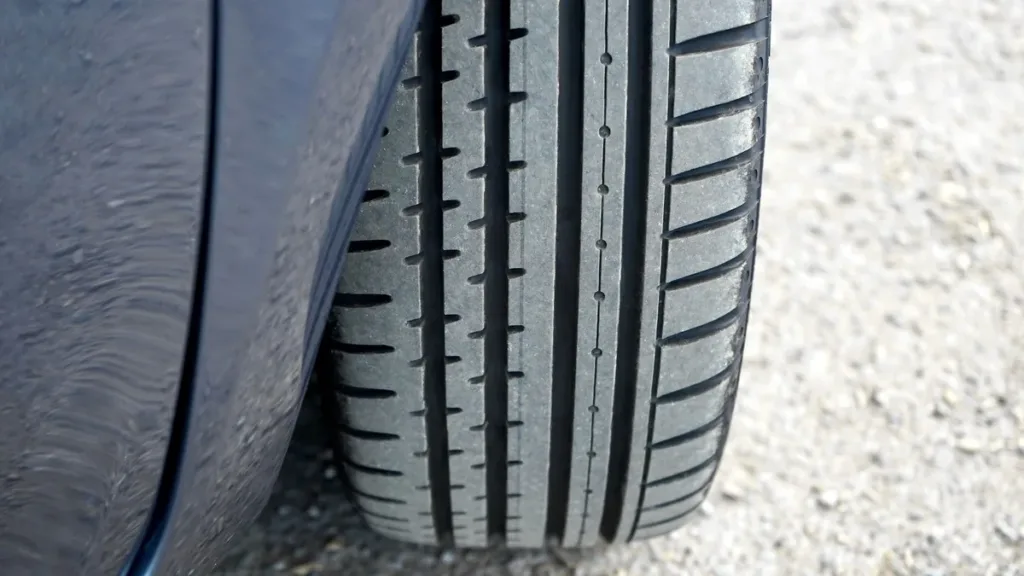
The best car for Pakistani roads is rarely the one that photographs best. For a hired car with a driver, the useful questions are measurable: how much space sits under the lowest point of the car, how the suspension copes with repeated speed breakers, whether the air conditioning can hold a cabin cool in 45°C traffic, and whether the tyres are a size a roadside shop in a small town will actually stock. Answer those four and the right class usually picks itself.
In practice that means a well-kept standard sedan for motorway and city work, a crossover when your route includes unpaved village roads, flooded monsoon streets or long stretches of broken surface, and a proper body-on-frame 4×4 only when the terrain genuinely demands it. A low, sleek executive sedan is a comfortable choice on the motorway and a nervous one on a rural link road. This guide sets out the criteria, the trade-offs and a class-by-road-type matrix you can use before you request a vehicle.
The best car for Pakistani roads: decision summary
Buyers of hired transport tend to judge a car the way they would judge one on a showroom floor: paint, badge, alloy wheels, leather. Those matter to how a journey feels at the kerb. They matter far less to whether the car arrives on time with an undamaged sump and a comfortable passenger. Operating suitability is the set of physical characteristics that decide how a vehicle behaves on the road you are actually going to use.
- Ground clearance decides whether speed breakers, potholes, raised manhole covers and standing water become an inconvenience or a repair bill.
- Suspension travel and tyre sidewall decide ride comfort over repeated bumps, and whether a sharp pothole edge damages a rim.
- Air-conditioning capacity, especially rear vents, decides whether passengers in the back seat are comfortable in May and June.
- Tyre size and spare availability decide how quickly a puncture outside a major city turns back into a moving car.
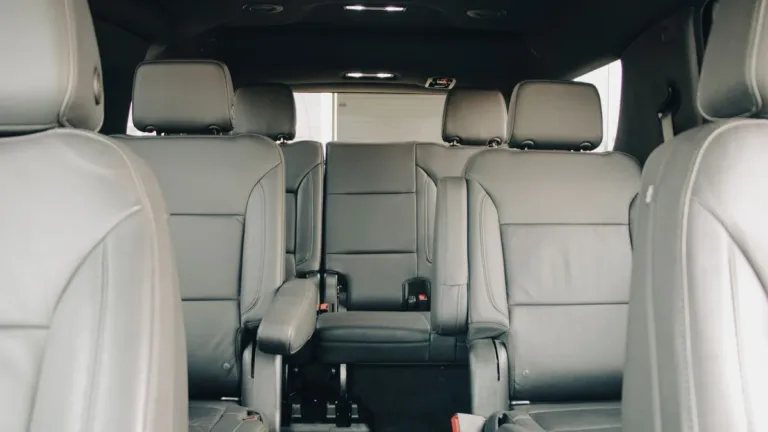
- Cabin and boot space decide whether luggage ends up on laps.
A useful rule of thumb: the further your route strays from the motorway network, the more weight the first four points should carry, and the less weight appearance deserves.
Ground clearance in Pakistan: what the numbers actually mean
Car ground clearance in Pakistan is quoted on manufacturers’ local spec sheets, but the figures are not always measured the same way, which is why comparing two brochures can mislead. Honda Pakistan, for example, lists the City 1.2LS at 172 mm, measured from the ground to the exhaust pipe, on 175/65 R15 tyres. Kia’s Pakistani distributor lists the Sportage L at a minimum of 181 mm, on 235/60 R18 tyres.
On paper that is a gap of under a centimetre. On the road the difference feels larger, for three reasons that a single number hides.
Clearance is only one of four geometry factors
What scrapes on a speed breaker is not always the lowest point in the middle of the car. It is often the front bumper lip or the rear of the car as it rolls off the hump. That depends on overhang (how far the body extends beyond the wheels) and on the approach and departure angles. A long sedan with a low nose can touch down on a steep hump even when its official clearance looks respectable, while a shorter crossover with a steeper approach angle clears it.
Load changes the number
Spec-sheet clearance is measured on an unladen car. Put five adults and a boot full of wedding luggage into a sedan and the rear sits noticeably lower. For family airport runs with heavy suitcases, the practical clearance is less than the brochure promises.
Wheel size and sidewall matter
Larger wheels lift the axle, and a taller tyre sidewall absorbs sharp edges. The trade-off is that fashionable low-profile tyres on large alloys look sharp and give a harder ride, with less rubber between a pothole edge and the rim.
The takeaway: treat clearance figures as a starting point, check how they were measured, and think about the laden car, not the empty one. Where a manufacturer does not publish a figure on its Pakistan site, the brochure or dealer is the place to ask.
Speed breakers, low cars and potholes
Anyone who has driven between Pakistani towns knows the pattern: a smooth stretch, then a speed breaker outside a school, a petrol station, a mosque, a police post or a market, and not every one of them is painted or signposted. Heights and profiles vary a great deal. Some are gentle rumble strips; others are steep ridges that a low car can only cross diagonally at walking pace.
Speed breakers and a low car are one of the most predictable mismatches in vehicle selection. A lowered or sport-trimmed sedan, or any car with a front splitter or a sagging rear, will slow a journey on these roads far more than traffic does. The driver has to crawl each hump, sometimes at an angle, and on a route with dozens of them the time adds up.
Potholes are the second issue. The UK Foreign, Commonwealth & Development Office notes that outside the major motorways the quality of roads is variable and conditions can be poor, and that many roads in remote northern areas have very uneven surfaces. A deep pothole hit at speed is where a thin tyre sidewall and a large rim are most vulnerable.
What to check if your route is bump-heavy:
- Is the vehicle on standard factory suspension, not lowered?
- Does it have a factory-height tyre rather than an ultra-low-profile aftermarket fit?
- Will it be carrying a full load? If so, consider stepping up a class.
- Does the driver know the route? Local knowledge of where the unmarked humps are is worth as much as extra clearance.
Monsoon flooding in Karachi and Lahore
Pakistan’s monsoon usually runs from late June to early October, according to the FCDO travel advice, which also recommends following Pakistan Meteorological Department updates. In the big cities the problem is less the rain itself than where the water goes afterwards. Heavy spells can leave underpasses, low-lying roads and older neighbourhoods waterlogged for hours, and the water hides potholes, open drains and kerbs.
The official position is clear. The National Disaster Management Authority’s pictorial flood guidelines advise avoiding walking or driving through floodwater because it may be deeper or faster-flowing than it appears, and for coastal areas they warn against driving through flooded areas or on coastal roads in flood season.
So how does vehicle choice help, if the right answer is not to drive through deep water at all? It helps at the margins, which is where most real monsoon journeys sit:
- A higher car tolerates shallow standing water and the wash from other vehicles better than a low sedan, and its air intake sits higher.
- A car with more clearance is less likely to ground on a submerged pothole edge or a kerb the driver cannot see.
- Crucially, no ordinary car or crossover is designed for fording. Clearance buys margin, not permission.
For monsoon-season airport runs and city transfers, the more useful levers are time and routing: build in extra time, let the driver choose a route that avoids known underpasses, and be willing to delay a non-essential trip during a heavy spell. If you are arranging transfers in the port city in July or August, our Karachi taxi and car hire page is the place to state your timings and flexibility up front.
The best car for Karachi roads, in one line
For most visitors, the best car for Karachi roads is a well-maintained sedan or crossover with strong rear AC: a sedan outside the monsoon, a crossover when rain is forecast or when your addresses include older districts where water pools.
AC performance in 45°C heat
Heat is easy to forget when you are choosing a car from a list in a cool office abroad, and impossible to ignore once you are in it. Sindh’s provincial heatwave management SOP, published through NDMA, records temperatures above 50°C in upper Sindh (Sukkur, Larkana, Jacobabad) in May and June 2024, and notes that Karachi saw temperatures as high as 49°C during the deadly 2015 and 2024 heatwaves. It identifies May, June and July as the peak-risk months and calls for public transport to have functional ventilation and cooling.
A car’s air conditioning is sized for the cabin it was designed for, and it is working hardest exactly when you need it most: parked in the sun at an arrivals kerb, crawling in city traffic with little airflow over the condenser, or climbing out of a valley on a long gradient. The practical differences between vehicles show up in a few places.
- Rear vents. A car without rear-seat vents relies on the front system blowing far enough back. With three adults in the rear, that is often not enough. Rear vents are standard on some models and trims and absent on others, so ask specifically rather than assuming a bigger car has them.
- Cabin volume versus system capacity. A small hatch cools quickly with two people; the same car with four adults and the sun on the rear glass struggles.
- Glass area and tint. Large windows look good and let heat in. Legal tint and sunshades help.
- Condition. A recently serviced system with a clean filter and a full gas charge outperforms a newer car whose system has been neglected. Condition beats model year here.
For elderly passengers, young children or anyone travelling in the peak months, rear vents and a pre-cooled cabin at pickup are worth more than any cosmetic upgrade. Ask for the car to be running with the AC on before you walk out of the terminal.
Tyre size and spare availability
Tyres are the quiet deciding factor on long rural journeys. A puncture is routine; what matters is what happens next. Common sizes on mainstream sedans and hatchbacks, such as the 175/65 R15 that Honda lists for the City 1.2LS, are the sizes roadside tyre shops in smaller towns are most likely to repair or replace from stock. Larger, less common sizes on premium crossovers and 4x4s (the Sportage L runs 235/60 R18) may mean a longer wait or a trip to a bigger town. Check the spare, too: Kia’s Pakistan specification sheet lists a steel space-saver (“donut”) spare for the Sportage L, which is designed to get you to a tyre shop, not to finish a long journey.
That is not an argument against larger vehicles. It is an argument for asking the right questions:
- Does the car carry a full-size spare, or a space-saver that limits speed and distance?
- Is the spare inflated and in usable condition?
- Are the jack and wheel brace present?
- For remote routes, is the tread on all four tyres healthy, not just legal?
On a motorway run between major cities, tyre size barely matters. On a trip to a village in the interior of Sindh or up a mountain road, it can decide whether a puncture costs twenty minutes or half a day.
Low executive sedans versus crossovers
This is the choice most corporate travellers and returning families actually face. The executive sedan looks right for a business meeting or a wedding arrival; the crossover looks more casual. On the right road, both are excellent. On the wrong road, each has a clear weakness.
Where the executive sedan wins
- Motorway cruising. Sedans tend to be quieter and more settled at sustained motorway speeds, and a lower body means less wind noise over a four-hour run.
- City-centre business travel on well-surfaced roads, hotel forecourts and office basements with tight ramps and low headroom.
- Passengers who find it hard to climb up into a taller vehicle, or who prefer a lower, easier seat to slide into.
Where the crossover wins
- Routes with frequent speed breakers, unpaved sections or broken tarmac.
- Monsoon weeks, for the extra margin in shallow standing water.
- Loaded family trips, where a sedan’s rear would sit low.
- Visibility. A higher seat lets the driver read the road further ahead, which helps in dense, unpredictable traffic.
The trade-off is real but narrower than it looks. A crossover typically gives up a little motorway refinement and fuel economy in exchange for a much wider operating envelope. If your trip mixes a motorway leg with a rural final stretch, the crossover’s weakness costs you a little comfort for a few hours; the sedan’s weakness can cost you the last hour entirely. If you are weighing it up, compare our standard sedan class against the comfort crossover and SUV class for the passenger and luggage counts you have.
Class suitability by road type
The matrix below matches road types to the vehicle classes that usually suit them. It is a planning guide, not a guarantee; the actual vehicle offered, its condition and the day’s weather all matter.
| Road type | Economy hatch | Standard sedan | Executive sedan | Crossover / SUV | 4×4 (body-on-frame) |
|---|---|---|---|---|---|
| Motorway between major cities | Adequate, light loads only | Good | Very good | Good | Good, thirstier |
| City centre, dry season | Good for 1-2 people | Good | Very good | Good | Oversized for most trips |
| City, monsoon spell | Poor | Fair, route with care | Fair to poor | Better margin | Best margin, still no fording |
| National highway with frequent speed breakers | Fair | Fair to good | Fair, slow over humps | Good | Good |
| Paved rural link road, broken edges | Fair | Fair | Poor to fair | Good | Very good |
| Unpaved village track | Poor | Poor to fair | Poor | Fair to good | Very good |
| Mountain roads, landslide season | Not advised | Poor | Poor | Fair, route-dependent | Preferred |
Two patterns stand out. First, the executive sedan is the strongest car in the top two rows and among the weakest in the bottom four. Second, the jump from sedan to crossover buys more real-world capability than the jump from crossover to full 4×4, unless you are genuinely heading into the mountains or onto unpaved tracks. You can browse every class, from economy hatches to group vans, on our vehicle classes page.
The best car for village road journeys
Many overseas Pakistanis land at a major airport and then drive to an ancestral village for a wedding, a funeral or a family visit. Most of that journey may be motorway or national highway. The last few kilometres are the part that decides the vehicle.
The best car for village road travel is usually a crossover or, for rough unpaved tracks, a pickup-based 4×4, for four reasons:
- Village approaches often combine unmarked speed breakers, narrow bridges over canals, raised irrigation channels crossing the road and soft verges.
- Seasonal rain can turn a dirt track to mud quickly, and a low car can bottom out in its own ruts.
- Families travel heavy on these trips, with gifts, luggage and extra relatives, so the laden-clearance problem is at its worst.
- Tyre help may be some distance away, which brings the spare-wheel questions above into play.
The single most useful thing you can do is describe the last stretch honestly when you request a vehicle. “Paved to the town, then about three kilometres of dirt road past the canal” tells a dispatcher far more than a village name alone. If you are unsure, ask a relative who drives it regularly, and pass on what they say.
How to specify a vehicle so you get the right one
Whoever arranges your transport, the quality of the match depends on the quality of the brief. A short, specific request prevents most of the problems described above. Include:
- Passenger count and ages, noting anyone elderly, unwell or very young who will feel the heat or struggle with a high step.
- Luggage, counted and sized: large checked cases, cabin bags, cartons and anything bulky such as a wheelchair or pram.
- Every road type on the route, especially the first and last few kilometres.
- Dates, so the season is clear: monsoon weeks, peak heat months or winter fog each change the advice.
- What matters most: arrival image for an event, comfort for a long drive, or getting through a difficult final stretch. Say which one wins if they conflict.
When you are ready, you can set out those details through the iDrive booking request page. Requests are reviewed against available vehicles; availability, the specific model and the final fare are confirmed with you rather than assumed at the point of request. If you would prefer a gentler, family-focused walk-through of the same choices, our sister service Pakistan Taxi, which runs on the iDrive network, explains its vehicle options for family and airport journeys in plain terms.
Questions people ask
Is a sedan or an SUV better for Pakistani roads?
For motorway and dry-season city travel, a well-maintained sedan is comfortable and efficient. For routes with frequent speed breakers, unpaved sections, heavy loads or monsoon weather, a crossover or SUV gives a wider margin. Match the class to the worst stretch of your route, not the best.
How much ground clearance do I need?
There is no single figure, because clearance, overhang, load and tyre size work together. Manufacturer figures such as Honda’s 172 mm for the City 1.2LS or Kia’s 181 mm minimum for the Sportage L are a starting point; a fully loaded car sits lower, and a long front overhang can scrape before the underbody does.
Can a higher car drive through flooded streets safely?
No car should be treated as flood-proof. NDMA advises avoiding driving through floodwater because it can be deeper or faster than it looks. A higher vehicle helps with shallow standing water, but the safer plan is extra time, careful routing or waiting out a heavy spell.