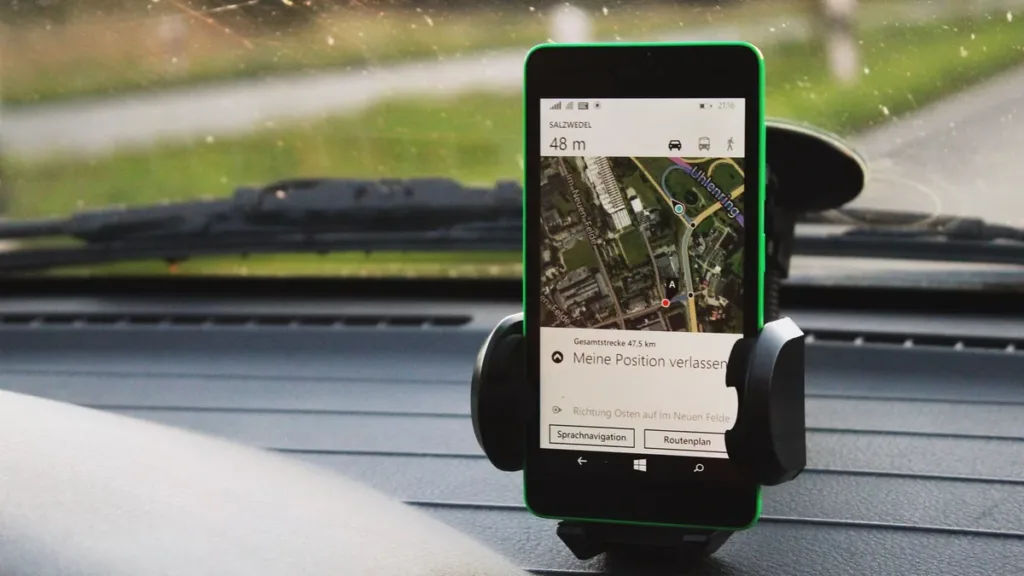
Do rental cars have trackers? In Pakistan, assume yes. A hire car handed over in Lahore, Karachi or Islamabad will very likely carry a GPS unit wired behind the dashboard, and the owner will probably be able to see where it is, how fast it is moving and whether the ignition is on. That is not sinister in itself. Fleet owners fit trackers because a car is an expensive, easily moved asset, and because both the UK Foreign, Commonwealth & Development Office and the US State Department list carjacking among the crime risks in Pakistan. The useful question is not whether the car is tracked, but what is recorded, who can look at it, for how long, and when the watching should stop.
The short version: accept the tracker, ask for the rules in writing. A well-run operator will tell you what the unit logs, whether a geofence applies, what happens if you cross it, and how long the location history is kept. If a company cannot answer those four points clearly, that tells you something about how the rest of the hire will be run.
Decision summary
- Self-drive hire: the tracker protects the owner’s asset. Expect location, speed and ignition data, and very likely a geofence tied to the cities or routes you agreed. Read the out-of-area clause before you sign.
- Car with driver: the tracker mainly serves dispatch and safety. As a passenger, you should be able to see the car approaching and the trip in progress, and nothing about the driver’s location once your journey has ended.
- Privacy: the reasonable standard is that live tracking covers the hire or the active journey, not the hours before or after, and that history is kept only as long as it is needed for billing, disputes or claims.
- Red flag: an operator who says the car “has no tracker” but then quotes penalties for speed or out-of-city driving. One of those statements is wrong.
Why Pakistani rental fleets fit trackers as standard
The logic is commercial, and it is the same on a Suzuki Alto as on a Toyota Fortuner. A rent-a-car owner is handing an expensive vehicle to someone they may have met that morning. The tracker is how they sleep at night.
Theft and recovery
A car that disappears is far easier to recover when its last known position and route are on a screen. The US State Department’s Pakistan country page describes urban crime that includes theft, robbery and carjacking, and the FCDO safety and security advice tells travellers to be aware of the risk of carjacking. Owners do not need a statistic to see why an untracked car is a gamble.
Proving what happened
If a hirer disputes a mileage charge, a late return or an accident claim, the tracker log is the neutral record. That cuts both ways: it can also prove that you returned the car on time, parked it where agreed and never left Islamabad.
Managing drivers on chauffeured hires
Where the car comes with a driver, the operator uses location data to dispatch the nearest suitable vehicle, confirm pickups at airports and hotels, and answer the client who rings to ask where the car is. For a professional buyer booking a week of meetings, that visibility is part of what they are paying for.
What a car tracker in Pakistan actually records
Units vary by supplier and by how much the owner pays for the monitoring plan, so treat the list below as the typical menu rather than a promise about any particular car. Ask which items apply to the vehicle you are being given.
| Data point | What it shows the owner | Why it matters to you |
|---|---|---|
| Location (GPS position) | Where the car is now and the route it took | Supports recovery if the car is stolen; also means your movements during the hire are visible |
| Speed | Moment-by-moment speed and alerts above a set threshold | Some agreements attach penalties to over-speed alerts; ask what the threshold is |
| Ignition on/off | When the engine was started and stopped | Used to check late returns, idling and unauthorised use overnight |
| Geofence entry and exit | An alert when the car leaves an agreed area | The basis for most out-of-city charges and, in some fleets, a phone call from the owner |
| Distance travelled | Kilometres calculated from the GPS trail | May be used alongside or instead of the odometer for mileage caps |
| Remote immobiliser (on some units) | Ability to prevent the engine restarting | Ask whether it exists and under what circumstances it would ever be used |
What a basic fleet tracker does not usually do is record audio or video inside the cabin. Dashcams and in-cabin cameras are separate devices. If a car has a camera pointing inwards, you are entitled to ask about it, and on a chauffeured hire you should be told before the journey, not discover it on the motorway.
Do rental cars have trackers that the passenger can see?
This is where self-drive and chauffeured hire part company, so it helps to separate three audiences.
The vehicle owner
The owner or fleet manager sees everything the unit reports, usually through a web dashboard or phone app supplied by the tracking company. In practice this is the person who gets the geofence alert at 11pm when a car leaves Rawalpindi.
The booking platform
On a managed platform, the operations team may see the live position of a car assigned to a booking so it can coordinate pickups, answer “where is my driver?” and handle delays. That access should be tied to live bookings, not open-ended.
The passenger or hirer
On a chauffeured trip, a passenger is typically shown the car approaching and the journey in progress. On self-drive, the hirer is the driver, so there is nothing to “see” except the obligation to stay within the agreed rules. Either way, the hirer should never see another client’s trips, and nobody should see a driver’s location on a day when that driver is off duty.
If you are still deciding which model suits your trip, our comparison of self-drive versus a car with a driver sets out the trade-offs on cost, responsibility and paperwork.
When live tracking should stop: during the hire versus outside it
A tracker is always physically in the car. What changes is whether anyone is watching, and whether that watching has a legitimate reason. The principle we think every operator should follow is simple: live location is justified while the car is on hire to you or while your journey is active. Before the hire starts and after it ends, your part of the story is over.
Self-drive: the hire window
From handover to return, the owner has a reasonable interest in knowing the car is where the agreement says it may be. That does not extend to building a profile of where you went for dinner, and a well-run operator will only pull detailed history if there is a reason to: a theft, an accident, a disputed charge.
Chauffeured trips: the active journey
For a passenger, the sensible window is from driver dispatch to drop-off. Once you have been dropped at the hotel in Gulberg or the departures kerb at Allama Iqbal International, there is no reason for your booking to keep displaying the car, and no reason for the passenger app to show where the driver goes next. The same courtesy applies the other way: the driver’s location between jobs is not the passenger’s business.
What happens to the history
The UK Information Commissioner’s Office sets out data protection principles that make a good yardstick even for a business operating in Pakistan: data should be collected for specified purposes, limited to what is necessary, and kept no longer than needed. Applied to trackers, that means trip history is kept for billing, disputes and insurance claims, then deleted or anonymised, rather than kept indefinitely because storage is cheap.
Whether UK law applies to a particular Pakistani operator is a legal question we will not try to settle here. The point is practical: these principles describe the behaviour you should expect, and they give you language to ask for it.
Geofence limits and out-of-city charges
Geofencing is where the tracker stops being background technology and starts affecting your wallet. Most self-drive agreements define an area, usually a city, a city pair or a named route, and treat anything outside it as a breach or a chargeable extra.
How the geofence is usually drawn
- City-only: the car may be used within, say, Karachi or the Islamabad-Rawalpindi area. Leaving triggers an alert.
- Agreed route: the hirer declares a trip in advance, for example Lahore to Islamabad on the M-2, and the permitted zone is widened to match.
- Excluded zones: some owners block areas they consider high risk or will not insure. This often overlaps with official travel advice.
Why the excluded zones matter
The FCDO’s Pakistan travel advice currently advises against all travel to Balochistan, to named districts of Khyber Pakhtunkhwa including Peshawar and Swat, to the Karakoram Highway between Mansehra and Chilas, and to within 10 miles of the Afghanistan border. It advises against all but essential travel to further areas, including Azad Jammu and Kashmir, within 10 miles of the Line of Control, Sindh north of and including Nawabshah, and Dera Ghazi Khan in Punjab. The advice changes, so check the live page before any road trip. The FCDO also warns that travelling against its advice can invalidate travel insurance. A rental geofence that excludes these areas is not the owner being fussy. Do not plan leisure driving there, tracker or no tracker.
Charges to clarify before you drive
- Is leaving the zone a flat fee, a per-kilometre surcharge, or a breach that ends the hire?
- Is a declared intercity trip priced differently from an unplanned one?
- Does the charge rely on the tracker log, the odometer, or both?
- Will someone call you before charging, or will you find out at return?
Our terms of hire explain how conditions and extras are set out in writing, and the self-drive car rental page covers eligibility and documents.
GPS tracking privacy in a rental car: where the law fits
Pakistan does not give hirers a neat consumer rulebook on vehicle telematics, so the protections come from a patchwork: the hire contract, the operator’s own privacy policy, and criminal law aimed at the worst abuses.
The Prevention of Electronic Crimes Act 2016
The Prevention of Electronic Crimes Act 2016 (PECA) is the main criminal statute for misuse of information systems and data. In the text as passed by Parliament, its offences include gaining unauthorised access to an information system or data with dishonest intent, copying or transmitting data without authorisation, and using another person’s identity information without authorisation. Its cyber stalking offence includes using electronic means to watch or spy upon a person in a way that causes fear of violence or serious alarm or distress. None of this is written specifically for rental cars, and we are not offering legal advice, but it sets the outer boundary: location data is not a free-for-all for whoever happens to hold the dashboard password.
The contract and the privacy policy
For day-to-day expectations, the documents that matter are the ones you are asked to accept. A good agreement says that the vehicle is tracked, what is recorded, who can access it and how long it is kept. Our own privacy policy is where iDrive sets out how personal data is handled; read the equivalent document from any operator you use.
If you are in the UK
UK residents are used to asking organisations what they hold. The ICO explains that you can make a subject access request for copies of your personal information and that organisations usually have one month to respond. Whether that right is enforceable against a given operator in Pakistan depends on where it is established and how it offers its services, but it is still a reasonable request to make in writing, and the answer is informative.
A note on bringing your own tracker
Some travellers, particularly families and security-conscious business visitors, think about packing a personal GPS tracker or satellite messenger. The US State Department’s Pakistan page states plainly that GPS with tracking capabilities is not permitted in Pakistan. It does not elaborate, so treat that as a reason not to pack one without checking the current position with the relevant authorities first. The tracker already fitted to a professionally run fleet car, plus a phone with location sharing to a trusted contact, covers most needs.
Rent a car with tracker: self-drive versus chauffeured, side by side
| Question | Self-drive | Car with driver |
|---|---|---|
| Who is being tracked? | You, as the person in control of the car | The vehicle and driver; you are a passenger |
| Main purpose | Asset protection, geofence, mileage and return checks | Dispatch, pickup confirmation, passenger reassurance |
| Typical charges linked to tracker data | Out-of-zone use, over-speed, late return | Usually waiting time or extra stops, agreed separately |
| Documents you carry | Licence, and for UK licence holders the 1968 International Driving Permit that FCDO advice requires | ID for yourself; the driver handles vehicle papers |
| Who handles a police stop or breakdown | You | The driver and operator |
The FCDO’s road travel guidance is blunt that road quality outside the major motorways is variable, that roads such as the N15 between Chilas and Babusar can be inaccessible at some times of year because of extreme weather, and that travellers on those routes should use experienced local drivers. For many visitors that settles it: the tracker question becomes the operator’s problem, not theirs. Our sister service Pakistan Taxi, part of the iDrive network, has a practical guide to self-drive eligibility, deposits and handover for overseas bookers if you are weighing the two.
Questions to ask before you sign
Print this, or paste it into a WhatsApp message to the operator. Written answers are worth more than a friendly “don’t worry, sir” at the handover.
- Is the car fitted with a tracker, and who supplies the monitoring? You want a straight yes and the name of whoever holds the data.
- What does it record? Location, speed, ignition, geofence events, and anything else such as a remote immobiliser or in-cabin camera.
- What is the permitted area? City limits, declared route, excluded zones. Get it as a list of cities or a description, not just “Punjab”.
- What happens if the car leaves that area? Fee, surcharge, phone call, end of hire. Ask for the figure or formula in writing.
- Is there a speed threshold that triggers a penalty? If so, what is it, and is it applied per alert or per trip?
- Who can see the live position during my hire? Owner, platform operations, anyone else.
- When does live monitoring stop? At return for self-drive, at drop-off for chauffeured trips.
- How long is the trip history kept, and can I have a copy if there is a dispute? The log that can be used against you should also be available to support you.
- Will anyone contact me before acting on an alert? A call is far better than an immobilised car on the GT Road.
At handover
- Photograph the odometer, fuel gauge and all four sides of the car, with timestamps.
- Confirm the return time and location and note it in the same message thread as the tracker answers.
- If you are planning an intercity leg, declare it now rather than hoping the geofence is generous.
How iDrive approaches tracking on hires and journeys
iDrive is the platform behind several Pakistani mobility brands, and the vehicles on it come from partner fleets and drivers. The standard we work to is the one set out above: location data is used to run the journey you asked for, not to watch you outside it, and any conditions that depend on tracker data belong in writing before the hire begins. Specific vehicles, partners and conditions vary, which is why we confirm details for each request rather than promising them in advance.
If you want a vehicle for a week in Lahore, a driver for an Islamabad conference or a self-drive car for family visits, start with an overview of car rental in Pakistan or go straight to the journey request form. Tell us the cities, dates and whether you want to drive yourself, and the tracker and geofence terms for the vehicle offered to you will be part of what is confirmed.
Questions people ask
Do rental cars have trackers in Pakistan?
Assume they do. Owners fit GPS trackers to protect the vehicle, prove return times and mileage, and enforce the agreed area of use. Ask what the unit records and who can see it.
Can a rental company see where I go?
Usually yes, during the hire. The fair standard is that detailed history is only reviewed for a reason, such as theft, an accident or a disputed charge, and deleted once it is no longer needed.
Will I be charged for leaving the city?
Many self-drive agreements charge for, or prohibit, driving outside a geofenced area unless the trip was declared in advance. Get the rule and any fee in writing before you collect the car.
When should live tracking stop on a chauffeured trip?
At drop-off. The passenger has no need to see the car after the journey ends, and the driver’s movements between jobs are not part of your booking.