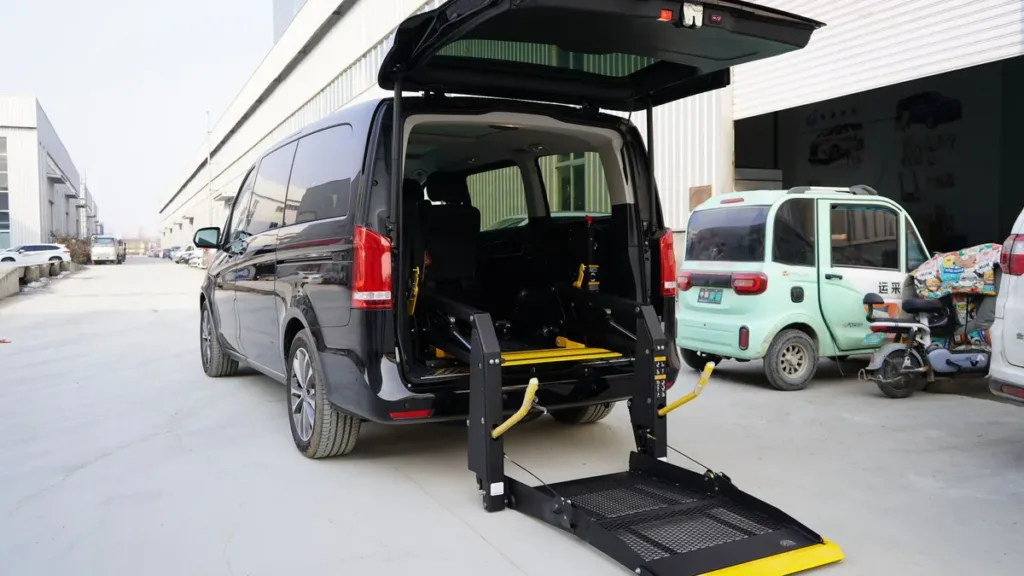
Accessible event transportation in Pakistan is decided long before the first delegate lands. It is decided on the registration form. If the form asks one vague question (“Any special requirements?”), the transport desk gets vague answers, books a standard coaster for everyone, and discovers on the morning of the plenary that a delegate’s powered chair will not go up three steep coach steps. If the form asks precise questions, the desk can match each delegate to a vehicle that works, tell the operator exactly what to send, and plan a drop-off point that is actually reachable from the hall door.
Below is the working brief, from the form to the operator’s written confirmation.
The decision summary
For organisers short on time, these are the calls that matter most:
- Ask about equipment, not diagnosis. You need to know what the delegate travels with and what they can do on the day, not their medical history.
- A powered wheelchair means a ramp or lift vehicle. Powered chairs are generally not folded into a car boot; plan on the delegate staying in the chair for the journey.
- A folding manual chair gives you options. If the delegate can transfer to a car seat with or without help, a saloon or MPV with boot space may be enough.
- Measure the walk, not the kerb. In Pakistan the obstacle is often the security cordon, not the step. Find out where vehicles are stopped and how far that is from the door.
- Book companions as passengers. A carer, interpreter or family member needs a seat in the same vehicle, not a separate booking that arrives ten minutes later.
- Get it in writing. Ramp or lift, wheelchair restraint, number of wheelchair positions, driver assistance: confirm each one with the operator by email or on the booking record.
The access needs registration question that actually works
The single most useful change most organisers can make is to replace the catch-all “special requirements” box with a short, specific block. People answer what they are asked. Ask about equipment and practical needs and you get information a transport desk can act on.
Suggested wording
The block below is an example you can adapt; it is not a legal form, and your own data protection rules decide how the answers are stored and who sees them.
Travel and access (optional, used only to plan your transport).
1. Do you use a wheelchair or scooter while travelling? No / Manual, folds / Manual, does not fold / Powered wheelchair / Mobility scooter
2. Can you move from your wheelchair into a car seat? Yes, on my own / Yes, with help / No, I need to stay in my chair
3. Can you manage a few steps into a minibus or coach? Yes / With a handrail and time / No
4. Roughly how far can you walk comfortably without a rest? Not at all / Under 50 metres / 50 to 150 metres / Further
5. Will someone travel with you (carer, interpreter, family)? How many?
6. Anything else the driver should know (e.g. sight or hearing, assistance dog, oxygen, extra luggage for equipment)?
Questions 1 and 2 decide the vehicle, 3 decides who can use the main shuttle, 4 shapes the drop-off plan and 5 sets seat counts. Question 6 catches what sinks a transfer on the day: an oxygen cylinder, a guide dog, a passenger who needs pickups confirmed by text.
When to ask, and when to ask again
Put the block on the main registration form, then send a short confirmation a week or two before the event: “You told us X. Is that still right, and what are your arrival flight and hotel?” Plans change, and one email saves a vehicle that does not fit.
Folding vs powered wheelchairs: matching the chair to the vehicle
Wheelchairs vary far more than most transport plans assume. The UK Department for Transport’s Inclusive Mobility guide draws on a UK survey of occupied wheelchairs that recorded manual chairs (with user) at a length of roughly 707 to 1,256 mm and a width of roughly 511 to 741 mm, and powered chairs a length of roughly 758 to 1,549 mm and a width of roughly 521 to 755 mm. The top of that powered range is a long object. It will not fit through a narrow side door, and the delegate’s head height when seated in it matters as much as the floor space.
That is why the registration question asks what the chair is, not simply whether the delegate “uses a wheelchair”. The practical groupings look like this:
| Delegate profile | Vehicle that usually works | What to confirm with the operator |
|---|---|---|
| Folding manual chair, transfers independently | Saloon, estate or MPV | Boot space with the delegate’s luggage loaded as well as the chair |
| Folding manual chair, transfers with help | MPV or higher saloon; seat height matters | Driver willing and briefed to assist; companion seat alongside |
| Rigid manual chair, stays seated | Wheelchair-accessible van with ramp or lift | Door height, restraint system, occupant seat belt |
| Powered chair or scooter | Wheelchair-accessible van with ramp or lift | Chair dimensions and weight supplied in advance; floor anchor points |
| Walks short distances, cannot climb high steps | Car or MPV, or a minibus with a low step and handrail | Step height, whether a portable step is carried |
Ask delegates with powered chairs for the make or model and the dimensions and weight in the confirmation email. Operators need these figures to say yes honestly, and a delegate who uses the chair every day usually knows them or has the manual.
The coaster problem
Many conference shuttles in Pakistan run on coasters and large coaches. They move a lot of people cheaply, but their entry steps are steep and the door is narrow. A delegate who “can manage steps” on a UK low-floor bus may find a coaster’s first step a different proposition entirely, especially carrying a laptop bag. That is what registration question 3 is for, and why “with a handrail and time” is offered as an answer. Those delegates can often ride the main shuttle if the driver is told to wait and the loading marshal knows who they are.
Ramp or lift van, or an assisted transfer?
There are two honest ways to move a wheelchair user, and the brief should say which one each delegate needs.
Staying in the chair
A wheelchair-accessible van with a rear or side ramp, or a powered lift, lets the delegate board and travel without leaving the chair. This is the only safe option for most powered-chair users and for anyone who cannot transfer. Key points for the brief:
- How many wheelchair positions the vehicle has, and whether seats have to be removed to create them.
- Whether the chair is secured with a proper restraint system and the occupant gets a separate seat belt. A chair held in place by a strap round the wheels is not the same thing.
- Ramp length and the kerb situation at pickup. A ramp that is fine on a flat hotel forecourt can be too steep dropped onto a raised kerb.
- Door and interior height for a seated passenger.
Vehicles of this type are far fewer in Pakistan than standard cars and coasters, so book them first, not last. If the event has several wheelchair users arriving at similar times, you may need to stagger pickups rather than assume multiple vans will be free at once.
Assisted transfer into a car
Many manual-chair users prefer to transfer into an ordinary car seat and have the chair folded into the boot. It is quicker and the vehicle choice is wider. The brief should say whether the delegate transfers alone or needs a hand, and from whom. Never assume a driver will lift a passenger; agree it in advance.
For a broader view of the vehicle types available, see iDrive’s accessible vehicle category, and check availability for your dates rather than assuming it.
The last 200 metres: barriers, drop-off and the door
International checklists assume the vehicle pulls up at a level kerb outside the entrance. At many Pakistani conference venues, government buildings and large hotels, it is stopped well before that: a barrier, a vehicle search, sometimes a second gate, then a walk across a forecourt. For a delegate who walks with a stick, that walk can mean missing the opening session.
Inclusive Mobility gives a useful benchmark for how far people can go without a rest: about 50 metres for people who use a walking stick, about 100 metres for mobility-impaired people who walk without an aid, and about 150 metres for wheelchair users and for people with a visual impairment. Those figures come from UK research and are guidance rather than a rule, but they make the point clearly. If your security point is 250 metres from the door, a delegate who answered “under 50 metres” on the form cannot be dropped there.
What to find out from the venue
- Where exactly do vehicles stop for screening, and where do they unload?
- Can a pre-registered accessible vehicle be screened and then allowed through to the entrance? Get the vehicle registration number and driver’s name to the venue in advance if so.
- If vehicles cannot go through, what covers the gap: a golf buggy, a venue wheelchair, a marshal, a covered walkway?
- Is the route from drop-off to the hall step-free, and is there a lift to any upper-floor sessions?
- Where will vehicles wait? A driver who is sent to a holding area two kilometres away cannot bring the van back quickly if a delegate needs to leave early.
Large venues such as the Jinnah Convention Centre on Club Road in Islamabad, which has parking for more than 1,000 vehicles across three lots, show why this matters: a big car park is convenient for a fleet and a long way on foot for someone with limited mobility. Walk the route yourself on the site visit, with a stopwatch, and note kerbs, gravel, ramps and doors.
The drop-off note on each booking should then be specific: “Stop at Gate 2 for screening, then proceed to the VIP porch on the east side. Marshal will meet the vehicle.” A driver can follow that. “Drop at the venue” is not an instruction.
Companion seats, timings and travel time
Delegates with access needs rarely travel alone. A carer, a personal assistant, a sign language interpreter or a family member may be with them for the whole event, and the brief should treat that person as a passenger with a confirmed seat, not as an extra who might fit.
- Seat count. Record companions in the booking against the delegate’s name. In a wheelchair-accessible van, creating a wheelchair position can remove seats, so check that the companion still has one.
- Loading time. Ramp deployment, securing a chair and fitting a belt takes longer than a passenger climbing in. Build a buffer into each pickup and tell the driver it is expected, so nobody feels rushed.
- Journey time. Keep accessible transfers direct. A shuttle loop that visits four hotels is a long ride for someone who cannot shift position easily.
- Rest stops. For intercity journeys, plan stops at places with accessible toilets rather than wherever the driver usually halts.
- Early departures. Some delegates will need to leave before the last session. Have a vehicle on call rather than tied to the main end-of-day shuttle.
Airport distances are part of this. Islamabad International Airport, for example, is at Fateh Jang, about 25 km from Zero Point in Islamabad according to its Wikipedia entry, with road links via the M-1, M-2 and Srinagar Highway. After a long-haul flight, a pre-arranged vehicle beats a queue. iDrive’s Islamabad airport transfers page explains how arrival pickups are requested.
The airport leg: connecting airline assistance to ground transport
For overseas delegates the event journey starts at the aircraft door, and the handover from airline assistance to your vehicle is where things go wrong. The airline’s wheelchair service usually brings the passenger through arrivals; what happens after that depends on your plan.
Pakistan International Airlines, for instance, sets out its special assistance arrangements on its website. It says staff are trained to assist passengers with disabilities, that on-board wheelchairs are available for moving through the cabin, and that passengers with postural support equipment other than standard models should contact a reservation office at least seven days before departure. Other airlines publish their own terms; delegates request assistance from whichever carrier they fly.
What the transport brief adds:
- Confirm the delegate has booked airline assistance, and tell the driver to expect them after the rest of the flight.
- Agree a meeting point the assistance team can reach, and share the driver’s number with the delegate.
- Size the vehicle for the chair plus luggage, chargers and cushions.
- If a powered chair travelled in the hold, allow time for it to be returned and checked.
Confirming capability in writing with the operator
An operator saying “yes, we can do wheelchairs” on the phone is not a plan. The phrase covers everything from a van with a powered lift and four-point restraints to a saloon with a large boot. Before you finalise the delegate brief, get a written confirmation for each accessible booking that covers:
- Vehicle type and access method: ramp, lift or none; rear or side entry.
- Wheelchair positions: how many, and seat count remaining with the positions in use.
- Securing: whether a wheelchair restraint system and an occupant belt are fitted.
- Limits: maximum chair dimensions and weight the ramp or lift can take.
- Driver assistance: what the driver will and will not do (push the chair, help with a transfer, load the chair).
- Timing: pickup time, buffer for loading, and waiting time included.
- Contingency: what happens if the vehicle breaks down or is delayed, and who you call.
Treat any answer as provisional until it is on the booking record or in an email you can forward to the delegate. If an answer is “we’ll see on the day”, book a different vehicle. On iDrive, requests for events are made through the events and group booking page; the access details from your registration block belong in the request notes, and nothing should be treated as settled until the confirmation spells out the vehicle and its equipment.
Then tell each delegate what has been arranged, so they can spot a mistake while it can still be fixed.
UK organisers, UK expectations
Many events in Pakistan are organised or co-funded from the UK, and their delegates bring UK expectations. Section 20 of Great Britain’s Equality Act 2010 sets out a duty to make reasonable adjustments to practices, physical features and auxiliary aids, and says the disabled person cannot be made to pay for them. Whether that law reaches an event run overseas is for the organisation’s legal adviser, but the principle is a sound planning standard: find the barrier, remove it or provide an alternative, and do not pass the cost to the delegate.
Security advice and where the event is
Accessible planning does not change the security picture. Before you finalise venues, hotels and any excursions, check the UK Foreign, Commonwealth and Development Office regional risks advice for Pakistan. At the time of writing it advises against all travel to Balochistan and to a list of districts in Khyber Pakhtunkhwa that includes Peshawar, and against all but essential travel to other areas including Azad Jammu and Kashmir and northern Sindh. Its safety and security page also advises caution at public events and large crowds. The advice changes, so check it close to the event and before any side trip.
Family members, older relatives and pilgrim add-ons
Some delegates will extend their trip to visit family, and the same principles carry over: ask about equipment, match the vehicle, plan rest stops and confirm in writing. For journeys between cities with elderly parents after the event, our sister service Pakistan Taxi has a practical guide to intercity travel with older relatives.
Delegates who combine a Pakistan event with Umrah face a different set of arrangements in Saudi Arabia. Our sister company Saudi Cab Co explains what to ask for when booking wheelchair-friendly vehicles there, and the same written-confirmation habit applies.
Putting the brief together
A workable accessible shuttle for delegates comes down to one page per delegate who needs it: contact preference, equipment, transfer ability, walking distance, companions, the confirmed vehicle, the drop-off point at each venue and a fallback contact. Most of it comes straight from the registration answers. Good reduced mobility delegate transport starts with a good question; the rest is logistics. When you are ready to request vehicles, start from the iDrive booking page and include the access details in full; the operator’s confirmation, not the request, is what you plan around.
Questions people ask
How early should accessible vehicles be requested for an event?
As soon as you have registration answers. Ramp and lift vans are far fewer than standard cars and coasters, so request them before the main shuttle fleet and confirm them in writing.
Can wheelchair users at conferences use the main delegate shuttle?
Some can. A delegate who walks a little and manages steps with a handrail may ride a coaster if the driver waits. Delegates who need to stay in their chair need a ramp or lift vehicle.
What should the registration form ask?
Ask about equipment, ability to transfer and climb steps, comfortable walking distance, companions and anything the driver should know. Avoid asking for a diagnosis; it does not help choose a vehicle.
Who arranges the airport wheelchair service?
The delegate requests it from their airline. The transport brief should record that it is booked and set a meeting point the airline’s assistance team can reach.