Your Pakistan. Your Journey.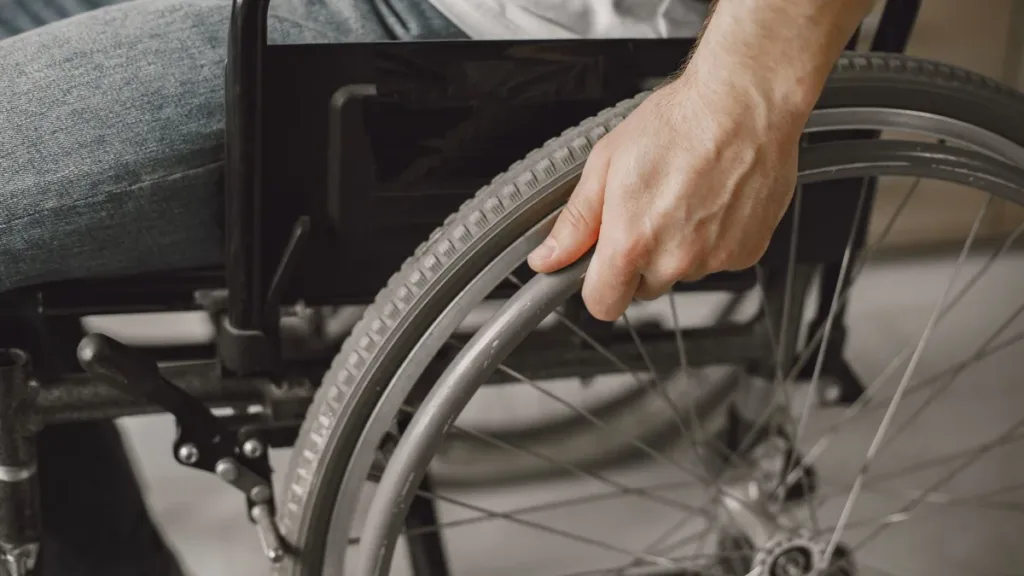
Islamabad airport wheelchair assistance is arranged through your airline, not the car company, and it is designed to get a passenger from the aircraft door through immigration, baggage and customs. Ask for it when you book, or at least 48 hours before departure, using the right code: WCHR if the passenger can manage steps and walk to the seat, WCHS if they cannot manage steps, WCHC if they cannot walk at all. What the airline service is not built to do is put anyone into a vehicle. That last stretch, from the arrivals exit to a seat or a ramp, is the part no airline page plans for you, and it depends on a vehicle that has been checked against the actual chair, the actual passenger and the actual luggage.
So there are two separate arrangements to make, with two separate confirmations. This guide covers both, and the join between them.
The decision in brief
- Airline side: request the correct wheelchair code on the booking, declare any personal wheelchair and its battery type, and keep the confirmation.
- Airport side: Islamabad International Airport runs a help desk for persons with disabilities (visible and hidden). The number is published on the airport’s home page.
- Vehicle side: decide whether the passenger will stay in their chair (ramp or lift vehicle) or transfer to a car seat, then get the operator to confirm in writing that the vehicle fits that plan.
- Handover: agree where assistance staff will bring the passenger, who meets them, and what happens if the flight or the wheelchair is late off the aircraft.
- Return: book departure assistance and the outbound vehicle at the same time as the arrival, not in the last week of the trip.
Requesting airline assistance: WCHR, WCHS and WCHC
Airlines use special service request (SSR) codes to tell ground handlers what level of help to provide. IATA’s best-practice note on SSR codes and assistance defines the three wheelchair codes precisely, and the ground team plans staff and equipment around the one on the booking. Understate the need and the help that turns up will be too light for the passenger.
| Code | What the passenger can do | What the airline arranges | What it means for the car |
|---|---|---|---|
| WCHR | Can climb steps and walk to the cabin seat; struggles with long distances | Wheelchair for the walk between aircraft and terminal | Usually a standard car or MPV with a low, easy seat; the chair itself may not travel |
| WCHS | Cannot manage steps but can walk short distances to the seat | Wheelchair plus help with steps (lift, ambulift or carrying) | Transfer to a car seat is often possible; seat height and door width matter |
| WCHC | Cannot walk; needs help to and from the cabin seat | Wheelchair throughout and assisted transfer to the seat | Plan a ramp or lift vehicle, or a transfer with trained help and a clear space at the kerb |
IATA also lists codes for passengers travelling with their own wheelchair, which tell the airline how it is powered: WCMP for a manual chair, WCBD for a dry or non-spillable battery, WCBW for a wet-cell battery, and WCLB for lithium-ion. These codes decide how the chair is loaded, and they are the first thing a vehicle operator should ask you about too.
IATA’s guidance recommends asking for assistance no later than 48 hours before departure. Emirates, to take one Gulf carrier as an example, asks for the same 48 hours and says that for a battery-powered wheelchair it needs to know the battery type, the size of the chair and its weight before the flight. Its mobility assistance page also lets passengers take up to two mobility aids, such as a collapsible manual chair, into the cabin without counting them against the cabin baggage allowance, and recommends arriving three hours early when travelling with an electric chair.
A PIA special assistance request
If you fly Pakistan International Airlines, make the request through PIA reservations or the booking channel you used, and check PIA’s own special assistance page for its current notice period and any medical clearance form it requires. Policies differ between carriers and change, so the airline’s page on the day you book is the rule.
On connecting itineraries, confirm that the code appears on every sector. A request added only to the London to Dubai leg, for example, may not follow the passenger onto the Dubai to Islamabad flight.
Where airport assistance hands over, and why that point matters
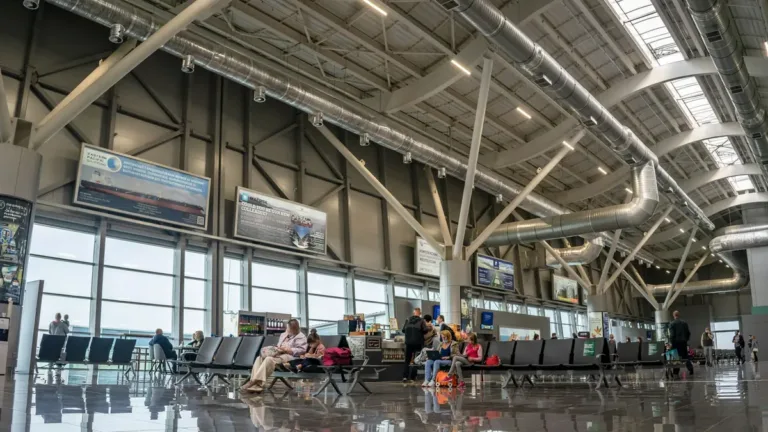
At Islamabad the arrival sequence runs from the aircraft to immigration, then baggage reclaim, then the green or red customs channel, and only then into the concourse hall, from which the airport’s arrivals procedure sends passengers on to the car park, taxis and rent-a-car counters. Immigration has sections marked for overseas Pakistanis, foreigners, taxpayers and special persons (listed as older citizens, women and children). Assistance staff move the passenger through the controlled part of that route. The handover to family or a driver happens once the passenger is out on the public side, and the exact point is not something the airline’s booking confirmation will describe.
Three local rules shape that handover:
- Vehicles enter through Gate I. The airport’s entrance gate guidance directs taxis and private cars arriving from the twin cities to Gate I, where the Airport Security Force carries out body and under-vehicle searches. Build that queue into the driver’s timing; a ramp van is searched like any other vehicle.
- One greeter per passenger. The same page limits greeters to one per passenger at the pedestrian gates because of space. If a family of five plans to wait inside for one wheelchair user, four of them will be outside. Decide in advance which person meets the assistance team.
- Documents at the gate. Entry points ask for a CNIC, airline ticket or valid passport. The greeter should carry theirs, and the driver should carry his.
The practical question to settle with the vehicle operator is simple: where will the driver be when the passenger comes out, and how long will he wait there? A driver sitting in the car park while an assistance porter waits at the exit with a passenger who cannot walk is the scenario to design out. With a ramp vehicle, the loading point also needs room behind or beside the vehicle to deploy the ramp and turn the chair.
Delays inside the terminal
An assisted passenger can take noticeably longer to reach the concourse than the rest of the flight, and a personal wheelchair that went in the hold has to come back up before the passenger can use it. Emirates says it tries to return a mobility aid as close to the aircraft door as regulations allow, and otherwise has a wheelchair waiting. That is good practice, but it still adds minutes. The driver’s waiting time should be measured from the passenger reaching the exit, not from the aircraft landing. Ask how the operator handles that, and what happens if immigration or reclaim runs long.
If something goes wrong inside the terminal, the airport’s help desk for persons with disabilities is listed on the Islamabad International Airport home page as 051-59050252. Save it in the greeter’s phone before the flight lands, along with the airline’s local number.
Folding chair or power chair: what actually fits
This is where most confusion starts. “Wheelchair” covers everything from a light folding frame that fits in a saloon boot to a power chair that no driver should try to lift by hand. Each creates a different vehicle requirement.
| Chair type | Travels as | Vehicle question | What to measure and send |
|---|---|---|---|
| Manual folding chair | Folded in the boot or cargo area | Does the boot take the folded chair plus the luggage? | Folded width, height and depth; number of suitcases |
| Manual rigid-frame chair | Wheels off, frame in the boot | Is there space for frame and wheels without crushing bags? | Frame dimensions with wheels removed |
| Power chair or scooter, passenger transfers | Upright in a van or large cargo space; very heavy to lift | Can it be loaded without lifting by hand, and secured? | Weight, length, width, height, battery type |
| Power chair, passenger stays seated | With the passenger on board, via ramp or lift | Ramp or lift rating, door height, interior headroom, restraints | Total weight of chair plus occupant; seated head height |
Two measurements are easy to forget and hard to fix at the kerb. The first is seated head height: the height from the ground to the top of the passenger’s head while in the chair. It decides whether they can roll in without ducking. The second is combined weight: chair plus passenger. Ramps and lifts have ratings, and an operator can only check yours against them if you give the number.
Send the operator the same equipment description you gave the airline: chair type, battery type, dimensions and weight. One set of numbers, used by both, removes a whole class of arrival-day surprises. If the chair has removable parts such as a joystick, headrest or footplates, say so, and say who will take them off.
Ramp or lift vehicle, or a transfer to the seat?
A wheelchair accessible taxi in Islamabad can mean two quite different things, and the word “accessible” on a booking screen does not tell you which. Settle the question before you compare anything else.
Staying in the chair
A ramp or lift vehicle lets the passenger travel seated in their own wheelchair, which is secured to the floor with restraints while the passenger wears a seat belt. It suits WCHC passengers, anyone who finds transfers painful or risky, and most power-chair users. The trade-offs are real: these are specialist vehicles, they need space to load, and they should be requested well ahead. Expect wheelchair van hire in Islamabad to be arranged by request and confirmed, not found waiting on a rank.
Transferring to a car seat
Many WCHR and some WCHS passengers are more comfortable in an ordinary seat, with the chair folded in the boot. A higher seat, such as an SUV or MPV front seat, can make the transfer easier than a low saloon; for others a low seat is better. That is a question for the passenger and whoever usually helps them, not for the booking form. Ask:
- Which side does the passenger transfer from, and can the vehicle park so that door opens onto a flat, clear surface?
- Will the driver help with the transfer, or only with the chair and luggage? Driving and assisted lifting are different skills; unless the operator confirms the driver is trained, a companion may be the safer pair of hands.
- Is there room for the chair and every bag at once? A family arriving from abroad rarely travels light.
| Factor | Ramp or lift vehicle | Transfer to seat |
|---|---|---|
| Best for | WCHC, power chairs, painful transfers | WCHR, many WCHS, folding chairs |
| Kerb space needed | Rear or side loading room | A door opening onto flat ground |
| Lead time | Longest; ask early | Shorter, but still confirm the boot fits |
| Onward roads | Check headroom and suspension comfort for long legs | Plan comfort stops for repositioning |
| Main risk | Vehicle does not match the chair’s size or weight | No trained help for the transfer |
For a reduced mobility airport pickup that continues beyond the twin cities, think about the whole day. A long run up the motorway or into the hills is a different undertaking from a short ride into Islamabad. The FCDO notes that outside the major motorways road quality varies and conditions can be poor, which matters more to a passenger who cannot shift position easily. Plan stops at places with step-free toilets and somewhere to sit, and ask the operator to build them into the timing.
Confirming capability in writing
“Yes, no problem” on the phone is not a confirmation. Ask for a written reply, by email or message, that answers these questions for your specific journey:
- Vehicle type: ramp, lift, or standard vehicle with the chair stowed. If a ramp or lift, its weight rating.
- Fit: confirmation that the vehicle has been checked against the chair’s dimensions, the combined weight and the seated head height you supplied.
- Restraints: for passengers staying seated, that the vehicle has wheelchair tie-downs and an occupant belt.
- Luggage: that the chair and all declared bags fit together.
- People: whether the driver will assist, and with what. Loading the chair and helping lift a passenger are different jobs.
- Meeting point and waiting: where the driver will be, how long he will wait after the passenger reaches the exit, and who to call.
- Substitution: what happens if the named vehicle becomes unavailable. A like-for-like replacement is acceptable; a different type of vehicle is not, and you should be told before the flight, not at the kerb.
That last point is where honest operators separate themselves. Ramp and lift vehicles are specialist kit, and a sensible operator will tell you when a vehicle is by request and still being checked, rather than showing it as available. That is how to read iDrive’s wheelchair accessible van: a request records the requirement so it can be matched and then confirmed in writing before travel; it is not a promise that a vehicle is held for you. If your chair would not suit a van, the wider accessible vehicle class covers the other options to discuss.
A worked plan for one arrival
Here is a hypothetical example to show how the pieces connect. A grandmother flies from Manchester to Islamabad via a Gulf hub. She walks a few steps with a frame but cannot manage aircraft steps, and she uses a manual folding wheelchair at home.
- At booking: WCHS requested on both sectors, with her own manual chair declared (WCMP). Confirmation saved.
- Two weeks out: the family sends the folded chair’s dimensions and the number of suitcases to the transport operator, states that she will transfer to a front seat, and asks for a vehicle with a moderately high seat and a boot big enough for chair and luggage together.
- Written reply received: vehicle class, fit confirmed, driver will load the chair but her son will help with the transfer, meeting point in the concourse hall, waiting time counted from her reaching the exit.
- Day of travel: the son is the single greeter; the rest of the family waits outside. The airport’s disabilities help desk number and the driver’s number are both in his phone.
- At the kerb: the car is brought to a flat spot, passenger door open towards her, and the transfer happens before any luggage is loaded.
Nothing there is complicated; it just has to be decided before the flight. For a family organising the same thing for parents from abroad, our sister service Pakistan Taxi has a practical guide to arranging an airport pickup for parents while you are overseas, written for the relative doing the planning.
The return journey and departure assistance
The trip home reverses the problem, and it is tighter on time. At Islamabad the airport advises arriving four hours before an international departure, and Emirates recommends arriving three hours before the flight when travelling with an electric wheelchair. Plan the outbound vehicle around the earlier of your airline’s and the airport’s guidance, plus the drive and the Gate I search.
- Book departure assistance when you book arrival assistance. On a return ticket the request should cover every sector; check it does.
- Book the vehicle at the same time. The same ramp vehicle or seat arrangement that worked on arrival is the one to reserve for departure, with the same written confirmation.
- Agree the drop point. Vehicles that only drop off use the drop lane, and the driver should know whether he needs to wait while the passenger is met by airline assistance staff at check-in.
- Carry the paperwork. Airline assistance confirmation, the equipment details you declared, and any medical form the airline asked for.
If the journey home involves a stop in Saudi Arabia for Umrah, the transport questions repeat in a different system. Our sister company Hajj Umrah Taxi sets out what to ask before confirming a wheelchair accessible taxi in Saudi Arabia, which is worth reading before you book that leg.
For UK residents, the FCDO keeps a general guide to disability and travel abroad, and notes that accessibility standards and facilities can differ from the UK. For the Pakistan leg itself, the airline and airport sources above do most of the work.
Next step: put the requirement on the booking
Once the airline assistance is confirmed, start the ground side with the journey itself. The Islamabad airport taxi and transfers page covers routes out of the airport, and the journey planner lets you record the wheelchair requirement, passengers and luggage together so they can be matched and confirmed in writing. For arrivals at Lahore, Karachi or elsewhere, the same checks apply; start from airport transfers across Pakistan.
Questions people ask
Does Islamabad airport provide wheelchairs?
Assistance through the terminal is arranged by your airline using a WCHR, WCHS or WCHC request. Islamabad International Airport also runs a help desk for persons with disabilities, listed on its home page as 051-59050252.
How far in advance should I request wheelchair assistance?
IATA guidance and airlines such as Emirates recommend at least 48 hours before departure. Earlier is better, especially with a battery-powered chair, which needs its battery type, size and weight declared.
Will airport assistance take the passenger to the car?
Do not assume so. Airline assistance is built around the terminal journey, ending in the concourse hall after customs. Agree the meeting point and waiting time with the driver separately.
Is there a wheelchair accessible taxi in Islamabad I can just flag down?
Plan on requesting one in advance. Ramp and lift vehicles are specialist and should be confirmed in writing against the chair’s dimensions and weight before the flight.