Your Pakistan. Your Journey.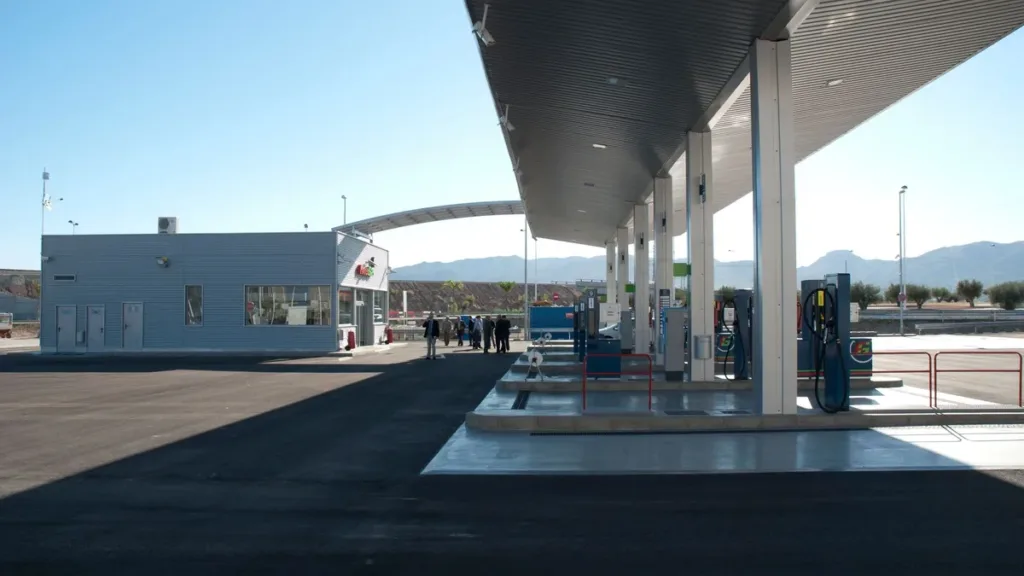
The M-2 between Islamabad and Lahore has five service areas, and each one exists on both carriageways: Chakri, Kallar Kahar, Bhera, Sial and Sukheki. They are the only places on the motorway where you can buy fuel, so every motorway rest area stop you take on this road happens at one of them. For most car journeys one stop is enough, and Bhera is the natural choice because it sits close to the middle of the 375 km route. A second stop is reasonable for families, elderly passengers or anyone who needs to pray on time. The practical point for pricing is simple: a stop inside a service area adds time but no distance, so it can be written into a quote before the day. A detour off the motorway adds both, and that is where disagreements start if nobody wrote it down.
Decision summary
- One stop, adults only, daytime: plan a single break at Bhera and allow about 20 to 30 minutes.
- Family with children or elderly passengers: plan two breaks, typically Kallar Kahar and Sukheki (or the reverse, depending on direction), and let the Bhera stop be optional.
- Prayer at a fixed time: name the prayer, not the place, in your notes, and let the driver pick the service area that falls closest to the time.
- A visit to a town, shrine, relative or landmark off the motorway: treat it as a separate leg with its own distance and waiting time, and ask for it to be priced before you confirm.
- Travelling to or from Faisalabad: you leave the M-2 at Pindi Bhattian for the M-4, so Sukheki is the last or first M-2 service area on your trip.
The M-2 motorway service areas, in the order you reach them
Service areas on the M-2 are named by direction. The side you use when heading towards Islamabad is the “North” service area; the side you use when heading towards Lahore is the “South” one. So Bhera North is the stop for a Lahore to Islamabad journey and Bhera South is the stop in the other direction. This matters when you are coordinating with a second car in a family convoy or arranging to meet someone: “meet at Bhera” is ambiguous, “meet at Bhera South” is not. According to the M-2 motorway reference entry, fuel is only available at these five locations on each side, and the average spacing between service areas is 60 to 80 km.
The same entry lists the amenities you can expect: a mosque, fast-food outlets at some sites, a bakery, a tuck shop, washrooms, vehicle workshops and petrol pumps. The contractor that built several of the sites, Habib Rafiq, describes the scope at Sukheki, Bhera and Sial Chowk as including shopping arcades, restaurants, a mosque and a truckers’ inn on both carriageways.
| Service area (north to south) | Where it sits on the route | What it is most useful for |
|---|---|---|
| Chakri | Near the Chakri interchange, on the Islamabad and Rawalpindi end of the motorway | A first fuel stop southbound if the car left the city low; a last washroom break northbound before city traffic |
| Kallar Kahar | At the edge of the Salt Range, where the motorway climbs or descends through the hills | A break before or after the Salt Range section; a sensible prayer stop |
| Bhera | Roughly midway, near the Bhera interchange in Sargodha district | The default single stop for a meal, fuel and prayer |
| Sial | Near the Makhdoom interchange, which serves Sial More and Sargodha | A short comfort break; useful if Bhera was busy |
| Sukheki | Between the Khanqah Dogran interchange and Pindi Bhattian, where the M-4 branches off | A final break before Lahore traffic, or a first break after leaving the city |
One navigational detail for airport runs: the same reference lists the Thalian interchange as an access road for Islamabad International Airport, but also advises travellers to use the main Islamabad exit. Which one your driver uses affects where Chakri falls in the journey, so it is worth asking.
Choosing a motorway rest area by direction and purpose
Habit (“we always stop at Bhera”) works for two adults with light bags. It fails when a journey has a fixed prayer time, a grandparent who cannot sit for three hours, or a baby on a feeding schedule. Decide what each stop is for, then pick the service area nearest that need.
Southbound: Islamabad to Lahore
Chakri comes up early and is usually too soon for a real break. Its value is fuel: with no pumps between service areas, a driver who says “I will fill up at Chakri” after a long airport wait is being sensible, not slow.
Kallar Kahar is the stop before the Salt Range descent; passengers who get carsick on bends often prefer a stretch before the hills. Bhera is the main meal stop, and Sukheki is the last washroom chance before Lahore’s approach traffic.
Northbound: Lahore to Islamabad
The logic reverses. Sukheki North is the first service area after Lahore and comes up early in the drive, which makes it a comfort stop rather than a meal stop. Bhera North is the usual midpoint break. Kallar Kahar North sits just after the climb through the Salt Range, which suits anyone who wants a pause once the hilly section is behind them. If you are heading to Islamabad airport for an evening flight, skipping Chakri usually makes more sense, so that the time goes into the airport buffer instead.
If you are searching “motorway rest area near me”
On this road the real question is “which service area is next on my side?” With only five per direction, read the order in the table from the last interchange sign you passed. It is also why “stop at the next place” can mean a long wait if one was just passed. Asking before departure avoids that.
How long each stop actually takes
There is no official standard for break length. The allowances below are planning figures we suggest writing into a request, not a policy or promise; your quote may use different numbers. A stop with a duration can be planned; “just quickly” cannot.
| Type of stop | Suggested planning allowance | What stretches it |
|---|---|---|
| Fuel only, driver stays with the car | 10 to 15 minutes | Queues at the pump during holiday weekends |
| Washroom and stretch | 10 to 20 minutes | Several passengers, children, elderly passengers who need assistance |
| Prayer | 15 to 25 minutes | Wudu, a busy mosque at congregational times, Friday prayers |
| Tea or snack | 20 to 30 minutes | Ordering for a group, waiting for a table |
| Sit-down meal | 40 to 60 minutes | Peak lunch hours, Eid travel, large family groups |
Stops combine well. Prayer followed by tea is one 35 to 45 minute break, cheaper in time than two separate stops. Write it that way: “one combined prayer and tea stop, about 40 minutes.”
Food prices and standards at rest areas have been a political topic. In January 2026 the Federal Minister for Communications inspected rest areas on the M-2, including Bhera, and directed the FWO and NHA to prepare a plan that included a uniform shop layout and food at fixed prices, as ProPakistani reported. An earlier campaign had NHA and the Motorway Police making surprise visits, with district administrations monitoring prices, according to the Associated Press of Pakistan. Facilities change between trips, so treat any specific outlet as a possibility, not a guarantee.
Planned stop versus unplanned detour: how each is priced
A quote for an intercity journey is built from a few inputs: the distance, the vehicle, the time the driver and car are committed, and the road costs along the way. Stops touch those inputs in very different ways, which is why the same “quick stop” can be free of consequence or can change the fare.
A planned stop inside a service area
The car never leaves the motorway, so the distance is unchanged. What changes is time. A 30 minute meal break on a journey of several hours is a modest addition (our note on motorway speed limits and realistic drive times explains why the driving time itself varies), and when it is in the request it can be reflected in the quote from the start. This is the cleanest kind of stop to plan, and it is the one we suggest most passengers use for meals and prayer.
An unplanned stop inside a service area
Asking to pull into the next service area is normally reasonable. The cost is time: a long unplanned meal can push arrival into rush hour or past a check-in. If the journey has a hard deadline, say so at booking.
A detour off the motorway
Leaving at an interchange to visit a town, a shrine or a relative adds kilometres on ordinary roads, waiting time, and the drive back to the motorway. On the M-2 the toll is charged by distance. For cars, the NHA revision reported by ProPakistani in July 2026 works out at Rs 3.98 per kilometre and Rs 1,430 end to end, and that notification is stated to run until 23 April 2027. How a mid-route exit and re-entry is charged at the plazas is something to check on the day or on your M-Tag statement rather than assume. Toll rates are revised often, so treat these figures as dated.
The fair way to handle a detour is to price it as its own leg. A request that says, to take a hypothetical example, “exit at Bhera interchange, visit a family home about 20 minutes from the motorway, wait one hour, return to the M-2” can be assessed properly. The same visit announced at the Bhera toll plaza cannot, and the driver has no way to confirm it without contacting the office. With iDrive, a change to an agreed itinerary should be confirmed with you, including any effect on price, before the car turns off, and we would rather quote the detour at booking than argue about it on the hard shoulder.
| Request | Adds distance? | Adds time? | Best handled |
|---|---|---|---|
| Meal or prayer at a named service area | No | Yes, predictable | In the booking notes, with a duration |
| “Stop when we need to” | No | Yes, unpredictable | State the number of breaks you expect and any deadline |
| Collecting a relative near an interchange | Yes | Yes | As a named extra pickup, priced before you confirm |
| Sightseeing visit off the motorway | Yes | Yes, often substantial | As a separate leg with waiting time, or as a day hire |
| Change of destination mid-journey | Usually | Usually | Contact the office; expect a revised quote |
Stops off the motorway that add distance and time
The M-2 passes close to several places people like to combine with a Lahore to Islamabad trip. None of them are on the motorway itself, and each turns a straightforward transfer into something closer to a touring day.
- Kallar Kahar town and lake: the town is reached from its own interchange, which is also where the motorway enters the Salt Range. A visit means leaving the M-2, driving into town and coming back.
- Katas Raj Temples: the temple complex lies near Choa Saidan Shah in Chakwal district, off the Kallar Kahar side of the motorway. It is a heritage visit, not a leg-stretch, and deserves its own time block.
- Khewra Salt Mine: in the town of Khewra in the Salt Range. A mine visit involves a drive off the motorway, parking, a tour and the drive back, so it sits better on a day hire than inside a transfer.
- Bhera old town: reached from the Bhera interchange rather than from the service area; the service area and the historic town are different places.
- Sargodha, Bhalwal or Mandi Bahauddin: common for family visits, reached via the Makhdoom, Kot Momin or Saalam interchanges. These are often the “quick visit to relatives” that turns into two hours.
If any of these matter to the trip, a car with driver for the day is often cleaner than stretching a transfer. Our guide to what a car with driver includes explains how day hire is usually structured.
Writing stops on the Islamabad to Lahore motorway into the booking notes
The booking notes field is where a stop becomes part of the job. A driver reads it, the office reads it, and it is the record anyone refers back to if the day does not go as planned. Good notes are short, in journey order, and specific about purpose and duration.
- List the route in order. Pickup, each stop, destination. If there is an extra pickup or drop-off, give the full address and who is getting in or out.
- Give each stop a purpose. Fuel, washroom, prayer, meal, visit. The purpose tells the driver how flexible the location can be.
- Give each stop a duration. Use the allowances above, or your own. If you genuinely do not know, say “unknown, possibly over an hour,” which is more useful than an optimistic guess.
- Name the service area only if it matters. “Meal stop, Bhera preferred” is fine. “Maghrib prayer, whichever service area is nearest the time” is better when the timing matters more than the place.
- State any hard deadline. A flight time, a nikah start time, a hospital appointment. It lets the driver decide whether an extra break is realistic.
- Mention passenger needs. Wheelchair users, a passenger who needs help on steps, a child seat, a baby who needs a feed. These change how long a stop really takes.
- Repeat it for the return leg. Stops rarely mirror neatly, and a northbound evening journey has different prayer times from a southbound morning one.
Here is an example of notes that give a driver everything needed. It is illustrative, not a template you must copy:
Islamabad (F-7) to Lahore (DHA Phase 5). Four adults, one grandparent who uses a walking stick, three large cases. Stop 1: Kallar Kahar South, washroom and tea, about 25 minutes. Stop 2: Zuhr prayer at whichever service area is nearest the time, about 20 minutes. No other stops planned. Must arrive by 6pm for a family event.
What can change the plan on the day
A well-written itinerary still meets the real road. Three things are worth checking close to departure.
- Closures and diversions. The National Highways and Motorway Police publish a travel advisory on road status. Closures can be sudden and selective: when several entry roads into Islamabad, including the M-1 and M-14, were closed from the night of 23 September 2026 until further notice, the M-2 stayed open to cars while heavy vehicles were held northbound at Kot Momin, Pakistan Era reported citing the motorway police. Situations like this change by the hour, so check the advisory again on the morning you leave.
- Speed limits. These have changed recently. After a temporary cut for fuel conservation, the limit for cars and light vehicles on motorways was restored to 120 km/h in June 2026, Dawn reported. A stop plan built on an old drive-time estimate can be off by a meaningful margin.
- Night driving. The UK FCDO travel advice for Pakistan notes that local driving standards are erratic, especially at night. A long dinner stop that pushes the second half of the drive into darkness is a real trade-off, not just an inconvenience.
Where this fits with the rest of your trip
If you are booking the route itself, the Islamabad to Lahore taxi and Lahore to Islamabad taxi pages set out how each direction is arranged, and our breakdown of motorway tolls and drive times on the M-1, M-2 and M-4 covers the road costs in more depth. For a more conversational, family-focused walk-through of asking for breaks, our sister service Pakistan Taxi has a guide to breaks and stops on intercity journeys.
Many families who travel the M-2 from the Gulf or the UK also make long road journeys in Saudi Arabia for Umrah. Our sister company Hajj Umrah Taxi has a practical guide to halal food stops on long journeys between the holy cities, which applies the same logic of planning breaks before the journey starts.
When your stops are written down, you can request a quote for your journey with the notes included. The quote is prepared against the itinerary you describe, and availability and final price are confirmed before anything is booked.
Questions people ask
Is the Bhera rest area on the motorway the halfway point?
Close enough for planning. Bhera sits roughly in the middle of the M-2, which makes it the natural choice for a single stop. Remember that Bhera North serves traffic heading to Islamabad and Bhera South serves traffic heading to Lahore.
Can I buy fuel between service areas on the M-2?
No. Fuel on the M-2 is only available at the five service areas on each side, so a driver who wants to refuel early is planning around that gap rather than wasting time.
Does a stop at a service area change my fare?
A planned stop inside a service area adds time but no distance, so when it is written into your request it can be reflected in the quote from the start. Detours off the motorway add distance and waiting time and should be priced before you confirm.
How many stops should a family plan between Islamabad and Lahore?
Two is a sensible default for families with children or elderly passengers, for example Kallar Kahar and Sukheki, with Bhera as an optional third. Adults travelling light often manage with one.