Your Pakistan. Your Journey.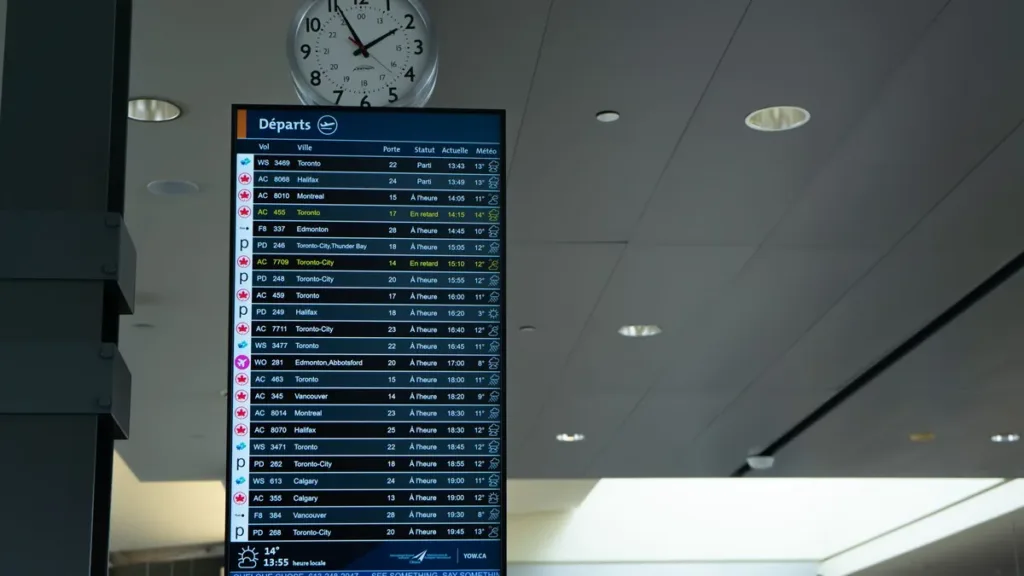
If you are asking “is Islamabad airport closed?”, the honest answer is that a full closure of Islamabad International Airport is rare, and most of what feels like a closure is something narrower: a delayed arrival, a cancelled rotation, a diversion to another airport, or an airspace restriction that affects some operators and not others. The fastest way to know which one you are dealing with is to check three places in order: the live arrivals and departures board on the airport’s own website, run by the Pakistan Airports Authority (PAA); your airline’s flight status page and the email or SMS it has sent you; and, if an airspace notice is in the news, the NOTAM behind it as reported by the PAA. Social media, forwarded voice notes and a relative’s guess from the arrivals hall come a distant fourth.
What follows is for the person who has to act on the answer: a transport manager, an event coordinator, or the relative who booked the car. It separates the kinds of disruption and gives a working checklist for vehicles, hotels and road legs when a flight does not arrive where or when it should.
Is Islamabad airport open or closed today? Where to check officially
Start with the source that owns the runway. Islamabad International Airport describes itself as “managed by the Pakistan Airports Authority (PAA)”, and its website, islamabadairport.com.pk, carries live departures and arrivals with a status against each flight: scheduled, delayed, arrived, departed, cancelled. If flights on the board are still arriving and departing in the last hour, the airport is open. It shows the airport’s view of a flight, not the airline’s plan for it.
Next, go to the operator. Every carrier serving Islamabad publishes its own status tool, and the airline is the party that decides whether a delayed aircraft still operates, diverts or is cancelled. Emirates, for example, lets you check flight status by route or flight number and tells passengers plainly that if they have received a cancellation email, they should not leave for the airport. Make that your rule too: when the airline’s message and the board disagree, the airline wins.
Third, the airspace layer. When a whole region is restricted, the notice that makes it legal is a NOTAM. The US Federal Aviation Administration describes a NOTAM as a notice of the abnormal status of a facility, service or procedure that could not be published further in advance (FAA: What is a NOTAM?). In Pakistan, these notices are issued by the PAA. Dawn’s reporting on the ban on Indian-registered aircraft, extended in September 2026 to 24 October, is a good illustration: the PAA issued the Notam, it named both of Pakistan’s flight information regions, Karachi (OPKR) and Lahore (OPLR), and it applied to one category of operator, not to every flight (Dawn, September 2026). A headline about “airspace closed” can therefore be true and still have no effect on a flight arriving from the Gulf or Europe.
If you need to speak to someone at the airport itself, the site lists an airport manager’s email (apm.iiap@paa.gov.pk) and a help desk number for passengers who need assistance with a disability, 051-59050252. Neither is a flight-status hotline.
Delay, diversion, cancellation or closure: why the label changes what you do
Search phrases such as “why islamabad airport is closed today” usually come from someone looking at one red line on a board. Before you release a driver or call a hotel, decide which of these you actually have. Each one leads to a different instruction for the vehicle.
| What happened | What it usually means | Where to confirm | Default action for a booked car |
|---|---|---|---|
| Delay | The aircraft will still land at Islamabad, later than scheduled | Airport board and airline status, updated estimated time | Hold, re-time the driver to the new estimate, keep the booking |
| Diversion | The aircraft landed or will land somewhere else, often for weather or operational reasons | Airline message to the passenger; board may show the flight as diverted or delayed | Pause the Islamabad car; wait for the airline’s plan before sending anything by road |
| Cancellation | That flight will not operate; passengers are rebooked or refunded by the airline | Airline cancellation email or SMS; board shows cancelled | Release or re-date the car once the new flight is confirmed in writing |
| Airspace restriction | A NOTAM limits flights through Pakistani airspace, sometimes for specific operators only | PAA-sourced reporting; airline advisories | Check whether your carrier is affected before changing anything |
| Airport closure | No movements for a period; every flight is affected | Airport board shows nothing moving; airlines issue blanket advisories | Hold all same-day pickups; re-plan in one batch once reopening time is published |
The costly mistake is treating a diversion like a delay. A driver told to “wait, it’s late” can sit at the Islamabad kerb for hours while the passenger is on the ground in another city with no idea who will collect them. The reverse, releasing a car for what turns out to be a two-hour delay, means rebooking at the worst possible moment.
Reading an Islamabad airport NOTAM without becoming a dispatcher
You do not need to decode aviation shorthand to use an Islamabad airport NOTAM sensibly. You need to answer four questions from whatever report or airline advisory quotes it:
- Who issued it? For Pakistani airspace and airports, the PAA. A notice attributed to nobody is a rumour.
- What does it cover? A single runway, the whole aerodrome, or an entire flight information region.
- When does it start and end? NOTAMs carry exact start and expiry times, often in UTC. Convert to Pakistan time before you brief anyone, and note that restrictions of this kind can be extended; the ban on Indian aircraft has been renewed repeatedly since it began in late April 2025.
- Who is affected? If the notice names a class of operator, check your passenger’s carrier and flight before you touch any booking.
The practical rule for PAA Islamabad airport disruptions is simple: act on the airline’s decision for the specific flight, and use the NOTAM to understand why that decision was made. When there is a genuine regional closure, as on 7 May 2025, when Pakistan shut its airspace to all carriers before reopening to non-Indian airlines the next day (summary of the May 2025 airspace closure), it is the airlines that cancel, hold or reroute, and their notice to the passenger is the one to build your plan around.
Holding or releasing booked vehicles: the decision summary
Most disruption costs are decided in the first thirty minutes, by whoever controls the car. The decision is not “keep it or cancel it”; it is “hold, re-time, re-route or release”, and each has a trigger.
Hold
Hold when the flight is delayed with a credible new arrival time, or when a diversion has just been announced and the airline has not yet said what happens next. Tell the driver where to wait, for how long, and when to call you rather than the passenger.
Re-time
Re-time when the delay is long enough that a driver waiting on the kerb is waste, typically when a fresh estimated arrival is several hours out or the flight has been moved to the next day. It keeps the booking and vehicle intact. Do it in writing, with the new flight number if it has changed.
Re-route
Re-route when the passenger will end up somewhere other than Islamabad and the airline is not going to bring them back by air within a reasonable time. It is the expensive option, and the one most often triggered by panic. Confirm three facts first: where the passenger actually is, whether the airline is operating an onward flight or bus, and whether the passenger’s baggage is travelling with them.
Release
Release when the flight is cancelled and the passenger has a confirmed new flight on a different day, or has chosen not to travel. Read the operator’s terms before you release anything, because the timing of your request can matter (more on that below).
Checklist for the first thirty minutes
- Confirm the flight’s status on the airport board and the airline’s page, and write down the time you checked.
- Classify it: delay, diversion, cancellation, restriction or closure.
- Message the driver or the operator desk with one clear instruction: hold, re-time, re-route or release.
- Message the traveller by a channel that works without mobile data (see below).
- Only then turn to what hangs off the pickup: hotel, event, second vehicle, onward flight.
Diversions to Lahore or Peshawar, and the road leg back
When an Islamabad arrival diverts, the two large alternatives on the motorway network are Lahore and Peshawar, and they lead to very different road decisions. Islamabad International Airport sits about 25 km southwest of the city centre near Fateh Jang, with direct connections to both the M-1 and the M-2 motorways (Islamabad International Airport overview).
Lahore
The M-2 runs 375 km from Thokar Niaz Baig in Lahore to its junction with the M-1 west of Rawalpindi, and it is a tolled road, with M-Tag payment introduced in December 2021 (M-2 motorway). A passenger stranded at Allama Iqbal International is therefore a long motorway drive away, not a short hop. Before you commission that journey, ask the airline whether it will fly the passengers on to Islamabad once conditions allow. Some will, and a car sent south at the same moment as the aircraft is refuelled is a car that passes its passenger in the air. If the road leg is genuinely the answer, a local pickup from the Lahore airport transfer desk is simpler than dispatching a driver down from Islamabad, because the passenger is waiting now and the Islamabad driver is hours away.
Peshawar
The M-1 connects Peshawar to Islamabad–Rawalpindi over 155 km, and its Rawalpindi and Islamabad exit links to the new airport (M-1 motorway). Distance is the easy part. The harder part for foreign and British travellers is advisory status: the UK Foreign, Commonwealth & Development Office currently advises against all travel to Peshawar, including the city, and warns that travel insurance could be invalidated by travelling against its advice (FCDO warnings and insurance). A diversion is not the passenger’s choice, but what happens next is. If your traveller holds UK insurance, let the airline handle the onward movement where possible and check the policy wording before any road leg is arranged. A Peshawar airport transfer can be requested, but the passenger should make that decision with their insurer’s position in view, not because a driver is available.
Road-leg questions to settle before anyone drives
- Is the passenger through immigration and customs, or held airside by the airline?
- Is all checked baggage with them, or still on the aircraft?
- Has the airline offered an onward flight or ground transport, and has the passenger accepted or declined it in writing?
- If the drive ends late at night, where does it end: home, the original hotel, or a closer one?
Communicating with travellers who have no data
The passenger who most needs information is often the one least able to receive it: just off a long-haul flight, phone on a foreign SIM, roaming switched off to avoid charges, and standing in a hall where everyone else is also trying to call home. Plan for that before the flight.
Before departure
- Agree a fallback meeting point that does not depend on a call: a named spot in the arrivals area, and a rule such as “if you cannot reach us, wait there”.
- Collect two contact routes: the passenger’s home-country number and, if they have one, a Pakistani number held by a relative who will be on the ground.
- Send the driver’s name and vehicle description in advance, as text in a message rather than inside a link or image the passenger must download later.
During the disruption
- Send one short, plain message at each change of plan: what has happened, what the car is doing, and what the passenger should do next. “Flight diverted to Lahore. Your Islamabad car is on hold. Stay with the airline until they confirm onward travel, then call this number.”
- Use SMS as well as messaging apps. A text reaches a phone with data off; a voice note does not.
- Route every instruction through one person. Two relatives giving contradictory directions is how pickups fail.
For families rather than managers, our sister service Pakistan Taxi has a shorter, passenger-side guide to what to check with the transfer operator when your flight changes, worth forwarding to whoever is actually flying.
Hotels, events and onward legs
The car is rarely the only thing tied to an arrival. Work outward from the flight in this order, because each item constrains the next.
- Onward flights. If the passenger is connecting to a domestic sector, check whether it sits on the same ticket as the international flight; if it does, rebooking is a conversation with that airline, and if it does not, the missed connection may be the passenger’s problem to solve. The FCDO notes that flights to and from the mountainous north are frequently delayed or cancelled by extreme weather and tells travellers to plan alternative routes in case of cancellation, so a Gilgit or Skardu connection after a late international arrival deserves a plan B from the start (FCDO safety and security).
- Hotels. Tell the hotel about a late arrival before its no-show cut-off, not after. If the passenger will now arrive the next day, ask whether the first night can be moved rather than lost.
- Events. For a wedding party or delegation, decide early whether the programme moves or the arriving guest joins late.
- Second vehicles. If a luggage vehicle or a second car was booked for a group, re-time it with the first.
Pilgrims are a special case. Umrah travellers routing Islamabad to Jeddah or Madinah often have a pre-booked transfer at the Saudi end as well, and a delay here pushes that pickup too. Our sister company Hajj Umrah Taxi explains how to handle flight delays with a pre-booked Umrah airport transfer, which is worth reading alongside this checklist if the outbound leg is the one at risk.
Cancellation terms during disruption
A disrupted flight does not automatically cancel a ground booking, and it does not automatically make the booking free to cancel. Three points are worth settling before you message the operator.
- Who is cancelling, and why. Cancelling because the airline cancelled is different from cancelling because plans changed. Say which, and attach the airline’s notice.
- When you asked. Notice periods are usually measured against the scheduled pickup time, so a request sent as soon as the airline confirms a cancellation puts you in a stronger position than one sent after the driver has already set off.
- Re-date first, cancel second. If the passenger is still travelling, moving the booking to the new flight usually loses less than cancelling and rebooking, and keeps the same vehicle class and details on file.
At iDrive, cancellation requests are reviewed by a person rather than processed automatically. The iDrive cancellation policy page is currently published as a draft under legal review, so treat it as a guide to the approach and confirm the terms that apply to your booking in writing. Waiting time, extended holds and diverted road legs are separate questions from cancellation. Raise them explicitly: a driver who waited three hours has done work even if the passenger never appeared.
Before the next arrival: set the rules in advance
Disruption is easier to handle when the rules were agreed before the flight. When you book an Islamabad arrival that matters, confirm in writing that the pickup is tied to the flight number rather than a clock time, who your single point of contact is on the day, how waiting time after a long delay is treated, and how to re-date rather than cancel. The Islamabad airport transfer page explains how iDrive approaches pickups at the new airport. When you are ready, send the details through the iDrive booking request. The request is reviewed by the team, and nothing, whether fare, vehicle or driver, should be treated as confirmed until that confirmation reaches you in writing.
Questions people ask
Is Islamabad airport closed right now?
Check the live arrivals and departures board on islamabadairport.com.pk and your airline’s flight status. If flights are still moving on the board, the airport is open; a single cancelled flight is an airline matter, not a closure.
Why would Islamabad airport be closed today?
Full closures are uncommon. More often the cause is a weather delay, an operational diversion, or an airspace restriction issued by the PAA as a NOTAM, which may apply only to certain operators.
Where can I read an Islamabad airport NOTAM?
NOTAMs for Pakistani airspace are issued by the Pakistan Airports Authority. Travellers usually meet them through airline advisories and reputable news reports that name the PAA as the source and quote the start and end times.
Should I cancel my airport pickup if my flight is delayed?
Usually not. Re-time it to the new estimated arrival. Cancel only once the airline has confirmed a cancellation and a new flight on another day, and check the operator’s cancellation policy first.