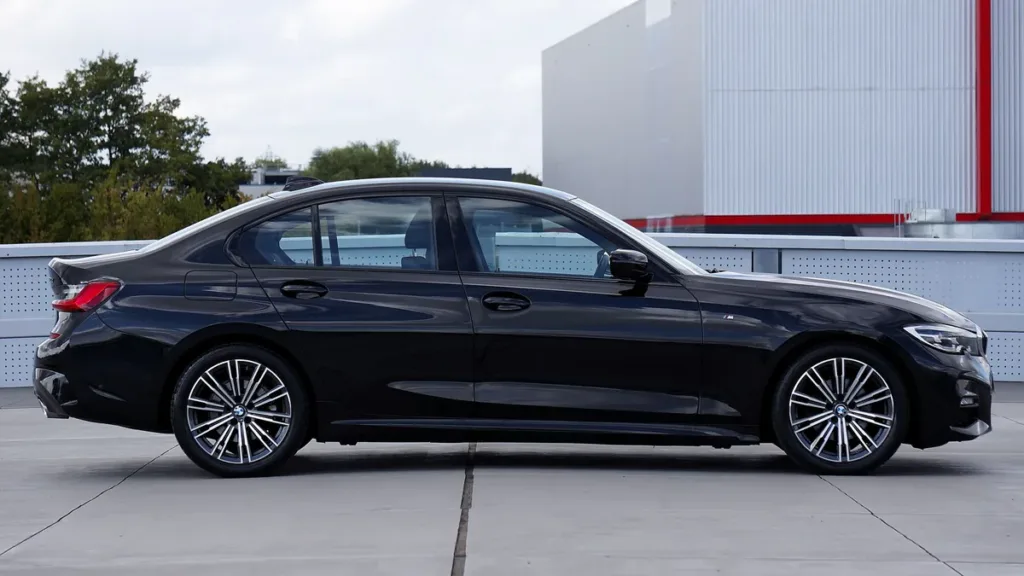
Executive corporate transport in Pakistan works best when it is written down before anyone lands. Decide four things in advance and most problems disappear: the vehicle class for each city, the driver standard (language, dress, conduct), the duty window and standby rules at each venue, and the point at which a trip stops being a car booking and becomes a security matter. For most senior visitors to Islamabad, Lahore or Karachi, an executive sedan covers the working day; a premium SUV earns its cost when there are bags, a colleague or rough access roads; a VIP SUV is justified by protocol or a documented risk assessment, not by the size of the title on the business card. Budget by the duty day, not by the transfer, and agree overtime rules before the first pickup.
What follows is a standard you can copy into a travel policy or hand to whoever arranges the car.
Why an executive corporate transport standard beats booking trip by trip
Booking a car for each leg invites drift. Monday’s driver speaks good English and wears a pressed shirt; Tuesday’s arrives in a different car, does not know the client’s office and phones the passenger for directions during a call. None of this is dramatic, but for a director with six appointments it adds up to lost minutes and a poor impression in front of a host.
A written standard fixes the variables once and gives you a clause to point to when something goes wrong. It also forces a decision many companies avoid: what level of vehicle and protection is actually proportionate for this visitor, in this city, this week.
Executive vehicle class choice by city
The executive vehicle class choice is less about prestige than about the roads, the luggage and the message the car sends at the destination. A Land Cruiser at a modest factory gate can read as ostentatious; a small hatchback outside a ministry reads as careless. Match the car to the day.
The three classes in plain terms
- Executive sedan. The default for one or two passengers moving between offices, hotels and restaurants. On iDrive the executive sedan class covers cars such as the Honda Civic, Toyota Corolla Altis Grande and Hyundai Elantra. Quiet enough for a call, discreet at a client’s entrance, easy to park.
- Premium SUV / 4×4. Higher seating, more boot space and better tolerance of broken surfaces. Our premium SUV and 4×4 class includes the Toyota Fortuner and Land Cruiser Prado. Sensible for an executive travelling with a colleague and sample cases, for site visits, or for days that include a motorway leg.
- VIP SUV. Full-size vehicles such as the Land Cruiser 200 and 300 in the VIP SUV class. These are the cars used for delegations, senior government-facing visits and convoy work. They are larger, more conspicuous and more expensive to run for a day.
Model names describe the class; the exact vehicle on a given day depends on what an operator confirms for your dates. Ask for the confirmed make, colour and registration in writing before arrival.
A starting table for the three main business cities
| Situation | Islamabad / Rawalpindi | Lahore | Karachi |
|---|---|---|---|
| Solo executive, office-to-office day | Executive sedan | Executive sedan | Executive sedan |
| Executive plus one colleague and cases | Premium SUV | Executive sedan or premium SUV | Premium SUV |
| Factory, port or industrial-estate visits | Premium SUV | Premium SUV | Premium SUV |
| Government, diplomatic or board-level hosting | VIP SUV | VIP SUV | VIP SUV |
| Intercity leg on the motorway the same day | Premium SUV | Premium SUV | Not usually by road; fly and meet at the airport |
Treat the table as a default, not a rule. Two adjustments come up often. First, the host’s own expectations: if the client meets its own visitors in a particular class of car, match it, neither higher nor lower. Second, the weather. After a heavy downpour a higher vehicle copes better with standing water and broken edges, so keep the option of upgrading for the day even for a solo passenger.
A duty car for executives: hours, standby and what “on duty” means
A duty car for executives is a car and driver held for a block of hours, usually the working day, rather than hired for single transfers. It removes the gap between meetings when a visitor would otherwise wait at a kerb. It also means somebody has to define the day, or the supplier and the passenger will each assume something different.
Write the duty window into the booking
- Start time and place. “08:00 at the hotel porch” is a start time. “Morning” is not.
- End time and the rule for running over. State whether overtime is charged per hour or part-hour, and who can approve it on the day. A passenger who is mid-negotiation will not want to take a call about money.
- A distance or area limit. Most duty days assume the car stays within one metropolitan area. A trip from Islamabad to Lahore is a different job and needs to be priced as one.
- Meal break. A driver on a ten-hour day needs to eat. Agree when, and make sure the break falls during a long meeting rather than just before a departure.
- Fuel and parking. Confirm whether they are included or passed on at cost, and whether receipts are required.
Standby at venues
Standby is where duty days usually go wrong. The executive walks into a building expecting the car to be at the door in forty minutes; the driver has been moved on by a security guard and is circling three streets away with a weak signal.
Set these rules in advance:
- The driver waits in the venue’s designated parking where there is one, and confirms by message where that is.
- The passenger or their assistant sends a “ten minutes” message before leaving the meeting. The driver replies to confirm.
- If the car must leave the venue, the driver says so, gives a return time, and does not leave during the final quarter-hour of a scheduled meeting.
- Engine idling for air conditioning during long waits is agreed in principle. In June heat it matters; in January it does not.
- The driver stays with or near the vehicle. A car left unattended outside a client’s office with documents on the back seat is a confidentiality problem as much as a punctuality one.
If you want a ready template for the day itself, our sister service Pakistan Taxi publishes an hourly chauffeur duty sheet covering times, changes and cost approval that pairs well with the standard described here.
The executive car with driver for meetings: driver standards
The vehicle gets the attention in most procurement conversations. The driver decides whether the day works. An executive car with driver for meetings needs a person who can be trusted with time, information and first impressions, and the standard should say so explicitly.
Language
Specify the language the passenger needs, not a vague “good English”. A British or American visitor usually needs a driver who can follow an address change given in English, read a message in English and explain a delay clearly. A Gulf-based Pakistani executive may prefer Urdu or Punjabi and find English formality stiff. Some visitors from the Gulf will value basic Arabic. Put the requirement in the booking and ask the operator to confirm it against the named driver.
Dress and presentation
- Plain, clean, pressed clothing in a single agreed style: a white or light shirt with dark trousers, or a neat shalwar kameez in a dark or neutral colour. Both are acceptable; the point is consistency across drivers.
- Closed shoes. No branded sportswear, no sunglasses when greeting the passenger.
- A car that is washed that morning, with an empty boot, no loose items in the cabin and no air freshener strong enough to follow the passenger into a meeting.
Conduct
- No personal phone calls while the passenger is in the car. Hands-free only, and only for operational calls.
- No smoking in or near the vehicle on a duty day, including during standby.
- Radio off unless the passenger asks for it.
- No unplanned stops for fuel, errands or collecting another person.
- Door opened on arrival and departure where the setting calls for it, but no hovering. Senior visitors notice both extremes.
- Driving that a passenger can work through: smooth braking, no weaving, no horn used as punctuation.
Checks you can ask for
You can ask any operator what checks sit behind the name on the booking. In Islamabad, the capital’s police list driving licence verification, general police verification and character certificates among their public services, which gives you a concrete question to put to a supplier: has this driver’s licence been verified, and has the driver been through police verification? Ask for the answer in writing rather than a reassurance on the phone.
Confidentiality in the car
An executive on a duty day treats the back seat as a moving office. Calls get taken, figures get read aloud, a colleague is briefed on the next meeting. The driver hears all of it. Your standard should acknowledge that plainly.
- A confidentiality clause with the supplier. The operator agrees that nothing heard or seen in the car is repeated, recorded or shared, and that the obligation passes to every driver it assigns.
- No recording devices beyond what is disclosed. If the vehicle carries a dash camera or a cabin camera, the passenger should be told before the first journey, including whether it records audio.
- Location data. Tracking is useful for dispatch and safety. Ask who can see it and how long it is kept. The passenger’s schedule is sensitive information in its own right.
- Documents and devices. Nothing is left visible in a parked car. The driver does not handle laptop bags or document cases unless asked, and never leaves them unattended.
- Itinerary discipline. The driver receives only what they need: pickup points, times and contact numbers. Meeting subjects and counterpart names stay off the job sheet.
VIP transport corporate triggers: when protocol or security takes over
VIP transport corporate arrangements are often requested because they sound safer. Sometimes they are; sometimes a large convoy draws exactly the attention a visitor would rather avoid. The decision should follow a short list of triggers, checked against official advice, rather than instinct.
Start with the official position
The UK Foreign, Commonwealth and Development Office keeps a list of areas where it advises against all or all but essential travel. At the time of writing that list includes the whole of Balochistan; a long list of Khyber Pakhtunkhwa districts, Peshawar city among them; the strip within 10 miles of the Afghanistan border; the area of Azad Jammu and Kashmir within 10 miles of the Line of Control; the land within 5 miles of the India border (Wagah and the Kartarpur Corridor excepted); Sindh north of and including Nawabshah; and Dera Ghazi Khan in Punjab. Islamabad, Lahore and Karachi are not on it, but the FCDO’s safety and security page says attacks have taken place in all three, and lists business travellers among the British nationals regarded as legitimate targets. The map changes, so read the current page for each trip rather than relying on this summary.
The US State Department currently rates Pakistan at Level 3, “Reconsider Travel”, and says US government employees must use armed escorts and armoured vehicles when travelling in certain parts of the country, on official and personal trips alike. That is a rule for US officials, not a requirement for private visitors, but it shows how seriously a large employer can reasonably treat the question.
If an itinerary touches an area under an FCDO all-travel or all-but-essential-travel warning, this is no longer a transport decision. It needs your organisation’s security function, your insurer and specialist advice before any car is booked. The FCDO warns that travel insurance could be invalidated by travelling against its advice, so check the policy wording.
Triggers for a protocol or escort arrangement
- The visitor is a public figure, a government counterpart or someone whose presence has been announced in the press.
- The programme includes a public event, a site opening or a large gathering.
- Your security team’s assessment, or your insurer’s conditions, call for it.
- The route leaves the main cities, particularly towards areas listed above.
- The host organisation arranges its own protocol for visitors and expects yours to align with it.
The FCDO notes that in higher-risk areas local authorities sometimes arrange police escorts for a traveller’s own protection. That is the authorities’ decision, not something a transport supplier can promise or sell. What a supplier can do is provide suitable vehicles for a convoy, drivers used to working with an escort, and a single coordinator on the day.
Controls that apply at every level
Even with no escort, the FCDO’s advice to vary routes and timings on regular journeys applies directly to a week of duty days. Leave the hotel at slightly different times. Do not let the same route to the same office become a pattern. The FCDO also advises using only taxis from reputable, licensed companies where you call and the operator contacts a driver, which is precisely the model a pre-arranged duty car follows. Avoid political demonstrations, and build slack into any day when protests have been announced; the FCDO warns that during unrest major roads in and around cities may be shut or blocked, which can strand a tight meeting schedule on the wrong side of a closure.
For emergencies, the Islamabad police list 15 as their emergency number and 1915 as the traffic helpline. On motorways and national highways, enforcement and assistance fall to the National Highways and Motorway Police, which also publishes travel advisories for motorists.
Budgeting a full duty day
Car prices in Pakistan move with fuel costs, exchange rates and demand, so any figure printed in a guide ages quickly. What does not change is the structure of the cost. Budget each line separately and you can compare quotes properly and explain the total to a finance team.
| Cost line | What drives it | What to confirm |
|---|---|---|
| Base duty block | Vehicle class and number of hours | Start and end times, area limit |
| Overtime | Meetings or dinners running late | Hourly or part-hour rate, who approves |
| Airport element | Early or late flights, waiting time | Whether an airport run is inside the block or extra |
| Fuel and distance | Kilometres beyond the included area | Included, capped or charged at cost |
| Tolls and parking | Motorway legs, hotel and venue parking | Passed on with receipts or bundled |
| Driver allowances | Very long days, overnight stays in another city | Meals and accommodation for out-of-town work |
| Upgrade or second vehicle | A colleague joins, luggage grows, protocol changes | Notice needed and how the price changes |
An illustrative example
The following is an example, not a quote. A regional director lands in Islamabad on an early morning flight, has four meetings across Blue Area and Rawalpindi, a working lunch and a client dinner. A sensible specification would be an executive sedan on a duty block from airport pickup to about 18:00, with a pre-agreed overtime rate for the dinner, and a separate line for the airport run at the end of the visit. If a colleague joins for the afternoon with sample cases, the premium SUV line in the quote shows immediately what the change costs. Ask for the quote in this shape, not as one number.
Putting the standard into a supplier brief
Once the clauses above are agreed internally, turn them into a brief the operator signs off. A useful brief fits on a single page and answers these questions:
- Who is travelling, in which cities, on which dates.
- Vehicle class per day, with the reason for any SUV or VIP SUV choice.
- Driver requirements: language, dress, the checks you expect to have been done.
- Duty window per day, overtime rule and the named person who approves changes.
- Standby rules and the “ten minutes” messaging protocol.
- Confidentiality clause, camera disclosure and data handling.
- Security triggers, the escalation contact and what happens if the plan changes on the day.
- Invoicing: how tolls, fuel, parking and overtime appear, and in what currency.
Send the brief with the enquiry, not after the booking. Operators respond more precisely to a written specification, and differences between quotes become visible. For organisations with repeat visitors, the business travel car service page is the natural starting point, and the chauffeur service in Pakistan page covers driver-led duty work more generally.
When the brief is ready, you can send the journey details through the iDrive booking page. Treat any price shown as a starting point: nothing is confirmed until an operator accepts the request for your dates and the vehicle details are in writing.
Questions people ask
Is an executive sedan enough for a senior visitor?
For most office-to-office days in Islamabad, Lahore or Karachi, yes. Move to a premium SUV for extra passengers, luggage, site visits or poor access roads, and to a VIP SUV only for protocol-level hosting or when a security assessment calls for it.
How many hours is a typical duty day?
It varies by operator and by city. Define the start, the end, the area limit and the overtime rule in the booking so both sides work from the same numbers.
Can a transport company arrange a police escort?
No supplier can promise one. The FCDO says local authorities sometimes arrange escorts in higher-risk areas; that decision sits with the authorities. A supplier can provide convoy vehicles and drivers used to working alongside an escort.
Should the same driver cover the whole visit?
Where confidentiality matters, ask for it. Continuity cannot always be guaranteed, so require advance notice of any substitution and the same briefing for the replacement.