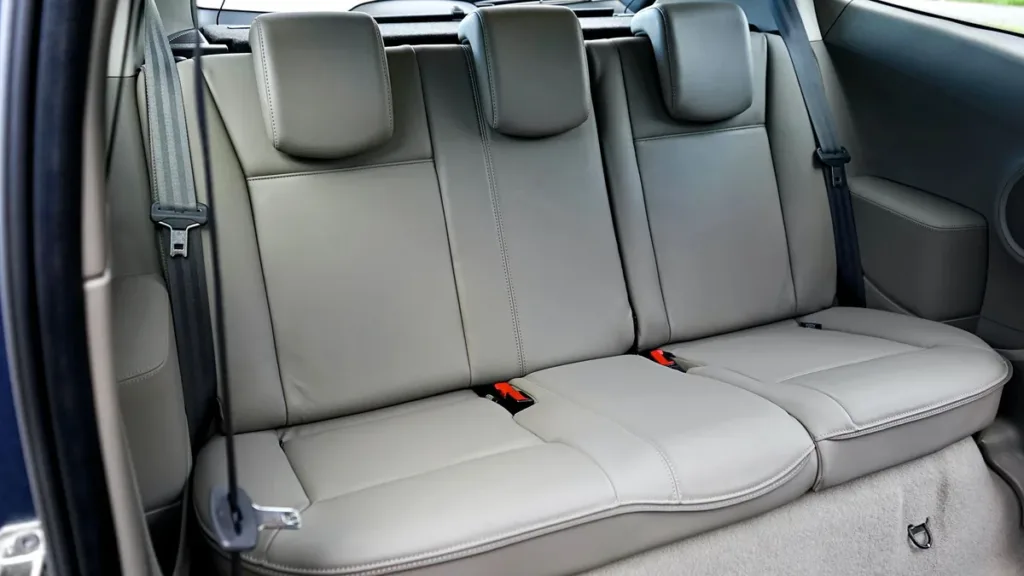
A usable corporate travel safety checklist for hired cars in Pakistan comes down to six approvals, signed off before anyone lands: the destination is inside the areas your travel advice allows; the vehicle is recent, sound and has working rear seat belts; the driver is named, licensed and verified; the journey can be tracked by someone at your end; there is a written breakdown and replacement plan; and the itinerary respects posted speed limits and avoids unnecessary night running. Then you keep evidence of each check, because a duty-of-care policy that cannot show its working is only a policy on paper.
That is the short answer. The rest of this guide turns each item into something a travel manager, security lead or executive assistant can actually tick, with the questions to send a supplier and the records worth keeping. It is written for UK, Gulf, European and North American employers sending staff to Islamabad, Lahore, Karachi and the Punjab motorway corridor, and for Pakistani firms tightening their own ground-transport rules.
Why generic duty of care for business travelers falls short in Pakistan
Most duty-of-care templates were written for a hotel-and-airport trip in a low-risk country. Pakistan asks more of the ground leg. The UK Foreign, Commonwealth & Development Office (FCDO) tells travellers that “local driving standards are erratic, especially at night”, that road quality outside the major motorways is variable, and that visitors should avoid street taxis, e-taxis and app-hailed rides in favour of taxis from reputable, licensed companies you call directly. The US State Department goes further for its own people: its Pakistan country page notes that US government employees are prohibited from using taxis, rideshare and public transport for security reasons.
Put simply, the car is not a commodity line on the expense report. It is often the single largest controllable risk on the trip. The UK Health and Safety Executive frames work driving around three areas to assess: the journey, the driver and the vehicle. That structure travels well, and the checklist below borrows it, with a fourth layer for the Pakistan-specific question of where the car is allowed to go at all.
The checklist at a glance
Use this table as the approval sheet. The right-hand column is what you file.
| Check | What a pass looks like | Evidence to keep |
|---|---|---|
| Destination and route | Every stop sits outside FCDO “against all travel” and “all but essential travel” zones, or has a documented essential-travel approval | Screenshot or PDF of the advice page on the approval date; the approved route |
| Vehicle age and condition | Model year within your policy limit, clean bodywork, working lights, air conditioning, tyres with visible tread | Registration number, make, model and year confirmed in writing |
| Rear seat belts | A working belt and buckle for every rear seat that will be used | Supplier confirmation; traveller check at pickup |
| Driver | Named in advance, valid licence for the vehicle class, verified by the supplier | Driver name, licence category, verification method and date |
| Tracking | Someone at base can see where the car is, or receives agreed check-in messages | Sharing method, contact numbers, check-in times |
| Breakdown and replacement | A written plan for who responds, how quickly a replacement is sought and where the traveller waits | Supplier’s written procedure; 24-hour contact |
| Journey plan | Daylight driving where possible, realistic timings at posted limits, planned breaks | Itinerary with departure windows and rest stops |
Step zero: confirm the trip is inside the advice
No vehicle check rescues a journey that should not be happening. Before a car is approved, match every pickup, meeting and overnight stop against the FCDO travel advice for Pakistan. At the time of writing, the FCDO advises against all travel to Balochistan, to areas within 10 miles of the Afghan border, and to a long list of Khyber Pakhtunkhwa districts that includes Peshawar city, Swat, Kohat, Bannu and Dera Ismail Khan. It also advises against all travel on the Karakoram Highway between Mansehra and Chilas, and on the N45 from north of the Mardan ring road to Chitral.
A second tier covers “all but essential travel”: Azad Jammu and Kashmir, within 5 miles of the India border (with named exceptions), Sindh north of and including Nawabshah, Dera Ghazi Khan in Punjab, and the Khyber Pakhtunkhwa districts of Malakand, Mardan, Nowshera, Shangla and Swabi. The US advisory sits at Level 3, “Reconsider Travel”, with Level 4 “Do Not Travel” for Balochistan, Khyber Pakhtunkhwa and the Line of Control area.
Three practical consequences for a travel manager:
- Insurance. The FCDO warns that travel insurance could be invalidated if you travel against its advice. Check your corporate policy wording before, not after, approving a route that brushes one of these zones.
- Routing, not just destinations. A meeting in an approved city can still involve a road that passes through a restricted district. Approve the route line, not only the end points.
- Re-check on the day. These lists change. Save a dated copy of the advice with the approval file, and have someone look again within 24 hours of departure.
If a journey genuinely needs to enter an “all but essential” area, treat it as a specialist security move with its own risk assessment and professional security advice. It does not belong on a standard car-hire approval.
Vehicle approval checklist for travel managers
The vehicle is where most suppliers are easiest to verify and most buyers are least specific. “A clean car” is not a standard. Write down what you mean.
Age and condition
Set a maximum model age in your corporate travel safety policy and ask for the registration year in writing. Newer is not automatically safer, but a stated limit stops the substitution of whatever happens to be free on the morning. At pickup, the traveller or greeter should be able to confirm, in under a minute:
- The registration plate matches the confirmation message.
- Headlights, brake lights and indicators work (ask the driver to show them before a dusk departure).
- Tyres are not visibly bald and the spare is present.
- Air conditioning works. In a Lahore or Karachi summer this is a fatigue and health issue, not a comfort extra.
- Doors lock from inside and windows close fully.
Rear seat belts
This deserves its own line on the form. A rear belt can be present on paper and useless in practice: hidden under a seat cover, missing its buckle, or jammed in the retractor. Ask the supplier to confirm working rear belts for every seat you will occupy, and tell travellers to check the buckle before the car moves, not halfway down the motorway. If a belt does not work, the instruction should be simple: do not start the journey, call the contact number, and wait for a replacement.
Match the class to the job
A single executive between hotel and office has different needs from a four-person delegation with equipment. iDrive’s vehicle classes run from economy hatchbacks through executive and luxury sedans to VIP SUVs, vans and coaches; for most corporate work the sensible bands are an executive sedan for one to three passengers on city and motorway work, and a premium SUV or 4×4 where luggage, ground clearance or a larger group matters. Any class is quoted and confirmed against availability; state the class you have approved so the supplier cannot swap down without asking.
Driver licence and verification checks
The driver is the half of the service you cannot inspect in a car park. That makes the paperwork trail more important, not less.
What to ask for before the day
- A named driver. Not “a driver will be assigned”. A name and a mobile number, shared with the traveller at least a few hours before pickup.
- Licence category. Confirm the licence covers the vehicle class. A van or minibus for a delegation is a different category from a saloon.
- How the supplier verified it. Provincial licensing systems have their own checks; Punjab’s Driving License Information Management System, for example, offers an online licence verification service. Ask which check was run and when, and record the answer.
- Identity at pickup. The traveller should confirm the driver’s name before loading bags. A driver who cannot give the booking reference or the passenger’s name is a stop signal.
- Fitness and hours. Ask how the supplier prevents a driver arriving after a double shift. HSE guidance to workers is blunt: do not drive tired, and tell the employer about medication that affects driving. Your supplier’s drivers deserve the same rule.
When the name or car does not match
Mismatches happen for ordinary reasons (a driver falls ill, a car fails its morning check), but they must never be settled on the kerb by the traveller alone. Your policy should say: the traveller does not get in, calls the supplier’s contact, and waits for written confirmation of the substitute’s name and registration. Families use the same discipline; our sister service Pakistan Taxi explains how to set up a contact plan for late-night arrivals, and the logic transfers directly to a corporate greeter protocol.
Tracking and live trip sharing
Tracking is only useful if a named person is watching and knows what to do when the dot stops moving. Decide the monitoring model first, then pick the tool.
| Model | How it works | Best for | Weak point |
|---|---|---|---|
| Traveller shares location | Traveller turns on live location sharing in a messaging or maps app with a named colleague | City transfers, short meetings | Fails if the phone dies or loses signal |
| Scheduled check-ins | Traveller or driver messages at agreed points: departure, midway service area, arrival | Intercity motorway runs | Relies on someone noticing a missed check-in |
| Supplier-side monitoring | Supplier’s operations team follows the trip and reports exceptions | Multi-day programmes, delegations | Ask exactly what is monitored; do not assume |
For most trips, combine the first two: live sharing plus timed check-ins with an escalation rule. A workable example rule: if a check-in is 30 minutes late and neither the traveller nor the driver answers, the monitor calls the supplier’s 24-hour line, then the in-country contact. Pick your own threshold, but write one down. Keep emergency numbers in the traveller’s phone before departure: 1122 for emergency medical services and 15 for police, both listed by the US State Department, and 130 for the National Highways & Motorway Police on the motorway network.
Breakdown and replacement procedure
A breakdown on the M-2 at the Salt Range descent near Kallar Kahar is a different problem from a flat tyre outside a Gulberg hotel. Your hired vehicle safety checks should include a written answer to four questions, supplied before the booking is confirmed:
- Who does the traveller call first? One 24-hour number that is answered by a person, not a voicemail. Test it.
- Where does the traveller wait? On a motorway, agree in advance whether the traveller stays in the car or waits well clear of the traffic, and that the driver calls the motorway police helpline. In a city, a hotel lobby or other staffed building beats a roadside.
- How is a replacement sourced? Ask whether the supplier sends its own vehicle, calls on a partner, or expects the traveller to make other arrangements. The honest answer may be “it depends where you are”, and that is fine, as long as you know it in advance.
- Who approves a change of plan? If the replacement will take hours, can the traveller divert to a service area, a hotel or the nearest city? Name the person who can say yes.
The M-2 between Lahore and Islamabad is about 375 km, with five service areas on each side, among them Bhera and Kallar Kahar. Those service areas are the natural waypoints for check-ins and the natural refuge if a car fails.
Keep expectations grounded. No operator anywhere can promise a replacement car in a fixed number of minutes on every stretch of road. What you are buying is a clear procedure and a supplier that picks up the phone.
Motorway speed limits and night driving
Speed
Pakistan’s motorways are policed by the National Highways & Motorway Police, which uses speed cameras to enforce posted limits. Limits vary by road and by vehicle class, so the rule for your policy is simple: the driver keeps to the posted limit, and the itinerary is built so that the driver can. If a schedule only works at a speed above the limit, the schedule is wrong. Pad intercity timings for traffic at the toll plazas and city exits, where much of the delay actually sits.
Give travellers explicit permission to ask a driver to slow down, and make it clear they will not be criticised for arriving late because they did. Many staff will not raise it otherwise.
Night driving
Both the FCDO and the US State Department single out night travel. The US page warns that many vehicles do not have working headlights and that roads often lack lighting and signage; the FCDO says driving standards are most erratic at night. A sound corporate travel safety policy therefore sets a default of daylight intercity travel, with night motorway runs only by exception and approval.
Airport arrivals are the obvious exception, because an international flight that lands after dark does not wait for your policy. The mitigation is to keep the night leg short: airport to a nearby hotel, then the intercity drive the next morning. If a late arrival must continue on the road, approve it explicitly, confirm a rested driver, and add a check-in at each service area.
Fatigue, both sides of the windscreen
HSE lists fatigue and time pressure among the core hazards in work driving. That applies to a jet-lagged executive who wants to push on to a meeting as much as to the driver. Build a rule that no driver starts a long intercity leg straight after an overnight airport shift, and ask your supplier how it enforces that.
Record-keeping for duty-of-care audits
If something goes wrong, the first question from insurers, auditors or a board will be: what did you check, and when? Records answer that. They also make the next trip faster, because an approved supplier and an approved route can be reused rather than re-argued.
For each trip, keep one file (a shared folder or a travel-management record is enough) containing:
- The traveller’s itinerary, with every address and the approved route between them.
- A dated copy of the FCDO advice, and your own internal risk rating for the trip.
- The supplier’s written confirmation: vehicle class, make, model, year and registration; driver name and licence category; verification method.
- The tracking arrangement: who monitors, which method, the check-in schedule and the escalation rule.
- The breakdown procedure and the 24-hour contact.
- Any exception you approved (a night leg, a change of vehicle class, an unplanned diversion), who approved it and why.
- A short post-trip note from the traveller: did the car and driver match, did the belts work, did check-ins happen.
That last item is the one most programmes skip, and it is the cheapest source of supplier intelligence you will ever get. Two lines per trip, reviewed quarterly, will tell you more about a supplier than any brochure.
UK employers will recognise the logic from HSE guidance, which applies the law on work driving to company vehicles, staff-owned “grey fleet” cars and gig-economy workers. Take your own legal advice on how far that reaches overseas, but assessing journey, driver and vehicle and recording the result is what an auditor will expect.
Briefing the traveller: the one-page card
The best checklist fails if it lives only in the travel office. Give each traveller a single page, or a pinned message, with:
- Driver name, mobile number and vehicle registration.
- The booking reference the driver should quote.
- The rule: no match, no ride. Call the contact and wait.
- Seat belt check before moving, every seat.
- Check-in times and the colleague who is watching.
- Emergency numbers: 1122, 15, and 130 on motorways.
- The supplier’s 24-hour line and your own in-country contact.
Keep it short enough to read in a queue at passport control. Nobody reads a twelve-page security annex at 2am in an arrivals hall.
Putting it into practice with iDrive
iDrive works as a managed-mobility platform: you describe the journey, the vehicle class and the passengers, and the request is quoted and confirmed against actual availability rather than promised on the spot. That fits the approval workflow above, because the confirmation is where you ask for driver name, vehicle details and the breakdown procedure in writing. For recurring programmes, the business travel car service page explains how corporate trips are arranged. When you are ready to price a specific itinerary, send it through the iDrive journey request with your checklist requirements in the notes, and judge the reply on how completely it answers them.
Questions people ask
Is it safe to use app-based taxis for staff in Pakistan?
The FCDO advises visitors to avoid street taxis, e-taxis and online taxi apps, and to use reputable, licensed companies they call directly. Many employers write that into policy as a pre-booked, named-driver requirement.
Should staff travel between cities at night?
Treat it as an exception needing approval. Both the FCDO and the US State Department highlight night-time road risks. Where a flight lands late, a short airport-to-hotel leg followed by a morning intercity drive is the usual mitigation.
What documents should the driver have?
A valid licence for the vehicle class, and the booking details that prove they are the assigned driver. Ask the supplier how the licence was verified and record the answer.
Does our travel insurance cover a trip to a restricted area?
Possibly not. The FCDO warns that travelling against its advice could invalidate travel insurance. Check your policy wording before approving any route near an advised-against area.
How long should we keep trip records?
Follow your own organisation’s retention rules and legal advice. What matters is that the approval evidence, supplier confirmation and post-trip note are kept together and can be found quickly.