Your Pakistan. Your Journey.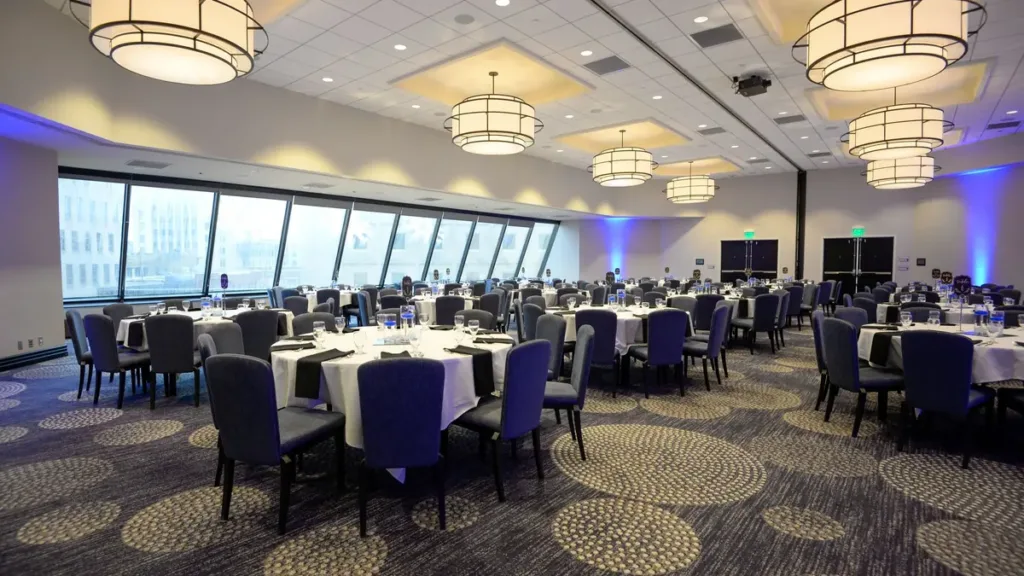
The return leg is where private event transportation for a corporate gala usually goes wrong. The arrival is easy, because guests turn up across an hour and the portico copes. The departure is the opposite: most of the room stands up within minutes of the vote of thanks, and a hotel canopy holds only a handful of cars at once. The fix is to set the return window from the printed programme, not from a guess like “cars at eleven”. Anchor it to three hard edges: when the last formal item ends, when dinner service closes, and when the hotel wants the ballroom cleared. Open the window shortly before the first of those, run your heaviest dispatch for the next half hour or so, and keep a small tail of cars until the last one. Then hold the fleet in a staging area and call vehicles forward in order, rather than paying twenty drivers to idle at the gate.
Decision summary
- Set the window from the programme. The last speech, the end of dinner service and the ballroom close each give you a time. Use the earliest as your opening and the latest as your hard stop.
- Prefer call-forward over idle waiting once you pass roughly ten cars. A holding area plus a dispatcher at the portico moves people faster and keeps overtime visible.
- Ask the hotel, in writing, how many vehicles the portico holds and how long a car may stand there. Plan to that number, not to your guest count.
- Define overtime triggers before the night, name one person who can approve them, and put a cap on the total.
- Split the manifest into in-house guests, local guests, out-of-town guests and staff. Each group needs something different.
- Treat the staff run as a safety job, not an afterthought: door-to-door drops, a confirmed contact for each car, and nobody left on a kerb at 1am.
Reading the programme to set the return window
A gala programme is a timetable dressed up as a menu card. Every item on it tells you something about when people will move. The trick is to separate the items that release guests from the items that merely suggest they might leave.
| Programme item | What it tells you | Transport action |
|---|---|---|
| Chief guest’s address | Protocol guests often leave soon after the chief guest does | Have the VIP cars first in the queue, engines running, before the address ends |
| Awards or recognition segment | The most likely item to overrun; names get added on the day | Do not open the main window until this segment has visibly started to wrap up |
| Dinner announced / buffet opens | Nobody serious leaves before eating; this is your quiet period | Drivers eat now; dispatcher confirms final numbers per group |
| Dessert and tea service | The first wave of families and senior staff begins to leave | Open the window; call forward the first batch from staging |
| Vote of thanks / closing remarks | The peak release point | Heaviest dispatch; portico marshal and dispatcher both on radio or phone |
| Musical segment or open floor | A long, thin tail of late leavers | Keep a reduced fleet; release the rest on a written schedule |
| Ballroom close (from the banquet contract) | Your hard stop | Last cars on site; overtime clock is already running if agreed |
Get the running order as the organiser’s events team actually uses it, not the printed card handed to guests. Then ask the organiser directly which item is the “real” end. At many corporate dinners in Pakistan the formal part finishes with the vote of thanks, but a performer or open floor keeps a portion of the room seated for another hour. Those people still need cars, just fewer of them and later.
Build in the overrun honestly
Speeches overrun. So do awards. Rather than padding every time on the programme, place a single buffer in front of the main window and state it on the transport plan. As an example only: if the vote of thanks is printed for 22:30 and the awards segment ahead of it has fifteen names, you might plan the peak for 22:45 to 23:15 and tell the fleet to expect a call from 22:30. If the programme runs on time, the staging area absorbs the early cars. If it runs late, you have not paid for a line of vehicles standing outside for forty minutes.
Get the hotel’s hard stop in writing
The banquet contract usually states when the hall must be vacated. That is the one time that will not move on the night, because the hotel has its own staff to send home and, sometimes, another event to set up. Ask for it in writing and put it on the transport sheet. It becomes your final dispatch time and the basis for any overtime calculation.
Idle waiting vs call-forward: choosing a gala dinner transport model
There are two ways to run gala dinner transport on the way out. In the first, every car waits near the venue from the start of dinner until its passengers appear. In the second, cars wait in a holding area away from the portico, and a dispatcher calls each one forward when its passengers are ready at the door. Both work. They suit different events.
| Factor | Idle waiting at the venue | Call-forward from a holding area |
|---|---|---|
| Best for | Small groups, a handful of VIP cars, or a venue with a large private car park | Anything beyond roughly ten vehicles, or a hotel with a tight portico |
| Guest wait at the door | Short if the car is visible; long if it is parked three rows back and the driver has wandered off | Short and predictable, provided the dispatcher calls cars before guests reach the door |
| Portico congestion | High; drivers inch forward to be seen | Controlled; only the next few cars approach |
| Cost visibility | Waiting time accrues quietly across the fleet | Each car’s standby and release time is logged |
| Staffing | Minimal; drivers manage themselves | Needs a dispatcher and, ideally, a marshal at the portico |
| Failure mode | Guests hunting for their car in the dark | A dispatcher who loses the phone signal or the list |
For most corporate galas at a large hotel, call-forward is the better default. It keeps the security lane clear, which the hotel will thank you for, and it turns waiting time into something you can see and control. Idle waiting still makes sense for the chief guest, a board member or anyone with a protocol detail, where the car should be at the door the moment they stand up.
How the call-forward works in practice
- Agree a holding area with the hotel or a nearby car park, within a few minutes’ drive of the portico. Confirm it is available at night and that drivers can wait there without being moved on.
- Number every car and link each number to a guest group on the manifest. The dispatcher works from that list, not from memory.
- Place a greeter inside the ballroom exit who tells the dispatcher which group is ready. This is the step most often skipped, and the reason call-forward sometimes fails.
- Call two or three cars ahead of need, so there is always a car arriving as the previous one pulls away.
- Log release times as each car leaves. That log is the evidence for any overtime conversation the next morning.
Hotel ballroom pickup: portico and security lane limits
A hotel ballroom pickup in a Pakistani five-star hotel is shaped by security as much as by traffic. Expect a large hotel in Islamabad, Lahore or Karachi to control vehicle access at an outer barrier, and the reasons are not theoretical. In September 2008 an explosives-laden truck was detonated in front of the Islamabad Marriott after it was stopped at the front barrier; at least 54 people were killed. The UK government’s current FCDO safety and security advice for Pakistan still lists hotels and restaurants among the places where attacks could happen, and notes that attacks have taken place in Karachi, Islamabad and Lahore. Hotel security teams plan accordingly, and your transport plan has to fit inside theirs.
In practical terms, expect these constraints and confirm each one with the hotel’s security or banquet manager before the event:
- Vehicle checks at the gate. Each car entering may be inspected. Ask how long a typical check takes on a busy night and multiply by your fleet size; it is often the real bottleneck, not the portico.
- Pre-registered vehicles. Some hotels ask for registration numbers and driver names in advance for large events. Send the list early and send changes as they happen.
- Portico capacity. Ask how many cars can stand under the canopy at once and whether there is a separate banquet entrance. Plan dispatch to that number.
- Standing time. Many hotels will not let a car wait under the portico with no passenger. That rule alone makes call-forward necessary for larger events.
- Protocol movements. If a minister, senior official or diplomat attends, their security may close the portico briefly on arrival and departure. Ask the organiser whether that is expected, and hold your own cars back while it happens.
Late finish chauffeur overtime: triggers and approval
Late finish chauffeur overtime is where goodwill between organiser and transport provider tends to break down, almost always because nobody agreed what counts as “late”. Settle it before the evening, on paper, in terms both sides can check.
Define the triggers
A trigger is the event that starts the overtime clock. Useful ones are specific and observable:
- A fixed time on the booking, for example the agreed end of the hire period. Simple, and hard to argue about.
- The ballroom close from the banquet contract. If the hotel extends the hall, your fleet is extended too.
- A per-car release time. Each car’s hire ends when the dispatcher releases it, and overtime applies only to cars kept past the agreed end.
Avoid vague triggers such as “when the event finishes”. Every party will remember that moment differently.
Name one approver
On the night, someone has to decide whether to keep ten cars for another hour or release six of them. That person should be named in advance, reachable by phone, and senior enough to commit the budget. Drivers and dispatchers should not be making that call, and nor should a guest who asks a driver to wait “just ten more minutes” for a colleague.
Approve in writing, and cap it
A short message to the dispatcher, sent from the approver’s phone, is enough: how many cars, until what time. Agree a ceiling in the booking so there is a limit even if the approver cannot be reached. Rates for extended hours vary by vehicle class, city and time of night, so ask for them as part of the quote rather than assuming; iDrive quotes are subject to confirmation and vehicle availability, and overtime terms should be stated in the confirmed booking, not agreed verbally at the kerb.
Corporate dinner return cars: guests staying at the hotel vs going home
Not every guest needs a car, and the ones who do need different kinds. Before you size the fleet for corporate dinner return cars, split the guest list into four groups.
| Group | What they need | Planning note |
|---|---|---|
| In-house guests | Usually nothing on the night; their room is a short walk away | Plan their airport or onward transfer for the next morning instead |
| Local guests going home | A car to the door, often in the same city | Group by neighbourhood; shared cars suit colleagues heading the same way |
| Out-of-town guests | A longer night drive, sometimes to another city | Decide whether they travel tonight or stay; a late intercity run needs a rested driver |
| Staff, crew and suppliers | A reliable ride after everyone else has gone | Schedule them last but guarantee them a seat; see the safety section below |
Out-of-town guests: tonight or tomorrow?
A guest from Rawalpindi at an Islamabad gala has a short drive. A guest from Lahore at the same event faces a long motorway drive after midnight. The UK government’s advice notes that outside the major motorways road quality in Pakistan is variable, and that local driving standards are erratic, especially at night. For longer returns, consider offering a hotel room instead, or book the intercity leg for the next morning. If the organiser does want same-night returns, make sure the driver has not already worked the full day of the event.
Match the vehicle to the guest
A board member and a junior analyst may both be going home, but they are not the same booking. A luxury sedan for senior guests and an executive sedan for general attendees is a common split. Decide it by group before the night, so the dispatcher is not improvising who gets which car.
Late-night safety for staff returning
The last people to leave a gala are rarely the guests. They are the organiser’s events team, the audio-visual crew, the photographers, the ushers and the registration desk. They pack up after the ballroom empties, and by then the fleet has often been released. That is the moment most worth planning for.
The FCDO’s advice for Pakistan is plain on this: be cautious in urban areas at night, especially on foot, and street crime is a risk, particularly in crowded places. A crew member waiting on a main road for a ride at 1am, holding a camera bag, is exactly the situation to avoid.
A staff return checklist
- Reserve the staff cars in the booking, with their own start time after the ballroom close. Do not rely on “whatever is left”.
- Drop at the door, not the end of the street. The manifest should carry a full address for each person.
- Share car details in advance. Each staff member should know the registration number, the driver’s name and the dispatcher’s number before they walk out.
- Arrange drop-off order sensibly. If one car carries several people, think about who is dropped last, particularly for women travelling alone, and let them choose.
- Confirm arrivals. Ask each person to message the event lead or dispatcher when they are home. It takes seconds and closes the loop.
Know the local numbers
Put the relevant emergency numbers on the transport sheet. In Islamabad, the Islamabad Capital Territory Police list 15 for police emergencies, 1915 for the traffic helpline and 1815 for the Online Women Police Station; Safe City Islamabad, the capital’s camera and command system, is a division of the same force. Rescue 1122 is the ambulance, fire and rescue number across most of the country. In Lahore, the Punjab Safe Cities Authority has installed more than 10,000 CCTV cameras across the city. None of this replaces a well-planned drop, but a crew member should never have to search for a number at the side of a road.
Check the advisory for the whole route
Most corporate galas take place in Islamabad, Lahore or Karachi, and none of these three cities is in the FCDO’s “advise against travel” areas at the time of writing (advice updated 22 September 2026). But the FCDO Pakistan travel advice does advise against all travel to Peshawar city, parts of Khyber Pakhtunkhwa and all of Balochistan, and against all but essential travel to some other areas. If any guest or staff member is heading home to one of those areas after the event, do not arrange a late-night drive there; discuss it with the organiser and check the advice first. The advice also says political rallies and protests may take place across the country; in practice they can close city roads at short notice, so check local news on the day.
Booking private event transportation: send the programme, not a headcount
When you ask for private event transportation for a gala, the most useful thing to send is the internal running order, the banquet contract’s close time and a manifest split into the four groups above. With those, a provider can propose a window and a fleet rather than guessing. For corporate evenings, our chauffeur service in Pakistan covers car-with-driver hire for evenings like this, and the events and weddings booking page is built for multi-car requests. You can also request an iDrive quote for your event directly; requests are confirmed subject to availability. If your event is more of a family occasion than a corporate one, our sister service Pakistan Taxi has a practical guide to event return transport when guests leave at different times.
Questions people ask
When should return cars arrive for a corporate gala?
Have VIP cars ready before the chief guest’s address ends, open the main window shortly before the vote of thanks, and keep a reduced fleet until the ballroom close stated in the banquet contract. Base every time on the internal running order, not the printed card.
Is it cheaper to have cars wait or to call them forward?
For more than about ten cars, call-forward from a holding area usually gives better control over waiting time, because each car’s standby and release is logged. Idle waiting still suits a small number of VIP cars that must be at the door instantly.
Who should approve chauffeur overtime on the night?
One named person from the organiser’s side, agreed before the event, with a written cap. Approvals should go to the dispatcher in writing, stating how many cars and until what time.
Do guests staying at the hotel need transport?
Not usually on the night. They often need an airport or onward transfer the next morning, so capture those details on the same manifest as the gala fleet.