Your Pakistan. Your Journey.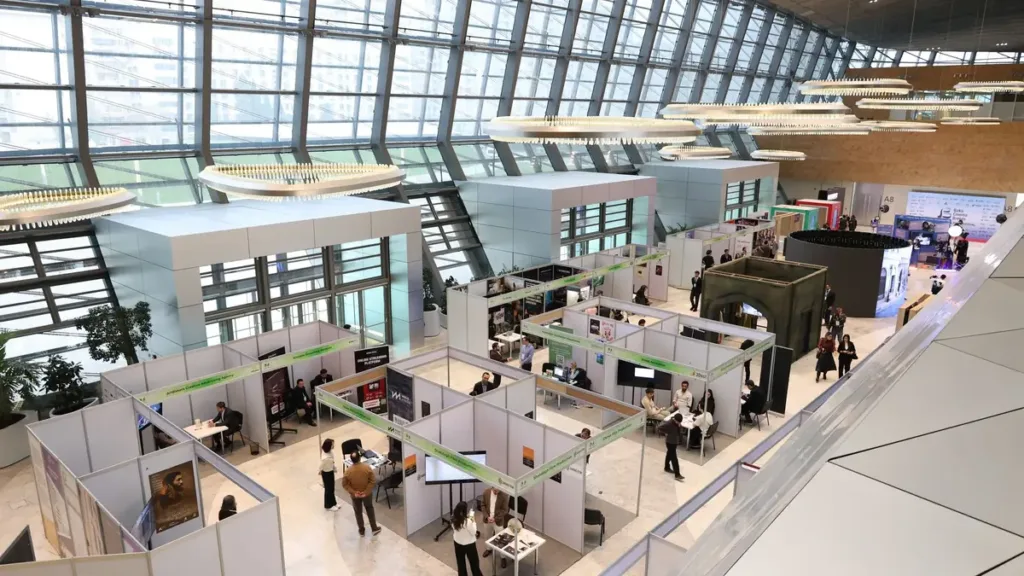
If you are exhibiting at the Pakistan Expo Centre Lahore, plan two transport jobs, not one. People and their overnight bags go in one set of vehicles, on one timetable. Samples, banners, literature and the stand build go in another, on the organiser’s move-in timetable, with whatever vehicle pass and loading rules the venue sets for that show. Put them together and you get a seven-seat van carrying three people, a stack of pop-up banners on the fourth seat and a rep standing at the gate in a suit while the driver argues about whether a passenger car may use the service entrance. The Expo Centre is in Johar Town, on the corner of Abdul Haque Road and Shahrah Nazaria-e-Pakistan. Nothing about its location is difficult. What goes wrong is timing, access and space in the vehicle.
Decision summary for exhibitors
- Staff only, carry-on samples: a car or MPV per three to four people, booked around the show’s opening hours and your hotel.
- Staff plus a few cases and roll-up banners: a larger van where the rear row or boot is reserved for kit, with seat count planned after the load, not before.
- Stand build, crates, furniture or bulk literature: a separate goods run, timed to the organiser’s move-in slot, with the vehicle details registered in advance if the show asks for it.
- Kit arriving from abroad: sort the customs route (freight forwarder, temporary admission or an ATA Carnet) weeks ahead. A taxi at the airport arrivals kerb is not a customs solution.
Where the Pakistan Expo Centre Lahore sits in Johar Town
The Expo Centre Lahore location is Johar Town, in Iqbal Tehsil. The site sits at the corner of Abdul Haque Road and Shahrah Nazaria-e-Pakistan, on land provided by the Lahore Development Authority. When the project was launched, Dawn reported a 400-kanal plot on a 40-year LDA lease, designed as a permanent place for exporters to display goods and meet trade delegations. Construction ran from 2007 to 2010, to a design by a NESPAK and Nayyar Ali Dada & Associates joint venture, according to the venue’s Wikipedia entry and its cited sources.
The complex is not one big shed. It has three numbered exhibition halls, a convention hall, two auditoriums, a foyer, a summit room and smaller meeting halls, plus an open event area. That matters for transport, because “drop me at the Expo Centre” is not an address your driver can finish. Your stand is in Hall 1, 2 or 3, or you are presenting in an auditorium, and the nearest pedestrian gate for that part of the site is what the driver needs.
Approach roads and the question to ask
Most drivers who know Lahore will reach Johar Town without thinking. The part that needs planning is the last few hundred metres. On a busy public day the roads beside a large venue fill with visitors’ cars, rickshaws and people looking for parking, and a vehicle trying to reach a loading gate can be stuck behind all of it. Ask the organiser which gate is for exhibitors, which is for goods and which is for visitors, and send your driver the answer as a pin, not a paragraph.
From the airport and the hotels
Allama Iqbal International Airport (LHE) sits roughly 15 km from central Lahore, according to its Wikipedia entry, and Johar Town is a separate cross-city drive from there, so ask for a realistic journey time at your landing hour rather than guessing. Plan arrival day as a dead day for setting up, and do not book a flight that lands an hour before your build slot closes. Our Lahore airport transfers page covers the meet-and-greet side. For hotel-to-hall runs across several days, the Lahore car and driver service is the one to use.
Exhibition stand material transport: split people from kit
The single most useful decision you can make is to treat exhibition stand material transport as its own job with its own vehicle, driver brief and time slot. Staff want to arrive fresh, on time, and leave when the doors close. Kit wants to arrive early, be unloaded at the right gate, and leave only after the organiser releases the halls. Those two timetables rarely match.
Here is how the jobs differ in practice:
| Question | Staff transport | Stand material run |
|---|---|---|
| When it moves | Daily, around show opening and closing | Build days before opening, breakdown after closing |
| Where it stops | Visitor or exhibitor pedestrian gate | Goods or service gate, as set by the organiser |
| What it needs | Seats, air conditioning, a driver who waits or returns on time | Load space, tie-down or protection, and a registered vehicle if the show requires it |
| What goes wrong | Late pickups at close, drivers stuck in visitor traffic | Missed move-in slot, vehicle refused at the gate, kit left overnight on a pavement |
| Who should brief it | Your stand manager | Whoever holds the organiser’s exhibitor manual and the stand contractor’s schedule |
If you are using a stand contractor in Lahore, the build materials often travel on their transport, not yours. Ask them early. You may only need to move your own samples, laptops, screens and literature, which changes the vehicle you need entirely.
Seats lost to sample cases and banners
Seat counts on a vehicle listing assume people with a handbag each. Exhibitors are not that. A few typical items and what they cost you in space:
- Roll-up banners in carry bags: long and thin. Two or three can ride in a boot; six or eight usually end up across a row of seats.
- Hard sample cases: heavy, rigid and awkward to stack. If they will not fit in the boot with the lid closed, they take a seat.
- Cartons of brochures: heavier than they look. Paper is dense, and a boot full of it changes how a loaded MPV handles.
- Screens and display stands: fragile and flat. They need to lie flat or be strapped upright, not wedged between suitcases.
- Personal luggage on arrival day: the case that tips the plan over. Arrival day is the day staff, suitcases and kit are most likely to share one vehicle.
A working rule: list every item first, estimate its size, and choose the vehicle for the load. Then fill the remaining seats with people. For example (illustrative only), a team of four with six banners, two sample cases and four cartons of literature will usually be better served by one van for the kit plus one car for the people than by a single seven-seater that nobody enjoys sitting in.
For a multi-day team, a Toyota Hiace H300 group van gives more flexibility on seating and load than an MPV. Where the kit is bulky and your team is small, an open load bed such as the Toyota Hilux Revo can carry crates, provided they are covered and secured against dust and rain. Check each vehicle page for seat and luggage details and tell us exactly what you are carrying when you enquire, so the vehicle is matched to the load.
Move-in, move-out and vehicle passes
Every show at the Expo Centre is run by an organiser who books the halls, and that organiser, together with the venue, sets the build and breakdown windows. The rules are not the same for every event. A trade fair taking two halls for a week will run its logistics very differently from a one-day conference in the convention hall. The only reliable source is the exhibitor manual or logistics note for your show. If you have not received one, ask for it before you book a single vehicle.
What to extract from that manual:
- Build dates and hours. The first and last time vehicles may unload, and whether night working is allowed.
- Vehicle registration. Whether goods vehicles need a pass, how far ahead the registration and driver details must be submitted, and whether the pass is tied to a number plate.
- Which gate. The goods entrance for your hall, and whether passenger cars may use it or must stay at the visitor side.
- Unloading time limits. Many venues allow a short unloading window at the dock or kerb, after which the vehicle must move on. Ask what the limit is for your show.
- Handling equipment. Whether trolleys, pallet jacks or porters are available, and whether they have to be booked.
- Breakdown rules. When stands may start dismantling, which is usually after the public closes on the last day and not before.
- Security and ID. What badge or pass staff and drivers need to enter during build days, when visitor badges are not yet in use.
Once you have those answers, pass the relevant ones to whoever is driving. A driver who knows the gate, the slot and the name of the person meeting the load will get through faster than one who has only been told “Expo Centre, morning”.
The last day is the difficult one
Move-out is where exhibitors lose the most time. Everyone wants to leave at once, the goods gate queues, and staff with evening flights want to be released. Plan it in two waves. The staff car collects people at the pedestrian gate at a fixed time, heading for the hotel or the airport. The kit run arrives later, when the organiser opens the halls for removal, and waits in line with everyone else. Do not ask one vehicle to do both.
Parking and drop-off at the Expo Centre
We could not verify the venue’s current published parking and drop-off rules from its own site at the time of writing, and those rules can change from show to show. Treat everything below as questions for the organiser, not as a description of the venue’s policy.
- Is there exhibitor parking, and does it need a sticker or pass? Visitor parking on a busy day may fill early or be some distance from your hall.
- Where is the drop-off for staff cars? On public days, the kerb nearest the entrance may be restricted to taxis and VIP arrivals, or closed to general traffic.
- Can a driver wait on site? If not, agree a call-back time and a pickup point your driver can reach without joining the visitor queue.
- Is paid parking managed by a contractor? If so, ask whether exhibitor vehicles pay each entry, and keep small change or the relevant receipt for your expense claim.
For a daily staff shuttle, drop and return is simplest: the driver drops the team at a fixed point and comes back at an agreed time.
Customs and temporary import for overseas exhibitors
If your samples and display materials are coming from the UK, the Gulf, Europe or North America, the transport question starts long before Lahore. Goods brought in for a show and taken home afterwards can, in principle, be admitted temporarily without paying the full import duties, but only if the paperwork is set up before the goods travel.
The ATA Carnet route
Pakistan participates in the ATA Carnet system, the international customs document for temporary admission of goods. ICC Pakistan describes itself as the national guaranteeing and issuing organisation for ATA Carnets under the Istanbul Convention, and publishes its application procedure and the relevant gazette notification. The ATA Carnet system covers goods for display or use at exhibitions, fairs, meetings and similar events, as well as commercial samples and professional equipment. A carnet is valid for up to one year from issue, and the goods must be re-exported within its validity.
What this means in practice:
- You apply in your own country, not in Pakistan. A UK exhibitor goes to the carnet issuer in the UK, a UAE exhibitor to the UAE issuer, and so on. Allow time for the application and security deposit or guarantee.
- List everything. The carnet’s general list is what customs checks on entry and exit. Items given away at the show, such as brochures and giveaways, may be treated differently from samples you take home. Ask your issuer how to handle consumables.
- Keep the carnet with the goods. It must be presented and stamped on arrival and departure. If your kit travels as freight rather than in your luggage, your forwarder needs the carnet, not you.
- Plan the return. The carnet is discharged when the goods leave Pakistan. If something is sold or left behind, the duty question comes back.
Freight, forwarders and the airport
For anything larger than a couple of cases, use a freight forwarder with experience of exhibition goods, and ask the show organiser whether it has an official forwarder or a recommended customs agent. Allama Iqbal International Airport has a dedicated cargo terminal separate from the passenger terminal, and cleared goods leave from there, not from the arrivals hall. That changes where your collection vehicle needs to go and when.
A passenger transfer is for people and their personal luggage. It cannot clear goods through customs for you, and a driver cannot collect uncleared freight. Once your forwarder confirms the goods are released and tells you where and when they can be collected, a van or pickup can do the last leg to the Expo Centre, timed to your move-in slot.
Rules and procedures for temporary imports change. Confirm the current position with your carnet issuer, your forwarder and Pakistan Customs before you ship, and do not rely on any guide, this one included, as the final word.
Using the Expo Centre Lahore directory and floor plan
People searching for an Expo Centre Lahore directory are usually after one of two things: what is on this month, or where a particular exhibitor or hall is. For transport, the second matters more. The organiser’s floor plan tells you which hall your stand is in, and from that you can work out the nearest gate for staff and the goods entrance for kit.
Three things to pull from the directory or floor plan before the show:
- Your hall number and stand reference, written exactly as the organiser writes it.
- The entrance nearest your hall, for both pedestrians and goods.
- The organiser’s on-site logistics contact, with a mobile number your driver can call.
Security checks and what foreign exhibitors should know
Lahore is not among the areas where the UK Foreign, Commonwealth and Development Office advises against travel; in Punjab, that warning applies to Dera Ghazi Khan. The FCDO’s Pakistan travel advice does, however, describe an ongoing risk of terrorism across the country and asks travellers to be careful around protests, rallies, security checkpoints, tourist sites and religious gatherings, particularly in urban areas. A busy public exhibition deserves the same alertness, and Johar Town itself was the scene of a bombing in 2021.
For transport planning, expect security screening at venue gates, allow time for vehicles to be checked, and keep staff ID, passports or copies, and any exhibitor passes on you, not in a case in the boot. Read the current advice before you travel, since it can change quickly.
A working timetable for a three-day show
This is an illustrative plan for a small overseas team exhibiting in one hall. Adjust it to your organiser’s actual dates and slots.
| Day | People | Kit |
|---|---|---|
| Arrival (two days before opening) | Airport pickup at LHE, straight to the hotel, no hall visit | Forwarder confirms customs release of freight |
| Build day | Stand manager only, dropped at the exhibitor gate for the build slot | Van collects cleared goods and delivers to the goods gate within the registered slot |
| Show days | Morning drop and evening pickup at a fixed point, same driver where possible | Top-up literature in the staff car only if it fits in the boot |
| Last day | Staff released at close; airport run for early flyers | Van returns when the organiser opens halls for breakdown, then to the forwarder or storage |
Two vehicles for most of the show, three on the last day, and none of them doing two jobs at once. That is the whole principle.
Next step
If your team is exhibiting and you want a car and driver for the show days, a van for the kit, or both, send us the dates, your hotel, the hall and a list of what needs to move through the iDrive booking and enquiry page. We will come back with the vehicles we can offer and a quote to review; nothing is confirmed until you have agreed it. Delegates travelling with families on the same trip may prefer our sister service Pakistan Taxi’s events and groups service, which is part of the same iDrive network. If your team also works the Gulf circuit, our sister company Saudi Cab Co has written up transport for trade shows at Riyadh’s major venues.
Questions people ask
Where is the Pakistan Expo Centre Lahore?
In Johar Town, at the corner of Abdul Haque Road and Shahrah Nazaria-e-Pakistan. Give your driver the gate for your hall, not just the venue name.
Can a normal taxi carry my stand materials?
A few banners and a sample case, yes, at the cost of seats. Anything larger, or anything that must reach a goods gate during a set slot, should go on a separate van or pickup.
Do I need a vehicle pass for move-in?
It depends on the show. The organiser’s exhibitor manual sets vehicle registration, gate and timing rules, so check it before booking transport.
How do overseas exhibitors bring samples into Pakistan temporarily?
Pakistan accepts ATA Carnets, issued in your home country and guaranteed locally by ICC Pakistan. A freight forwarder or customs agent is the usual route for larger shipments.