Jinnah International handles about 6.7 million passengers a year, up nearly four per cent in the year to June 2025, and it is the simplest of Pakistan’s big airports to move through. Everything is under one roof: the East concourse takes international traffic and the West concourse takes domestic, with arrivals on the lower level and departures above, and no inter-terminal transfer to make. The Hajj terminal dates from 1978, and the 1938 original is now the Civil Aviation Authority headquarters.
Its busiest routes tell you who is arriving: Islamabad at 105 weekly flights, Dubai at seventy-eight and Lahore at sixty-nine, alongside Jeddah, Doha, Istanbul and Bangkok. This is a domestic and Gulf airport with a heavy business and labour-migration mix, and a lot of it lands late.
What actually happens when you land
Three things are true at every Pakistani airport and none of them appear in the brochure. There are no tourist SIM counters in arrivals, so a phone that worked at the departure gate has no data on landing. Airport cash machines frequently decline foreign cards. And the app-based options that look obvious from a laptop at home need both of those things working before a car will come.
Karachi adds scale to the problem. The airport sits at Star Gate, at the eastern end of Shahrah-e-Faisal, and the districts most arriving passengers are heading for are fifteen to twenty-six kilometres away down one road. Getting the transfer wrong here is not a ten-minute mistake.
That is the argument for arranging the car before you fly. A driver waiting inside arrivals with your name does not require you to have a local number, mobile data or rupees in your pocket. We meet arriving passengers inside the terminal, and the driver’s photograph and the vehicle registration reach you before the car does.
Shahrah-e-Faisal is the transfer
For most of Karachi, the airport run is a single road. Shahrah-e-Faisal covers 18 km from Star Gate to the Bhutto Underpass near Hotel Metropole, carries around 250,000 vehicles a day, and is identified in cited injury research as the city’s deadliest road. Congestion peaks between 07:00 and 09:00 and again between 16:00 and 19:00. The same 22 km run out to DHA can take fifty minutes or ninety, depending only on when you set off.
Rickshaws are banned from twenty-five major roads including Shahrah-e-Faisal, Shahrah-e-Quaideen and Korangi Road under Section 144, so on the corridors that matter the realistic choices are a car or a motorcycle. Karachi Cantonment railway station is two kilometres southwest of the terminal, which is useful to know if you have an onward train rather than an onward address.
What the transfer actually looks like by district
Karachi is the one Pakistani airport where district-level figures are published at all, and the numbers below come from a travel source rather than an authority, with no date attached. Treat them as the shape of the market, not as a tariff.
- Saddar 15 to 18 km, thirty to fifty minutes, airport taxi counters quoted at Rs 2,500 to Rs 3,000.
- Clifton 20 to 23 km, forty-five to seventy minutes, quoted at Rs 3,000 to Rs 3,800.
- DHA 22 to 26 km, fifty to ninety minutes, quoted at Rs 3,500 to Rs 4,200.
The same source puts ride-hailing on those trips at Rs 1,000 to Rs 3,500, which is the honest picture: the apps undercut the airport counters substantially, and they do it by removing the parts an arriving international passenger most needs.
The honest price ladder
We would rather set out the whole market than pretend we are the only option. From cheapest to dearest, an airport transfer in Pakistan runs: public transport, then a Bykea bike, then inDrive or Yango, then a negotiated street taxi, then an airport radio cab, then a pre-booked chauffeur.
Karachi is where that ladder is easiest to see, because all of it exists in one car park. Three official taxi counters sit outside arrivals, White Cars, Metro Cars and Airport Taxis, and app drivers work the same rank. The counter rate is roughly double the app rate for the same journey, and neither publishes a tariff you can check in advance.
One thing is no longer on that ladder at all. Uber left Pakistan completely on 30 April 2024 and Careem suspended ride-hailing on 18 July 2025. Any guide still listing them is out of date, and a great many still do.
Timing beats everything else here
An hour’s difference in departure changes a Karachi airport transfer more than any other variable. If you have a choice about when to land or when to leave for the airport, avoid 07:00 to 09:00 and 16:00 to 19:00.
Tell us the journey and we will price it. A submitted request is not a booking until availability, price and terms are confirmed.
The journey in figures
- Airport
- Jinnah International Airport (KHI)
- Terminal
- One terminal, two concourses: Jinnah East for international, Jinnah West for domestic. No inter-terminal transfer needed
- To Saddar
- 15 to 18 km, 30 to 50 minutes
- To Clifton
- 20 to 23 km, 45 to 70 minutes
- To DHA
- 22 to 26 km, 50 to 90 minutes
- Nearest station
- Karachi Cantonment, 2 km southwest
Almost every transfer from this airport runs the length of Shahrah-e-Faisal, the 18 km artery from Star Gate to the city, which carries around 250,000 vehicles a day and peaks between 07:00 and 09:00 and again from 16:00 to 19:00. The same run to DHA can take 50 minutes or 90. Rickshaws are banned from Shahrah-e-Faisal and 24 other major roads, so on the main corridors the real choice is a car or a motorcycle.
Every way of making this journey
We are one row in this table, and not the cheapest one. Here is what the alternatives actually cost and what each of them asks of you.
| Option | Typical cost | Time | What to know |
|---|---|---|---|
| inDrive or Yango | Reported Rs 1,000 - 3,500 | 30 to 90 min | Cheaper than the airport counters. Assumes a working local SIM on landing. |
| Airport taxi counter | Reported Rs 2,500 - 4,200 by district | 30 to 90 min | Three counters outside arrivals: White Cars, Metro Cars and Airport Taxis. Fares are from a travel-guide source, not an official tariff. |
| iDrive.pk, car with a driver | Quoted for your journey | — | A fixed price once quoted, a vetted driver whose photo and vehicle registration you see before the journey, and a car sized to your party and luggage. Booked before you travel, so it does not depend on having a local SIM when you land. |
Costs for other operators checked on August 31, 2026 and published from their own booking systems, official notices or named third-party sources. Fuel in Pakistan moved from Rs 264.61 a litre in September 2025 to Rs 343.10 by August 2026, so fares here move quickly. Treat these as a guide and confirm with the operator.
Which vehicle actually fits
Seat counts are the manufacturer figures. The passenger and luggage numbers beside them are what the vehicle carries in practice, with the cases people really travel with. If your party is near the limit, tell us the number of bags rather than the number of people, because that is what decides it.
- Suzuki WagonR 3 passengers, 2 cases Short city transfers on a budget. The tall boot helps more than the engine does.
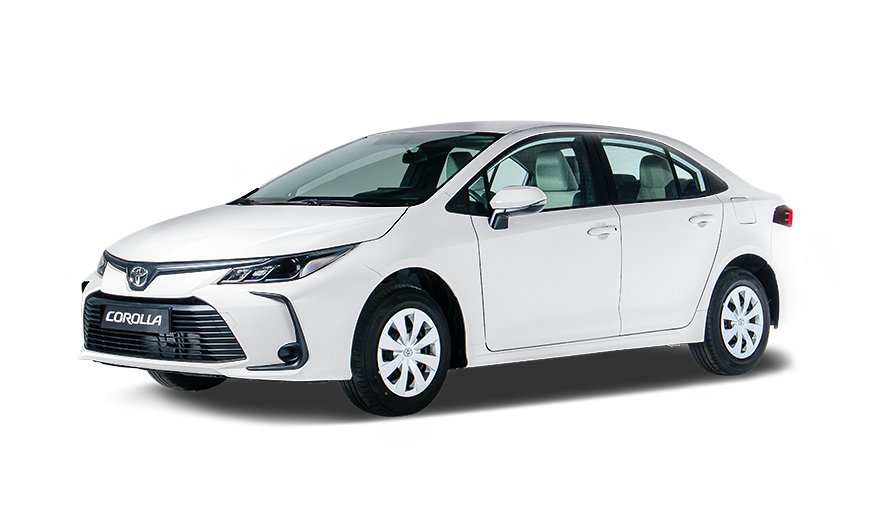
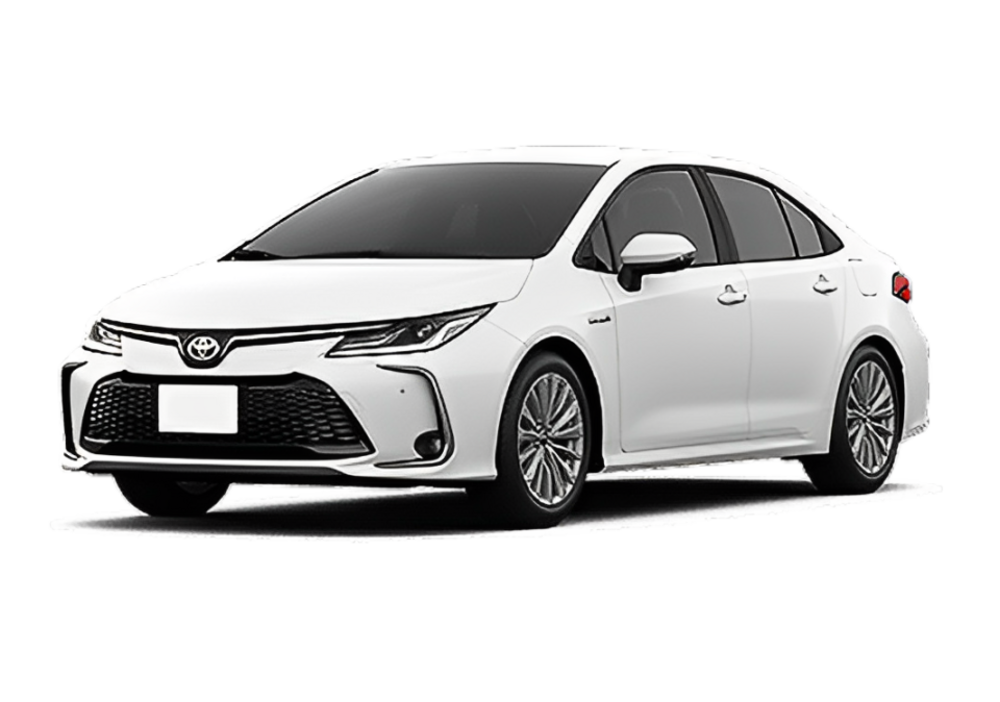
- Toyota Yaris or Corolla 3 to 4 passengers, 2 to 3 large cases The workhorse. City work, airport transfers and the motorway run between Lahore and Islamabad.
- Honda BR-V 5 passengers with luggage, or 7 with almost none Family airport transfers on paved routes. The third row eats the boot, so it suits children or short hops rather than seven adults with cases. Not a mountain vehicle.
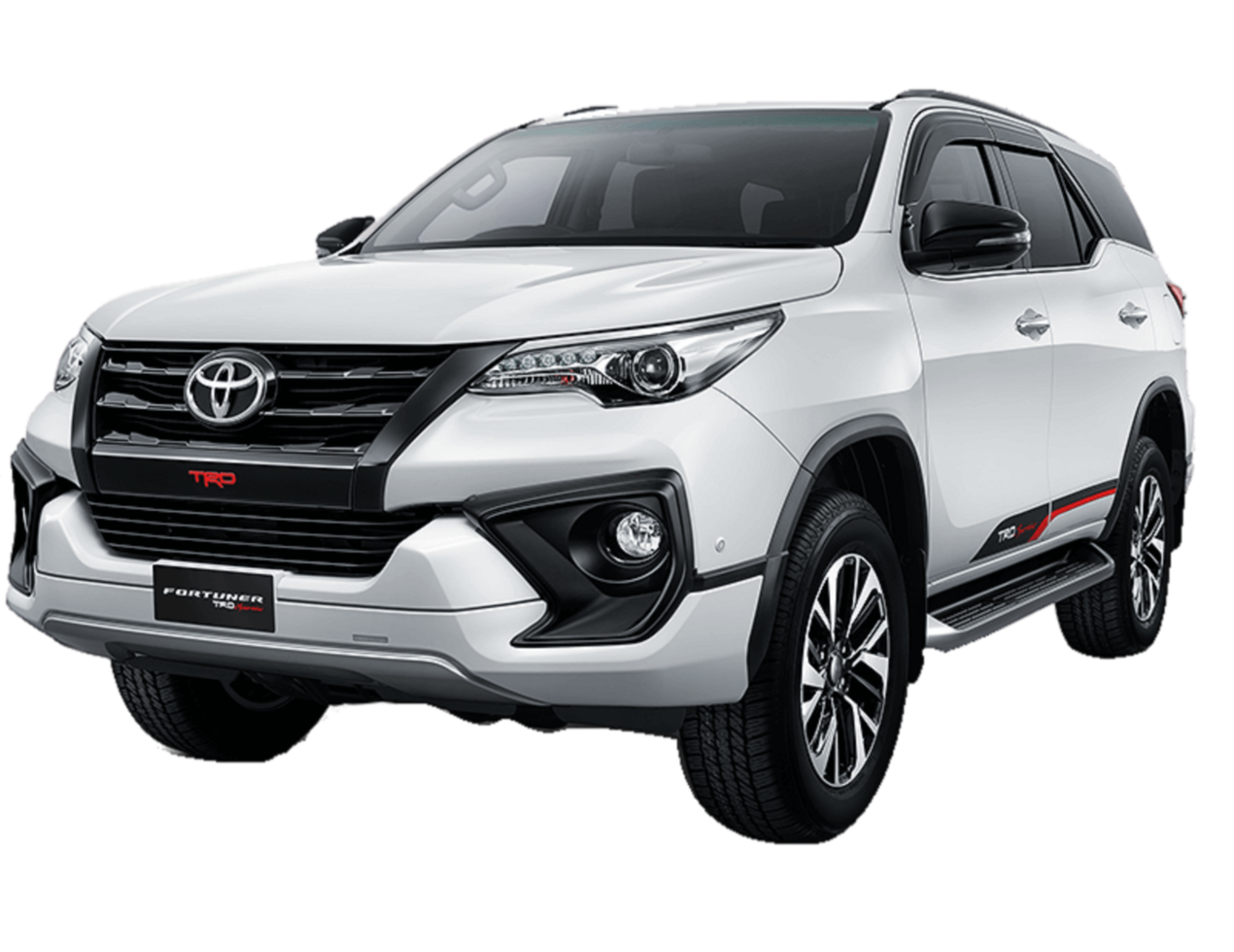
- Toyota Fortuner 5 passengers with full luggage, 7 travelling light Rough road and mountain work: Skardu, Hunza, Naran, Babusar. Ask for the diesel four-wheel-drive, because the petrol version is two-wheel-drive.
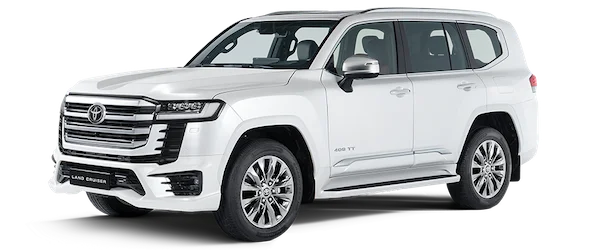
- Toyota Land Cruiser 4 to 5 passengers with full luggage Protocol and expedition work, and a genuine choice for Skardu and Deosai. It returns 5 to 10 km a litre, which at Rs 343 a litre is the honest reason it costs what it costs.
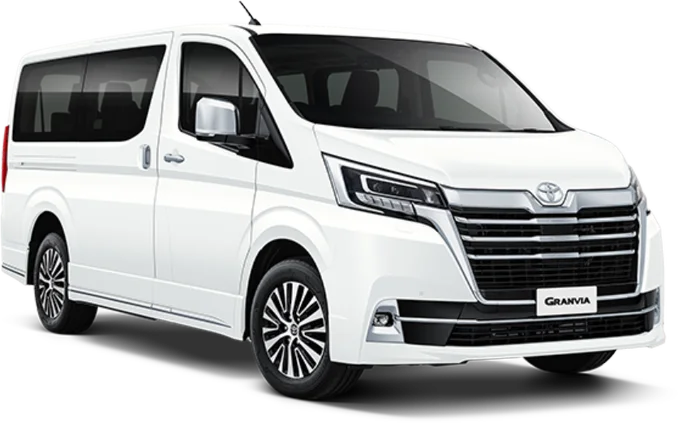
- Toyota Hiace Grand Cabin 13 passengers plus the driver The group and family vehicle. Gulf arrivals into Sialkot and Peshawar with heavy luggage, tour groups, weddings, long intercity runs.
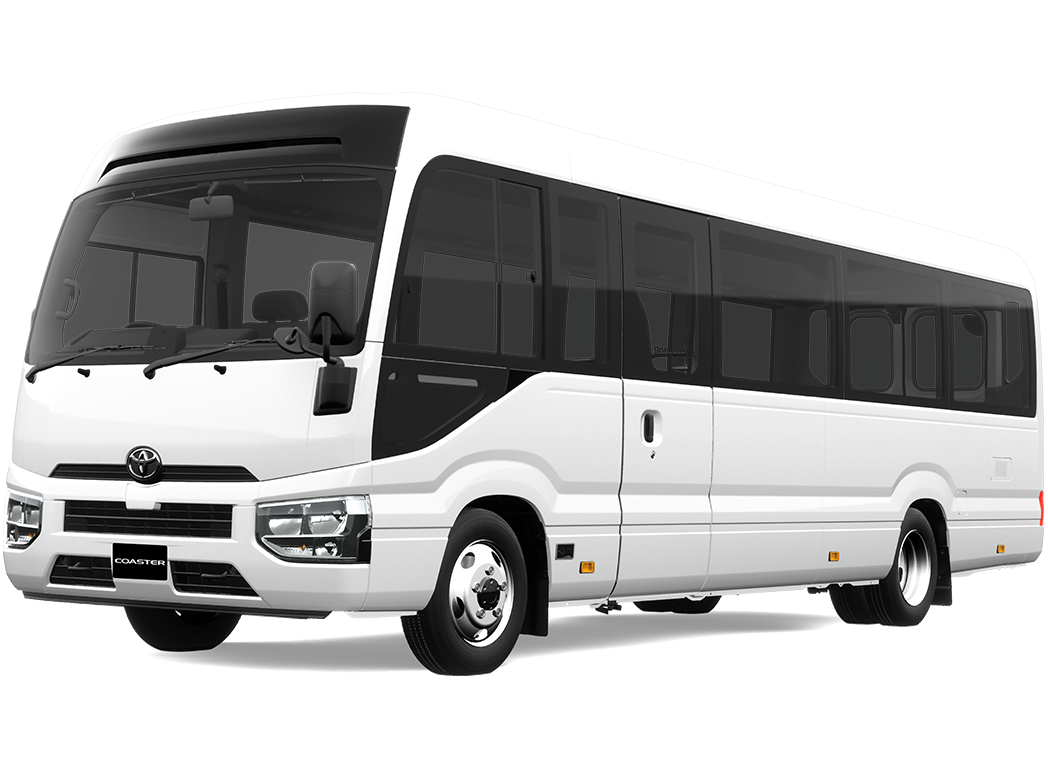
- Toyota Coaster 25 to 29 passengers with hold luggage Large groups, corporate shuttles and pilgrimage travel. Worth knowing that the motorway toll alone is Rs 3,350 each way against Rs 1,430 for a car.
How booking works
- 01 Tell us the journey Where from, where to, when, how many of you and how much luggage. Precise addresses matter more than you would think, because a Rawalpindi address and an Islamabad address twenty minutes apart are very different journeys.
- 02 We quote a fixed price One figure for the whole journey, with the vehicle class it assumes. If a motorway toll or a waiting period is part of it, you see that too.
- 03 You see the driver and the car Before the journey you get the driver photograph and the vehicle registration, so you know exactly who and what you are looking for.
- 04 You travel At an airport your driver waits inside arrivals with a name sign. Check the photograph and the registration plate against what we sent you before you get in.
Frequently asked questions
How far is Karachi airport from the city?
Between about 15 and 26 km depending on the district. Saddar is 15 to 18 km, Clifton 20 to 23 km and DHA 22 to 26 km, almost all of it along Shahrah-e-Faisal.
How long does the transfer take?
Thirty to fifty minutes to Saddar, forty-five to seventy to Clifton and fifty to ninety to DHA. The range is entirely down to the time of day.
Are the international and domestic terminals separate?
No. Jinnah East handles international traffic and Jinnah West handles domestic, but both are concourses inside one terminal, with arrivals below and departures above. There is no inter-terminal transfer.
What do the official airport taxi counters charge?
Three counters operate outside arrivals: White Cars, Metro Cars and Airport Taxis. A travel source with no date attached puts them at Rs 2,500 to Rs 3,000 for Saddar, Rs 3,000 to Rs 3,800 for Clifton and Rs 3,500 to Rs 4,200 for DHA. Those are indicative rather than published rates.
Are the apps cheaper?
Substantially, on the same source: Rs 1,000 to Rs 3,500 for those trips against Rs 2,500 to Rs 4,200 at the counters. They also need a working local phone, mobile data and a payment method, which is where an arriving international passenger tends to be stuck.
Can I take a rickshaw from the airport?
Not on the main corridors. Rickshaws are banned from twenty-five major roads including Shahrah-e-Faisal, Shahrah-e-Quaideen and Korangi Road.
When is Karachi traffic at its worst?
Between 07:00 and 09:00 and between 16:00 and 19:00. Shahrah-e-Faisal carries around 250,000 vehicles a day and the difference between peak and mid-morning is roughly an extra forty minutes to DHA.
Is there a train from the airport?
Karachi Cantonment station is two kilometres southwest of the terminal, which makes it useful for an onward rail journey rather than as a way into the city.
Can you meet a late-night arrival?
Yes. Give the flight number and the scheduled arrival time so the pickup is planned against the schedule.
Can you take us on to Hyderabad?
Yes. The M-9 runs 136 km and the door-to-door journey is about 165 km and two and a half hours. Say so at the quote stage so the vehicle and the driver hours are planned for it.
What vehicle suits a family arriving from the Gulf with heavy luggage?
Count the cases, not the seats. A seven-seat SUV loses most of its boot to the third row, so a family of five or six with full luggage is usually a van.
Is the quoted price final?
Yes, once quoted and accepted, for the journey as described. There is nothing to negotiate at the kerb.
Tell us the journey and we will price it
Send the route, the date, the number of travelling and how many cases you have. You will get one price for the whole journey and the vehicle class it assumes. If we cannot cover it properly we will say so rather than take the booking.