Your Pakistan. Your Journey.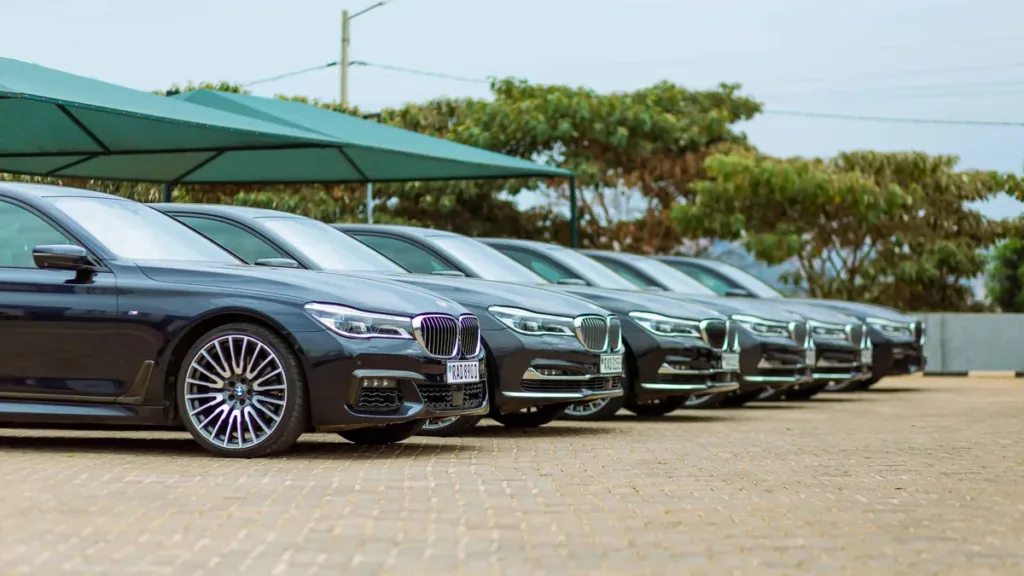
Good VIP event transportation for a visiting delegation comes down to one document: the car allocation. It says which person sits in which vehicle, in which seat, in which order the cars leave, and who holds the authority to change any of it. Get that sheet right and the arrival at Islamabad International Airport, the drive to the venue and the evening dinner move as one. Get it wrong and you get the familiar failures: the principal waiting beside a kerb while the interpreter is two cars back, a laptop bag travelling to the wrong hotel, a junior staffer sitting where the host’s liaison officer expected to sit.
The short version: give the principal a dedicated car with one trusted companion, put staff who need the principal’s ear in the next car, keep the interpreter within arm’s reach of whoever is speaking, send baggage separately, and hold one spare seat somewhere in the convoy. Write that down, share it only with the people who need it, and name one person who can change it on the day. Everything below explains how to build that sheet for a group landing in Pakistan, what to check before you commit, and where the limits are when police or security escorts come into the picture.
The decision summary before you allocate a single seat
Before names go into cells, settle five questions. Each one changes the number and type of vehicles you need.
- Who is the principal, and is there more than one? A minister and a chief executive travelling together are two principals, not one principal with a friend. Each normally needs their own car.
- Which languages will be spoken in each car? If the principal speaks English and the hosts speak Urdu, the interpreter’s seat is a working seat, not a courtesy.
- What has to travel with people, and what can travel apart? Hand luggage, gifts for the hosts, presentation kit and personal medication stay with their owners. Checked bags do not have to.
- Is a host government, police or private security team involved? If yes, their plan sets the convoy order and you fit your cars into it, not the other way round.
- Who signs off changes on the day? One named person on the delegation side and one on the transport side. Nobody else moves a passenger.
If you cannot answer the fourth question yet, do not finalise the motorcade order. Draft the seat allocation and leave the running order open until the security picture is confirmed.
Principal and staff vehicles: what each car in the delegation is for
A delegation convoy is easier to plan if every car has a single job. The labels below are working titles; use whatever your organisation calls them, but keep the jobs distinct.
| Vehicle | Who rides in it | Typical vehicle class | What it must not become |
|---|---|---|---|
| Principal car | Principal, one aide or host counterpart, driver | Full-size SUV or executive sedan | A meeting room for four people |
| Staff car | Chief of staff, senior advisers, interpreter if not with principal | SUV or sedan | A luggage van |
| Support car | Junior staff, media or communications lead, spare seat | Sedan, SUV or people carrier | Left behind when it fills up |
| Baggage vehicle | Checked bags, gifts, equipment, one handler if needed | Van or large SUV | Part of the tight convoy on every leg |
| Spare car (optional) | Nobody until something goes wrong | Same class as the principal car where possible | An extra car for whoever asked last |
The principal car
The principal car carries the principal and, at most, one other passenger. That second seat usually goes to either a senior aide or the host’s liaison, and the choice is political rather than logistical, so ask the delegation lead to make it. A full-size SUV such as the Toyota Land Cruiser 300 gives rear-seat space for papers and a phone call; a luxury sedan is lower, quieter in town and easier to step out of in formal dress. Neither is automatically right; climbing out of a tall SUV in a sari or long coat is a real consideration.
If a close-protection officer is travelling, the front passenger seat is theirs. If not, it is the natural place for the aide. Many delegations have firm views on seating; follow theirs.
The staff car
This is the car that follows the principal and carries the people who may be called forward at the next stop: chief of staff, a subject adviser, the interpreter if they are not already beside the principal. Put the person holding the day’s briefing folder in this car, not the support car. If the principal needs a document between the airport and the venue, it should be one vehicle away.
Support and baggage vehicles
Support cars carry everyone whose job starts when the principal arrives: note-takers, communications staff, photographers. Baggage should, where the schedule allows, go straight from the airport to the hotel, which takes a vehicle out of the convoy.
Delegation car allocation by role and language
The delegation car allocation fails most often at the language layer. A seating plan that looks tidy on paper can leave a Punjabi-speaking host counterpart in a car with three people who share no language with him, for forty minutes on the Srinagar Highway.
Build the sheet from roles, then add names
Start with a column of roles, not people: principal, aide, interpreter, adviser, note-taker, communications, host liaison. Assign roles to cars first. Only then attach names. This gives you a sheet that survives the inevitable swap of one adviser for another two days before departure.
Interpreter placement
The interpreter sits wherever the conversation that matters takes place. On an airport arrival, that is often the principal car, because the host’s welcome party may ride with the principal to the hotel. On a hotel-to-venue leg where the principal is reading a brief in silence, the interpreter can move to the staff car. Note against each leg which applies, or the interpreter will default to whichever car has a free seat.
A worked example (hypothetical)
Example only: a seven-person delegation arriving at Islamabad for a two-day programme with a ministry and a private-sector partner.
- Car 1 (principal car): Principal (rear left), host liaison officer (rear right), aide (front). Language: English and Urdu, liaison is bilingual.
- Car 2 (staff car): Chief of staff, trade adviser, interpreter. Briefing folder travels here.
- Car 3 (support car): Note-taker, communications lead, one reserved empty seat.
- Baggage van: All checked bags and host gifts, direct to hotel, leaves the airport after the passenger cars.
On day two the ministry sends its own liaison to meet the principal at the hotel. The interpreter moves from Car 2 to Car 1 for that leg only, and the liaison from day one moves to Car 3. That change is written on the sheet the evening before, not negotiated at the hotel door.
Motorcade order and spacing on Pakistani roads
For a private delegation without an official escort, the motorcade order is simple: principal car first or second, staff car directly behind, support cars after that. Whether the principal car leads or sits second depends on whether you have a lead vehicle that knows the route better than the principal’s driver. Heads-of-state motorcades follow a more elaborate pattern, with a police presence ahead of the group and support vehicles behind the protected section, as Wikipedia’s overview of motorcades describes. A corporate delegation does not need that choreography, but the logic of a protected core with support around it still applies.
Spacing
Convoy spacing is a trade-off. Too far apart and a traffic signal on Jinnah Avenue splits the group in two; too close and one hard stop turns into a chain of bumpers. Brief drivers to hold a gap they can brake inside at road speed and never to run a red light to stay together. Splitting is recoverable. A collision is not.
Regrouping points
Every leg longer than a short hop should have one named regrouping point that all drivers know: a hotel forecourt, a fuel station on the approach to the venue, or the venue’s own drop-off. If the convoy splits, the lead car waits there rather than slowing on the carriageway.
Airport arrivals
Islamabad International Airport sits near Fateh Jang in Attock District, about 25 km from Islamabad’s Zero Point, and is linked to the city by the Srinagar Highway, according to its Wikipedia entry. That is long enough for a split convoy to matter. Stage the cars in the order they will depart, so the principal car pulls up first and nobody has to reverse or overtake in the pickup lane.
When a police or security escort is involved
This is where a transport plan stops being yours alone. If the host government, a police force or a professional security provider is escorting the delegation, their plan decides the running order, the route, the timing and often the vehicles. Your car allocation slots into their plan. Share your sheet with the escort lead early and ask them to mark it up; do not ask them to adapt to it.
Read the official advice first
The UK Foreign, Commonwealth and Development Office says terrorists are very likely to try to carry out attacks in Pakistan, and its safety and security guidance tells visitors to keep a low profile and to vary routes and timings on regular journeys. It also notes that local authorities sometimes arrange police escorts in higher-risk areas, and that a No Objection Certificate from the Ministry of Interior may be required for some travel. The US State Department’s Pakistan travel advisory sits at Level 3, reconsider travel, and says travel by US government personnel within Pakistan is restricted, with further limits possible at any time. Both pages are updated without notice, so read the current versions rather than relying on a summary.
Two practical consequences for a delegation planner:
- Some places are off the table for a visiting group. The FCDO’s main Pakistan page advises against all travel to Balochistan and to a list of Khyber Pakhtunkhwa districts that includes Peshawar city, and against all but essential travel to other areas including parts of Sindh north of Nawabshah. If an itinerary touches any of these, stop and take specialist security advice before you plan cars at all. This article does not cover movements there.
- Varying routes and timings is advice, not a luxury. A multi-day programme that runs hotel to ministry at the same minute every morning is exactly the pattern the advice warns against. Build two route options per regular leg and let the escort lead or the delegation’s security adviser choose on the morning.
What changes on the sheet
- A lead or tail escort vehicle takes its own row, with the escort lead’s name only if they agree to it being written down.
- The principal car’s front seat may be allocated to a protection officer, which moves the aide to the staff car.
- Departure times become windows rather than fixed minutes, and the sheet should say who gives the word to move.
- The baggage van may be excluded from the convoy entirely and routed separately.
iDrive supplies cars and professional drivers. It does not provide armed escorts, police protection or armoured vehicles, and nothing on the allocation sheet should imply otherwise. If the delegation needs those, they come from the host or a specialist provider, and our role is to fit the chauffeured cars into their plan.
For local contact details, the Islamabad Capital Territory Police lists 15 for emergencies and 1915 as the traffic helpline on the ICT Police website. Put both on the drivers’ copy of the sheet.
Sharing the executive delegation transfer list without oversharing
An executive delegation transfer list is a sensitive document even when nothing on it is secret. It combines names, flight numbers, hotel, mobile numbers and a timed movement plan, which is precisely the information a low-profile approach tries to keep contained. For UK organisations, the ICO’s guidance on data minimisation sets the principle: personal data should be adequate, relevant and limited to what is necessary for the purpose. That translates neatly into versions of the same sheet.
| Version | Who receives it | What it shows | What it leaves out |
|---|---|---|---|
| Master | Delegation lead, transport coordinator | Everything: names, roles, cars, seats, flights, phones, hotel, changes log | Nothing |
| Driver copy | Each driver, for their own car only | Pickup and drop points, times, passenger first names or roles, coordinator’s number | Other cars’ passengers, flight details beyond arrival time, personal phones |
| Venue copy | Venue or hotel front desk | Expected arrival window, number of cars, drop-off point | Names of anyone except the principal, if needed at all |
| Escort copy | Security or escort lead | Whatever they ask for | Decided by them |
A few habits help. Send driver copies close to the event rather than a week ahead. Use role labels (“Principal”, “Adviser 2”) instead of full names on anything that will be printed and left in a car. Avoid posting the full sheet in a large group chat; message each driver their own section. And agree when copies get deleted, so the movement plan for a finished visit is not sitting on a dozen phones for months.
Handling last-minute additions without breaking the plan
Someone always joins late. A regional director flies in from Dubai, the host adds a second liaison, the principal’s spouse decides to attend the dinner. The allocation survives this if you planned for it.
- Keep one reserved seat. The empty seat in the support car is there for exactly this. It is not a spare for comfort.
- Decide by role, not by seniority alone. A late arrival who needs to talk to the principal on the way goes into the staff car, and a staff-car passenger moves back. A late arrival who simply needs to reach the venue takes the reserved seat.
- Never add a passenger to the principal car without the delegation lead’s word. This is the one rule drivers should hold even under pressure at the kerb.
- Log the change. Time, who approved it, which car. The master sheet gets a line; the affected driver gets a message.
- If additions exceed the spare capacity, ask for another car rather than squeezing. Four adults in the rear of a sedan for an hour in formal clothes is a poor start to a meeting. Extra vehicles depend on availability on the day, so ask early and have a fallback.
For larger visits, keep the principal and staff vehicles fixed and let a pool of one or two cars absorb additions, side trips and early departures from dinners.
Choosing vehicles and drivers for the allocation
Match the vehicle to the job in the table above, then check the practical details that allocation sheets tend to miss.
- Uniform or matching cars. A matched set of VIP SUVs looks orderly outside a ministry, but it also makes the principal car easier to pick out if it is always first. Discuss with whoever is advising on security.
- Boot space against luggage. Count bags per car, not per person. Presentation kit and gift boxes take more room than suitcases suggest.
- Driver language. At least the principal and staff car drivers should be able to take simple instructions in English if the delegation does not speak Urdu.
- Driver continuity. The same driver in the principal car for the whole visit learns the principal’s preferences and the hotel’s layout. Ask for that where possible.
Our chauffeur service in Pakistan page sets out how driver-and-car days work.
A pre-event checklist for the transport coordinator
- Principal or principals confirmed, with who shares their car on each leg.
- Roles mapped to cars before names are added.
- Interpreter position set for each leg, with a note on why.
- Motorcade order drafted, and marked “provisional” until any escort plan is confirmed.
- Regrouping point named for each longer leg.
- Baggage route separated from passenger route where the schedule allows.
- One reserved seat and a named approver for changes.
- Driver, venue and escort copies prepared, each carrying only what that reader needs.
- FCDO and host-country advice checked for every place on the itinerary, and rechecked the day before, because advice can change.
- Emergency numbers (15, 1915 in Islamabad) and the coordinator’s number on every driver copy.
If part of the group is also arranging its own family or guest pickups around the event, our sister service Pakistan Taxi has a practical guide to making a pickup manifest for an event with several vehicles, written for families and hosts rather than delegations. Delegations moving on to the Gulf may find our sister company Saudi Cab Co’s note on fleet options for airport VIP and diplomatic transfers useful for the Saudi leg.
When the sheet is drafted, send it with your dates through the iDrive booking page. We will come back with the vehicles we can offer for each role and a quote to confirm; nothing is fixed until both sides agree it in writing.
Questions people ask
How many cars does a small delegation need?
For five to eight people, a common pattern is three passenger cars (principal, staff, support) plus a separate baggage vehicle. The exact number depends on how many principals there are and whether an escort changes the plan.
Should the principal car always lead the motorcade?
Not necessarily. If a lead car knows the route better, the principal car often sits second. Where police or security are escorting, they set the order.
Can iDrive arrange a police escort?
No. iDrive provides cars and professional drivers. Escorts and protection come from the host authorities or a specialist security provider, and we fit our vehicles into their plan.
What should a driver’s copy of the allocation contain?
Only their own car: pickup and drop points, times, passenger roles or first names, the regrouping point and the coordinator’s number. Nothing about other cars.