Your Pakistan. Your Journey.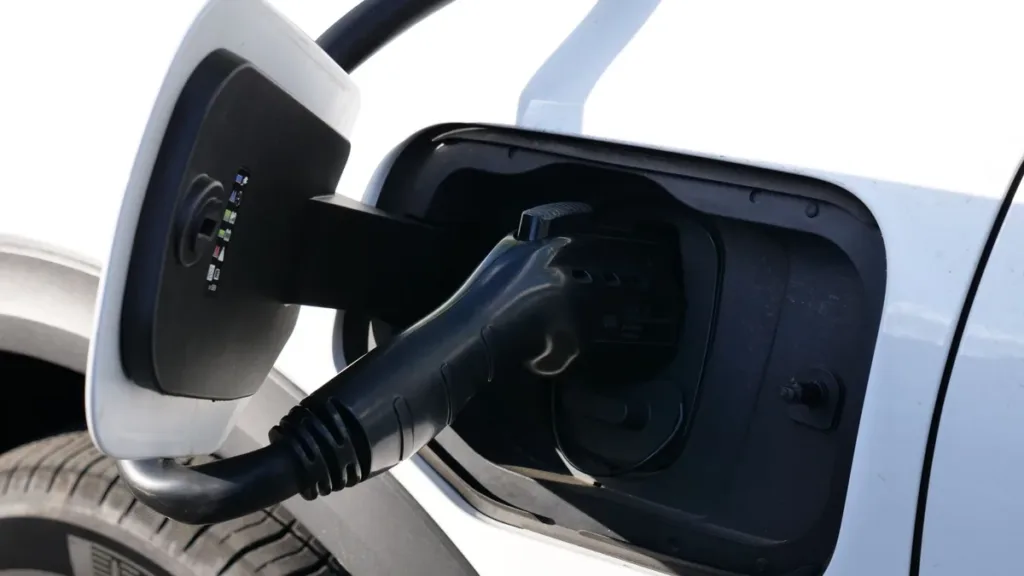
The short answer: EV charging stations on motorway Pakistan routes now exist in useful numbers on exactly one road, the M-2 between Islamabad and Lahore. ProPakistani reported in July 2026 that ultrafast chargers were working at the Chakri, Kallar Kahar, Bhera and Sial Mor service areas, with Bhera covered on both carriageways. Add the 60 kW charger HUBCO Green and PSO opened at a rest stop on the same motorway in June 2025, and an electric car can do Islamabad to Lahore with a sensible plan and a margin to spare.
Beyond the M-2 the picture thins quickly. Policy promises chargers every 120 km from Peshawar to Karachi, and several companies have announced corridors, but most of that is still being built or was only ever announced. So can you hire an EV intercity? On the M-2, yes, if an electric vehicle is actually available for your date and the charging stop is planned into the timing. On most other long legs, a hybrid or a petrol car is still the honest recommendation.
Decision summary: EV, hybrid or petrol for the leg you have
If you only read one section, read this. The verdicts below reflect what we could confirm from published reports in September 2026, not what has been promised.
| Journey | What we could confirm | Electric car verdict | Better default |
|---|---|---|---|
| Islamabad to Lahore (M-2, 375 km) | Fast chargers at Chakri, Kallar Kahar, Bhera and Sial Mor service areas, plus a 60 kW unit at a PSO rest stop | Workable with one planned stop | EV if available; hybrid otherwise |
| Lahore or Islamabad to Faisalabad and Multan (M-2 then M-4, or M-3) | No confirmed motorway charger list for these roads in the reports we checked | Unproven | Hybrid or petrol |
| Islamabad to Peshawar (M-1) | A Multan-to-Peshawar phase was announced by HUBCO Green; no confirmed M-1 sites found | Unproven | Hybrid or petrol |
| Karachi to Hyderabad (M-9) | Described in July 2026 as a proposed starting point for intercity charging | Short enough to need no stop, but no roadside backup confirmed | Any class; EV acceptable with full charge at both ends |
| Sindh interior, Multan to Sukkur (M-5), and the north | Announced sites in Sindh with past target dates; nothing confirmed on the M-5 or in the mountains | Not recommended | Petrol, or a 4×4 in the north |
The pattern is simple. One corridor has redundancy, meaning more than one place to charge if the first one fails. Everywhere else, an electric car depends on a single announcement being true on the day you arrive, and that is not a plan a careful traveller should accept.
EV charging stations on motorway Pakistan routes: the M-2 sites
The M-2 is 375 km long and, according to its published route summary, has five service areas on each side: Sukheki, Sial, Bhera, Kallar Kahar and Chakri, typically 60 to 80 km apart. That spacing is why the M-2 was the natural first corridor. No electric car on sale in Pakistan needs a charger every 70 km, but having one at that interval means a broken or busy unit is an inconvenience rather than a stranding.
The ultrafast service-area chargers
According to ProPakistani’s July 2026 report, each of the new service-area stations uses a 360 kVA fast charger that can serve up to four vehicles at once. The locations reported were:
- Chakri, northbound side, the closest to Islamabad
- Kallar Kahar, southbound side, on the Salt Range
- Bhera, on both the northbound and southbound sides
- Sial Mor, northbound side, the stop nearest the Lahore end of the list
Read the direction notes carefully, because every M-2 motorway EV charger serves one carriageway unless reported otherwise. A charger listed on the northbound side is no help to you heading south unless you are prepared to leave the motorway, turn at the next interchange and come back, which costs time and toll. Heading from Islamabad to Lahore, the confirmed options on your side of the road are Kallar Kahar and Bhera. Heading north, you have Sial Mor, Bhera and Chakri.
The rest-stop charger
Separately, HUBCO Green and PSO inaugurated a 60 kW dual-port charger at PSO’s Magic River rest stop on the Lahore-Islamabad motorway in June 2025, as Profit reported at the time. It is slower than the service-area units but it adds a second operator on the same road, and a second operator matters more than a faster one when you are planning for failure.
Charging speed and how long the stop really takes
Two numbers get quoted and neither is the time you will actually lose. ProPakistani put the average session at the new ultrafast units at 15 to 20 minutes for most EVs. Profit reported that the 60 kW rest-stop charger could put 50 per cent into a BYD Atto 3 in under 30 minutes, worth roughly 200 km of driving. Both are fair as charger performance. Your stop is longer, for three reasons.
- Queueing. A unit that serves four cars is excellent until a fifth arrives. Eid weekends and the Friday evening run out of Islamabad are when you would expect the M-2 service areas to be at their busiest.
- The last 20 per cent. Fast charging slows sharply as the battery fills. Quoted times assume you stop well before full, which is also the efficient way to do it.
- Getting in and out. Finding the bay, starting the session, paying, and walking back from the food court add minutes that no spec sheet includes.
For planning, we would budget 30 to 45 minutes for one charging stop on the M-2 and treat anything quicker as a bonus. Most M-2 runs include a tea break at Bhera or Kallar Kahar anyway; the difference is that this break is fixed and cannot be skipped.
Our sister service Pakistan Taxi has a practical piece on asking for breaks and stops on an intercity journey, which is worth a read if you are travelling with older relatives or children; with an EV, just make sure the charging stop and the prayer or meal stop are the same one.
Range on Islamabad to Lahore, and beyond
The brochure range of an electric car is measured under test conditions that a loaded car on a Pakistani motorway in June does not resemble. Three local factors pull in opposite directions.
What helps
Speed. Since 26 March 2026 the motorway limit for cars has been 100 km/h, down from 120 km/h, a fuel-conservation measure reported by The Nation. Aerodynamic drag rises steeply with speed, so a lower cruising speed is kind to an EV battery. If that limit is relaxed, expect motorway range to fall.
What hurts
- Air-conditioning in summer. Running the AC hard for five hours in 40-plus degree heat draws real energy.
- A full load. Four adults plus airport luggage is a heavier car than the test cycle assumes.
- The Salt Range. The climb around Kallar Kahar costs energy going up. Regenerative braking recovers some of it coming down, not all.
A worked example, with assumptions labelled
This is an illustration, not a claim about any specific car. Assume an electric crossover that, loaded and with the AC on, realistically covers 300 km of motorway from 100 per cent. Leaving Islamabad full, it reaches the southbound Bhera service area, roughly the midpoint of the 375 km run, with a comfortable reserve. A charge there to around 80 per cent leaves more than enough to reach Lahore and drive across the city to the drop-off.
Now change one assumption. The car was collected at 70 per cent because it was not charged overnight. It now arrives at Kallar Kahar needing a charge, and if that unit is busy or out of service, the next confirmed southbound option is Bhera, which the car should still reach, but with a thin margin. That is the whole case for insisting on a full departure charge.
Beyond Lahore the numbers stop being the problem. From Lahore the M-3 runs to Abdul Hakeem and the M-4 continues to Multan, and much of that is within a single charge for many modern EVs on paper. The issue is that we could not confirm a roadside charger if anything goes wrong, and a long road with no confirmed backup is a different proposition from a 375 km road with five.
For distances and toll figures on the M-1, M-2 and M-4, see our guide to motorway tolls and drive times.
EV charging stations in Pakistan: announced versus working
Most of what you will read about electric car charging in Pakistan is an announcement. Some of it will be built; some already has been. For a hire decision, the only useful question is whether a charger is confirmed working on the road you will use, in the direction you will travel.
What the policy says
In November 2024 the federal government approved 40 EV charging stations along the motorways, placed at existing NHA service stations at roughly 120 km intervals from Peshawar to Karachi, with an initial power tariff of Rs39.75 per kWh, as reported by The Express Tribune. The same report noted that NEECA’s charging station regulations removed upper caps on the fees operators may charge. In plain terms, the electricity price to the operator is regulated, the price to you is not.
By May 2026, Dawn’s situationer reported the EV charging tariff cut to Rs39 a unit from Rs71, oil marketing companies told to put Level-3 charging at 10 per cent of their fuel outlets, PSO reporting nine charging stations along the Karachi-to-Peshawar corridor, and BYD Pakistan building a charging corridor with stations planned every 200 to 250 km.
What the operators have announced
HUBCO Green’s first phase on the Karachi-to-Peshawar route listed Hyderabad, Moro, Sukkur and Zahir Pir (North), with a commissioning target of 31 October 2025, and a second phase from Multan to Peshawar targeted for the third quarter of FY2025-26, according to Business Recorder. Those are dated targets. We have not seen confirmation that each site is open, so we treat them as likely rather than certain.
On the M-9, President Zardari described the Karachi-Hyderabad motorway in July 2026 as a possible starting point for intercity charging, according to The Express Tribune. A proposal, then, not a network.
Even the national count depends on who is counting. Dawn’s May 2026 piece said thirteen investors had been licensed and five of their stations were operating, while an industry estimate in The Express Tribune put all public stations at 30 to 50, against a government target of 3,000 by 2030. Either way the number is small.
Load-shedding, the grid and charger reliability
Fast charging needs a strong electricity connection. The Express Tribune reported that fast chargers need reliable three-phase supply, which is often unavailable in the places where demand is growing, and that grid reliability falls below 80 per cent in some regions. Dawn has also noted that fast charging needs high-capacity transformers, which adds cost for operators.
Motorway service areas are a more natural home for fast chargers than a roadside plot on a rural feeder, since they already run fuel pumps, restaurants and lighting. But a better site is not the same as an outage-proof one, and electric car charging in Pakistan still sits on the same grid as everything else. For a hire, that means four practical rules:
- Never plan around a single charger. On the M-2 you can have a first choice and a fallback on your side of the road. On most other roads you cannot, which is the core reason we do not recommend EVs there yet.
- Check status on the morning of travel. If the charging operator offers an app or helpline with live status, the driver should use it before leaving, not on arrival at the service area.
- Carry payment options. Charging operators set their own payment methods, and there is no universal card or app that works across every network.
- Leave with a full battery. Home or depot charging overnight is the single biggest reliability improvement you can make, and it depends on the vehicle’s base having a working charger, which is worth confirming too.
Hybrids: the practical alternative for most intercity legs
A hybrid, or a plug-in hybrid or range-extender, removes the charging question entirely while keeping much of the running-cost benefit. Dawn quoted an oil industry executive saying hybrid vehicles are a better option than pure battery vehicles under current circumstances. Business Recorder quoted an industry executive saying plug-in hybrids and range-extenders can cover 50 to 170 km on electricity alone before switching to hybrid mode, which makes them useful in town and unworried on the motorway.
That same Business Recorder piece recorded a Rs55 per litre rise in petrol and diesel prices, which it called the largest single increase in recent years, and framed that shock as the reason plug-in hybrids are back in the conversation. Fuel prices are volatile and revised regularly, so check the current rate rather than relying on any figure you see quoted.
For a passenger, the trade-offs look like this:
| Factor | Battery EV | Hybrid or plug-in hybrid | Petrol |
|---|---|---|---|
| Planned stop needed on Islamabad to Lahore | Usually yes | No | No |
| Flexible on unconfirmed routes | Low | High | High |
| Cabin noise at motorway speed | Quietest | Quiet | Varies by car |
| Risk from a broken charger | Real | None | None |
| Charging plan to agree before the day | Always | Not needed | Not needed |
If what you value is a quiet, smooth, air-conditioned cabin for a long day, a well-kept comfort crossover such as the Haval H6 delivers most of that without any range planning. Vehicles depend on availability, so if you specifically want a hybrid, say so in the request and check the confirmation.
Our sister company Saudi Cab Co has worked through the same question for chauffeured travel there; its guide to electric and hybrid fleet options is useful context if your trip takes in both countries.
Electric car hire in Pakistan: when to approve an EV request
This is the part most charger news skips. A family booking one trip and a company approving staff travel face the same test: an EV request for a long journey should pass five checks before anyone says yes.
- Route. Is the whole leg on the M-2, or does it continue somewhere without confirmed chargers? Islamabad to Lahore and back passes. Islamabad to Multan does not, yet.
- Vehicle. Is an electric car actually available on your date, with a known real-world motorway range? EV numbers in hire fleets are small, so availability is never automatic.
- Departure charge. Will the car leave at or near 100 per cent? Ask where it is charged overnight and whether that charger works.
- Stops. Is the charging stop named in the plan, with a fallback on the same side of the road? On the southbound run, that means Kallar Kahar and Bhera.
- Timing slack. Can the itinerary absorb 30 to 45 minutes for charging plus a queue? A flight to catch at Allama Iqbal International or a nikah start time is not the moment to discover there is a car ahead of you on the charger.
If any answer is no, switch to a hybrid or petrol car. That is not a judgement on electric cars; it is the same logic you would apply to any single point of failure on a long day.
On self-drive, all of this is your job rather than the driver’s, so for a first electric intercity trip a car with a driver is the calmer choice.
How to request an electric or hybrid car with iDrive
On iDrive you request a journey and a vehicle class; the specific vehicle, including whether it is electric or hybrid, depends on what is available and is set out when your request is confirmed. There is no guarantee of an EV for a given date, and if a leg fails the checks above, expect a hybrid or petrol car to be suggested instead.
- Enter the route and date through the iDrive journey planner, or start from the Lahore to Islamabad taxi page if you are on the M-2.
- In the notes, state the preference clearly: “electric preferred, hybrid acceptable” or “hybrid required”. Mention any fixed time you must make.
- Give an honest passenger and luggage count. Weight affects EV range, and boot space varies between electric and petrol versions of similar cars.
- Review the confirmation. For an EV on a long leg, it should name the vehicle and the planned charging stop. If it does not, ask.
For journeys beyond the M-2, the city-to-city service covers the main intercity routes, and the sensible default there remains a hybrid or petrol class until charger coverage is confirmed.
Questions people ask
Are there EV chargers on the M-2 motorway?
Yes. ProPakistani reported ultrafast chargers at the Chakri, Kallar Kahar, Bhera and Sial Mor service areas in July 2026, and a 60 kW charger opened at a PSO rest stop on the same motorway in June 2025. Check which side of the road each one serves.
Can an electric car drive from Islamabad to Lahore without charging?
Some can on paper, since the M-2 is 375 km. With a full load, AC and the Salt Range climb, most drivers should plan one charging stop and treat a no-stop run as a bonus.
How much does EV charging cost on the motorway?
The regulated power tariff to operators was reported at around Rs39 per unit, but operators set their own retail price and fee caps were removed. Check the operator’s current rate before you travel.
Is a hybrid a better choice for intercity travel in Pakistan?
For most routes other than the M-2, yes. A hybrid needs no charging stop and carries no risk from a broken or busy charger, while still using less fuel than a comparable petrol car.