Naran sits at the top of the Kaghan Valley, and the drive up to it is the part of the holiday most people underestimate. The road is good for the first two thirds and slow for the last third. Getting the timing right matters more than getting an early start.
The short answer
Islamabad to Naran is roughly 280 to 285 km by road, and a realistic drive is six to eight hours including fuel, food and the stops a family will actually want (route guide). Treat anything under six hours as optimistic. In July and August, with valley traffic, eight is common.
The route, in three parts
Islamabad to Mansehra — the fast part. You leave the capital on the Hazara Motorway, the M-15, which runs 180 km from the Burhan interchange near Hasan Abdal up to Thakot. It has interchanges at Haripur, Havelian, Qalandarabad and Mansehra, and it carries you through the 2.75 km Mansehra Lassan Nawab tunnel. Note that it is not uniformly wide: six lanes around Haripur, four from Havelian to Mansehra, and two beyond Mansehra towards Thakot (M-15)). Come off at the Mansehra interchange. This stage is around 160 km and, driven sensibly, takes about two and a half hours.
Mansehra to Balakot — the transition. You join the N-15, the highway that runs 240 km from Mansehra all the way to Chilas through the Kaghan Valley and over Babusar Pass (N-15). Balakot is roughly 40 km on, but this is town-and-hill driving rather than motorway driving, so budget an hour or more.
Balakot to Naran — the slow part. About 85 km, and the stage that decides your arrival time. Two to four hours is the honest range (route guide). It is a single carriageway climbing beside the Kunhar river, with blind bends, tourist coaches, road works and, in season, a queue of cars that all left Islamabad at the same hour. Kiwai and Kaghan town are the natural stops.
If you are pricing this against a shorter hill trip, Murree is a different order of journey entirely — a couple of hours each way rather than a full day. We cover that separately on our Islamabad to Murree taxi page.
When the road is open, and when it is not
This is the part that ruins trips, so read it carefully. The Kaghan road and Babusar Top are two different questions with two different answers.
The road to Naran closes for winter. In the most recent cycle it was cut off from November and reopened to Naran in late April, after five months, once heavy machinery had cleared the glaciers off the carriageway (Express Tribune). The year before, the valley was declared open to tourists on 21 April (road conditions report). So: late April is the earliest realistic opening, and it moves with the snow.
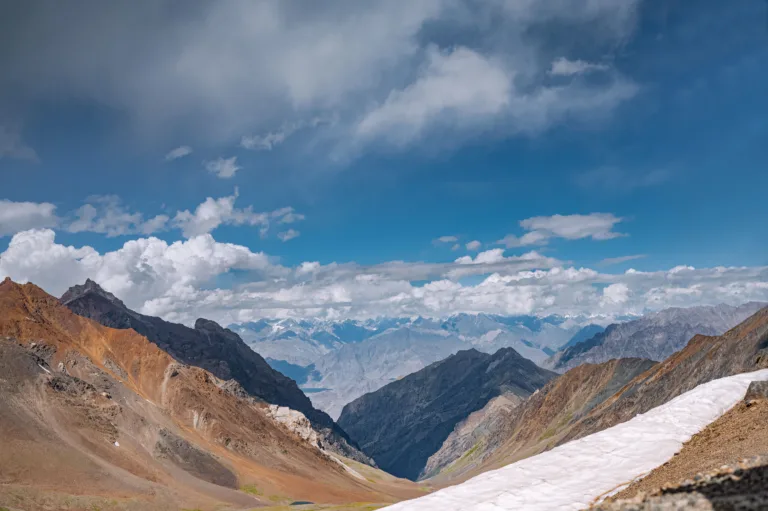
Babusar Top, the pass beyond Naran that takes you over to Chilas and Gilgit-Baltistan, opens much later and closes much earlier. It sits at 13,700 feet. In 2025 it reopened on 23 May after seven months shut, and the National Highway Authority had to clear more than 21 glaciers between Naran and the top in phases to do it (Dawn). In 2026 it opened to tourists on 25 May (Pakistan Today) — and was then closed again by the NHA and district administration until 6 June so the carriageway could be widened and cleared properly, with traffic sent round via Dasu instead (APP).
That sequence is the lesson. A pass can open, then shut again. If Babusar is the point of your trip, do not book non-refundable nights on the far side of it. Police Helpline 15 carries road updates, and we check the position the morning you travel.
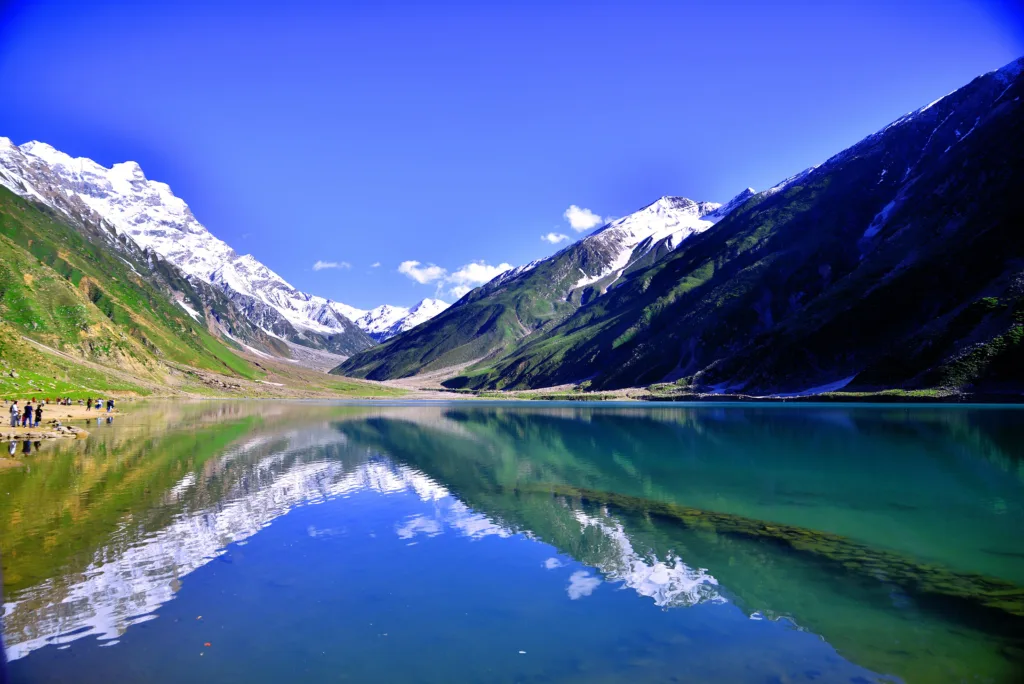
Lake Saif-ul-Malook has its own calendar again. The road to it usually opens somewhere between late May and early June and stays usable into October, subject to snow, rain and landslides (Guide to Pakistan).
Why a low-clearance sedan is the wrong choice past Naran
Up to Naran, a well-maintained saloon is fine in season. Past it, the arithmetic changes.
The lake track is only about 8.9 km from Naran, but it is rough and is normally done in local jeeps rather than private cars (Guide to Pakistan). A short distance on a broken surface is still a broken surface. Low front bumpers, soft suspension and a shallow sump are exactly the wrong combination on loose rock and water crossings, and a grounded car 9 km from town is an expensive afternoon.
Babusar is a different problem. The route climbs to 13,700 feet, and when the authorities reopen it they specifically ask drivers to travel in daylight, to use properly maintained vehicles, and to take care on the sharp turns and steep sections (Pakistan Today). Sustained climbing at altitude with a full load is hard on brakes, clutch and cooling. You want engine braking you can trust on the way down more than you want power on the way up.
Our practical rule: sedan for Islamabad to Naran, higher-clearance vehicle if you intend to go over Babusar, and a local jeep for the lake track regardless of what you arrived in. Tell us at the quoting stage which of the three you are doing, because it changes which car we send.
Luggage, and what a family should think about
The Kaghan Valley is the one Pakistani route where luggage planning genuinely affects comfort. Three things worth deciding before you book.
Seats versus bags. A five-seat saloon with five adults in it has a boot, not a luggage compartment. Four people with a week’s luggage plus a cool box is a seven-seat vehicle, not a squeeze.
Layers, not volume. You may leave Islamabad in the high thirties and stand at Babusar Top in single figures on the same day. Warm clothing that packs small beats a large suitcase of the wrong clothing.
Roof loads. They raise the centre of gravity on a road made entirely of bends, and they turn a soft bag into a wet bag in a valley shower. If it will not go inside, consider whether it needs to come.
For a full-day mountain run we would rather send a bigger vehicle than have you arrive uncomfortable. If you are weighing this against other long-distance options, our intercity taxi page explains how we handle multi-day journeys generally.
What we quote, and what sits outside it
Prices are not published live on this site. We quote in writing for your dates, your party size and the vehicle the route actually needs, and once quoted the price is fixed. Drivers are vetted and carry photo ID and vehicle registration.
A chauffeur fare covers fuel, tolls, parking, and the driver and his pay. Charged separately: waiting beyond the agreed allowance; a night surcharge for travel between 22:00 and 06:00; any change to the route, stops or timing after we have quoted. On bookings running over 24 hours, the driver’s accommodation and meals for each night away from base are also charged — accommodation as an estimate confirmed in writing, and waived if you house the driver yourself. A hire day is 24 hours from pick-up, for chauffeur and self-drive alike. On self-drive, mileage is unlimited, the car comes back at the fuel level it left with, and tolls, parking and fines are yours.
Common questions
How far is Islamabad from Naran?
Around 280 to 285 km by road, via the M-15 Hazara Motorway to Mansehra and then the N-15 through Balakot and the Kaghan Valley.
How long does the drive take?
Six to eight hours is realistic, including stops. The Islamabad to Mansehra motorway stage is quick; the 85 km from Balakot up to Naran is the slow part and can take two to four hours on its own in peak season.
When does the road to Naran open?
It closes for winter, typically from November, and reopens once glaciers and snow are cleared from the carriageway. Late April is the earliest realistic reopening in recent years, and the exact date moves with the snow each season.
When is Babusar Top open?
Much later than Naran itself. Recent reopenings have fallen in the second half of May, after seven months or so of closure, and the pass can be shut again afterwards for further clearance work. It is a summer route, not a spring one. Always confirm the day you travel.
Can I take a normal car to Lake Saif-ul-Malook?
It is only about 8.9 km from Naran, but the track is rough and the lake is normally reached by local jeep. We would not send a low-clearance saloon up it.
Do you rent a car for Naran and Kaghan without a driver?
Yes, self-drive is available. Mileage is unlimited, the car is returned at the same fuel level it left with, and tolls, parking and fines are the hirer’s. For the Kaghan Valley we would still talk through vehicle choice with you before confirming, because the right car for Naran is not always the right car for Babusar.